
Isaiah, a significant figure in the Bible, is known for his profound prophecies and visions that have shaped religious understanding for centuries. Many believers and scholars alike find themselves asking: Did Isaiah Go to Heaven?
This question arises naturally when studying his remarkable spiritual experiences and the vivid descriptions found in his writings.
The biblical texts suggest that Isaiah did experience a powerful vision of heaven, where he encountered God sitting on His throne and witnessed divine glory in all its majesty.
This transformative experience, recorded in Isaiah chapter 6, describes angels called seraphim worshipping God, and it marked the beginning of Isaiah’s prophetic calling. While this was a vision rather than a physical journey, it demonstrates the profound spiritual access Isaiah was granted.

In the context of his visions, Isaiah described ascents through various levels of heaven, ultimately reaching the seventh heaven. These experiences highlight the depth of his prophetic encounters and reveal his close connection to the divine.
Throughout his life, Isaiah served as a prophet, sharing messages that shaped the faith of many. His visions provide insight into the nature of heaven and the role of prophets in understanding spiritual truths.
Readers can explore more about these experiences and their implications for faith and belief.
The Prophet Isaiah: Historical Context

Isaiah was a significant figure in the 8th century BCE. His role as a prophet connected him deeply to the spiritual and political life of Jerusalem during a transformative period, particularly under King Uzziah’s reign.
Isaiah’s Role and the Temple of Jerusalem
As a prophet, Isaiah’s mission centered around delivering messages from the Lord to the people of Judah. His prophecies often addressed moral and spiritual decay, calling for repentance and faithfulness to God.
The Temple of Jerusalem served as the spiritual heart of the nation. Isaiah’s visions frequently took place in this sacred space, highlighting its importance. His encounter in the temple (Isaiah 6) reveals a powerful vision of the Lord, where he witnesses the seraphim and hears God’s call.
This moment profoundly impacted his prophetic mission, reinforcing his dedication to guiding the people back to righteousness.
King Uzziah’s Reign and Isaiah’s Visions
King Uzziah’s reign (792-740 BCE) was marked by prosperity and military success. Uzziah’s leadership influenced Isaiah’s early prophecies, as the kingdom faced challenges from surrounding nations, especially Assyria.
During this time, Isaiah experienced pivotal visions. These revelations provided insight into the coming judgment and restoration of Israel. His visions emphasized God’s sovereignty over nations and the importance of trusting in divine protection.
The tension between faith and fear influenced Isaiah’s messages. He urged the king and the people to rely on the Lord rather than political alliances, shaping the spiritual landscape of Jerusalem.
Visions of the Divine: Isaiah’s Revelations
Isaiah experienced profound visions that revealed the nature of God and heavenly worship. These encounters not only displayed the glory of God but also emphasized the significance of worship in the divine presence.
The Throne of God and Heavenly Worship
In his vision, Isaiah saw God seated on a throne, signaling His authority and majesty. The setting was awe-inspiring, with the train of God’s robe filling the temple. This description highlights the grandeur and significance of God’s glory.
Surrounding the throne were seraphim, angelic beings who continually praised God, calling out, “Holy, holy, holy is the LORD Almighty.” This repetition underscores God’s ultimate holiness.
The atmosphere of worship is a key element in Isaiah’s vision, reflecting the reverence that is due to God alone. The imagery of the throne scene serves to reinforce the power and sovereignty of the Creator.
Seeing God: Symbolism and Interpretation
Isaiah’s vision is rich with symbolism. When he beheld God’s glory, it was a transformative experience. The vision not only affirmed God’s holiness but also revealed Isaiah’s own unworthiness.
Upon seeing God, Isaiah became acutely aware of his sinful nature and the impurity around him.
The phrase “Holy, holy, holy” emphasizes the perfect and unchanging nature of God. This repetition in worship signifies the Trinity’s role and the completeness of God’s holiness.
Seeing God equates to being in a state of revelation and clarity, allowing Isaiah—and by extension, others—to understand the divine will. Through this encounter, Isaiah accepted his role as God’s messenger, demonstrating the powerful effect of witnessing the divine presence.
Ascension and Eschatology in Isaiah’s Teachings
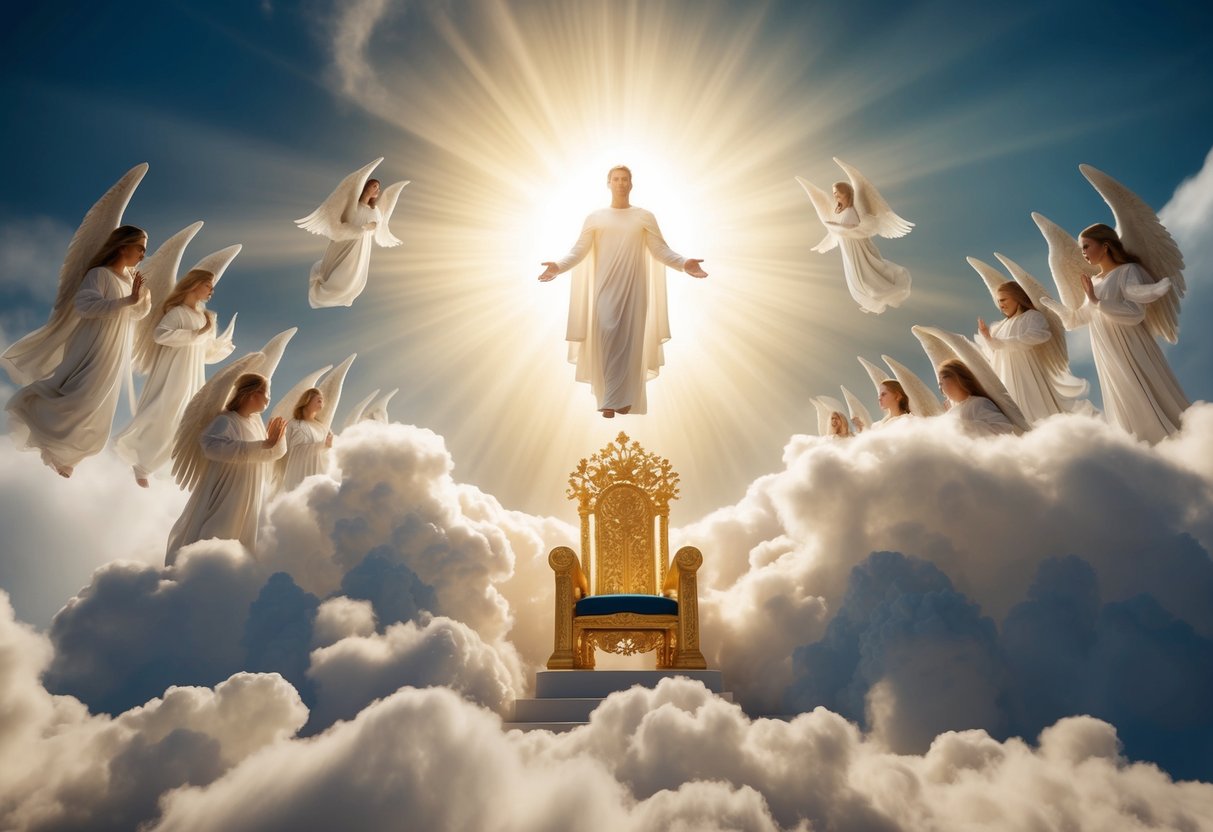
Isaiah’s teachings provide a unique perspective on ascension and eschatology that connects both Jewish and Christian beliefs. His visions reveal insights into the nature of heaven, divine judgment, and the role of Jesus Christ.
The Ascension of Isaiah and Beyond
The Ascension of Isaiah portrays the prophet’s journey through the heavens. In this text, Isaiah descends into various layers of heaven, known as the Seventh Heaven, where he witnesses the glory of God and encounters innumerable angels. These experiences highlight a triune God and foreshadow the coming of Jesus Christ.
The narrative also connects with themes of martyrdom. Isaiah prophesies his own death by being sawn in half due to the threats posed by evil figures like Beliar. This aligns with certain Gnostic elements, showing a struggle between good and evil within the spiritual realms. These visions emphasize the importance of divine revelation.
Isaiah’s Influence on Christian Eschatology
Isaiah’s writings significantly shaped Christian eschatology, particularly in the context of the Christian Apocalypse. His visions affirm the judgment that awaits at the end of time, focusing on justice and salvation.
Throughout the Ascension of Isaiah, the Angel of the Holy Spirit serves as a guide for Isaiah, symbolizing the connection between God and humanity.
In addition to revealing future events, Isaiah’s ascension narrative parallels those of Enoch, highlighting a common belief in heavenly journeys among early religious texts.
Overall, Isaiah’s viewpoints resonate through Christian teachings on the afterlife, emphasizing hope, judgment, and the eternal presence of the divine.
Themes of Redemption and Sacrifice
The concepts of redemption and sacrifice play a significant role in the narrative of Isaiah. Key elements include the portrayal of the Suffering Servant and its connections to messianic prophecy, alongside the themes of martyrdom that reflect a broader narrative of redemption.
The Suffering Servant and Messianic Prophecy
In Isaiah, the Suffering Servant is a pivotal figure. This character embodies the idea of bearing guilt and offering grace to others. The passages in Isaiah 53 depict the Servant as one who suffers for the sins of humanity, paralleling the concept of martyrdom.
This figure represents the ultimate sacrifice, showing that through suffering, redemption is achieved. The Servant’s crucifixion not only highlights pain but also leads to resurrection and hope. His role in creation is central, demonstrating that through hardship, faith can be strengthened.
The messianic elements indicate that this suffering serves a greater purpose, providing believers with a path to reconciliation and spiritual renewal.
Martyrdom and the Narrative of Redemption
The theme of martyrdom in Isaiah illustrates how sacrifice is integral to redemption. Martyrs, like Abel from Genesis, are seen as examples of faith through their trials. They often face persecution for their beliefs, yet their suffering serves to inspire others.
Isaiah’s message emphasizes that true sacrifice arises from reverence for God. Martyrdom, in this context, reflects a willingness to endure hardship for a higher cause.
This narrative of redemption resonates with all believers, urging them to embrace their own struggles. The idea of resurrection following suffering provides profound hope, affirming that faith and grace prevail even in the darkest times.
The Prophet’s Legacy in Abrahamic Faiths
Isaiah’s legacy endures through the teachings and visions attributed to him, impacting theological thought across major Abrahamic faiths. His role as a prophet provided insights into divine authority and humility, affecting followers of Judaism, Christianity, and Islam.
Isaiah’s Enduring Impact on Religious Thought
Isaiah is noted for his profound visions and experiences, particularly his vision of the Lord on the throne in heaven, surrounded by angelic beings. This pivotal moment illustrates the majesty of God and the concept of divine authority. The humility Isaiah displayed in recognizing his unworthiness before God has become a significant theme in religious teachings.
Moreover, his prophecies, particularly in the context of the Testament of Hezekiah, emphasize themes of repentance and the consequences of faith. His messages encouraged believers to turn back to the Lord during times of distress. Isaiah’s role as a bridge between God and the people remains fundamental in understanding God’s communication and the moral expectations placed upon humanity.
Comparisons and Contrasts with Other Prophets
Isaiah stands out among prophets like Jeremiah and Ezekiel due to the unique depth of his spiritual experiences.
While all prophets conveyed God’s messages, Isaiah’s trances and visions provided vivid imagery of God’s holiness and majesty, which are less emphasized in the writings of other prophets.
For instance, unlike Ezekiel’s elaborate visions, Isaiah’s encounter is marked by simplicity and directness, driving home the weight of divine authority without overwhelming details.
Furthermore, Isaiah’s interactions with angelic beings highlight his unique calling. This focus on heavenly encounters reinforces his messages about humility and dependence on divine support, making his contributions distinct within the broader context of prophetic literature.
