
Many wonder about the nature of angels and whether they possess gender like humans do. This question has fascinated theologians, scholars, and curious minds for centuries.
When exploring do angels have gender, we discover that the answer isn’t as straightforward as one might expect.
Angels are generally considered to be genderless spiritual beings, though they may appear in masculine forms in religious texts and art. This leads to confusion, as people often associate certain characteristics with male or female identities.
Throughout history, artistic depictions have shown angels with both masculine and feminine features, further blurring the lines of celestial gender identity.
Understanding the true nature of angels requires looking beyond human concepts of gender and examining what various religious traditions actually teach about these divine messengers.
The discussion about angels and gender touches on deeper themes of representation and symbolism within various cultures and religions.
While angels may often be referred to with male names, this does not imply that they possess the same biological attributes as humans. Exploring these ideas can reveal much about how humans understand the divine and spiritual realms.
Understanding the genderless nature of angels allows for a broader perspective on their roles and functions in religious beliefs.
Readers can uncover how these celestial beings influence cultures and faiths while challenging traditional ideas of gender in spirituality.
Biblical Depictions of Angels
Angels have important roles in the Bible, often showcasing qualities that reflect their purpose as messengers and servants of God.
Understanding how they are depicted in scripture sheds light on their nature and function. The language used, as well as specific angels mentioned in the texts, reveals a deeper insight into how angels are perceived in biblical tradition.
Gender Language in Scripture
The Bible uses masculine pronouns when referring to angels. This choice of language may suggest a male identity, but it is important to note that angels are spiritual beings. They do not possess gender in the same way humans do.
For instance, the term malak in Hebrew and angelos in Greek both mean “messenger.” These terms lack any specific gender assignment, indicating that angels may not fit into human categories of male or female.
Furthermore, angels are often depicted in male form in various stories, contributing to the perception of them as masculine figures in religious art and culture.
Angels in Hebrew and Greek Texts
In Hebrew texts, angels like Michael and Gabriel are described using masculine characteristics. Michael is referred to in the book of Daniel as a “great prince” who protects Israel. This portrayal is further emphasized by the use of the masculine term malak.
Similarly, Greek references to angels continue this trend. In the New Testament, angels are often depicted performing tasks assigned by God, such as delivering messages to Mary and the shepherds. The consistent use of masculine references suggests a traditional view of angels, even though their true nature may transcend gender.
Noteworthy Angels in the Bible
Several angels are specifically named in the Bible and play crucial roles in various stories. Michael is known as a protector and warrior (Daniel 10:13). Gabriel serves as a messenger who foretells important events, such as the birth of Jesus (Luke 1:26-38).
In Jude 9, Michael contends with the devil over the body of Moses, showcasing his authority and strength. Zechariah also mentions angels when referring to visions and prophecies. These notable angels help shape the understanding of angelic beings and their attributes in biblical narratives.
The consistent representation of angels, specifically the ones named in scripture, enhances the perception of them as powerful, male figures working under the authority of the Lord.
Theological Perspectives on Angelic Gender
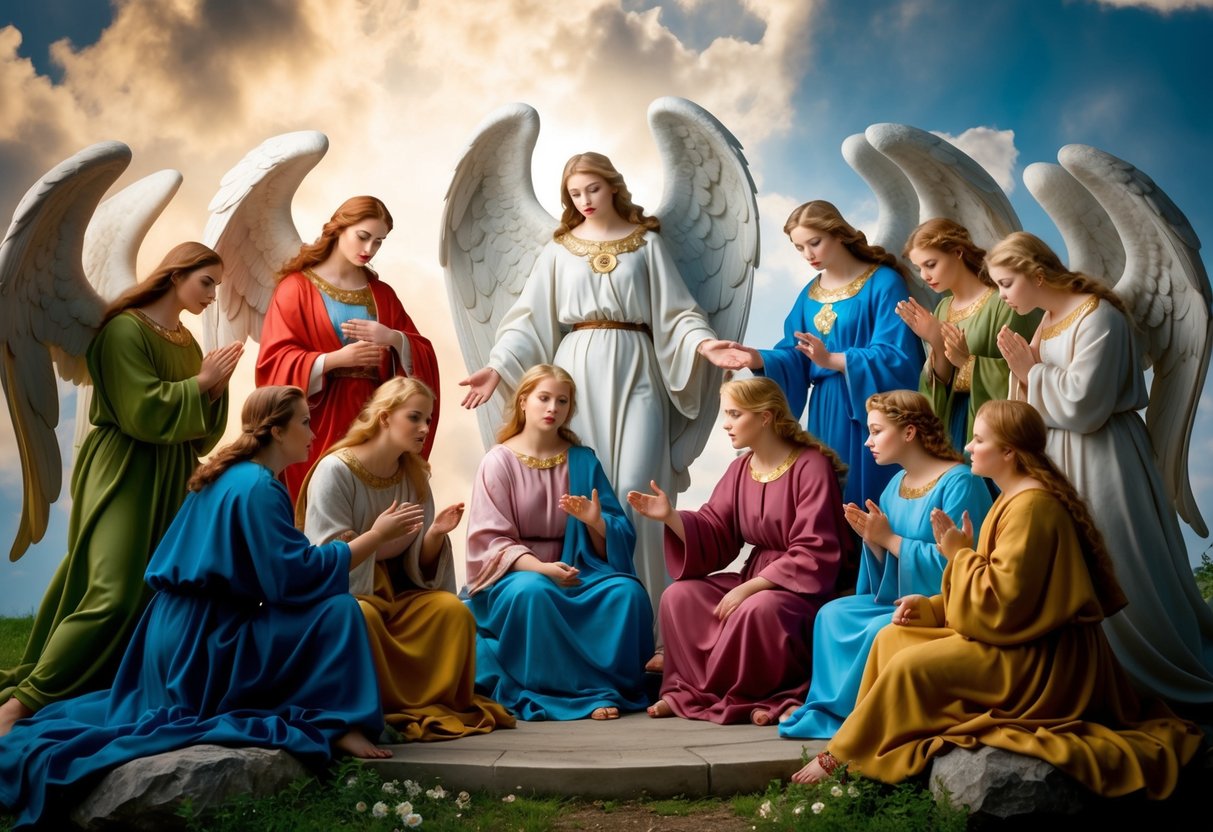
The nature of angels raises questions surrounding gender. The idea that angels may possess or represent gender has been interpreted throughout different theological perspectives.
This section will explore the essence of angels as pure spirits, the absence of sexual reproduction among them, and how their roles relate to gender attributions.
Angels as Pure Spirits
Angels are typically viewed as pure spirits in many theological traditions. They do not possess physical bodies and exist beyond the material realm.
This spiritual nature means they do not experience human traits, such as gender identity or physical characteristics.
In Christianity, angels are often referred to using masculine pronouns, which some interpret as indicating a male nature. However, this is more about linguistic convention than an actual gender. Angels embody qualities of wisdom and strength seen as masculine yet can manifest in forms that relate to human experiences, but not in a gendered way.
Sexual Reproduction and Angels
Angels do not engage in sexual reproduction. In biblical texts, such as Matthew 22:30, it is stated that angels do not marry.
This aspect reinforces the idea that angels exist outside human constructs of gender. Since they were created by God without the need for reproduction, they do not fit traditional definitions of male or female.
The concept of angels as “sons of God” in certain texts has led to interpretations of a masculine nature. Yet, this title reflects their role and relationship with the divine rather than indicating gender. Ultimately, angels remain distinct from human sexual biology, operating on a level that transcends physical realities.
Angels’ Roles and Gender Attributions
Angels often fulfill specific roles, such as messengers or guardians, in various religious texts.
These roles are sometimes attributed with masculine qualities. For example, the archangel Michael is depicted as a warrior and protector, embodying strength traditionally associated with men.
Conversely, feminine representations exist, though they are less common. Some traditions recognize angelic beings that embody nurturing aspects associated with women.
Regardless of specific roles, angels ultimately serve divine purposes that do not align with human gender categories.
The conversation about angels and gender focuses more on their function and divine assignments than on physical forms or identity.
Angels in Christianity and Other Traditions
Angels serve vital roles in various religious traditions, embodying different characteristics and functions. In Christianity and Judaism, they act as messengers and protectors while also reflecting diverse interpretations of gender and identity.
Angels in Jewish Tradition
In Jewish tradition, angels are considered spiritual beings created by God to fulfill specific tasks. They are often seen as messengers, with notable figures like the Archangel Gabriel and the Archangel Michael serving crucial roles.
Gabriel is recognized for delivering important messages, such as the announcement to Mary regarding the birth of Jesus, while Michael is known as a protector and warrior angel against forces of evil.
Jewish texts describe angels as genderless beings. Their roles do not depend on gender but on their divine mission. They engage with humanity, offering guidance and protection, evidenced in stories throughout the Hebrew Bible. This perspective emphasizes their function over a physical identity.
Variations in Christian Thought
Christian beliefs about angels reveal a mix of interpretations. Many view angels, especially the archangels, as male figures based on biblical descriptions and cultural depictions. They are seen as guardians and protectors, with the Archangel Michael winning battles against darkness, thereby emphasizing a warrior archetype.
Interpretations can vary widely among denominations. Some Christians believe that angels possess masculine and feminine qualities, allowing for a broader understanding of their nature.
This flexibility suggests that divine beings can transcend human concepts of gender, focusing instead on their purpose as celestial intercessors between God and humanity.
Comparative Spiritual Perspectives
Across various religions, the depiction of angels shows a rich tapestry of beliefs. In Islam, angels, known as “malaikah,” are also genderless and obedient servants of God. They carry out commands and record human deeds, similar to their roles in Christianity and Judaism.
Other spiritual traditions may not have angels in the same sense but feature spirit guides or guardians that serve similar functions.
These beings may embody both masculine and feminine qualities, emphasizing harmony and balance in their guidance. In every case, the essential role of these spiritual beings remains: to assist and protect humanity in its journey through life.
Angelic Hierarchy and Authority
Angels exist within a structured hierarchy that defines their roles and authority. This system allows for the organization of their responsibilities and how they interact in the spiritual realm. Each rank serves a specific function, contributing to the overall divine order.
Ranks of Angels
The angelic hierarchy consists of various ranks, often classified into three main tiers: Seraphim, Cherubim, and Thrones; Dominions, Virtues, and Powers; and Principalities, Archangels, and Angels. Each rank possesses unique characteristics and levels of authority.
Seraphim: These angels are at the highest rank, known for their intense love and light. They serve directly before God and are associated with worship.
Cherubim: Often depicted as guardians, Cherubim carry knowledge and enlightenment. They also represent divine wisdom.
Thrones: Theses angels serve as instruments of God’s authority, administering justice and ruling over lower choirs of angels.
Lower ranks such as Archangels and Angels have specific missions on Earth and protect individuals as guardian angels. This structure creates a balance between the divine hierarchy and the duties each angel fulfills.
Angels and Their Divine Missions
Angels are tasked with various divine missions according to their rank and role within heaven. Their authority allows them to carry out these responsibilities effectively.
- Guardian Angels: Assigned to protect and guide individual humans, they work closely with their charges.
- Archangels: Often seen as messengers, they relay important messages from God to humanity. They play a role in pivotal events, such as the battle depicted in Revelation 12.
The authority angels possess stems from their alignment with divine will. They act to maintain order in heaven and on Earth, fulfilling their roles with reverence and purpose. Each mission reflects the angels’ power and commitment to the greater good.
Angels in Cultural Context
Angels hold significant roles in various cultures, influencing art, literature, and modern beliefs. They are often depicted in various forms and genders, reflecting human perceptions and societal values.
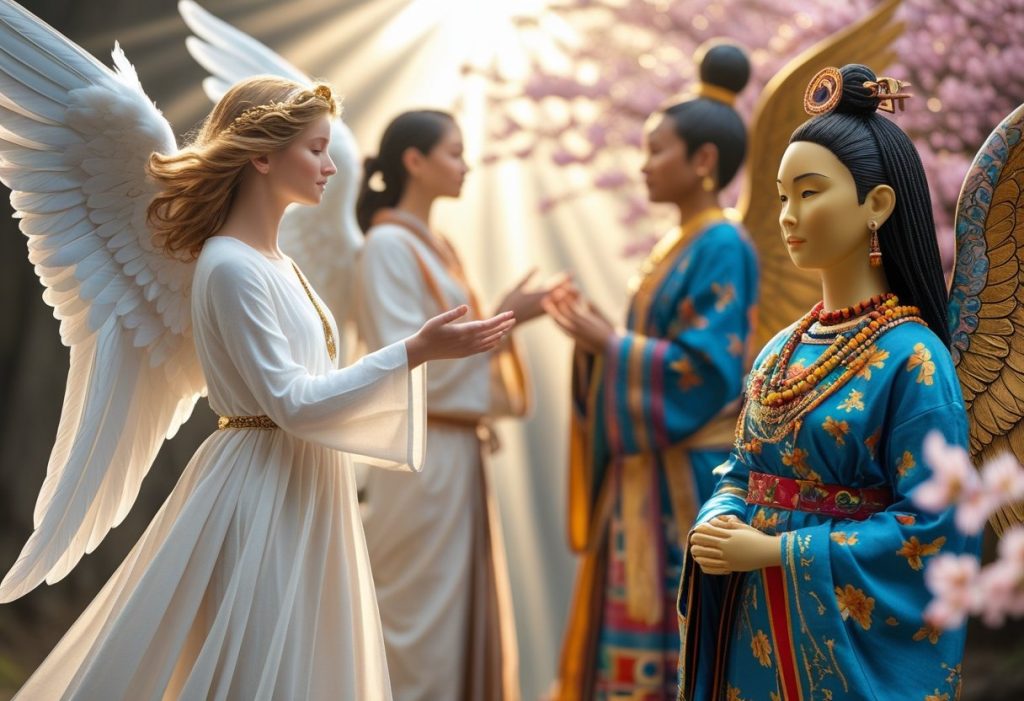
Angels in Art and Literature
Throughout history, angels have been portrayed in various artistic forms. In many paintings, they appear as ethereal beings with wings, often symbolizing messages from a higher power. Notable artists like Michelangelo and Raphael depicted angels in ways that emphasize their beauty and grace.
In literature, angels often symbolize hope, protection, and guidance. Works like “Paradise Lost” by John Milton explore their complex nature. Here, angels are more than mere messengers; they represent moral choices and the battle between good and evil, including the roles of celestial beings like Satan. Such depictions shape the viewer’s understanding of angels and their place in human nature.
Modern Perceptions of Angels
Today, perceptions of angels have expanded. Many people view them as guardian figures, offering protection and support.
This connects to a growing interest in spirituality beyond organized religion.
Cultural references, such as the character of Nike symbolizing victory, show that angels can represent various attributes. Questions about angels often arise, including their gender and status.
Modern media, including films and books, contribute to these discussions, portraying angels in diverse roles that resonate with contemporary audiences.
These themes reflect a blend of traditional beliefs and modern interpretations, showcasing how angels continue to resonate in human culture.
