
Many people still ask how long did it take Noah to build the ark when they picture this massive vessel slowly taking shape to save his family and pairs of animals from the coming flood.
Although the Bible never gives an exact figure, careful reading of Genesis and different interpretations point to a construction period that may have lasted several decades.
Exploring Noah’s building timeline helps us connect this ancient account with real-world materials, labor and human lifespans.
Based on these biblical clues, many scholars estimate that Noah could have spent between 40 and 75 years building the ark, working steadily while preaching to his generation.
This long span of time allowed him to follow God’s detailed instructions, overcome practical challenges and persevere in faith until the flood finally came.
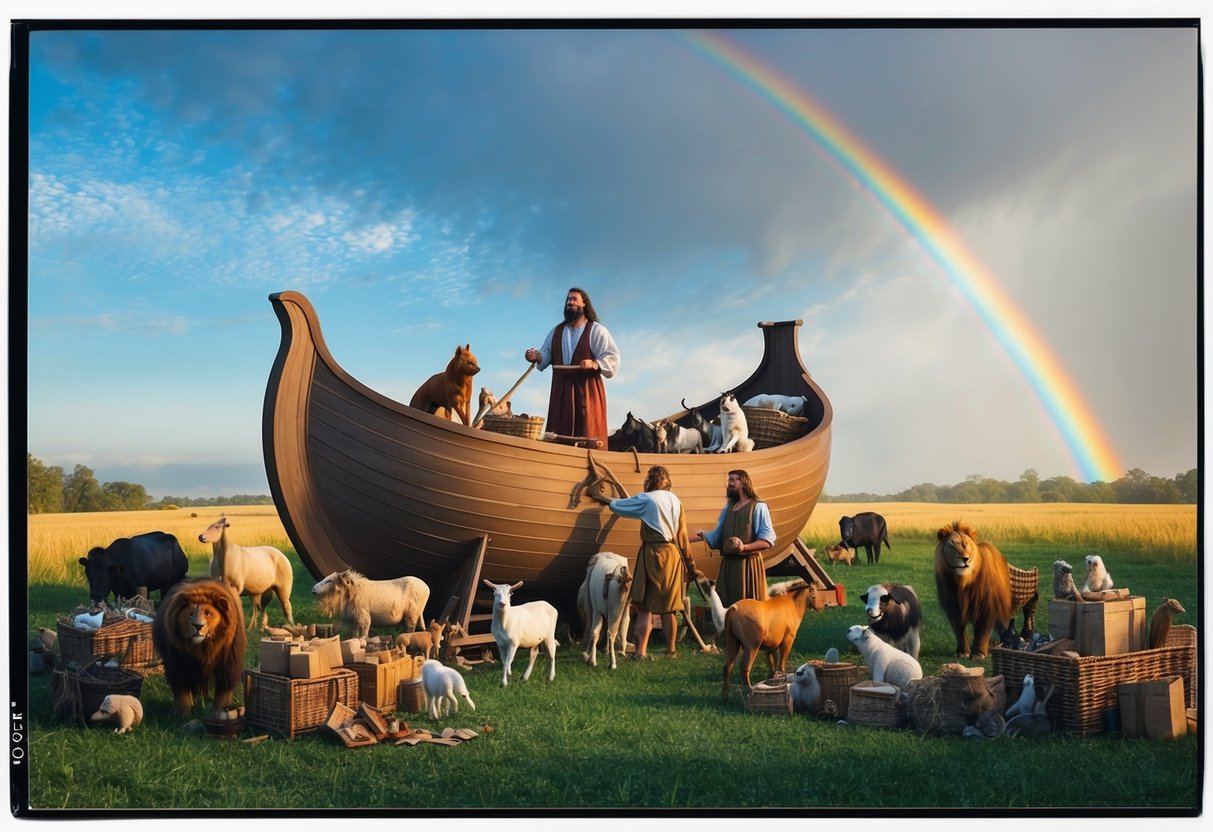
The timeline often referenced is linked to Genesis, which indicates that Noah was 600 years old when the flood began. This means the construction started after God commanded him to build the ark.
As Noah worked on this monumental project, he not only prepared for the flood but also acted as a preacher, calling others to repentance.
Understanding how long it took Noah to build the ark provides insight into his faith and determination. The story of the ark serves as a reminder of perseverance in the face of adversity.
Exploring this question helps reveal the depth of Noah’s character and the significance of the flood in biblical history.
Historical Context of Noah’s Era
Noah’s time is described in the Bible as marked by unique circumstances that influenced his life and mission. Significant factors include the extraordinary lifespans of people and the deep corruption that led to divine judgment.
The Lifespan of Antediluvian Patriarchs
In the era before the Flood, known as the Antediluvian period, people lived much longer than they do today. For example, Methuselah, Noah’s grandfather, is said to have lived for 969 years, as noted in Genesis. Other patriarchs, like Adam and Noah himself, lived for several centuries.
This extended lifespan allowed generations to accumulate knowledge and experience. However, it also meant that there was a lengthier period in which corruption could spread among people.
The Bible indicates that as time passed, the moral decay of society worsened, leading to greater violence and wickedness.
Corruption and God’s Judgment
By the time of Noah, the earth was filled with violence and corruption. Genesis 6:5 states, “The Lord saw that the wickedness of man was great in the earth, and that every intention of the thoughts of his heart was only evil continually.” These conditions led God to decide upon judgment.
God’s Spirit was grieved by mankind’s actions, which he viewed as fleshly and sinful. The buildup of this corruption was met with a divine plan for renewal through the Flood.
Noah, as a righteous man, was chosen to build the ark to save his family and a remnant of the Earth’s creatures. This judgment underscores the serious consequences of a society that turns away from moral values.
The Directive to Build the Ark
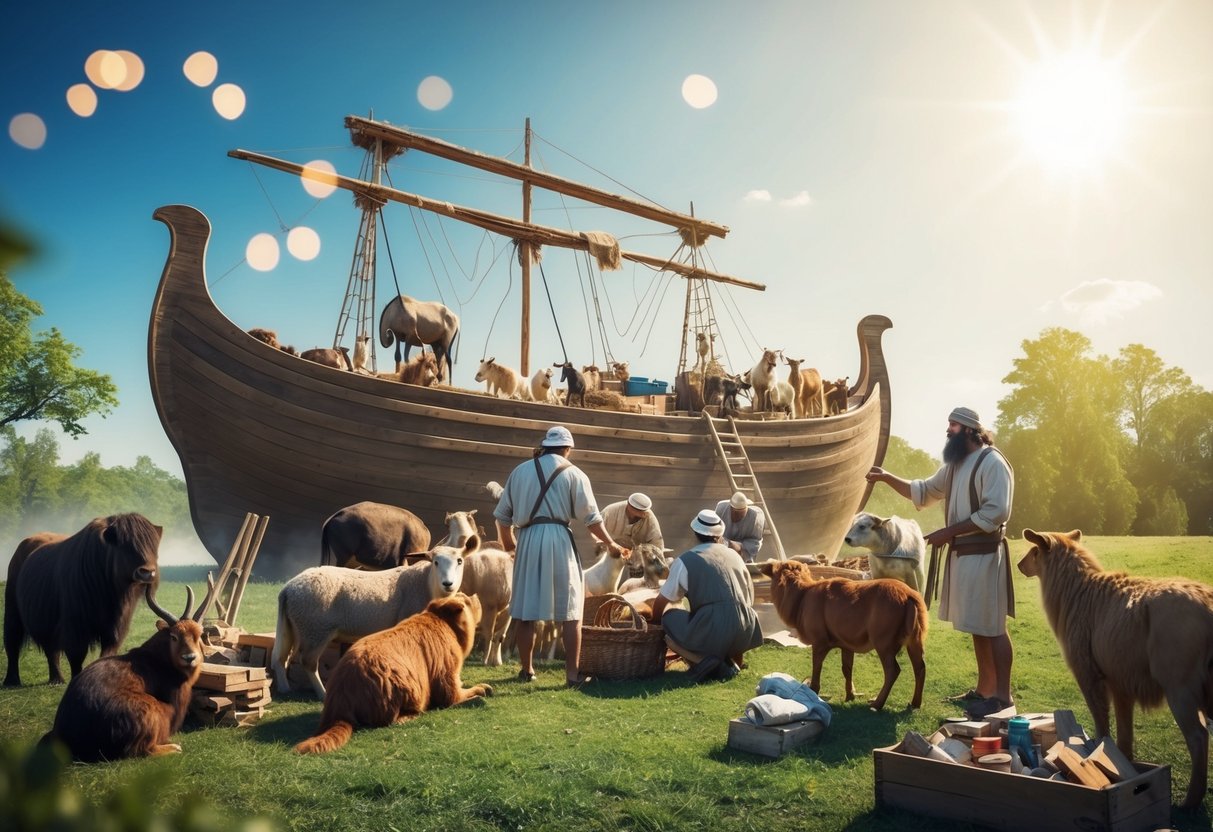
Noah received specific instructions from God, which included details on building the ark and the significance of the covenant established between them. This directive laid the groundwork for the massive construction project that would save Noah’s family and many animals from the impending flood.
Genesis and the Covenant
In Genesis, it is noted that God made a covenant with Noah. This promise was crucial to the narrative, as it ensured the survival of Noah, his family, and specific animal species.
God instructed Noah to build the ark after seeing the wickedness of humanity.
Noah’s faith played an essential role in this directive. Despite the challenges, he accepted the task with unwavering trust.
The flood was to cleanse the earth, and the covenant served as a foundation for a new beginning for life on the planet.
Specifications and Materials
God provided detailed specifications for the ark. The ark was to be constructed using gopher wood, although its exact nature is unknown.
According to the instructions, the ark should be 450 feet long, 75 feet wide, and 45 feet high. These dimensions made it larger than a typical ship of that time.
The construction included multiple decks and was designed to be watertight with pitch applied both inside and outside. This attention to detail ensured that it would withstand the brutal conditions of the flood.
Chronology of Construction
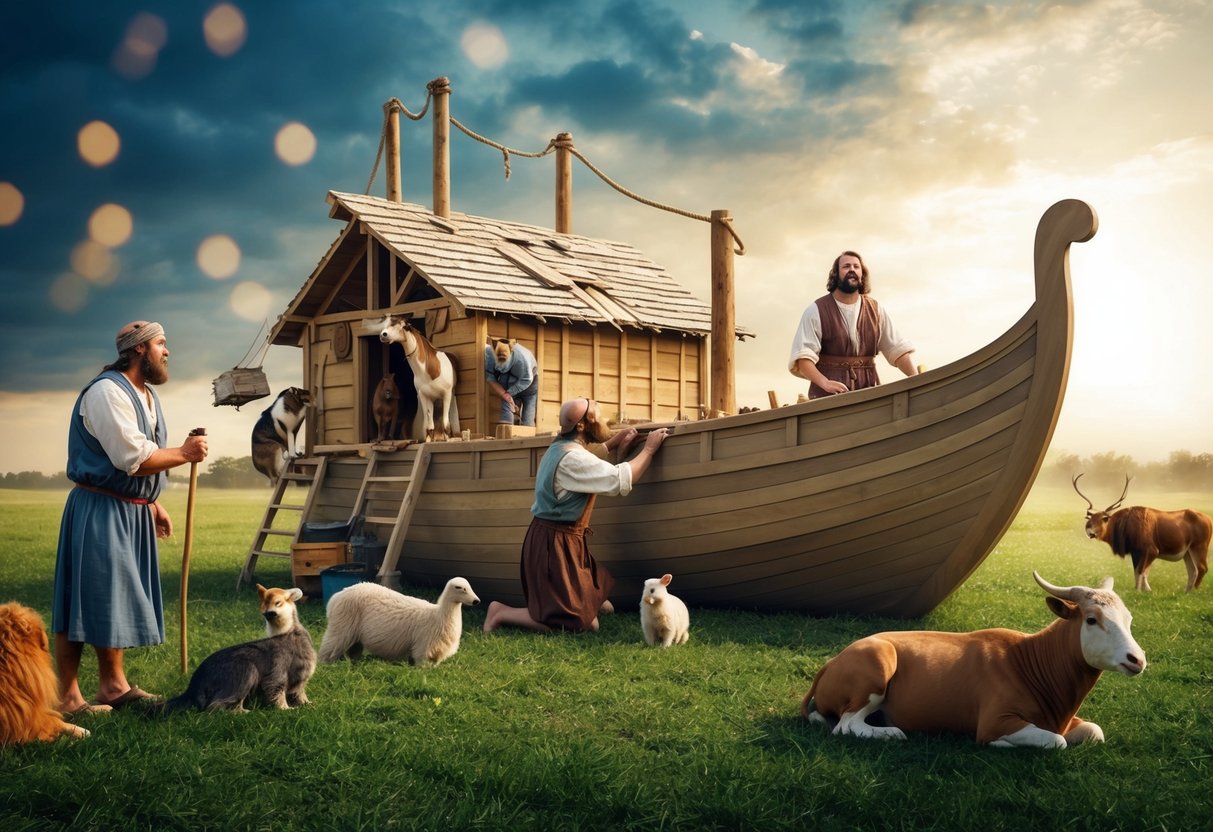
The timeline of Noah’s construction of the ark is often discussed among scholars and religious texts. Key milestones provide insight into how long the process took. Important aspects include the supposed 120 years and Noah’s age during significant events.
The 120-Year Revelation
Genesis 6:3 mentions that God limited human lifespan to 120 years and some interpret this as the duration of the ark’s construction. This idea suggests that Noah had a long time to build the ark and prepare for the flood.
Some scholars argue this timeframe reflects God’s patience, allowing time for repentance. During this period, Noah preached while building, giving others a chance to seek forgiveness.
Even though the exact duration of the construction is debated, the mention of 120 years remains a significant point.
Noah’s Age at Key Events
Noah’s age provides context to the timeline of the ark’s construction. He was 480 years old when God instructed him to start building the ark.
This instruction came after he had lived a long life, indicating his experience and capability.
By the time the flood began, Noah was 600 years old. In this period, he gathered supplies and prepared for the impending disaster.
His age underscores the span of time he devoted to the project, from gathering materials to loading the ark with food, as noted in the biblical accounts.
The Deluge and Aftermath
The Great Flood, often referred to as the Deluge, marked a significant event in biblical history. Following the flood’s onset, the waters eventually began to recede, leading to crucial discoveries regarding the land and the survivors.
The Onset of the Great Flood
When the flood began, the earth was covered in rain for 40 days and nights. The waters rose rapidly, reaching even the highest mountain peaks.
This catastrophic event was believed to be God’s judgment on humanity’s wickedness.
Noah and his family were safe inside the ark along with pairs of every animal. Once the doors of the ark were closed, no one could enter or exit.
The floodwaters swept away everything in their path, creating a stark and desolate landscape.
The significance of the Great Flood lies not only in its destruction but also in its role as a fresh start for Noah’s family and the animals on the ark.
Signs of Receding Waters
After the floodwaters peaked, they began to recede. Noah sent a raven out first, which did not return, suggesting that it found food.
He then sent a dove to see if the waters had subsided enough for land to appear.
The dove returned empty-handed at first, but after several days, it came back with an olive leaf. This confirmed that the trees were starting to grow again.
Eventually, the waters receded enough for the ark to rest on the mountains of Ararat. This marked the beginning of a new chapter as Noah and the others prepared to leave the ark and explore the newly cleared land.
The Legacy of the Ark
The Ark symbolizes faith and obedience in God’s commands. Noah’s willingness to build the Ark despite the doubts of others reflects a deep belief in a divine promise.
This act of faith remains a powerful lesson for many.
The story of the Ark serves as a reminder of repentance. The flood was a consequence of humanity’s wickedness. Noah was seen as a righteous man, chosen to save creation.
His actions highlight the importance of turning away from wrongdoings.
After the flood, God made a covenant with Noah. This included the promise of a rainbow as a sign of His mercy. The rainbow represents hope and commitment, reminding people of God’s presence and protection.
The Ark also stands as a testament to the preservation of life. It saved Noah, his family, and pairs of animals from extinction.
This act illustrates the value of stewardship over the environment.
Today, the Ark continues to inspire art, literature, and discussions about faith. It evokes curiosity about the past and encourages reflection on moral values.
Many look to this story as a guide for living in harmony with nature and each other.
