
Noah, a key figure in the Bible, is known for building an ark to survive the great flood that wiped out much of humanity and animal life. Many readers still ask, how long was Noah in the ark, and what those long months of waiting and trusting God were really like.
The Bible states that Noah and his family spent a total of 370 days on the ark, from the start of the rain until they finally stepped onto dry land again.
This extended time at sea raises many questions about their daily experiences, the harsh conditions on the ark, and how they cared for so many animals during such a challenging year.
In this article, we explore the biblical timeline of the flood and what it reveals about God’s judgment, protection, and faithfulness.
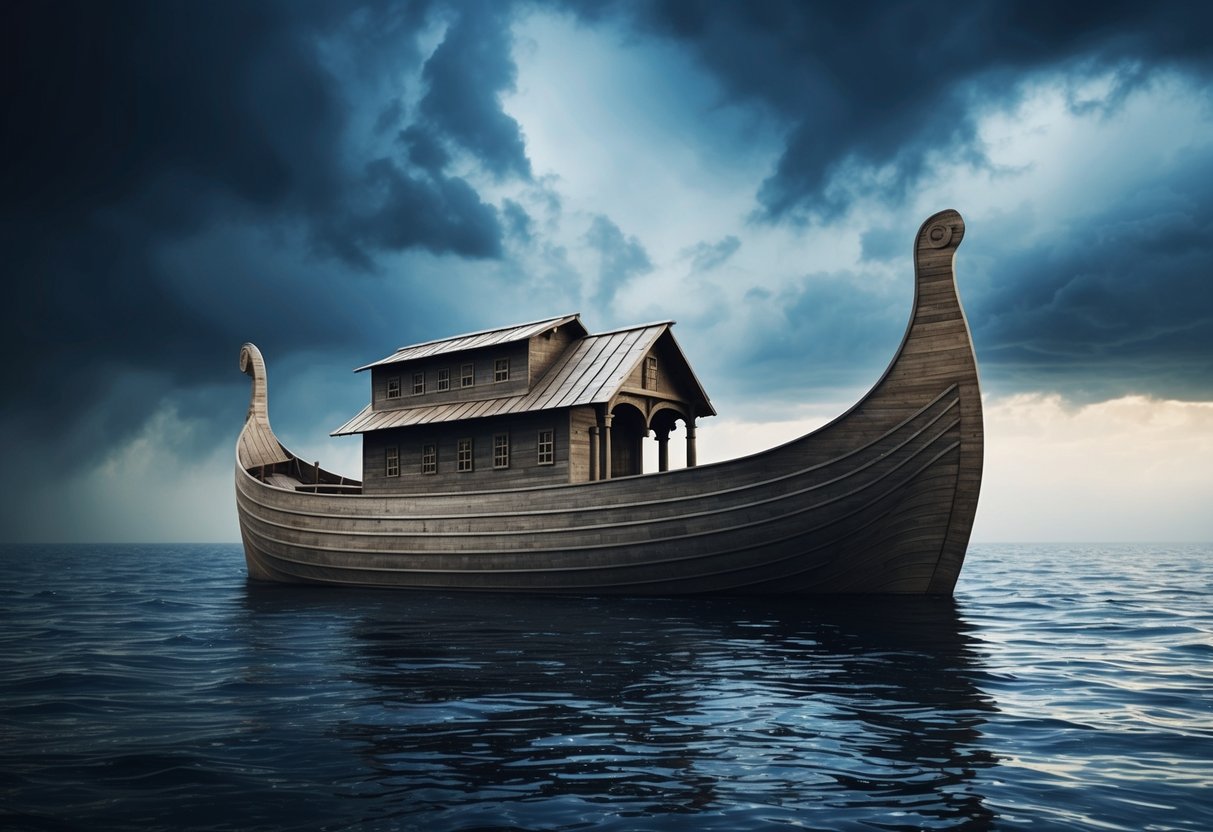
The story of Noah’s ark captivates people’s imaginations and encourages curiosity about the duration and events of the flood. Many are surprised to learn the exact timeline of Noah’s journey and the significant aspects that contributed to this extraordinary tale.
Understanding how long Noah was on the ark can provide deeper insights into faith, perseverance, and survival.
Exploring the details surrounding this period reveals not just how long it lasted, but also what life on the ark entailed. Readers will find that there’s more to this story than just the number of days, as it reflects themes of hope and restoration.
The Story of Noah and the Ark
The story of Noah and the Ark is a central narrative in the Bible’s book of Genesis. It highlights Noah’s obedience to God and the instructions given for building the Ark, which served as a means of salvation during the Flood.
Biblical Account in Genesis
In Genesis, God saw that humanity was corrupt and decided to send a flood to cleanse the Earth. He chose Noah, a righteous man, to build an Ark to save his family and pairs of each animal species.
Noah was instructed to construct the Ark with specific dimensions: 300 cubits long, 50 cubits wide, and 30 cubits high.
Once the Ark was complete, Noah gathered his family and the animals. They entered the Ark just before the torrential rains began. The flood lasted 40 days and nights, and the waters covered the Earth for a total of 150 days. Eventually, the Ark came to rest on Mount Ararat, marking the end of the flood.
The Significance of Noah’s Obedience
Noah’s obedience is a key theme in this narrative. He followed God’s commands without question, demonstrating faith and trust.
His actions set him apart from the rest of humanity, reflecting a profound commitment to God’s will.
This obedience was significant, as it preserved life on Earth. Noah built the Ark despite skepticism from others. His faith led him to protect his family and ensure the continuation of animal species.
Noah’s story emphasizes the impact of individual choices in the face of widespread disbelief and moral decline. His unwavering commitment illustrates how obedience can lead to salvation and hope for future generations.
Construction and Description of the Ark
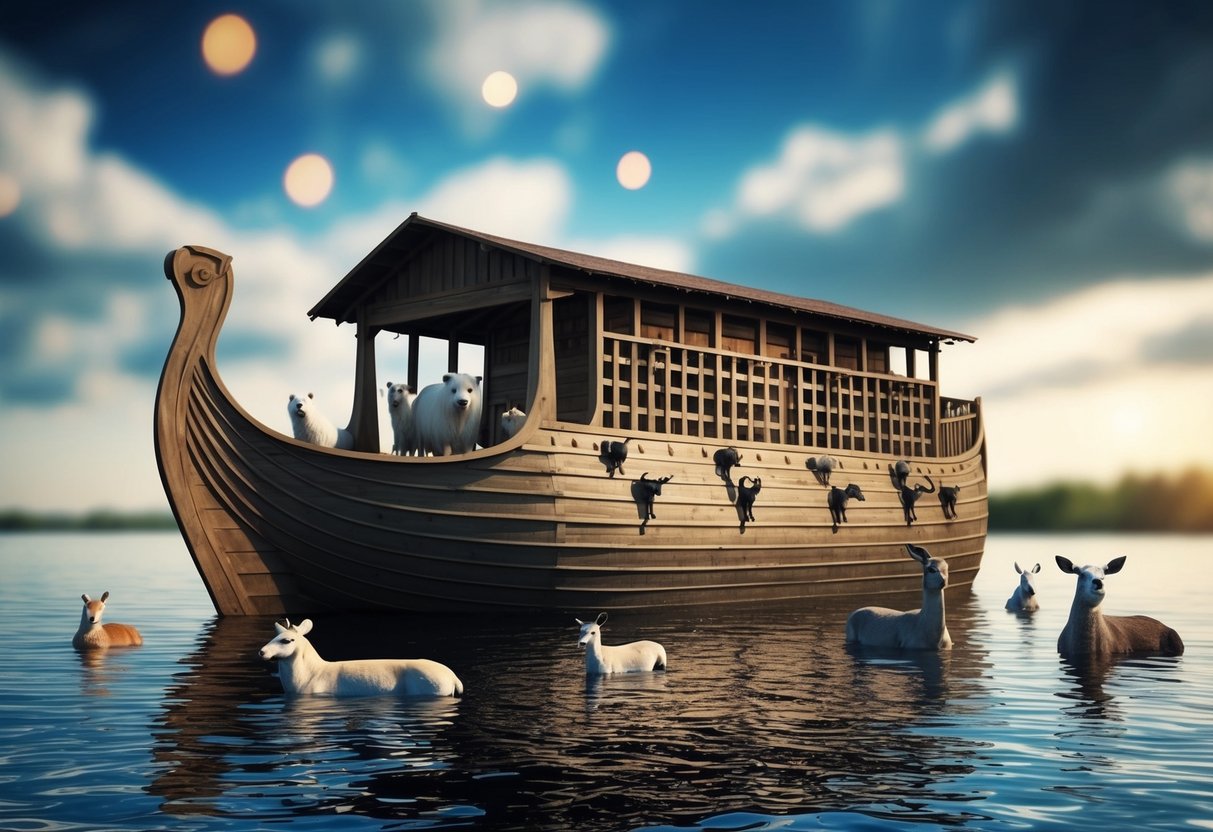
The construction of the Ark was a significant task that involved specific dimensions and materials. It was built in preparation for a catastrophic event, showcasing the scale of Noah’s undertaking.
Dimensions and Materials
The Ark was described in the Bible as being 300 cubits long, 50 cubits wide, and 30 cubits high. A cubit is approximately 18 inches, making the Ark roughly 450 feet long, 75 feet wide, and 45 feet high. This size allowed it to hold many animals and supplies.
Noah was instructed to use gopher wood for its construction, which remains a subject of debate. Some believe gopher wood refers to a specific type of tree, while others think it may represent a method of treatment for the wood. The Ark was also covered inside and out with pitch to make it waterproof, ensuring the safety of its occupants during the flood.
Preparation for the Deluge
Noah’s preparation for the flood involved gathering animals, food, and necessary supplies.
The Bible states that he took two of every kind of animal aboard the Ark, along with additional clean animals for food and sacrifices.
He was also responsible for storing enough food to sustain both the animals and his family. It was crucial to ensure a variety of seeds and provisions to restart life after the flood. Noah’s efforts reflected great foresight and commitment to fulfilling the divine instructions he received.
The Great Flood
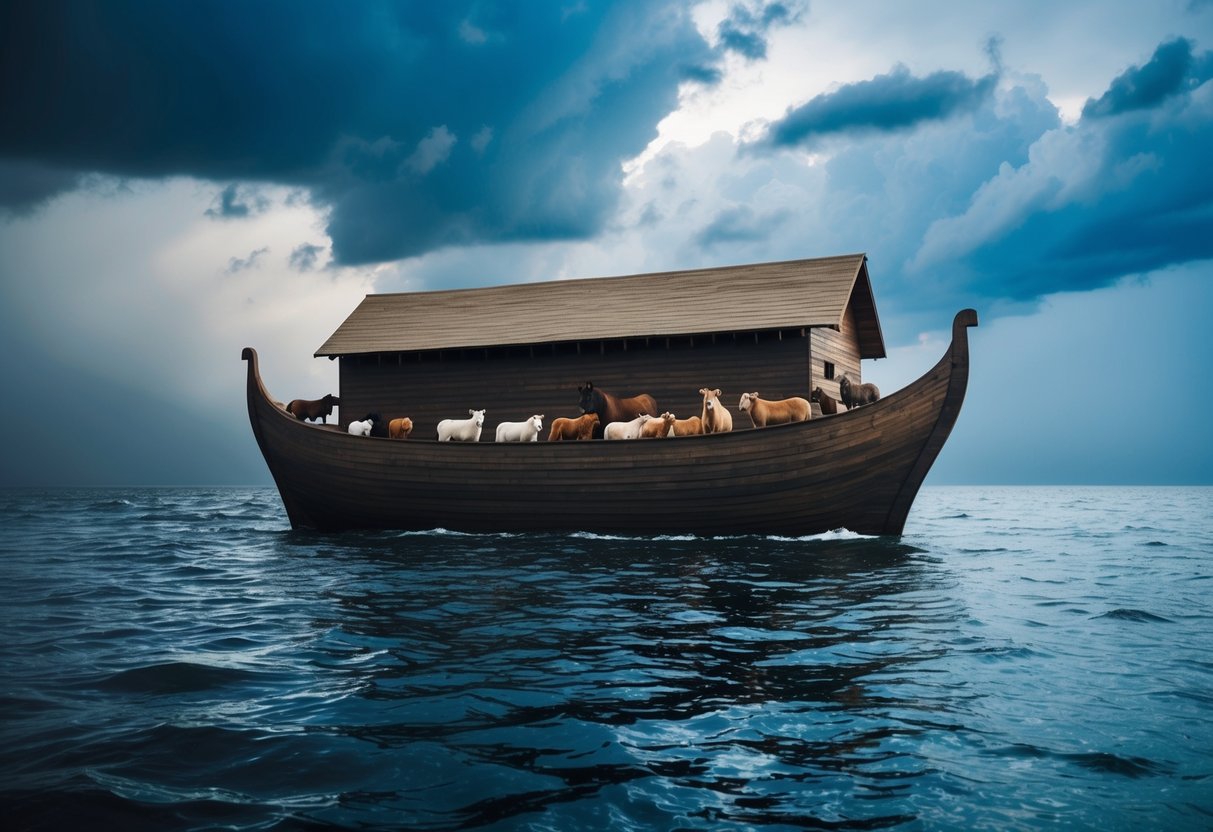
The Great Flood, as described in biblical texts, was a significant event marked by intense rain and the breaking of the earth’s water sources. It involved dramatic changes in the landscape and a lengthy duration that affected all life.
The Onset of Rain and Fountains
The flood began when Noah was six hundred years old. On the seventeenth day of the second month, rain started to fall. This rain was not ordinary; it continued for forty days and forty nights.
According to Genesis 7:11, the “windows of heaven” were opened, leading to heavy rainfall. At the same time, the fountains of the great deep burst forth, releasing vast amounts of water. This combination of rain and underground water triggered the rapid rise of floodwaters, overwhelming the land.
The Waters Prevail
As the rain continued, the waters prevailed over the earth. The floodwaters increased, covering not only the ground but also the highest mountains. Genesis 7:19-20 states that the waters rose to a height of fifteen cubits above the mountains.
This devastation lasted a total of one hundred fifty days before the waters began to recede. During this time, all living things, except those aboard the ark, perished. The overwhelming force of the flood changed the earth’s environment, leading to a new beginning once the waters finally calmed.
Duration Aboard the Ark
Noah and his family spent a significant amount of time aboard the Ark during the flood. This period included two major phases: the forty days of relentless rain and the extended time waiting for the waters to recede and reveal dry land.
Forty Days and Nights of Rain
The flood began with forty days and nights of continuous rain. According to biblical accounts, Noah entered the Ark with his family seven days before the rain started.
During this time, the waters began to rise rapidly. The torrential downpour caused the earth to flood, covering it completely. As water filled the landscape, Noah’s Ark floated on the surface, safeguarding him and the creatures aboard.
This initial deluge was crucial, marking the beginning of the flood as a divine response to humanity’s wickedness. Each day was a test of faith for Noah as he remained on the Ark, trusting in God’s promise. After the rain ended, the Ark continued to float as the waters remained high.
Waters Receding and the Waiting Period
After the rain stopped, the Ark came to rest on Mount Ararat as the waters began to recede.
Initially, it was a slow process, and Noah had to wait for several months. The waters abated enough for the mountains to become visible on the first day of the tenth month.
Noah then started sending out birds to check for signs of dry land. First, he sent a raven, followed by a dove. These efforts took forty days and were crucial in determining when it was safe to leave the Ark. Eventually, the dove returned with an olive leaf, signaling that dry land was emerging. This waiting period was not just physical but also a time for reflection and preparation for life after the flood.
The Aftermath of the Flood
After the floodwaters receded, Noah took careful steps to understand the condition of the earth. This period was marked by significant events that symbolized hope and renewal. Among these were the sending out of birds to assess the environment and the heartwarming moment of receiving an olive leaf.
Sending of the Raven and Dove
Noah first sent out a raven to survey the landscape. Ravens are known for their ability to fly long distances. However, the raven did not return, which may indicate that it found a place to land.
Next, Noah released a dove. Unlike the raven, the dove is often seen as a symbol of peace.
The first dove returned to the ark with no sign of dry land. Seven days later, Noah sent the dove again. This time, it returned with an olive leaf, signaling that vegetation was beginning to grow again on Earth.
The Olive Leaf and Noah’s Gratitude
The olive leaf was a significant find for Noah. It represented the promise of new life after judgment.
The appearance of the leaf assured Noah that creation was starting to recover. Upon receiving this sign, Noah expressed gratitude to God for the hope it brought.
The olive leaf symbolized not just physical renewal but also spiritual salvation for Noah and his family. It marked the end of their uncertain wait inside the ark and offered assurance of life resuming on the reshaped Earth.
