
Many people wonder about Joseph’s age at the time of Jesus’ birth. This question has fascinated believers and scholars for centuries, leading many to ask: how old was Joseph when Jesus was born?
While the Bible does not provide a direct answer, we can piece together clues from historical and cultural evidence.
Scholars estimate Joseph was likely between 18 and 25 years old based on Jewish customs of first-century Palestine. This age range reflects the typical life stages of Jewish men when they married and started families.

Joseph played a crucial role in the Holy Family’s life, guiding and protecting Mary and the baby Jesus.
His commitment to his family is evident even in the moments described in the biblical record, such as their journey to Bethlehem. Understanding Joseph’s potential age can give deeper insights into his character and responsibilities as the earthly father of Jesus.
Historical and Theological Context
Understanding the historical and theological context surrounding Joseph’s age at Jesus’ birth involves examining his role in the Bible, his ancestry, and the significance of Mary and the virgin birth.
These factors provide insight into the cultural and religious framework of the time.
Joseph in the Bible
Joseph, the husband of Mary, is a significant figure in the Gospels. He is described as a “just man” who was chosen to raise Jesus.
In Matthew 1:18-25, the angel of the Lord appears to Joseph, informing him of Mary’s miraculous conception. His willingness to obey the angel’s message demonstrates his faith.
Despite limited information, Joseph’s actions reveal his importance in the story of Jesus’ early life. After Jesus’ birth, Joseph takes his family to Egypt to escape King Herod’s decree, illustrating his protective role.
The Ancestry of Joseph
Joseph’s lineage is also crucial to understanding his importance. He is a descendant of King David, which fulfills Old Testament prophecies regarding the Messiah’s lineage.
Matthew 1:1-16 traces his genealogy back to David and Abraham. This connection not only establishes Jesus’ royal heritage but also underscores the fulfillment of prophetic expectations.
Jewish custom placed significant emphasis on ancestry, making Joseph’s lineage critical in the context of messianic prophecy. His background reinforces the belief that Jesus was the awaited Messiah.
Mary and the Virgin Birth
Mary, known as the Virgin Mary, is central to the narrative of Jesus’ birth.
In Luke 1:26-38, the angel Gabriel announces to her that she will conceive a child by the Holy Spirit. This virgin birth is a cornerstone of Christian theology, signifying the divine nature of Jesus.
Mary’s acceptance of this role reflects remarkable faith and courage. The virgin birth emphasizes the miraculous aspects of Jesus’ origins, distinguishing him from other figures of the time. Understanding Mary’s role provides deeper insight into the meaning of motherhood and divinity in the story of Jesus.
Life and Role of Joseph

Joseph played a significant part in the early life of Jesus. His character and actions demonstrate strong moral values, essential responsibilities, and unwavering support for his family.
Joseph’s Character
Joseph is known as a righteous man, a title that reflects his commitment to God‘s will. His humility is shown through his willingness to accept his role as Jesus’ earthly father.
He acted with integrity, obeying divine messages delivered through dreams. This obedience ensured that he protected Mary and Jesus from harm, fulfilling his duties with commitment.
Joseph’s character is characterized by compassion and strength, traits vital for nurturing his family in challenging times.
The Carpenter’s Family
As a carpenter, Joseph provided for his family through skilled labor. His trade not only symbolizes stability but also suggests a humble lifestyle marked by hard work.
He likely taught Jesus the craft, instilling values of diligence and practicality. The family lived in Nazareth, where Joseph’s role as the husband of Mary and a father figure was central.
Their simple life reflects the virtues of humility and dedication to family, laying a strong foundation for Jesus’ upbringing.
Protector and Provider
Joseph’s role as a protector was evident through his swift actions based on divine guidance. After Jesus’ birth, he fled to Egypt to escape King Herod’s threat, showcasing his commitment to his family’s safety.
He provided for them and ensured a nurturing environment. Joseph’s actions illustrated his deep love and dedication, establishing him as an integral part of the Holy Family.
His obedience and quick decision-making were crucial during critical moments, reflecting his responsibility as a provider and protector.
The Nativity and Early Life of Jesus
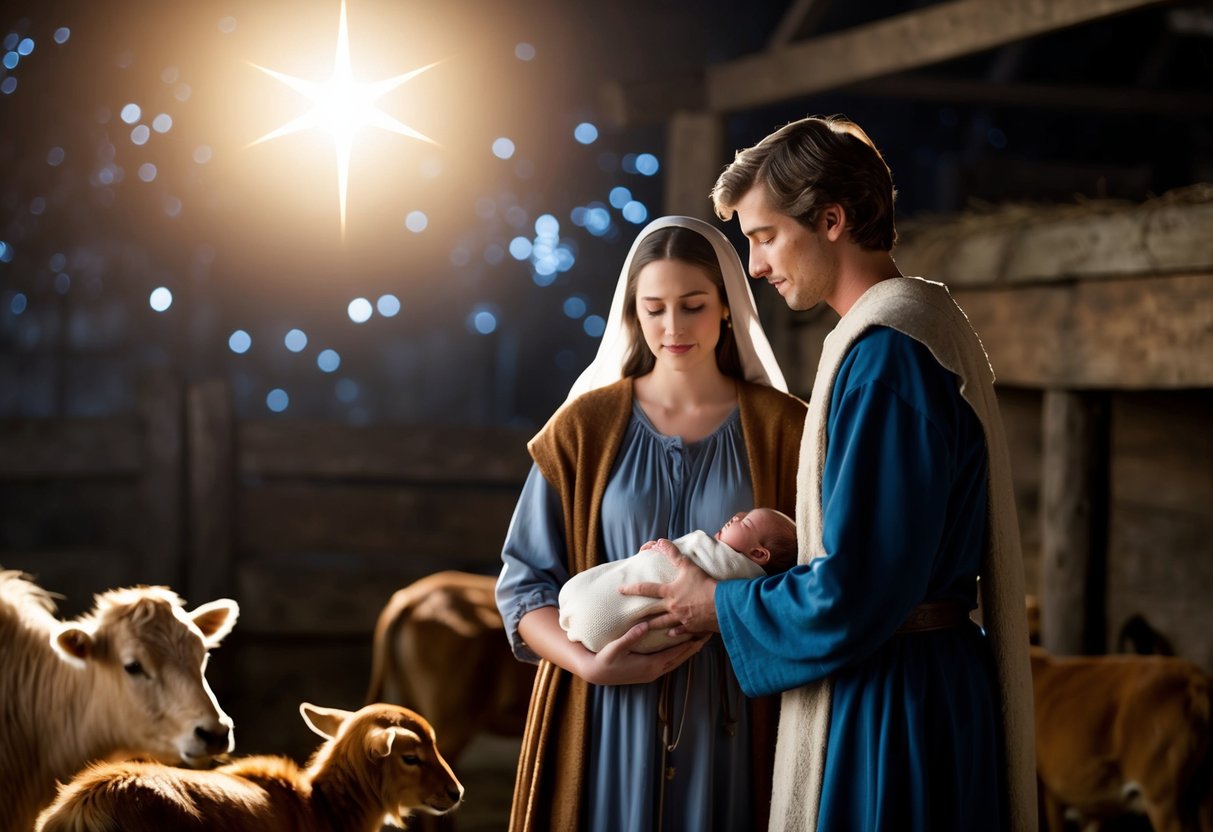
The early life of Jesus is marked by significant events that shaped his formative years. Key moments include the journey to Bethlehem for his birth and the subsequent flight to Egypt to escape danger.
Journey to Bethlehem
Mary and Joseph traveled to Bethlehem due to a census ordered by Emperor Augustus. They went from Nazareth to Bethlehem, which was Joseph’s ancestral home. This journey was about 70 miles and would have taken several days.
Upon arriving in Bethlehem, Mary went into labor. They sought shelter but found none available. Jesus was born in humble surroundings, likely a stable. He was laid in a manger, emphasizing his modest beginnings. This event fulfilled prophecies about the Messiah being born in Bethlehem, as foretold in scriptures.
The Flight to Egypt
After Jesus’ birth, King Herod learned of a prophecy that a new king would be born. Fearing for his throne, he sought to kill the infant Jesus.
An angel warned Joseph in a dream, directing him to flee to Egypt with Mary and the child.
Joseph acted quickly, taking Mary and Jesus under the cover of night. They traveled to Egypt, where they stayed until King Herod’s death. This escape was crucial to protecting Jesus and ensuring the fulfillment of his mission. It highlights Joseph’s role as a protector and caregiver during this dangerous time.
Cultural and Religious Significance
Joseph’s role in Christianity extends beyond being the earthly father of Jesus. His figure is embraced in various traditions and carries deep significance in faith across cultures, especially within the Orthodox Church and Catholicism.
Joseph in Tradition and Faith
In many Christian traditions, Joseph is revered as a model of faith and responsibility. Biblical scholars often describe him as a “just man” for his obedience to God’s will.
He accepted Mary and her miraculous pregnancy, showing profound trust. The International Marian Research Institute explores Joseph’s vital role in safeguarding the Holy Family, highlighting his protective nature.
Traditionally, Joseph is celebrated in feasts, particularly on March 19, enhancing his visibility in religious practices. His life symbolizes fidelity, courage, and humility. In Catholic teachings, he is often seen as a model for men and fathers, embodying the virtues of patience and strength.
Veneration of Saint Joseph
Saint Joseph is widely venerated in both the Orthodox Church and Catholicism. His significance is reinforced through various prayers, liturgies, and artworks dedicated to him.
Many Christians seek his intercession, believing he provides guidance and support in times of need.
Fulton Sheen, a noted bishop and theologian, often emphasized the importance of Joseph’s silent strength and dedication. He remarked on how Joseph’s life exemplifies true masculinity, free from arrogance.
Statues and icons of Saint Joseph can be found in homes and churches, symbolizing his role as a protector and patron of families.
This veneration underscores the spiritual connection that many people feel with Saint Joseph, affirming his importance in the Christian faith.
Joseph’s Legacy and Influence
Joseph’s legacy is marked by his role as a devoted father and protector of the Holy Family. He is remembered for his strength, obedience, and faith. His influence extends through various traditions and interpretations, especially within Christianity.
Patronage and Interpretations
Saint Joseph is the patron saint of workers, fathers, and the universal Church. He is known as the model of humility and integrity. His work as a carpenter symbolizes dedication and skill.
Many artists have depicted him in various lights. These works often highlight his nurturing role, particularly in scenes with Jesus.
In the Christian tradition, Joseph’s obedience to divine guidance through dreams is significant. These dreams, including the one advising him to flee to Egypt, emphasize his protective nature.
The impact of St. Joseph spans cultures and centuries, inspiring countless churches and shrines dedicated to him. His legacy continues to shape understanding of fatherhood and family life.
Reflections on Fatherhood
Joseph’s role as a father to Jesus Christ carries deep significance. He raised Jesus with love and care, setting an example of nurturing and guidance.
His protective instincts were clear when he took steps to safeguard his family from King Herod’s decree.
Reflecting on Joseph’s qualities offers insights into modern fatherhood. His unwavering support and commitment showcase the importance of being present for one’s children.
Joseph is often seen as a figure of strength in faith, encouraging fathers to foster similar values today.
His actions teach lessons about humility and responsibility. Many look to St. Joseph as a spiritual guide for parenting, seeking to emulate his patience and gentle authority.
The history of Joseph the carpenter remains a testament to the lasting power of fatherhood in the family and community.
