
Noah is a significant figure in the Bible, especially known for building the ark that saved him and his family from the great flood. Many people wonder how old was Noah when he built the ark — and the answer may surprise you.
According to the Book of Genesis, Noah was around 500 years old when he began constructing the ark.
This remarkable detail challenges common perceptions of age and capability, making Noah’s story even more extraordinary.
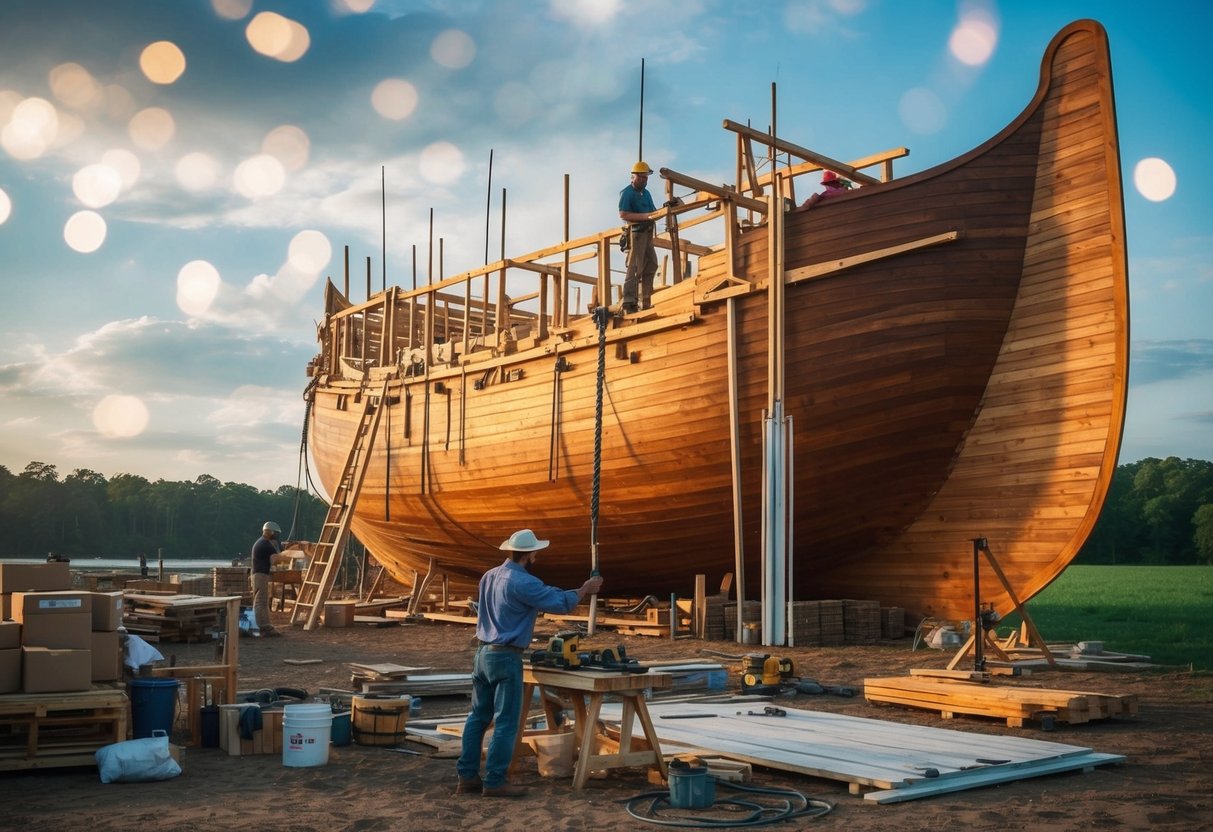
The timeline of Noah’s life is critical to grasping the events leading to the flood. As stated in Genesis, he was 600 years old when the floodwaters came. This timeframe highlights not only the longevity of biblical figures, but also the immense commitment Noah displayed in fulfilling God’s command.
Noah’s story is one of obedience and faith, starting with the monumental task of ark building.
Understanding how old Noah was during these pivotal moments sheds light on the challenges he faced and the significance of his actions in the context of biblical history.
The Age of Noah and the Timeline of the Ark
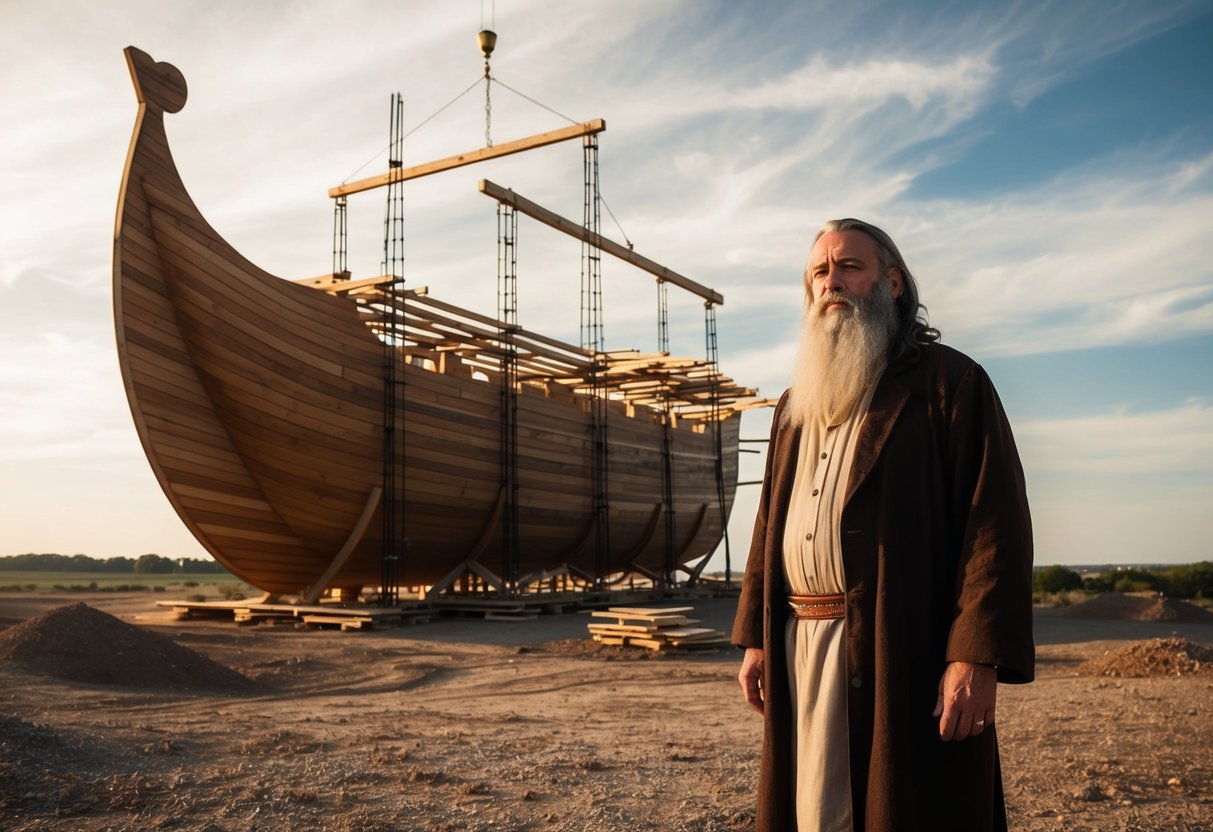
Knowing how old was Noah when he built the ark plays a significant role in understanding the biblical story.
His age at various points helps establish a clear timeline for the events leading to the flood.
This section examines Noah’s age during the ark’s building and outlines the timeline from his birth until the flood.
Noah’s Age at the Time of the Ark’s Construction
Noah was around 500 years old when he began building the ark. According to Genesis 5:32, he became a father to his three sons, Shem, Ham, and Japheth, at this age.
The construction of the ark took place over the next 100 years, leading up to the flood. In Genesis 7:6, it is written that Noah was 600 years old when the floodwaters came.
This period of building likely required immense dedication and faith, as Noah worked while warning others of the impending judgment. His age highlights his remarkable lifespan, living a total of 950 years before his death. This extraordinary longevity reveals the biblical context of his time and the significance of his actions.
Timeline from Noah’s Birth to the Flood
Noah was born when his father, Lamech, was 182 years old. This places Noah’s birth several generations after Adam and Eve.
- Noah’s Birth: Lamech was 182 years old.
- Becoming a Father: Noah was 500 years old.
- Flood Age: Noah was 600 years old when the flood began.
The flood occurred in 2313 B.C., which is significant in biblical chronology. After the flood, Noah lived for an additional 350 years, dying at the age of 950. This timeline helps readers understand how Noah’s life and the ark’s construction fit into the broader narrative of the Bible.
Genesis: The Scriptural Context
The Book of Genesis provides important background regarding Noah and his time. This includes the genealogy from Adam, which sets the stage for understanding Noah’s significance, and the themes of wickedness and obedience that are central to his story.
The Generational Line from Adam to Noah
Genesis outlines the genealogy from Adam to Noah, emphasizing the importance of lineage. This genealogy spans ten generations, highlighting each key figure, including Methuselah, who lived 969 years, and Lamech, Noah’s father.
Noah is introduced as a pivotal character. The scripture states that he was 500 years old when he became a father to Shem, Ham, and Japheth (Genesis 5:32). Understanding this lineage establishes his role as a righteous man in a corrupt world, setting the context for the flood narrative.
The Role of Obedience and Wickedness
During Noah’s time, wickedness had increased on the earth. Genesis 6:5 describes how God observed humanity’s evil thoughts, leading to His decision to cleanse the earth. God limited human lifespan to 120 years (Genesis 6:3) to highlight His displeasure and urge repentance.
Noah stood out for his obedience to God amidst widespread corruption. He was described as righteous and blameless in his generation (Genesis 6:9). His faithfulness demonstrated a stark contrast to the wickedness surrounding him, which ultimately led to the instructions for building the ark. This obedience was crucial in fulfilling God’s plan for humanity’s preservation.
The Construction of the Ark
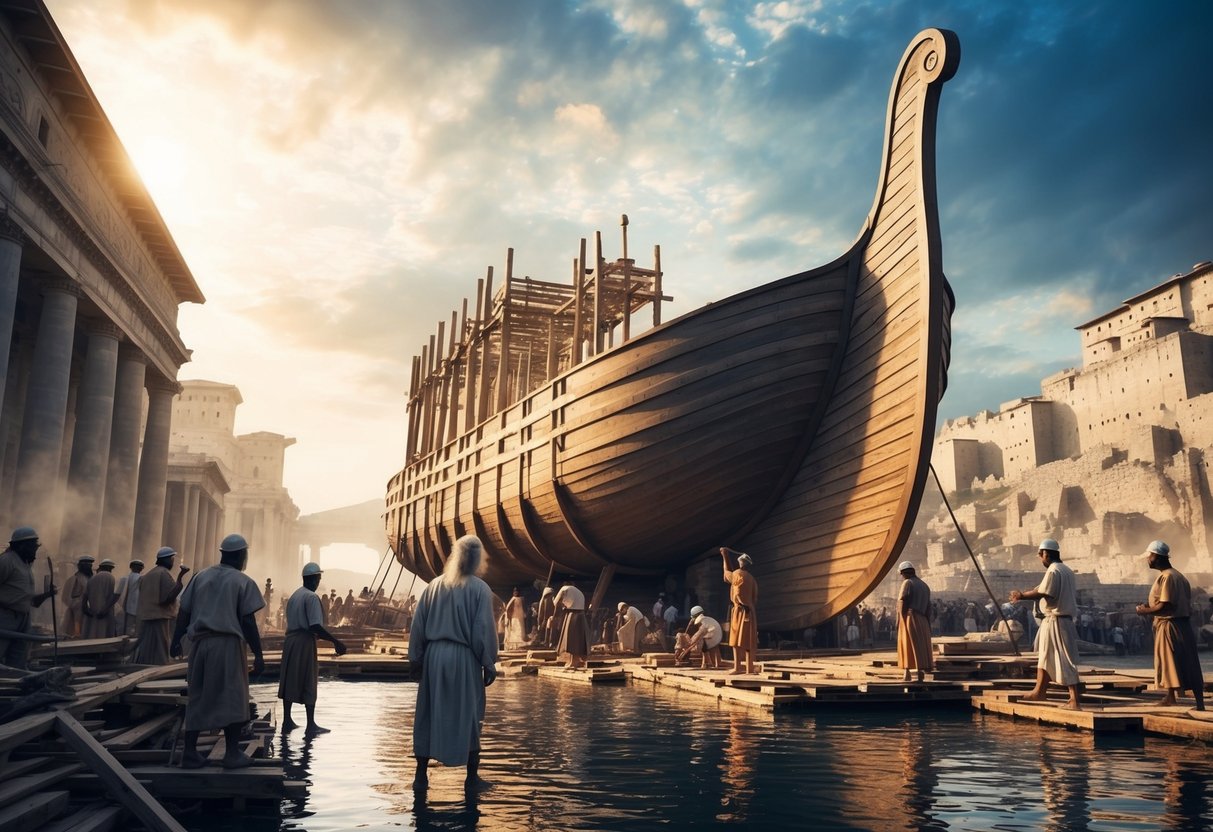
The construction of the ark began with a divine command and involved significant effort and planning. Noah’s obedience to God’s instructions is a key element in understanding this monumental task.
The scale of the ark was immense, requiring extensive resources and time for its completion.
God’s Command and Noah’s Compliance
In the Book of Genesis, God instructed Noah to build the ark. This command came in response to the widespread wickedness of humanity. God wanted to save Noah, his family, and pairs of animals from the coming flood.
Noah was instructed to make the ark from specific materials, primarily gopher wood. He followed God’s design, which included precise measurements. Noah’s compliance demonstrated his faith, as he undertook a monumental project without knowing how it would unfold.
The Scale and Timespan of Building the Ark
Building the ark was no small feat. Many scholars believe it took Noah around 100 years to complete the construction. The exact time frame varies, but this long duration allowed for planning, gathering materials, and assembling the massive structure.
The ark measured approximately 450 feet long, 75 feet wide, and 45 feet high. This scale was essential for housing Noah’s family and many animal species. The construction involved hard labor and dedication, emphasizing Noah’s commitment to fulfilling God’s command in a challenging time.
The Deluge and its Aftermath
The Great Flood, a pivotal event in the biblical narrative, began with a heavy downpour that lasted for 40 days. Following this, the waters slowly receded, marking a significant change in the world while giving life a chance to emerge once again.
The Onset of the Great Flood and Its Duration
The flood started with rain falling continuously for 40 days and nights, which overwhelmed the earth. The water rose, covering even the highest mountain peaks. The Bible mentions that the waters were so immense that they prevailed for many days, leading to complete destruction of all land life.
During this time, Noah remained in the ark with his family and a selection of animals. They waited patiently as the flood ravaged the earth, confident that they would survive this divine judgment. The swirling waters surrounded them, making the ark their only refuge until God decided to stop the deluge.
Receding Waters and Emergence of Life
After the rain stopped, the waters began to recede. Noah sent forth a raven to check if the land was becoming habitable again. The raven flew back and forth but did not return with any sign of safety.
Next, Noah sent a dove to search for dry ground. The first attempt failed when the dove returned with nothing. On a second try, the dove brought back an olive leaf, signaling that the waters were finally receding. After the third attempt, when the dove did not return, Noah understood that it was time to leave the ark.
Eventually, the floodwaters dried up completely, allowing Noah and his family to exit the ark. They stepped onto dry land, witnessing the world transform and begin anew.
Reflections on Noah’s Longevity and Legacy
Noah’s long life and his role in biblical narratives offer insights into trust, patience, and divine judgment. His lifespan raises questions about humanity’s original design and the significance of his actions in a critical period of history.
Noah’s Lifespan and Biblical Longevity
Noah lived for 950 years, as recorded in Genesis 9:29. This extended lifespan is notable and part of a larger pattern found in Genesis 5-10, where several patriarchs lived significantly longer than people do today. In contrast, average lifespans in modern times are far shorter.
Biblical scholars often discuss the implications of such longevity. Some suggest it reflects a divine design for human life. Others connect it to a genetic breakdown over generations, which may explain the decline in lifespans over time. Noah’s age when he built the ark is debated, with some traditions placing it around 480 years old, leading into a countdown to the flood.
The Lessons of Patience and Trusting God
Noah’s story is a powerful testament to patience and unwavering faith.
Despite facing ridicule and judgment from others, he remained steadfast in following God’s commands. This unwavering trust highlights the importance of faith during challenging times.
Noah’s life serves as a model for anyone experiencing uncertainty.
His ability to wait for God’s timing when building the ark demonstrates profound patience. This act of faith provided a route for repentance and salvation during a time of moral decline.
In essence, Noah’s legacy teaches valuable lessons about the importance of trusting God and the strength found in patience amidst adversity.
