
Many people wonder about the practice of cremation and its standing in religious beliefs. As more families consider this option, the question “Is cremation a sin?” becomes increasingly common among those seeking guidance from their faith.
This concern is understandable, given the deep connection between religious teachings and end-of-life decisions.
The truth is that cremation is not labeled a sin in the Bible, allowing individuals to make a personal choice based on their own beliefs and preferences. While some religious traditions have historically favored burial, there is no explicit biblical prohibition against cremation.
This gives believers the freedom to choose the option that best aligns with their personal convictions and family wishes..
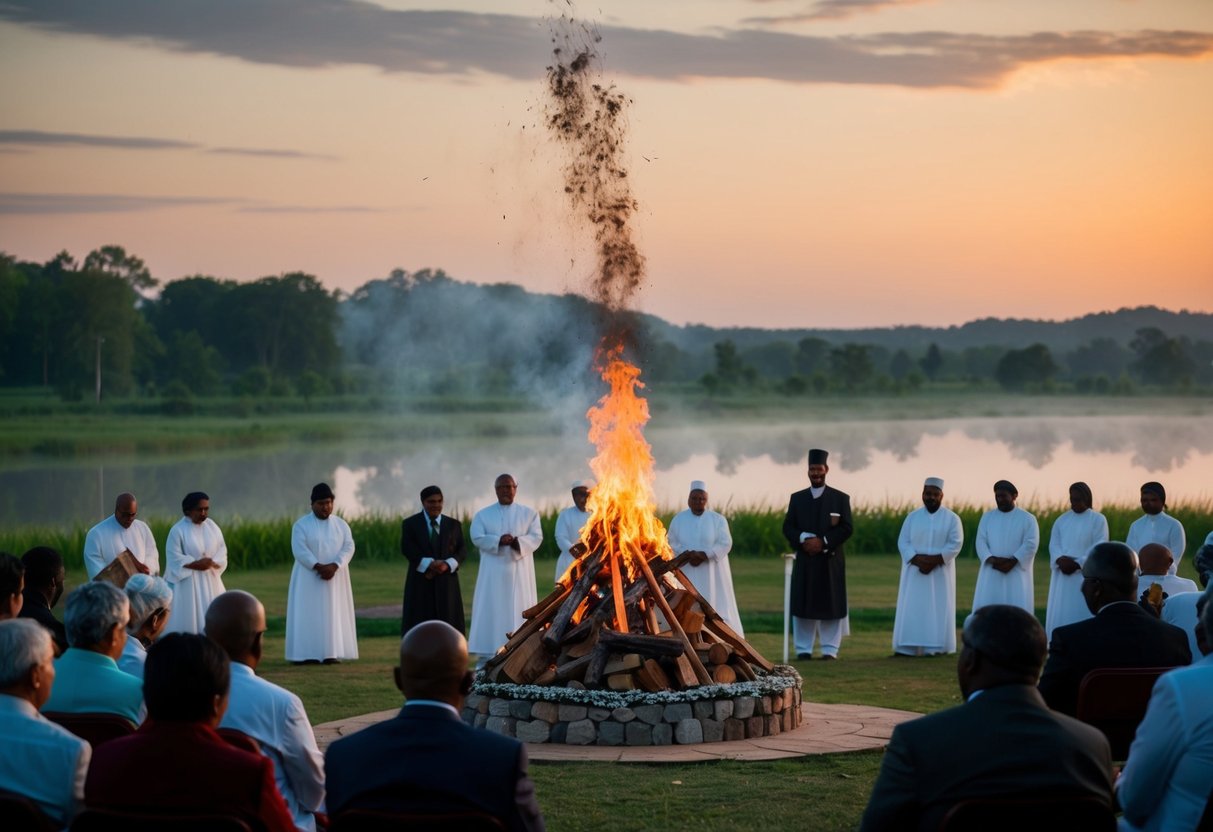
Throughout history, various cultures have approached death and the disposal of bodies in different ways.
While burial has been the more traditional choice in many Christian communities, cremation has also been practiced for centuries.
Many Christians recognize that the state of the body after death does not impact the soul or resurrection.
Understanding the nuances of this topic can help clarify personal beliefs and values regarding death. This article explores the biblical perspectives on cremation, its historical context, and how individuals can navigate these decisions within their faith.
Cremation in Christian Doctrine
Cremation holds differing views in various Christian traditions. Understanding biblical references and interpretations related to resurrection is crucial for grasping its significance in Christian doctrine.
Biblical References to Cremation and Burial
The Bible does not explicitly condemn cremation. Instead, it primarily depicts burial practices.
For instance, notable figures like Sarah, Rachel, and Rebekah were buried soon after death, as shown in the Old Testament (Genesis 23:1-20; Genesis 35:19-20).
In the New Testament, there are fewer references to body disposal. The focus remains more on the resurrection of the body rather than the method of handling remains.
The practice of burial has historically been favored within Christian traditions, reflecting beliefs about bodily resurrection and honoring the deceased. Some early Christians also adhered to burial customs to signify respect for the body as God’s creation.
Interpretations of Resurrection and Body
Christian teachings often emphasize the resurrection of the body, aligning with the belief in a spiritual body. This transformation is referenced in scriptures like 1 Corinthians 15:52-53, which illustrates that the mortal body will be raised imperishable.
Many Christians view the body as integral to one’s identity, meaning it should be treated with dignity. The transformation into a spiritual body signifies hope for eternal life.
While burial traditionally aligns with these beliefs, the lack of a direct biblical prohibition against cremation allows for varying interpretations. Some denominations, like certain Protestants, accept cremation as compatible with Christian teachings, emphasizing that the method of disposition does not impact the soul’s resurrection.
Historical and Cultural Perspectives
Cremation practices differ widely depending on historical events and cultural beliefs. Early Christians had distinct views on cremation, influenced by their religious context. Over time, burial practices evolved, reflecting shifts in societal norms and cultural traditions.
Early Christians and Cremation
In the early Christian community, burial was the preferred method of handling the deceased. This choice stemmed from the belief in bodily resurrection. Early Christians sought to distance themselves from pagan practices, which often included cremation.
They viewed fire as a means of punishment, linked to the concept of hell. As a result, many early Christian writers and leaders discouraged cremation. By choosing traditional burial, they honored the body as a temple of the Holy Spirit. This reverence for the body influenced funeral customs for centuries.
Burial Practices Through the Ages
Throughout history, burial practices evolved alongside cultural and religious shifts.
In ancient Rome, burial was common, yet cremation was still accepted in some circles. As Christianity spread, traditional burial became more prevalent.
During the Middle Ages, burial in churchyards symbolized one’s connection to the faith. The preference for burial continued into modern times, though cremation started to gain acceptance in the 19th century.
Today, views on cremation vary among different Christian denominations. Some accept it, while others still hold to traditional burial due to historical beliefs. Cultural practices also play a significant role in shaping attitudes towards cremation and burial.
Ethical and Moral Considerations
When exploring cremation from an ethical and moral perspective, key issues include respect for the body and the traditions surrounding funerals. Questions arise about whether cremation aligns with religious beliefs and the value placed on the physical form after death.
Reverence for the Body and Funeral Rites
Many traditions emphasize the importance of treating the body with respect after death. This reverence often shapes funeral rites, which can vary significantly among cultures and religions. Traditional funerals typically involve burial, reflecting a belief in the sacredness of the human body.
While some argue that cremation lacks this respect, others believe it can still honor the deceased. In certain faiths, cremation is accepted, as it is seen as a means to return the body to nature. Regardless, any choice should be approached thoughtfully, considering the deceased’s values and beliefs.
Sin, Death, and the Love of God
The question of whether cremation is a sin is complex. Many Christians agree that the Bible does not explicitly prohibit cremation. For some, sin is defined by love of God and neighbor, rather than ritual practice.
Cremation can be viewed as a personal choice reflecting faith and individual beliefs about death. The act of loving God may extend beyond traditional views and encompass caring for the living. Thus, the love of God may prompt different responses to death, allowing for a wider acceptance of practices like cremation, as long as they align with one’s faith.
Contemporary Christian Views on Cremation
Christian views on cremation today vary significantly among different denominations and influential leaders. Factors like tradition, scripture, and personal beliefs shape these perspectives.
Denominational Stances on Cremation
Different Christian denominations hold diverse views on cremation.
- Catholics: The Catholic Church permits cremation as long as it does not imply a denial of resurrection. The body is still respected, and ashes must be treated with reverence.
- Protestants: Many Protestant denominations accept cremation. They often focus on the intent behind the choice rather than the act itself.
- Eastern Orthodox: Generally, the Eastern Orthodox Church opposes cremation, emphasizing traditional burial as a practice tied to faith and the resurrection.
This diversity highlights that cremation is not uniformly accepted or rejected.
Influential Christian Leaders and Theologians
Many respected Christian leaders contribute to the discussion on cremation.
- John Piper, a well-known pastor and theologian, expresses that cremation is not a sin, encouraging people to focus on the heart’s intentions.
- Other theologians suggest that since the Bible does not explicitly forbid cremation, individuals should base their decisions on personal beliefs and cultural context.
These perspectives emphasize understanding the underlying reasons for choosing cremation while respecting individual choices.
Practical Aspects of Cremation
Cremation involves various practical aspects that can influence decisions. Key considerations include financial and ecological factors, as well as understanding the cremation process itself.
Financial and Ecological Considerations
Cremation costs typically range from $700 to $3,000, depending on services provided. Basic cremation may be more affordable than traditional burial, which often includes costs for caskets, burial plots, and embalming.
Cremation can also offer ecological benefits. It uses fewer resources compared to burial. There’s no need for a casket or a burial plot. Many families choose cremation to minimize environmental impact. Instead of a traditional burial, families might place the cremains in a columbarium or scatter them in a meaningful location.
The Cremation Process and Its Variations
The cremation process takes place in a special chamber called a cremation chamber. This chamber uses intense heat, typically 1,800 to 2,000 degrees Fahrenheit, to reduce the body to ash and bone fragments.
There are variations in how cremation can be performed.
Some opt for direct cremation, which eliminates the need for embalming and a service before the process.
Others may have a memorial service before the cremation, allowing for family gatherings and tributes.
After cremation, families receive the cremains, which can be stored in an urn or scattered, depending on their wishes.
