
Rainbows have long captivated people with their beauty and vibrancy. In the Bible, they carry a deep and significant meaning that continues to resonate with believers today.
When we explore what does a rainbow symbolize in the Bible, we discover a powerful message of divine faithfulness and mercy that has endured for thousands of years.
The rainbow symbolizes God’s promise to never again destroy the earth with a flood, signifying hope and renewal. This promise was made to Noah after the great flood, marking a pivotal moment in biblical history.
Every time a rainbow appears in the sky, it serves as a visible reminder of this eternal covenant between God and humanity.
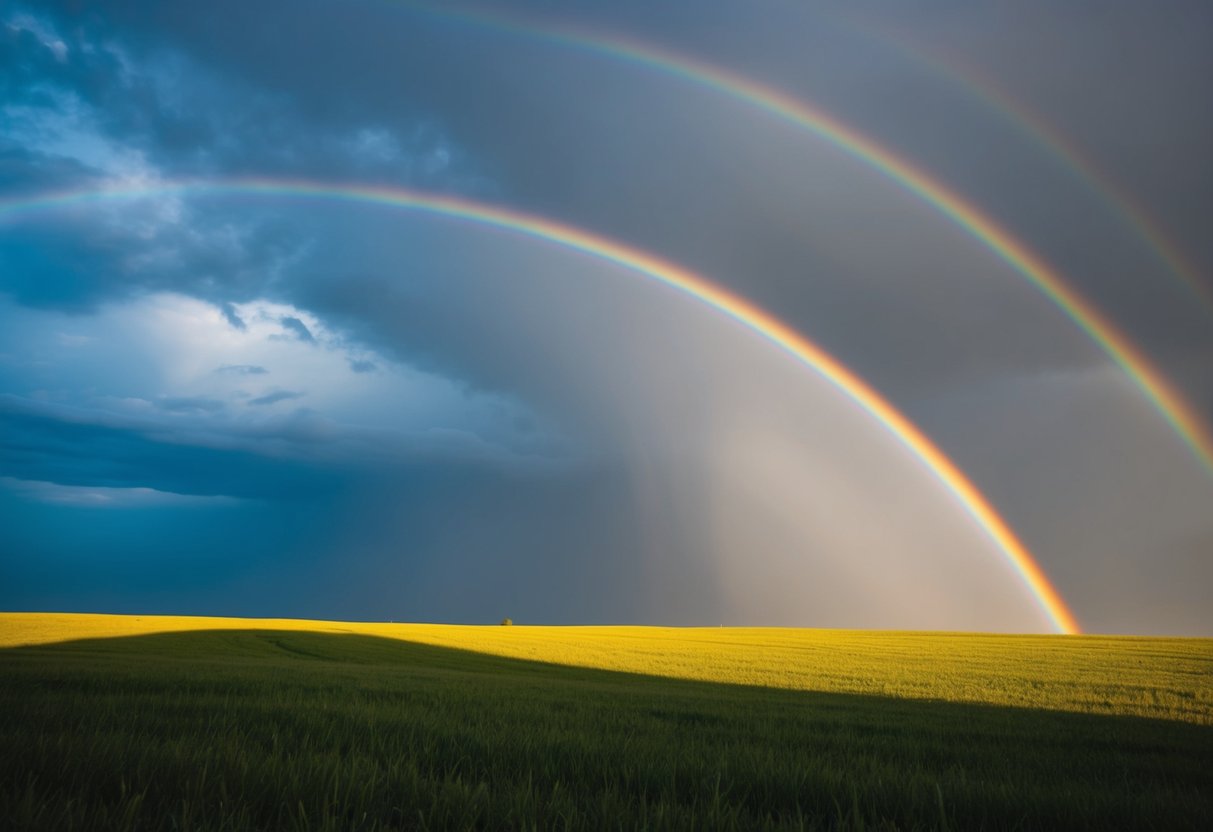
Throughout scripture, the rainbow also represents God’s presence and glory. It serves not only as a reminder of His covenant but also as an assurance of His protection and love for humanity.
As seen in various biblical texts, these colorful arcs in the sky inspire people to reflect on faith and the divine relationship between God and the earth.
The Rainbow as a Divine Sign
The rainbow serves as a powerful symbol of divine promise and faithfulness in the Bible. It is first introduced in the context of God’s covenant with Noah, representing a significant moment after a great flood. This section explores the key elements of this divine sign.
Covenant with Noah
In the Book of Genesis, after the flood, God makes a special covenant with Noah and his family. He promises never to destroy the earth again with a flood. This moment is marked by the appearance of a rainbow in the sky.
God states that the rainbow will be a visible sign of this promise. It is a reminder of His mercy and grace. The covenant is not just for Noah but extends to all living creatures. This signifies hope for humanity and a new beginning after destruction.
The Everlasting Covenant
The rainbow represents an everlasting covenant between God and all of creation as detailed in Genesis 9:12-16. This promise highlights God’s commitment and faithfulness to His people.
Whenever a rainbow appears, it serves as a reminder of God’s assurance. It signifies a pause in the cycle of nature, demonstrating His power and presence. The covenant is rooted in love, showing that God cares for every creature.
This enduring symbol emphasizes the relationship between God and humanity, reinforcing the notion that His promises are reliable and eternal.
Colors of Hope and Mercy
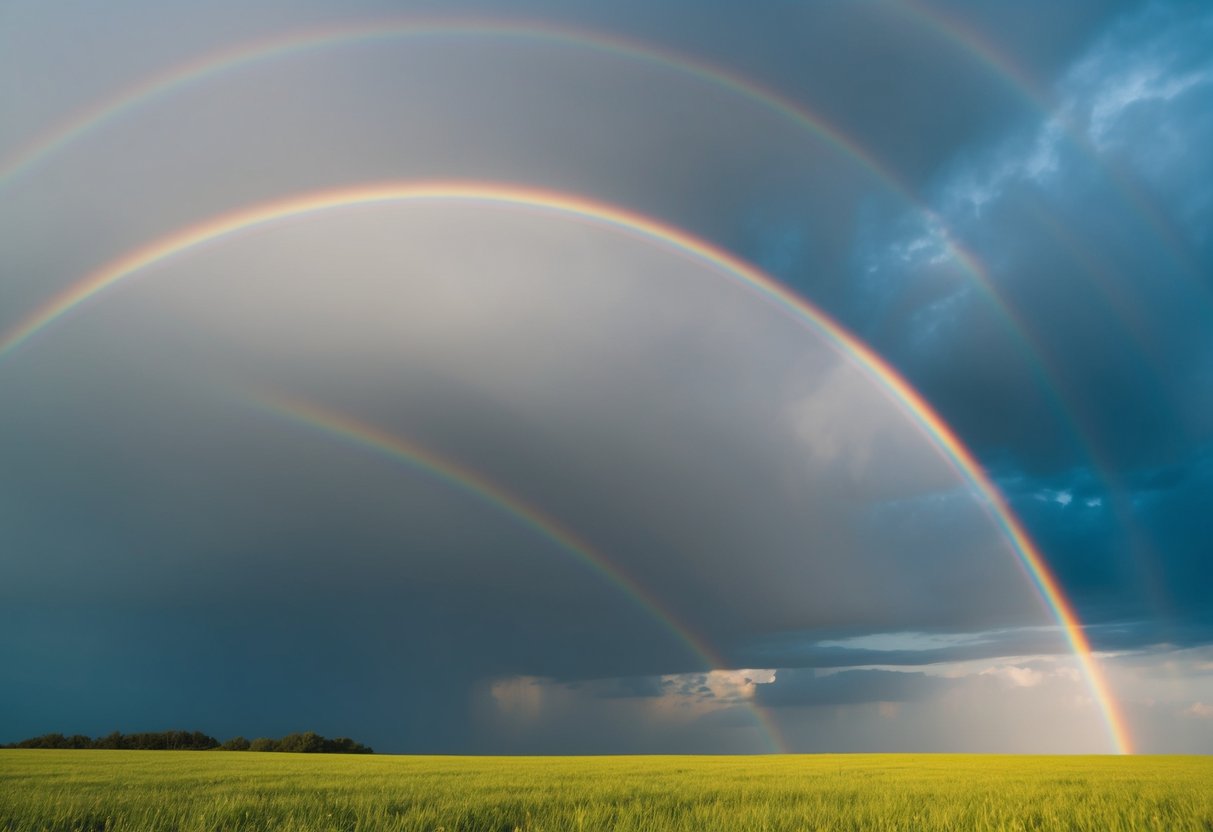
The colors of the rainbow hold deep meanings in the Bible, symbolizing hope, mercy, and the love of God. Each color can represent specific aspects of this covenant and the beauty of renewal after a storm.
The Meaning Behind Rainbow Colors
Rainbows consist of seven colors: red, orange, yellow, green, blue, indigo, and violet. Each color can symbolize different attributes of God’s nature.
- Red often represents sacrifice and love, reflecting God’s deep commitment to humanity.
- Orange signifies enthusiasm and joy, reminding believers of the happiness found in faith.
- Yellow stands for hope and light, representing the promise of a brighter future.
- Green symbolizes life and growth, illustrating how faith allows for personal and spiritual development.
Blue, indigo, and violet can reflect peace, spirituality, and divine wisdom. These colors combine to show the fullness of God’s promise and His mercy towards humanity.
Expression of God’s Mercy
The rainbow is more than just a beautiful sight; it embodies God’s mercy. After the flood in Genesis, God placed the rainbow in the sky as a sign of His covenant with humanity. This act shows His desire to protect and love His creation.
Rainbows serve as a constant reminder of God’s unfailing mercy. The colors remind believers that even in storms, hope remains.
In Hebrew tradition, the number seven represents perfection and completeness. The seven colors of the rainbow reflect the totality of God’s mercy and love, encompassing all aspects of life and faith.
Prophetic and Apocalyptic Symbolism
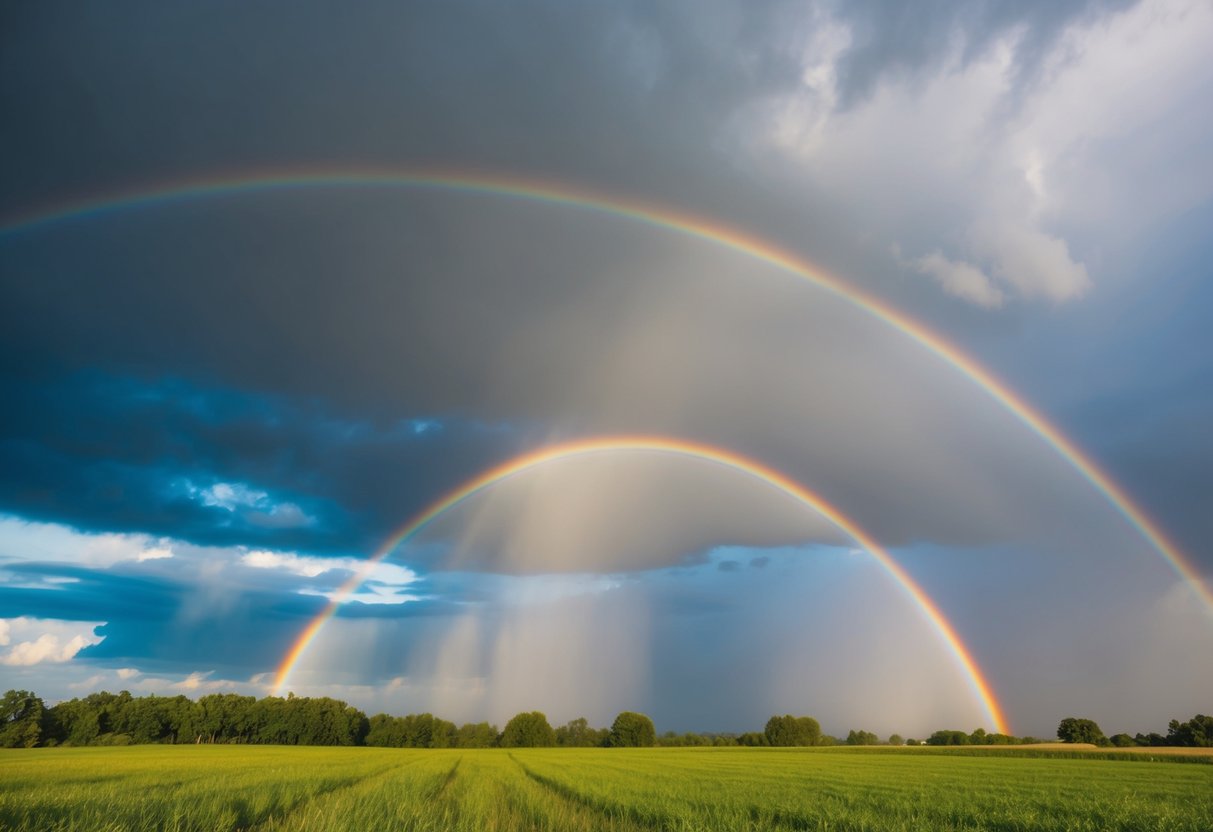
Rainbows carry deep meanings in both prophetic and apocalyptic literature of the Bible. They often represent the glory of God and His promises. In this context, rainbows appear as vivid symbols, illuminating important messages regarding divine authority and future hope.
Rainbows in the Book of Ezekiel
In the Book of Ezekiel, rainbows are linked to the glory of God. Ezekiel 1:28 describes a vision where a rainbow appears around God’s throne. This manifestation reflects the divine presence and splendor. The verse states, “Like the appearance of a rainbow in the clouds on a rainy day, so was the radiance around Him.”
This imagery serves to signify God’s power and beauty. The rainbow in Ezekiel is not just a natural phenomenon but a profound spiritual symbol. It emphasizes God’s covenant with His people, reminding them of His faithfulness.
Visions in the Book of Revelation
In the Book of Revelation, rainbows have significant prophetic implications. Revelation 4:3 portrays God’s throne surrounded by a rainbow that shines like an emerald. This image represents not only God’s majesty but also His promise of renewal and hope amid chaos.
The presence of the rainbow reinforces themes of judgment and grace. It symbolizes God’s commitment to redeem His creation. In the apocalyptic context, the rainbow assures believers of a future where God’s justice will prevail. This spiritual significance highlights the ongoing relationship between God and humanity, providing assurance even in troubling times.
The Rainbow in New Testament Teachings
The New Testament reflects on the symbolism of the rainbow as a powerful reminder of God’s grace, faithfulness, and promises. In this context, the rainbow embodies themes of redemption, forgiveness, and the hope found in Jesus Christ.
Reflections of Grace and Salvation
In the New Testament, the rainbow represents God’s enduring grace and the salvation available through Jesus. Just as the rainbow appeared after the flood as a sign of God’s promise, Jesus’ life and resurrection symbolize a new beginning for humanity.
The act of Jesus on the cross brings grace to believers. This grace is unearned, emphasizing God’s willingness to forgive and accept those who have faith. The New Testament teachings reveal that through Jesus, individuals can experience spiritual rebirth and hope, illustrated by the promise of eternal life.
Imagery of Redemption and Forgiveness
The imagery of the rainbow also serves as a reminder of redemption and forgiveness in the New Testament. When God makes a covenant with Noah, it signifies His commitment to humanity’s future. Similarly, in the teachings of Jesus, forgiveness is a key theme.
Jesus urges followers to forgive others as they seek God’s forgiveness. This connection illustrates the importance of grace in relationships among believers and with God. The rainbow serves as a visual representation of the covenant that extends to all who embrace the message of redemption through faith in Jesus Christ.
Cultural and Religious Interpretations
The rainbow has various meanings across different cultures and religions. These interpretations reflect beliefs about fortune, divine promises, and moral lessons. Understanding these perspectives reveals how the rainbow symbolizes hope and reassurance.
Irish Folklore and the Pot of Gold
In Irish folklore, rainbows are often linked to the mythical pot of gold, believed to be hidden at the end of a rainbow. This tale symbolizes good fortune and the pursuit of happiness. The quest for the pot represents the idea that rewards come from trust in the mystical and the unseen.
Many stories depict leprechauns as guardians of this treasure. They are clever and tricky, often leading people on wild chases. The pot of gold serves as a metaphor for dreams and aspirations, emphasizing that searching for one’s goals is a timeless pursuit.
Rainbows in Other Religious Texts
Beyond the Bible, rainbows appear in various religious texts and traditions.
In many cultures, they represent divine promises or a bridge between heaven and earth. For instance, in the Quran, the rainbow is seen as a sign of God’s mercy and a reminder to trust in His plan.
In the context of the Bible, the first mention of a rainbow follows the flood story in Genesis. Here, it signifies God’s promise to Noah, showing His commitment to never flood the earth again.
This event reinforces the notion of atonement and renewal, encouraging believers to maintain faith even amidst challenges.
