
Many wonder about the true appearance of Satan, often shaped by myths and artistic interpretations. The question “what does Satan look like” has fascinated believers and scholars for centuries, yet the answer remains elusive.
Popular culture depicts him with red skin, horns, and a pitchfork, but these images have no biblical foundation.
The Bible reveals that Satan is a deceiver who can change his form, sometimes appearing as an angel of light (2 Corinthians 11:14). This ability to disguise himself adds to the confusion about his actual appearance.
Scripture suggests he was once a beautiful angelic being before his fall, which makes his deceptive nature even more dangerous.
Understanding Satan’s true nature matters more than knowing his physical form. His power lies not in a frightening appearance but in his cunning ability to mislead and tempt humanity through attractive disguises.

In various passages, Satan is described in different forms, such as a serpent, a dragon, or a lion. Each representation symbolizes his cunning, destructive nature, and intent to lead people away from faith.
Understanding these depictions can shed light on how he operates in the world today.
The images people commonly associate with the devil—horns, a tail, and fiery eyes—do not reflect biblical teachings. Instead, the focus should be on his true role as a powerful spirit seeking to deceive.
Exploring this topic can deepen one’s awareness of the spiritual battle described in Christianity.
Biblical Descriptions of Satan
The Bible provides various images and representations of Satan across both the Old and New Testaments. These descriptions help to understand the nature and characteristics attributed to Satan throughout scripture.
Old Testament Imagery
In the Old Testament, Satan is often depicted through symbols that reflect his deceptive and prideful nature.
One of the most recognized images is the serpent in the Book of Genesis. This creature tempts Eve, leading to humanity’s fall.
In Isaiah 14:12, Satan is referred to as Lucifer, meaning “morning star.” This passage describes his fall from grace, emphasizing beauty and pride before his rebellion against God.
These images illustrate the contrasting themes of light and darkness. Lucifer was once considered an angel of light but became a symbol of temptation and sin. The Old Testament doesn’t give detailed descriptions but paints a picture of Satan as a crafty adversary who uses deception to achieve his goals.
New Testament Depictions
The New Testament shifts the focus to the more direct roles of Satan.
He is described in 2 Corinthians 11:14 as an angel of light, suggesting that he can appear deceptively beautiful to mislead others. This reinforces the idea that Satan is not always recognizable as evil.
Additionally, the Book of Revelation draws a vivid picture of his character and actions. In Revelation 12:9, Satan is portrayed as the great dragon, representing chaos and hostility toward God and His followers.
The New Testament emphasizes Satan’s work in opposing the truth, leading people away from faith and creating confusion through deception.
Titles and Names
Throughout the Bible, Satan is known by several titles that provide insight into his role.
Commonly used titles include the Devil and the Accuser. These names highlight his function as an adversary against God’s people.
In addition to Lucifer, other names include Beelzebub and the Prince of the Power of the Air. Each of these names holds significance in illustrating why he is feared and opposed. These titles contribute to a deeper understanding of the character and actions of Satan as described in scripture.
Theological Interpretations
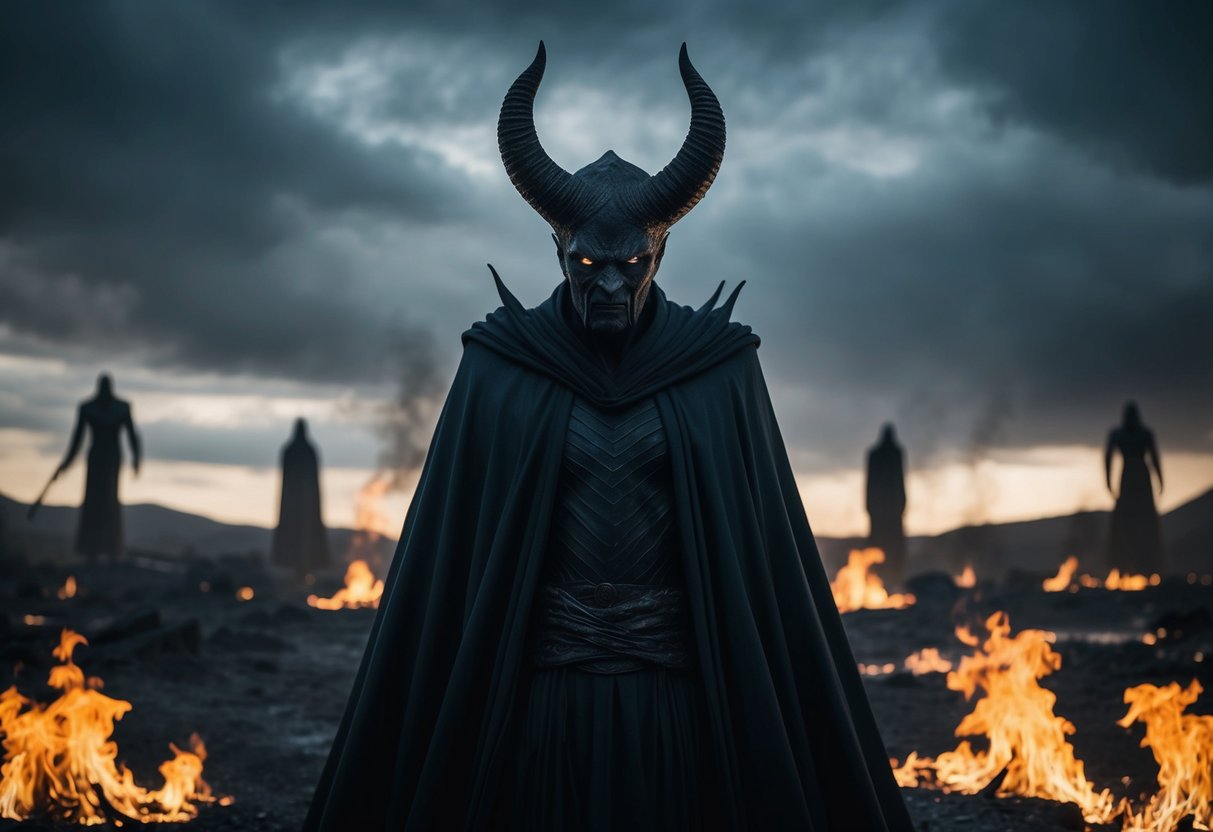
The nature and appearance of Satan are shaped by various theological viewpoints. These interpretations suggest a multifaceted character that embodies rebellion, deception, and opposition to divine order. Each aspect provides insight into how Satan is perceived in religious teachings.
Fall from Grace
Satan is often described as a fallen angel. Originally known as Lucifer, he was created as a beautiful cherub. His pride led to rebellion against God, resulting in his expulsion from heaven.
This fall signifies not only his loss of position but also his transformation into the adversary of humanity.
The Biblical account portrays him as a master of deception. After his fall, Lucifer became known as Satan, associated with darkness and temptation. His story warns of the consequences of pride and the dangers of turning away from divine authority.
Satan as the Deceiver
In theology, Satan is termed the father of lies. His primary role is to lead individuals away from truth. He is believed to use clever tactics to sow doubt and confusion.
This deception is evident in how he tempted Eve in the Garden of Eden and tempted Jesus in the desert.
He disguises himself as an angel of light, which makes his deceptions more dangerous. By presenting himself in appealing forms, he entices people to stray from God’s path.
This role highlights the continuous struggle between good and evil, where temptation is a key strategy employed by the enemy, the devil.
Roles in Religious Texts
Different religious texts portray varying interpretations of Satan’s role.
In the Bible, he is depicted as both a tempter and an accuser. He challenges the faithful, seeking to prove that they will turn away from God under pressure.
Satan’s actions reflect a profound opposition to God’s plan for humanity. The Book of Job illustrates this by showing how he tests Job’s faith. In the New Testament, he tempts Jesus, attempting to derail the divine mission. Each instance serves to highlight the ongoing spiritual battle between light and darkness in human experience.
Cultural and Artistic Representations
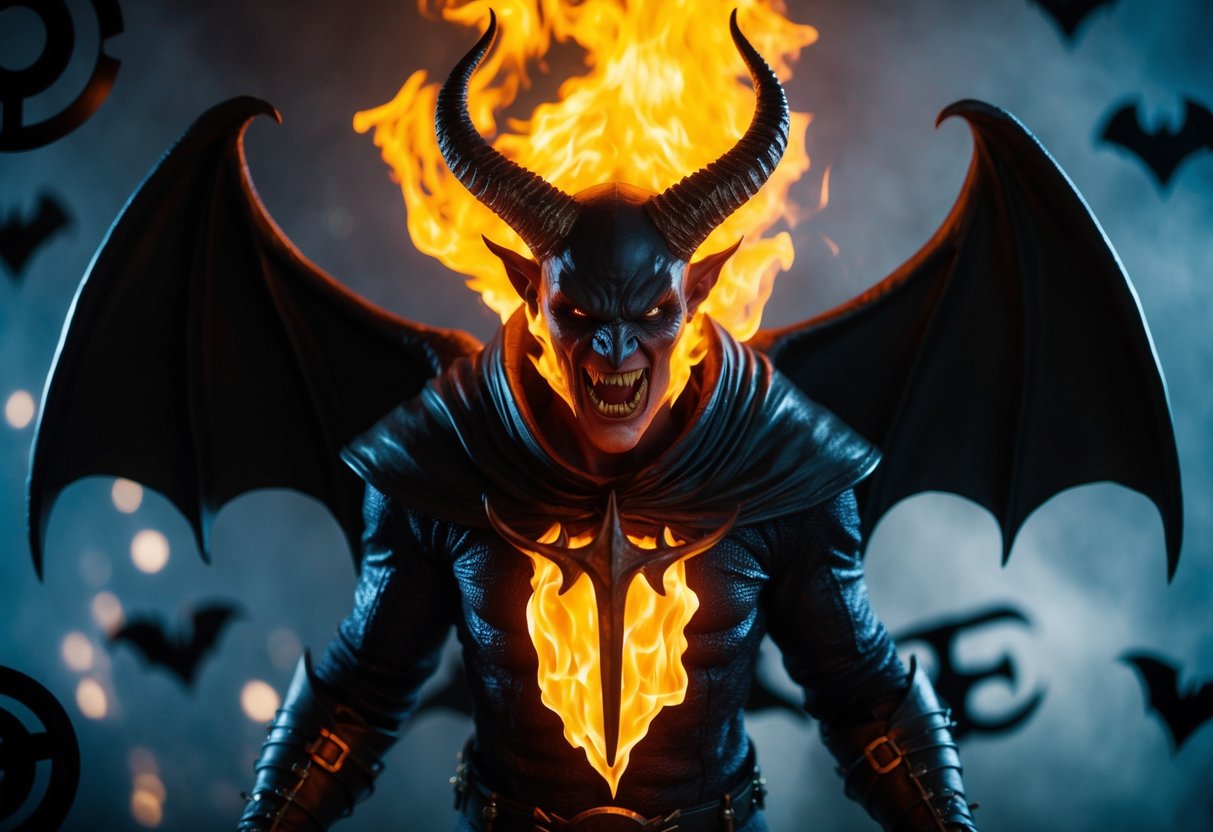
Throughout history, representations of Satan have evolved, reflecting various cultural beliefs and artistic movements. These depictions often blend symbolism, character traits, and societal fears, highlighting the complex nature of evil.
Medieval Symbolism
During the Middle Ages, Satan was often symbolized in art as a grotesque figure. Artists depicted him with features like horns, fangs, and bat-like wings, emphasizing his monstrous nature.
In Dante Alighieri’s Divine Comedy, Satan appears as a dragon-like creature trapped in ice, representing ultimate defeat.
The sixth-century mosaic found in the Basilica of Sant’Apollinare Nuovo also presents early imagery of Satan. Here, he is depicted as a blue angel, contrasting with the common red demons seen later. This blue representation encourages reflection on the fall from grace, embodying the duality of light and darkness.
Modern Day Depictions
In modern culture, depictions of Satan have shifted towards more relatable forms.
Today, Satan is often presented as a red demon, popularized in movies and Halloween costumes. This portrayal emphasizes his role as a tempter and deceiver.
Films like The Omen and literature such as Paradise Lost depict Satan with a charismatic but evil personality. These representations tend to highlight the struggle between good and evil, where Satan embodies temptation and rebellion against divine order.
Such characterizations have influenced public perception, transforming fear into intrigue.
Influences on Literature and Art
Satan has significantly influenced literature and art throughout history. The character’s evolution can be traced through works like John Milton’s Paradise Lost, where he is portrayed with a tragic depth, challenging the notion of evil as solely malevolent.
Artists often draw inspiration from literary descriptions to create powerful images that resonate emotionally. This includes the incorporation of demon characteristics, which serve to make Satan a central figure in narratives about morality.
His representation continues to evoke discussions about the nature of evil, influencing works across various mediums.
Symbolism and Interpretation
Satan’s appearance often combines physical traits and allegorical meanings. These elements reveal deeper insights into his role and influence in various cultural and religious narratives.
Physical Traits and Attributes
Satan is typically depicted with features like horns and a pitchfork. This imagery often symbolizes his rebellious nature and association with fear.
For example, in 1 Peter 5:8, he is described as a “roaring lion” that “prowls around” seeking to devour the unwary.
The lion represents power and danger, illustrating the threats he poses. This imagery connects to his role as the Prince of Darkness, representing evil in stark contrast to divine light.
Despite these common depictions, the Bible suggests he can appear as an “angel of light,” reflecting his deceptive nature. His physical attributes serve to instill fear and portray him as a dangerous adversary.
Allegorical Meanings
Satan’s symbolism extends beyond physical traits to deeper allegorical meanings. He is often viewed as a deceiver, embodying temptation and moral corruption.
His connection to the Garden of Eden highlights this theme, where he deceived Eve, leading to humanity’s fall.
Figures like Mephistopheles illustrate the dual aspects of Satan: temptation and the struggle against mortal desires. Additionally, the concept of hell strengthens his role as a force opposing divine sovereignty.
The fear associated with Satan encourages vigilance among individuals as they navigate moral choices. His multifaceted portrayal reflects the ongoing battle between good and evil.
Comparative Mythology
Various cultures depict figures similar to Satan, showcasing a range of characteristics and themes. These representations highlight how different societies understand evil, rebellion, and control, often drawing connections between familiar symbols and narratives.
Satan and Other Mythologies
In many mythologies, Satan-like figures embody rebellion and opposition to divine authority.
For instance, in Zoroastrianism, Ahriman represents chaos and darkness, paralleling concepts of evil found in Christianity. In the Old Testament, characters like the serpent in the Book of Genesis showcase temptation and deception.
Physical forms often include attributes such as cloven hooves, reminiscent of goats, which symbolize mischief and wildness. Other traditions attribute wings to these figures, suggesting a fallen nature.
The consistent imagery of sheep versus goats points to a moral division among humanity, aligning with the themes of good versus evil.
Cultural Exchange and Interpretations
The concept of a devil or adversarial figure has evolved through cultural exchange.
For example, the Greek god Hades often embodies the underworld but also carries traits associated with temptation and moral darkness.
Imagery of the devil, often interpreted as a rebellious angel, takes many forms.
Interpretations vary widely, from representing chaos to embodying the ultimate evil.
This transformation reflects the blending of ideas across cultures, as seen in comparative mythology.
This blending shows how similar themes of control and moral struggle resonate globally, making Satanic imagery rich and complex across traditions.
