
Among the many intriguing questions that arise from studying the Bible, few spark as much curiosity as this one: did Jesus have a tattoo? The idea may sound surprising at first, yet it continues to fuel lively debates among Christians and Bible scholars alike.
Some interpret the verse in Revelation 19:16, which describes a name written on His thigh, as possible evidence of a tattoo.
Others see it as purely symbolic language, consistent with the prophetic and figurative style found throughout the Book of Revelation. Understanding the cultural and historical context behind this passage is essential before drawing any conclusions.
However, most biblical scholars agree that this does not imply Jesus had a literal tattoo.

Understanding the cultural and historical context is key. Jesus was a Jew who adhered to Jewish laws, which explicitly warn against tattoos and body markings. This leads many to conclude that any reference to markings in scripture should not be taken literally.
People often reflect on this topic to explore their own views on tattoos. By examining the scriptures and the traditions of the time, one can gain a clearer perspective on this interesting issue.
The debate touches on a larger conversation about faith, culture, and personal expression.
Biblical Passages and Tattooing
The topic of tattooing in the Bible is often viewed through specific passages that highlight the significance of body markings. Key verses from the Old Testament and the New Testament help to define the cultural and spiritual context surrounding tattoos.
Leviticus and Old Testament Law
In Leviticus 19:28, the Bible explicitly states, “You shall not make any cuts on your body for the dead or tattoo yourselves: I am the LORD” (ESV). This command is part of the Levitical Law, which was given to guide the Israelites on moral and ceremonial practices.
The Hebrew word for tattooing suggests a form of permanent marking that was frowned upon in ancient Jewish culture. Observant Jews would interpret this law strictly, viewing tattoos as forbidden acts that violate God’s commandments.
The prohibition against tattoos reflects a broader theme in the Old Testament of maintaining holiness and separation from pagan customs.
Revelation and Symbolism
In the New Testament, particularly in Revelation 19:16, there is mention of a name written on Jesus’ robe that is often interpreted as a form of tattoo: “On his robe and on his thigh he has this name written: KING OF KINGS AND LORD OF LORDS.” This raises questions about the nature of such markings.
The Book of Revelation is rich in symbolism and uses vivid imagery to convey spiritual truths. The Greek word used in this context may not directly indicate a physical tattoo but rather a symbolic representation of authority and kingship.
This suggests that the markings may carry deeper spiritual meaning rather than serving as an endorsement of tattooing. The interpretation varies among scholars, indicating that context is essential when understanding these passages.
Jesus and Jewish Traditions
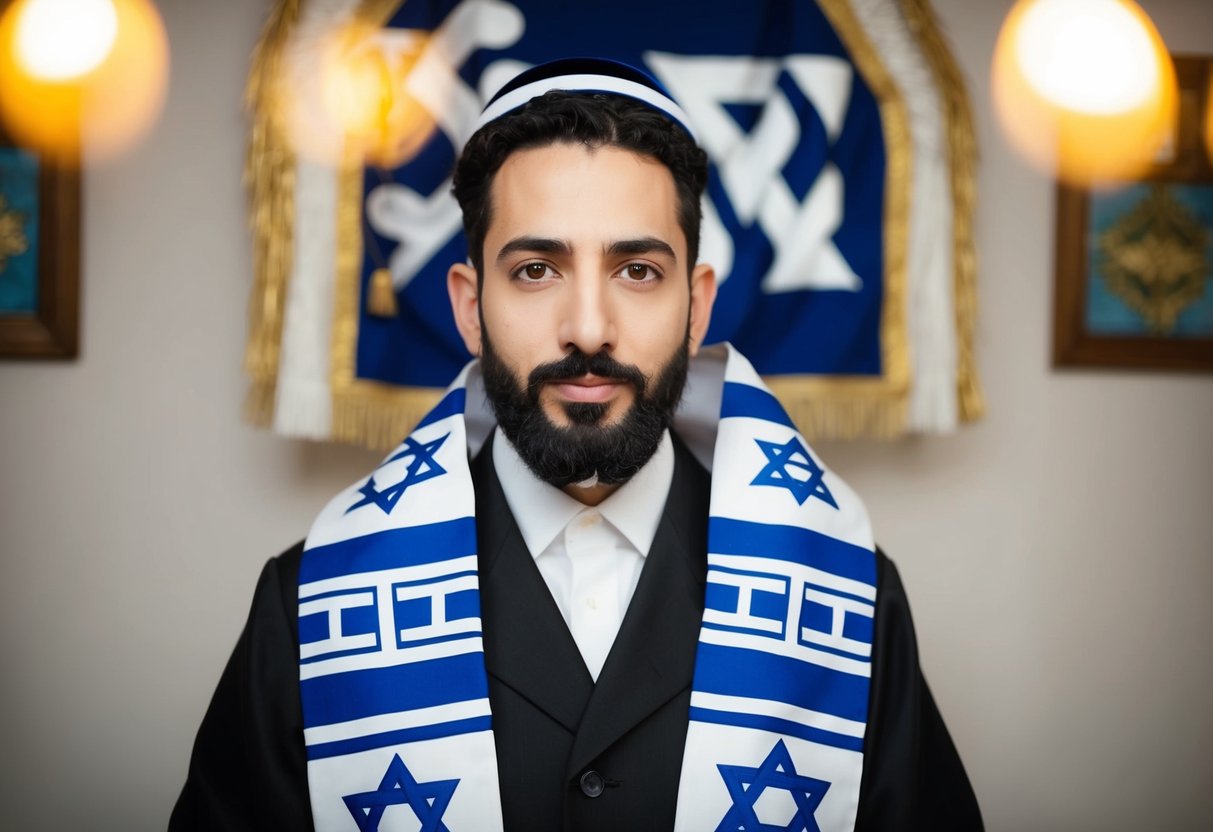
Understanding Jesus’s connection to Jewish traditions provides insight into his life and teachings. His adherence to Jewish law shaped his actions and beliefs. This relationship with Jewish customs is essential for discussing practices like tattooing.
Historical Context and Jewish Law
In the time of Jesus, Jewish law, particularly the Mosaic Law, guided daily life. This set of laws is outlined in the Old Testament and emphasized obedience to God’s commandments. Among these commandments, Leviticus 19:28 specifically states, “Do not cut your bodies for the dead or put tattoo marks on yourselves.”
This law reflects the Jewish view of the human body as sacred. Therefore, tattooing was largely seen as a violation of this principle.
The cultural and religious significance of these laws plays a vital role in understanding Jesus’s actions and teachings.
Jesus’s Adherence to Mosaic Law
Jesus, as a Jewish man, adhered closely to the Mosaic Law. He emphasized fulfilling the law rather than abolishing it. In Matthew 5:17, he clearly states, “Do not think that I have come to abolish the Law or the Prophets; I have not come to abolish them but to fulfill them.”
His commitment to these laws indicates that he likely would not have participated in practices like tattooing, which contradicted Jewish beliefs.
Jesus’s respect for Jewish traditions was evident throughout his ministry, influencing his followers and shaping early Christian teachings.
Interpretations of Revelation 19

Revelation 19 contains significant imagery and descriptions regarding Jesus’ second coming. This chapter is often analyzed for its deeper meanings, particularly focusing on the wording in verse 16 and the titles attributed to Jesus.
The Text of Revelation 19:16
Revelation 19:16 states, “On his robe and on his thigh he has this name written: King of Kings and Lord of Lords.” This verse plays a crucial role in discussions about Jesus’ identity and authority. The phrase highlights His supreme power and reign over all creation.
This passage appears in a vision given to John, the author of the book of Revelation. It reflects the anticipation of Jesus as a conquering king, emphasizing His divinity and authority.
The depiction uses rich symbolism, which is common throughout the New Testament, especially in apocalyptic literature.
The mention of Jesus wearing these titles on His robe suggests an unshakeable claim to His role in the last days, particularly during events such as the Battle of Armageddon. This provides a powerful image of hope and assurance for believers.
The King of Kings and Lord of Lords
The titles “King of Kings” and “Lord of Lords” signify Jesus’ ultimate sovereignty. These phrases assert that no other power can rival His reign.
In biblical context, such titles illustrate not just authority but also His role as a protector who leads His followers into victory.
In many interpretations, Jesus being marked as both “King” and “Lord” stresses His dual nature. He is not only a ruler but also a spiritual leader.
This importance of these titles encourages believers to find strength and guidance in their faith.
The symbolic inclusion of “King of Kings and Lord of Lords” on His thigh can also be seen as a banner of victory. It reveals His dominance over earthly and spiritual realms.
The imagery resonates with the overarching themes of the book of Revelation, which aims to provide hope to the faithful during times of hardship and conflict.
Tattoos in Christian Theology
The topic of tattoos in Christian theology raises important questions about the body, authority, and spiritual significance in the faith. Different interpretations of scripture can influence views on whether tattoos are acceptable for believers.
The Body as a Temple
In 1 Corinthians 6:19-20, the Apostle Paul emphasizes that the body is a temple of the Holy Spirit. This scripture suggests that believers should honor their bodies as sacred spaces.
Some Christians interpret this as a reason to avoid tattoos, viewing them as defilement of this temple.
On the other hand, others argue that tattoos can serve as meaningful expressions of faith. They may inscribe scriptures or symbols that represent their beliefs.
In this view, tattoos do not necessarily dishonor the body but can enhance one’s spiritual identity. The key issue lies in intent and the meaning behind the tattoo.
Mark of the Beast
The phrase “mark of the beast” comes from Revelation 13:16-17, where it describes a mark required for buying and selling.
Some Christians express concern that getting a tattoo could be linked to this “mark,” fearing it may symbolize allegiance to worldly systems rather than to God.
However, most scholars do not view tattoos as equivalent to the mark mentioned in Revelation. The tattoo itself is not seen as a judgment; rather, it is the significance placed upon it that matters.
Thus, the mark of the beast does not inherently apply to modern practices of tattooing in Christianity.
Modern Perspectives on Religious Body Art
In contemporary society, views on religious tattoos have evolved significantly.
Many individuals see tattoos as a form of personal expression, incorporating symbolic imagery into their designs. This blend of faith and art helps people connect their beliefs to their identity.
Religious tattoos often feature symbols like crosses, angels, and verses from sacred texts. These pieces can serve as constant reminders of one’s faith.
Some choose to place tattoos on visible areas, while others opt for less prominent locations, such as the thigh.
Many religious communities have varied opinions on tattoos.
Some members embrace them, seeing them as a celebration of faith. Others may express discomfort due to traditional views on body art.
For instance, the Bible does not explicitly forbid tattoos, leading to different interpretations among believers.
Individuals often engage in discussions about the meaning behind their tattoos.
They may ask questions like, “How does this tattoo reflect my beliefs?” or “What story does this symbolize?” This reflective approach encourages a deeper understanding of one’s faith.
Moreover, social media has played a role in the acceptance of religious tattoos.
People share their designs and the stories behind them, creating a sense of community. This sharing fosters dialogue about the significance of tattoos in religious and personal experiences.
