
Hagar holds a unique place in biblical history as the Egyptian slave of Sarah and Abraham. Her story reflects deep themes of struggle, faith, and divine intervention.
Since the Bible does not explicitly reveal her eternal fate, many believers find themselves asking: did Hagar go to heaven? This question continues to spark meaningful discussion among scholars and Christians alike.
What we do know is that Hagar had direct encounters with God — something only a handful of biblical figures experienced. She is the only person in Scripture who gave God a name, calling Him “El Roi,” the God who sees. These remarkable moments of divine connection offer important clues about her spiritual standing.
While no definitive answer can be drawn from Scripture alone, exploring Hagar’s faith, her relationship with God, and the promises she received can help us better understand where she may stand in eternity.

Throughout the Bible, Hagar’s experiences reveal her growth in faith. She connected with God in profound ways, crying out to Him in her moments of desperation.
Her belief in divine intervention indicates a remarkable journey toward understanding salvation, even as a marginalized figure in biblical times.
The absence of a definitive answer about Hagar’s afterlife does not diminish her legacy. Instead, it encourages readers to reflect on the themes of faith and redemption present in her story while considering how they apply to their own lives.
The Biblical Account of Hagar
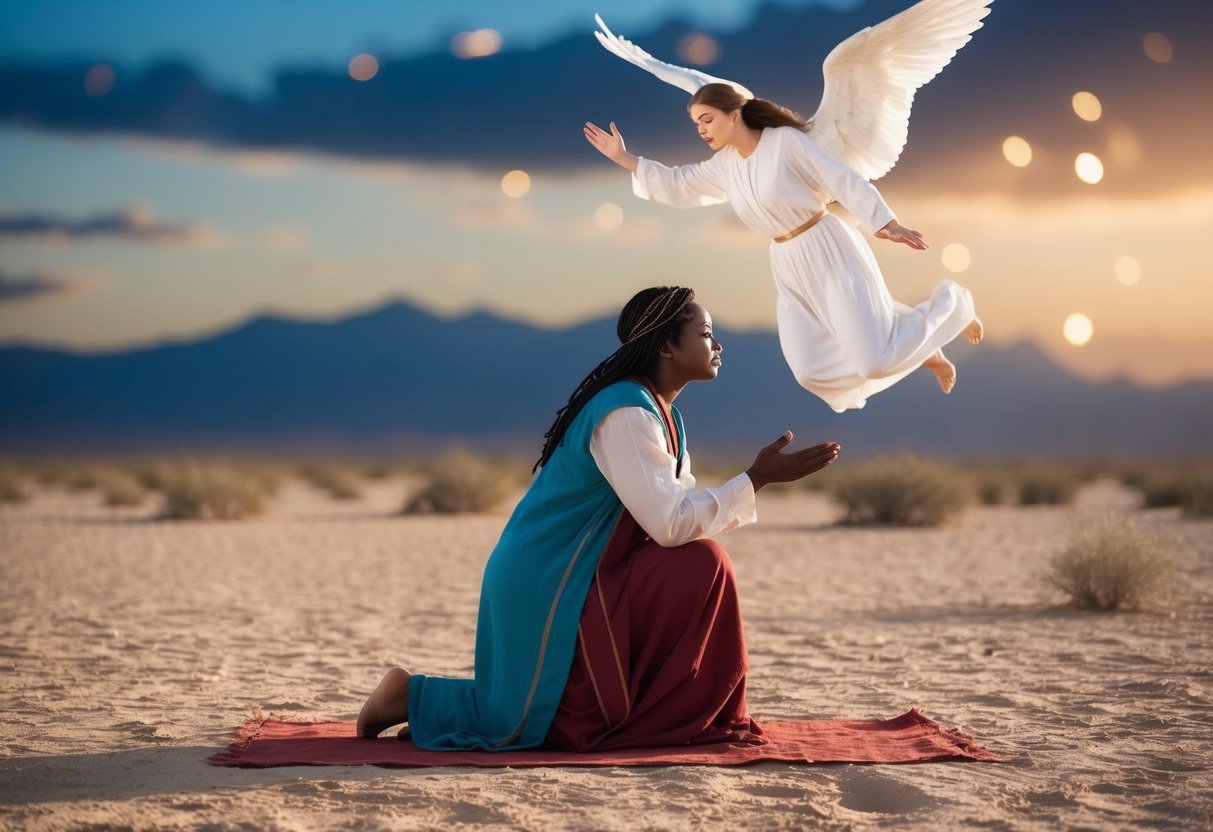
Hagar’s story in the Bible highlights her complex relationships and significant encounters. It reveals her struggles, divine encounters, and the lasting impact of her life and decisions.
Hagar’s Relations with Abraham and Sarah
Hagar was an Egyptian slave owned by Sarah, the wife of Abraham. When Sarah could not have children, she offered Hagar to Abraham to bear a child. This decision is documented in Genesis 16.
Hagar became pregnant, which led to tension with Sarah. Sarah treated her harshly, causing Hagar to flee into the desert.
This relationship illustrates the challenges faced by those in positions of power and those who are vulnerable. Hagar’s pregnancy brought strife, showing how attempts to control a situation can lead to unintended consequences.
Eventually, Hagar gave birth to Ishmael, who became the father of a great nation.
The Desert Experience
When Hagar fled, she found herself in a vast and lonely desert. This wilderness experience was crucial for her. Feeling abandoned and in despair, she faced a dire need for water and safety.
In the desert, Hagar encountered a life-changing moment. The harsh environment symbolized her struggles and fear. She was in a place where she felt invisible, but this was also where God saw her.
In the midst of her suffering, Hagar demonstrated resilience.
The Encounter with the Angel of the Lord
In her desperation, Hagar met the Angel of the Lord in the wilderness. This encounter is also found in Genesis 16.
The angel assured her that God had seen her distress. He instructed her to return to Sarah and submit, but also promised that her son Ishmael would become a great nation.
This meeting was transformative for Hagar. She named God El Roi, meaning “the God who sees me.”
Hagar’s experience showed that God notices even those who are overlooked. The Angel’s words offered her hope and direction in her challenging situation. Hagar’s faith was strengthened as she returned with renewed purpose.
Theological Perspectives
Different religious traditions provide various views on Hagar’s fate and significance. These perspectives often reflect deeper beliefs about faith, divine promises, and God’s relationship with humanity.
Jewish Interpretations
In Jewish thought, Hagar is sometimes seen as a symbol of divine compassion. Her story highlights God’s attention to the marginalized. Hagar is called by God, who assures her that her son, Ishmael, will become a great nation.
This reflects the belief that God cares for all His creations, including those outside the main covenant community.
Jewish tradition does not explicitly discuss Hagar’s afterlife. Instead, the focus remains on her faith and trust in God’s promises.
Various rabbinic interpretations admire her spiritual journey from idol worship to a faith in the God of Israel. Hagar’s presence in the scriptures demonstrates the idea that redemption and divine favor are accessible to all, regardless of their origins.
Christian Views
Christian theology often emphasizes themes of faith and grace in Hagar’s story. Hagar, a servant in Abraham’s house, embodies the experience of being an outsider. Many believe she represents those who are marginalized yet are seen and heard by God.
The New Testament references the “God who sees” and highlights Hagar’s encounter with the angel. This connection shows that God recognizes and responds to suffering.
Some Christians view Hagar as a precursor to the gospel message, where God’s love extends beyond traditional barriers. Discussions about her eternal destiny are less common but may suggest a belief in God’s mercy towards those who demonstrate faith.
Islamic Understanding
In Islam, Hagar, known as Hajar, holds a significant place in religious history. She is revered as the mother of Ishmael, considered a prophet and ancestor to the Arab people.
Her story shows unwavering faith as she faces hardships.
Muslim teachings often highlight Hagar’s reliance on God, especially when she runs between the hills of Safa and Marwah searching for water for Ishmael. This action is commemorated during the Hajj pilgrimage.
While Islamic texts do not detail her afterlife, the emphasis lies on her faith and God’s provision. This reinforces the belief that God’s mercy encompasses all believers. Hagar’s legacy is thus seen as foundational in both Islamic and cultural contexts.
Hagar’s Legacy and Symbolism

Hagar’s story in the Bible holds deep significance in understanding her legacy and the symbolism surrounding her life. She was not just a servant but played a crucial role in the unfolding of God’s promises.
Mother of a Nation
Hagar is known as the mother of Ishmael, a key figure in the biblical narrative. Her son became the father of a great nation, which is often interpreted as the descendants known as the Ishmaelites. These descendants are understood to be part of the broader narrative of God’s provision and blessings.
Hagar’s relationship with Abraham highlights the complex dynamics of inheritance and covenant within the family.
Symbol of God’s Providence
Hagar’s experiences illustrate God’s providence in challenging circumstances. Despite her position as a servant, God saw her struggles and blessed her with a promise.
He assured her that her son would flourish and become a great nation. This act of divine provision shows that God remains mindful of all individuals, regardless of their status.
Hagar’s encounter with God in the desert reinforces the theme of mercy and care for those in distress.
Hagar in Spiritual Metaphors
Hagar’s story transcends her literal existence, representing broader spiritual metaphors. She symbolizes hope for those marginalized or oppressed.
Her journey reflects themes of faith and obedience, as she returned to a difficult situation after meeting God. Hagar embodies the idea that God’s plan includes all people, not just those bound by lineage.
The Hagrites, her descendants, remind believers of the diverse ways God works through different families and nations.
Paul’s Epistle to the Galatians
In Galatians, Paul addresses the two covenants represented by Hagar and Sarah. He uses these figures to explain concepts of slavery and freedom, highlighting the differences between the old and new covenants.
Hagar as an Allegory
In Galatians 4, Paul presents Hagar, the maidservant of Sarah, as an allegory for the old covenant, which is linked to Mount Sinai. Hagar symbolizes the law and its bond to slavery. Hagar’s son Ishmael reflects a works-based approach to righteousness.
Paul contrasts Hagar’s situation with Sarah, emphasizing that the old covenant leads to bondage. Those who rely solely on the law are still trapped under its demands.
He calls upon his readers to recognize the implications of living under such an arrangement. This allegorical approach urges them to seek the freedom that comes through faith in Jesus Christ.
Contrast Between Old and New Covenants
Paul contrasts the old covenant, represented by Hagar, with the new covenant symbolized by Sarah. The old covenant demonstrates the limitations of the law, signifying slavery and spiritual death.
In contrast, the new covenant brings freedom and life through faith in Jesus.
In this new arrangement, believers become heirs to God’s promises. The inheritance of freedom is available to all who accept Christ.
Paul stresses that the law was never meant to bring salvation but to highlight humanity’s need for grace.
This powerful message encourages the Galatians to embrace their identity as children of the promise, free from the constraints of the law. By abandoning the old covenant, they step into the inheritance that brings true freedom and spiritual fulfillment.
Hagar’s Influence on Modern Discourse
Hagar’s story resonates deeply in today’s discussions surrounding feminism and religious belief. Her experiences as a slave and an outcast highlight themes of hope and resilience that many find relevant in modern contexts of freedom and empowerment.
Discussions on Feminism and Freedom
Hagar, as a bondwoman and an Egyptian slave, embodies the struggles faced by marginalized women. Her role in the narrative raises important questions about power dynamics in relationships. Sarah’s treatment of Hagar illustrates the harsh realities many women face.
In liberal feminist circles, Hagar represents a figure of resistance and strength. Her act of escaping from oppression symbolizes the fight for freedom.
Discussions often highlight how Hagar’s experience parallels contemporary issues of domestic abuse and systemic inequality faced by single mothers today.
Hagar’s encounter with God in the wilderness, where she is seen and heard, reinforces a message of hope. It speaks to the importance of acknowledging and uplifting the voices of those suffering in silence.
The Significance in Religious Contexts
In many religious frameworks, Hagar serves as a pivotal character. Her story emphasizes themes of grace and divine intervention. She receives promises and blessings, even as a marginalized figure.
Religiously, she is often viewed as a mother figure, symbolizing God’s care for the forgotten. This is particularly significant in Judeo-Christian teachings, where God’s concern for Hagar reflects His compassion for all.
Hagar’s legacy also influences discussions on the nature of faith and divine support. Her willingness to return to Sarah, despite her hardships, may represent the complexities of belief in God’s plan even amidst suffering.
Drawing Parallels: Hagar in Contemporary Issues
Hagar’s narrative has drawn parallels to contemporary issues such as immigration and racial inequality.
Her status as an outcast highlights the experiences of many facing discrimination today.
Modern discourse often compares her experience as a single mother to the challenges faced by women raising children alone in difficult circumstances.
Her story offers a lens through which to view systemic issues of social justice.
Furthermore, Hagar’s journey to finding her identity and purpose resonates with those fighting for their rights.
Her narrative encourages conversations around self-advocacy and the importance of having one’s voice heard in society.
Through these discussions, Hagar continues to influence and inspire those seeking freedom and recognition.
