
The death of Jesus Christ remains one of the most significant events in history, sparking deep questions and discussions among scholars and believers alike.
When people ask how did Jesus die, the answer points to crucifixion—a brutal Roman method of execution reserved for criminals.
Jesus was crucified around AD 30 or AD 33 in Jerusalem. This event is central to the New Testament and is reflected in the accounts of the four gospels, which describe the events leading up to his death and the profound impact it had on his followers.
Understanding how Jesus died helps believers grasp the depth of his sacrifice and the foundation of Christian faith in redemption and salvation.
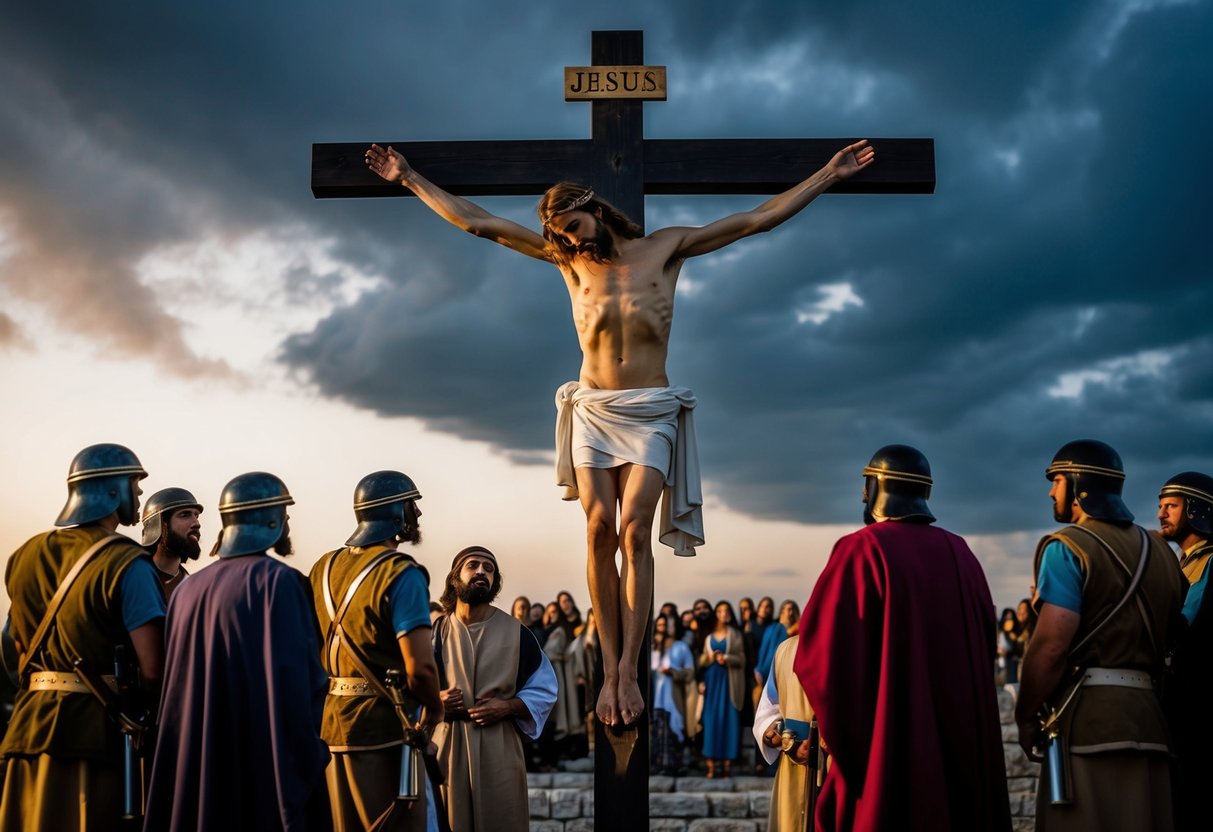
The crucifixion was more than just a brutal punishment; it served a key purpose in Christian beliefs about sacrifice and redemption. Jesus suffered not only physical pain but also emotional anguish, which is noted in various historical writings.
The details of his death are examined from multiple perspectives, including theological interpretations and historical contexts, making it a pivotal moment in understanding his life and legacy.
This blog post will explore the circumstances surrounding Jesus’ crucifixion, the reasons behind such a harsh penalty, and how these events shaped the faith of millions.
Readers will gain insight into the implications of his death and its enduring influence on modern Christianity.
Historical Context and Jesus of Nazareth
Understanding the historical setting of Jesus is vital to grasping his impact and the events of his life, especially his death.
He lived during a time of significant political and social tension, with Roman authority imposed over Judean society.
Roman Rule and Jewish Leadership
During Jesus’ life, Judea was under Roman control, governed by figures like Pontius Pilate. Pilate represented the Roman Empire, which was led by Emperor Tiberius. The Roman influence created a climate of unrest among the Jewish population, who resented foreign rule.
Herod the Great, prior to Jesus’ birth, was a client king installed by Rome. His leadership was marked by political intrigue and violence, which set the stage for Jesus’ emergence.
The religious leaders, including Pharisees and Sadducees, positioned themselves against any perceived threats to their authority, viewing Jesus as a challenger to their control.
Jesus’ Ministry and Influence
Jesus began his ministry by preaching about the Kingdom of God and claiming to be the Messiah. His teachings attracted many followers, who saw him as a prophet and potential king.
He performed miracles, challenged traditional laws, and offered messages of hope and redemption.
The growing popularity of Jesus alarmed the Jewish leadership and Roman authorities. They feared he might incite rebellion or disrupt the delicate balance of power. His title, “King of the Jews,” was particularly provocative, leading to his eventual arrest and trial.
Jesus’ influence stretched beyond immediate followers. His actions and teachings left a lasting mark on Jewish and Roman societies, leading to significant religious and political repercussions.
The Arrest and Trial of Jesus
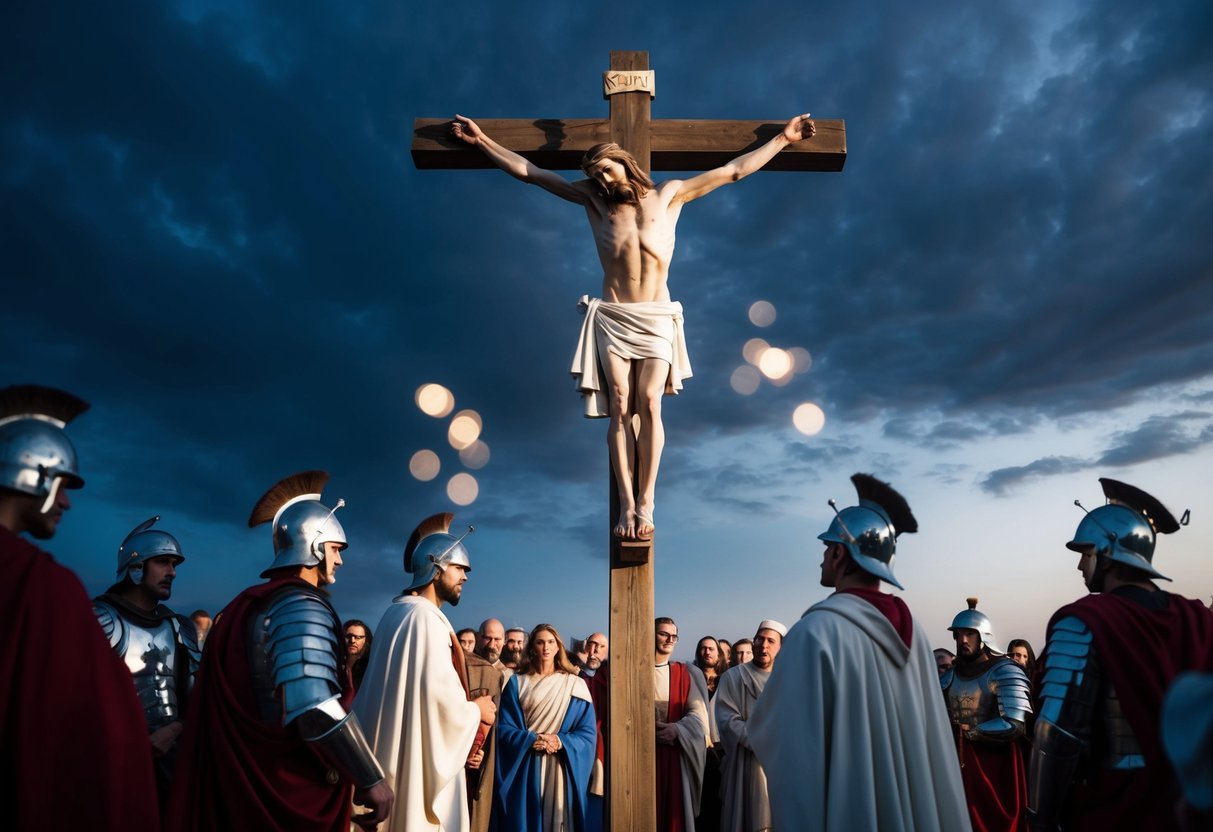
The events surrounding Jesus’ arrest and trial were pivotal in the lead-up to his crucifixion. Key moments include the betrayal by Judas Iscariot, the hearings before the Sanhedrin, and the judgment by Pontius Pilate. Each of these events played a crucial role in determining Jesus’ fate.
Judas Iscariot’s Betrayal
Judas Iscariot, one of Jesus’ twelve disciples, played a significant role in the events that led to the arrest of Jesus. During the Last Supper, Jesus predicted his betrayal, which troubled the disciples.
Later, Judas agreed to betray Jesus to the religious leaders for thirty pieces of silver.
In the dark of night, Judas led a crowd to the Garden of Gethsemane, where Jesus was praying. He identified Jesus by giving him a kiss, signaling the arresting soldiers. This act of betrayal set in motion a series of trials that would ultimately lead to Jesus’ crucifixion.
Before the Sanhedrin
After his arrest, Jesus was taken before the Sanhedrin, the Jewish council of religious leaders. They sought false testimony against him in an attempt to find grounds for a death sentence.
Many witnesses came forward, but their statements did not agree.
The high priest, Caiaphas, questioned Jesus directly. He asked if he was the Messiah, to which Jesus affirmed. This declaration was seen as blasphemy, and the council concluded that Jesus deserved death. They mocked him and beat him, further solidifying their intent to condemn him.
Pontius Pilate’s Judgment
Following the Sanhedrin’s decision, Jesus was brought to Pontius Pilate, the Roman governor. The religious leaders accused him of claiming to be the King of the Jews.
Pilate, recognizing the political motives behind the accusations, questioned Jesus.
Despite finding no basis for a charge, Pilate faced pressure from the crowd to execute Jesus. He attempted to offer the option of releasing a prisoner, hoping to set Jesus free. However, the crowd chose Barabbas, leading Pilate to reluctantly order Jesus’ crucifixion, thus sealing his fate.
The Crucifixion Event
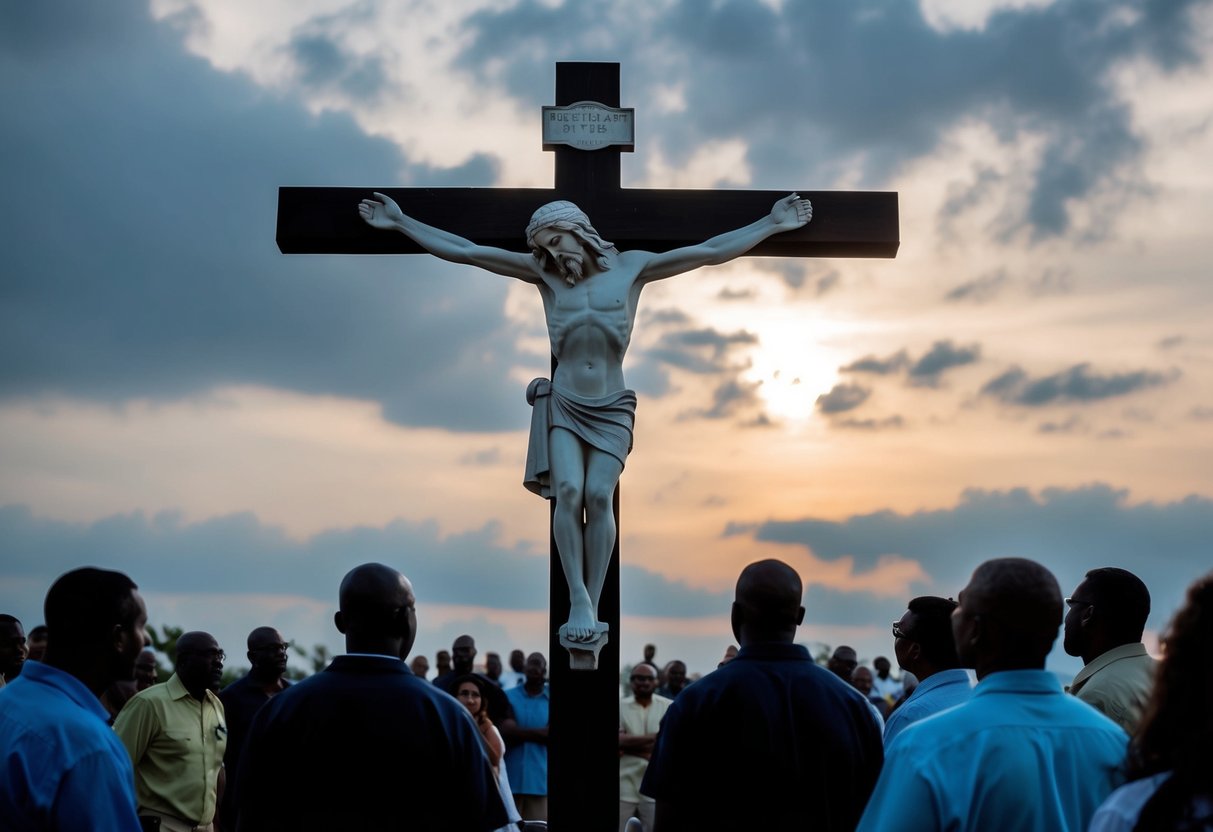
The crucifixion of Jesus marks a pivotal moment in history. It involves his journey to Golgotha, the actual process of crucifixion, and his final words during this critical event.
Journey to Golgotha
Jesus carried his cross to Golgotha, also known as the Place of the Skull. This journey took place after his condemnation by Roman authorities. As he walked, he faced immense pain, weak from previous beatings.
Roman soldiers led the way, ensuring that the crowd did not intervene. Simon of Cyrene was compelled to help carry the cross when Jesus could no longer do so. This journey is significant, as it showed the physical and emotional burden Jesus bore for humanity.
The Execution by Crucifixion
At Golgotha, the execution was brutal. Roman soldiers nailed Jesus to the cross, securing his hands and feet with large spikes. The method of crucifixion was designed to inflict maximum pain and humiliation.
Once nailed, the cross was lifted into place, causing further agony as Jesus’ body jolted into position. The soldiers mocked him, placing a crown of thorns on his head, adding to his suffering. This event was not just a punishment, but a significant moment in the Passion narrative.
Jesus’ Last Words
Jesus spoke several powerful phrases during his crucifixion. Among them was “Father, forgive them, for they do not know what they are doing.” This expression of forgiveness highlighted his compassion even in death.
Before his passing, he declared, “It is finished.” This statement marked the completion of his mission on Earth. These last words resonate deeply, signifying both an end to his suffering and the fulfillment of his purpose. The pain and shock of the crucifixion underscored the gravity of the moment, affecting all who witnessed it.
Death and Burial
The death and burial of Jesus are pivotal events in Christian belief. Key details include the manner of his death, the tearing of the temple veil, and the actions of Joseph of Arimathea, who provided a burial site.
The Death of Jesus
Jesus died through crucifixion, a method used by the Romans as punishment. He suffered considerable trauma, leading to what some scholars suggest was cardiac rupture, indicated by the separation of blood and water when a soldier pierced his side. This moment highlighted both his physical suffering and the enormity of the event for believers.
The death occurred around 3 PM, and an earthquake is said to have followed, shaking the ground and causing a significant reaction among the witnesses. A centurion present recognized that Jesus was indeed the Son of God after witnessing his final moments, which added to the profound impact of this event.
Significance of the Temple Veil Tearing
At the moment of Jesus’ death, the temple veil, which separated the most holy place from the rest of the temple, tore from top to bottom. This act is highly significant in Christian interpretation. It symbolizes that access to God was now open to all, not limited to priests.
The tearing of the veil suggests a new covenant between God and humanity, emphasizing themes of redemption and forgiveness. This dramatic event illustrated that the sacrifices of the Old Testament were fulfilled in Jesus’ death, marking a transition in how believers could relate to God.
Joseph of Arimathea and the Tomb
Joseph of Arimathea played a crucial role in the burial of Jesus. A wealthy and respected member of the council, he boldly asked Pilate for Jesus’ body after the crucifixion.
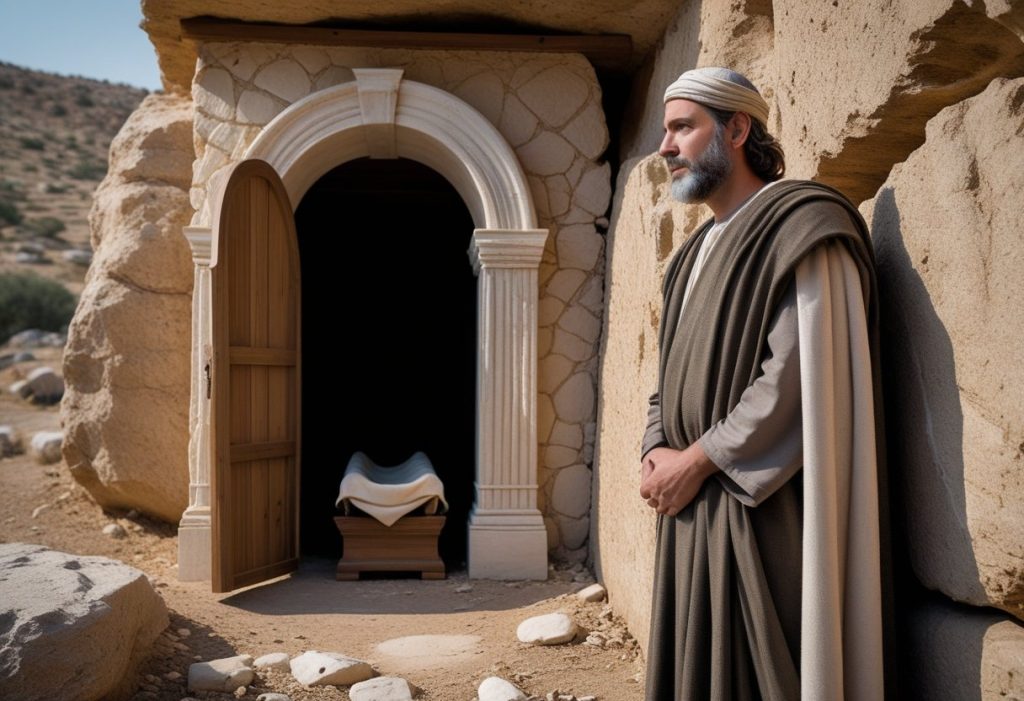
He provided a new tomb for Jesus, ensuring he received a proper burial. The tomb was hewn out of rock, fulfilling prophecies about the Messiah’s burial. After preparing the body with spices and linen, they laid Jesus in the tomb. This act demonstrated Joseph’s faith and courage in a challenging time for Jesus’ followers.
Theological Significance and Aftermath
The death of Jesus carries profound meaning in Christian theology, influencing key beliefs about resurrection, salvation, and atonement. This section explores the implications of His sacrifice and the theological interpretations that emerged following these pivotal events.
Resurrection and Christianity
The resurrection of Jesus is central to Christian faith. It occurred three days after His crucifixion and confirmed His divine nature. This event is celebrated on Easter Sunday, symbolizing victory over sin and death.
Early Christian writers emphasized that Jesus rose not just to prove His divinity but to provide hope for all believers.
His resurrection offers the promise of eternal life, a key tenet of Christianity. It signifies that through Christ, individuals can attain salvation. This belief fosters a profound sense of joy and assurance among followers, encouraging them to live according to Christian teachings.
Additionally, the Ascension, which followed the resurrection, affirmed His eternal reign and ongoing presence in the lives of believers.
Theological Interpretation of Sacrifice and Atonement
The death of Jesus is understood as a sacrificial act of atonement for humanity’s sins. This concept links back to the Jewish Passover, where lambs were sacrificed for redemption.
Christ’s sacrifice is viewed as the ultimate fulfillment of this practice. By dying on the cross, He bore the punishment that humanity deserved, thus reconciling them with God.
The “Holy of Holies,” a term used in early Christian writings, signifies the ultimate place of atonement. This aspect is critical in Christology, as it underlines Jesus’ role as Savior.
Through His death, He opened the way to a direct relationship with God, which was previously inaccessible. This reinterpretation of sacrifice deepened faith and transformed the understanding of God’s love and justice.
