
Jesus stands as the central figure of the Christian faith, revered as the Son of God and the promised Messiah. By examining how is Jesus represented in the New Testament, we uncover a complex portrait that defines the core of biblical theology and serves as the foundation for the spiritual lives of millions.
His life, teachings, and miraculous acts form the bedrock of the faith, revealing a profound path to salvation for all believers. These accounts do not merely list historical events but establish the framework for Christian devotion and understanding.
Through the powerful narratives of his birth, ministry, crucifixion, and resurrection, he is depicted as a divine savior. Ultimately, these scriptures reveal a figure who brings enduring hope and redemption to humanity.

The New Testament emphasizes various aspects of Jesus’ identity, showcasing him as a teacher, healer, and miracle worker.
His parables and actions illustrate profound spiritual truths that challenge followers to live with love and compassion.
Each book contributes to the overall image of Jesus as the one who fulfills Old Testament prophecies and establishes a new covenant between God and humanity.
By exploring how Jesus is represented in the New Testament, readers gain deeper insights into his role and significance within Christianity. The accounts reveal not only the nature of Jesus’ ministry but also the transformative effect he has on those who place their faith in him.
The Birth and Genealogy of Jesus
The account of Jesus’ birth and genealogy highlights significant aspects of his identity as the Messiah. This section explores the fulfillment of Old Testament prophecies and the unique circumstances surrounding his birth.
Fulfillment of Old Testament Prophecies
The genealogy of Jesus is meticulously detailed in the Gospels of Matthew and Luke. These genealogies emphasize Jesus’ lineage as a direct descendant of key figures like Abraham and David. This connection fulfills the prophecy of the Messiah being a Son of David.
Matthew’s genealogy outlines Jesus’ legal claim to the throne, confirming him as the promised King. In contrast, Luke’s genealogy traces Jesus’ line back to Adam, showcasing his humanity. Both accounts support the belief that Jesus is Immanuel, meaning “God with us,” as foretold in Isaiah 7:14.
The Virgin Birth and Early Life
The story of Jesus’ birth is marked by the miraculous virgin birth. According to the Gospel of Matthew, Mary, a young woman engaged to Joseph, conceived Jesus through the Holy Spirit. This event fulfills the prophecy of Isaiah and underscores Jesus’ divine nature.
Following his birth in Bethlehem, the early life of Jesus involved significant events, such as the visit of the Magi and the subsequent flight to Egypt to escape King Herod’s decree. These events not only highlight Jesus’ royal heritage but also his vulnerability and the fulfillment of divine prophecy in protecting him during childhood.
This birth narrative sets the stage for understanding Jesus as both fully divine and fully human, emphasizing his role as the awaited Messiah.
Ministry and Teachings of Jesus

Jesus’ ministry is marked by powerful teachings and miraculous acts that reveal his role as the Lord and the embodiment of truth. His parables and sermons provide deep insights into moral living. Miracles demonstrate his divine authority, while his messages about the Kingdom of God offer hope to humanity.
Parables and Sermons
Jesus frequently used parables to teach profound lessons. These simple stories conveyed complex spiritual truths.
For instance, the parable of the Good Samaritan highlights the importance of compassion and love for one’s neighbor. This aligns with his role as the Good Shepherd, guiding people toward righteousness.
In his Sermon on the Mount, Jesus presented core principles of morality. He instructs his followers to live in a way that reflects the light of the world.
Key themes include mercy, humility, and the pursuit of justice. His teachings emphasize the need for inner transformation and a genuine commitment to God.
Miracles and Signs
Miracles were a significant part of Jesus’ ministry, showcasing his divine power.
He healed the sick, gave sight to the blind, and raised the dead. Each miracle served as a sign of his authority and compassion.
For example, when he fed 5,000 people with five loaves and two fish, it demonstrated his ability to provide abundantly. These acts were not just wondrous; they revealed the truth about his nature as the Son of God. Miracles often prompted further understanding of who he was and the kingdom he proclaimed.
Discourses on the Kingdom of God
Jesus often spoke about the Kingdom of God, emphasizing its spiritual significance. He taught that the Kingdom is not just a future hope but a present reality.
Through his parables, he illustrated what it means to live in alignment with God’s will.
He described the Kingdom as a treasure hidden in a field, worth sacrificing everything to obtain. His messages encouraged people to embrace the values of the Kingdom, such as love, humility, and justice. These discourses invite believers to participate actively in the unfolding of God’s plan on earth.
The Passion and Sacrifice
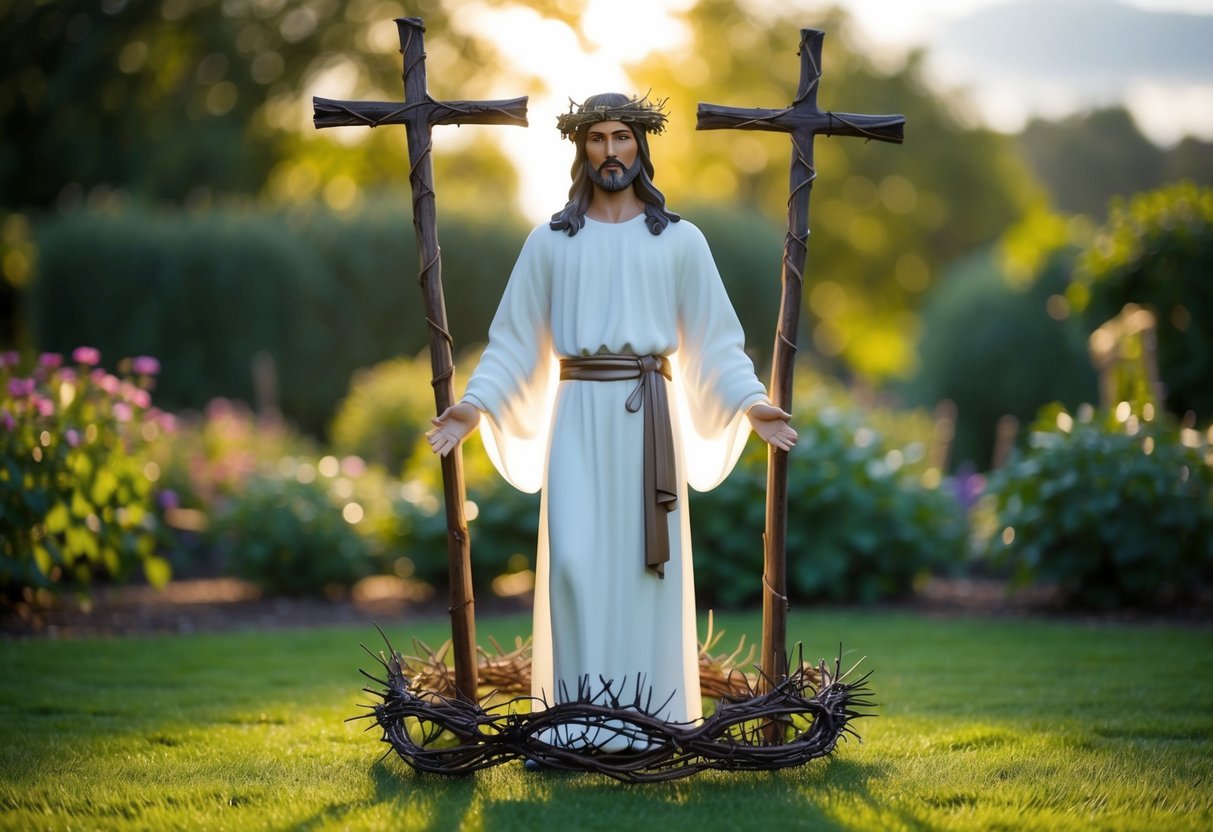
This section examines the significant events leading to Jesus’ sacrifice, his role as the suffering servant, and the implications of his death for atonement and salvation.
The Last Supper and Betrayal
During the Last Supper, Jesus shared a final meal with his disciples. He broke bread and offered wine, symbolizing his body and blood, establishing the practice known as Communion. This meal is crucial as it foreshadows his impending sacrifice.
Judas Iscariot, one of the twelve disciples, betrayed Jesus for thirty pieces of silver. This act of betrayal was foretold in prophecies, highlighting the deep human struggle with sin and faith. Jesus remained aware of his fate, demonstrating grace even in the face of suffering.
Crucifixion and Death
The crucifixion is a central event in the New Testament. Jesus was condemned by the religious leaders and handed over to the Romans.
He suffered immense physical and emotional pain, fulfilling the role of the Passover lamb that takes away the sins of the world.
His death on the cross marks the culmination of his mission as the Savior and the Son of Man. Jesus cried out, “It is finished,” signifying the completion of his atoning work.
Through his death, believers receive salvation and redemption, bridging the gap between humanity and God.
Meaning of the Sacrifice
Jesus’ sacrifice carries profound meaning for Christian faith. It represents atonement for sin and offers a chance for grace and redemption.
Many believers view Jesus as the suffering servant predicted in the prophecies of the Old Testament.
His death opened the door for salvation, allowing followers to receive forgiveness. This act reflects God’s love and desire for a relationship with humanity. Through Jesus’ suffering, believers find hope and assurance in their faith, knowing that his sacrifice was necessary for eternal life.
Resurrection and Ascension
The resurrection and ascension of Jesus Christ are key events in the New Testament, highlighting his victory over death and his divine authority. These events offer hope and assurance to believers, emphasizing his role as the Lord and the fulfillment of faith.
The Empty Tomb
The empty tomb serves as a powerful symbol of the resurrection. After Jesus was crucified, several women, including Mary Magdalene, went to his burial site.
They found the stone rolled away and the tomb empty. Angels at the site declared that Jesus had risen, affirming that death could not hold him.
This discovery is significant as it confirms Jesus as the Messiah. The empty tomb invites followers to reflect on their faith.
It symbolizes hope, as believers are assured of eternal life through him. The event is crucial, as it sets the stage for Jesus’ appearances and teachings following his resurrection.
Post-Resurrection Appearances
After his resurrection, Jesus made multiple appearances to his disciples and others. These encounters were essential in reinforcing their faith and assuring them of his reality.
One significant appearance was on the road to Emmaus, where he explained the Scriptures to two followers without them initially recognizing him.
During these appearances, Jesus provided comfort and instruction. He emphasized the importance of spreading the message of hope and forgiveness.
These meetings strengthened his disciples for their forthcoming mission. They bear witness to the transformative power of faith in Jesus Christ.
The Great Commission
Before his ascension, Jesus shared the Great Commission with his disciples. He instructed them to go and make disciples of all nations. This command underscores the central role of mission in Christian faith.
Jesus assured them that he would be with them always. The Great Commission emphasizes the importance of spreading the gospel.
It also highlights the continued work of Jesus through believers. The call to share his message is a significant part of his legacy, encouraging a life dedicated to faith and service.
The Role of Jesus as a Figure of Worship
Jesus occupies a central role as a figure of worship in the New Testament. He is celebrated as the Messiah and the Son of God, highlighting his divine authority and significance to early Christians. His connection to God and the concept of holiness are key to understanding his worship.
The Christology of Jesus
Christology is the study of the nature and role of Jesus Christ. In the New Testament, Jesus is depicted as both fully divine and fully human. This duality is essential to his identity as the Son of God and Messiah.
The titles given to Jesus, such as Lord and High Priest, emphasize his authority and mediating role between God and humanity.
Passages like John 1:1-18 affirm his divine nature, describing him as the Word that was with God. This portrayal encourages worship, as Jesus is seen not just as a teacher but as the divine key to access God.
Worship and Devotion in Early Christianity
Early Christians expressed their worship of Jesus through prayer, hymns, and communal gatherings. They recognized him as the King of Kings and Lord of Lords, affirming his sovereignty and holiness.
New Testament writings, such as Philippians 2:5-11, illustrate this devotion, showing how believers exalt Jesus.
Worship included recognizing his role as the mediator who reconciles humanity with God. Jesus’ resurrection further solidified his status, inspiring a deep and abiding devotion that shaped the foundation of Christian faith.
Eschatological Themes and Legacy
The New Testament presents eschatological themes that significantly shape the understanding of Jesus’ role and influence. Central to this is the promise of his second coming, which serves as a foundation for faith among believers. This belief affects how Christians view salvation and the hope for a unified kingdom.
The Second Coming
Jesus’ return, often referred to as the Second Coming, is a vital theme in New Testament teachings.
In the Gospel of John, this idea is deeply rooted in the promise of eternal life through faith in Jesus (John 3:16). Revelation vividly describes this future event, portraying Jesus as the “Son of Man” returning in glory.
Believers hold this event as a source of joy and hope. It symbolizes the ultimate fulfillment of God’s promises and the establishment of his kingdom.
This anticipation encourages Christians to live faithfully and strive for unity within the church, grounded in the assurance of salvation.
Influence on Christian Theology and Worldview
The eschatological views in the New Testament profoundly influence Christian theology. The Second Coming not only emphasizes individual salvation but also highlights a collective unity among believers.
This theme reflects the idea that through Christ, they become part of a larger divine plan.
The teachings around the kingdom of God encourage Christians to embody values such as love, service, and hope in their daily lives. These values are foundational to their worldview, shaping how they interact with one another and the world.
The anticipation of Jesus’ coming again unites believers in faith and purpose, driving them to share the message of salvation with others.
