
Jesus, the Son of God, is widely recognized as the most influential figure to ever walk the earth. When we examine his life, many people wonder how powerful was Jesus in terms of his ability to alter the physical and spiritual world. He possessed a unique divine authority that allowed him to perform incredible miracles, heal the sick, and even raise the dead.
His authority extended far beyond these physical acts; he commanded the elements and spoke with a wisdom that silenced his critics. He taught profound truths about faith, love, and the Gospel that continue to challenge and inspire millions of people across the globe today.
Ultimately, the strength of Jesus is not just found in the wonders he performed, but in the lasting transformation he brings to human hearts. His power remains a central pillar of faith, proving that his influence is as vital and life-changing now as it was two thousand years ago.

Throughout Scripture, Jesus demonstrated his divine nature and power. He calmed storms, cast out demons, and provided for the needs of those around him, showing that his strength was not just in his deeds but in his compassion and wisdom.
His claims of unity with God the Father highlight the unique and powerful relationship he holds within Christian belief.
Understanding the true power of Jesus invites deeper reflection on the impact of his teachings and the transformative potential of faith in him.
Explore how these elements intertwine to shape the essence of who Jesus Christ is and why he remains a pivotal figure in the discussions of faith and truth.
The Spiritual Authority of Jesus
The spiritual authority of Jesus is profound, encompassing his divine sonship and victory over sin and death.
This authority grants him a unique position of power, emphasizing his role in salvation and his current reign in heavenly places.
Jesus as the Son of God
Jesus is recognized as the Son of God, a fundamental aspect of his spiritual authority. According to Hebrews 1:3, he is the “radiance of God’s glory” and “the exact representation of his being.” This unique relationship with God empowers him to act with authority in both teaching and miracles.
His divine sonship is further validated through his direct relationship with the Father. In John 3:35, it is stated that “the Father loves the Son and has given all things into his hand.” This connection establishes Jesus as the ultimate authority in spiritual matters, granting him the power to forgive sins and offer eternal life.
Jesus’ Victory Over Sin and Death
Jesus’ spiritual authority is also evident in his victory over sin and death. Through his sacrificial death and resurrection, he triumphed over the powers of darkness. Colossians 2:15 states that he disarmed rulers and authorities, making a public spectacle of them.
Moreover, 1 John 3:8 declares that “the reason the Son of God appeared was to destroy the devil’s work.” This victory reassures believers of Jesus’ power, providing a pathway to forgiveness and redemption. His resurrection fundamentally changed the course of humanity, affirming his authority over life and death.
Christ Seated in Heavenly Places
Currently, Jesus reigns from a position of authority in heavenly places. Ephesians 1:20-21 highlights that he is above all rule and authority, power and dominion. This emphasizes that Jesus holds supreme power over all spiritual forces.
His exaltation means that believers can approach God with confidence, knowing that Jesus intercedes for them. This intercessory role reinforces his spiritual authority, as he advocates for humanity from a position of power.
By relying on the name of Jesus, believers can access this authority in prayer and life challenges.
Ministry and Teachings of Jesus
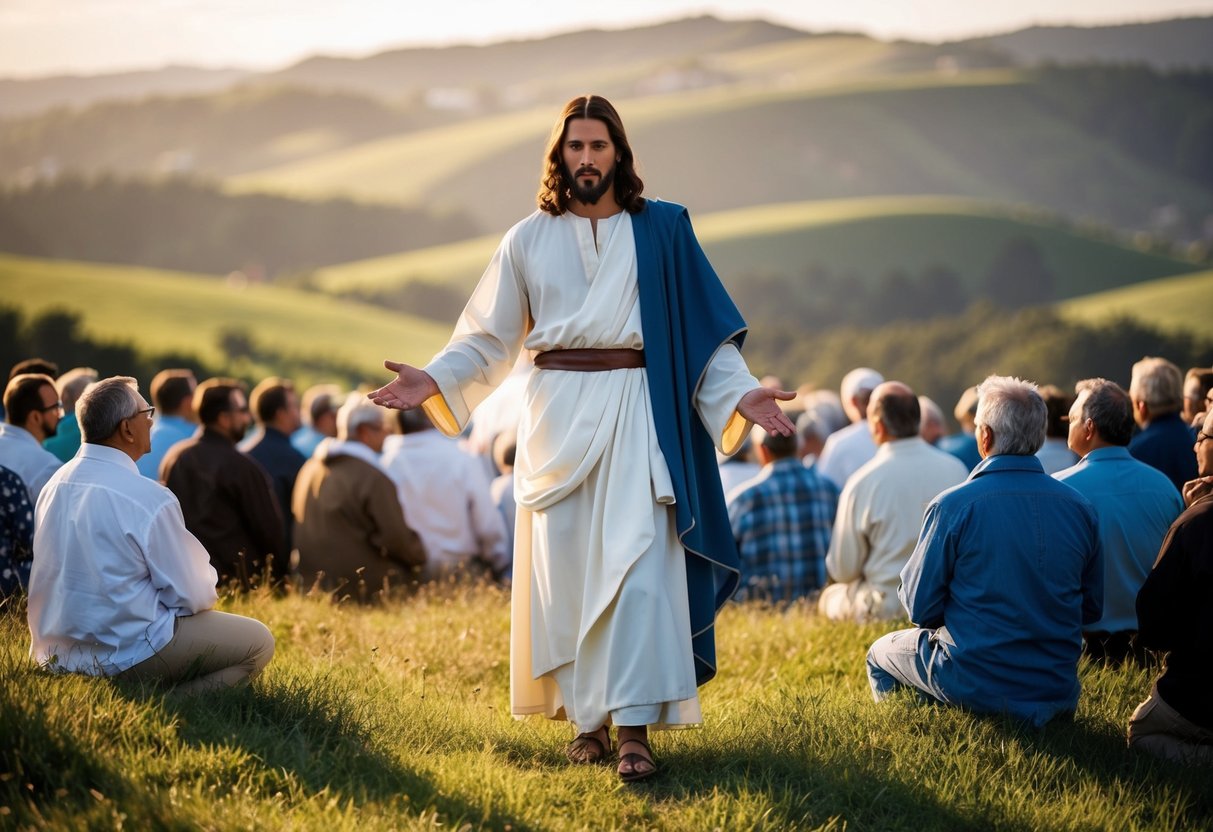
Jesus’ ministry was marked by powerful teachings and a deep understanding of human nature. His messages often included practical guidance for living a life of compassion and faith. He used relatable stories and actions to convey his core beliefs.
Parables and Teachings
Jesus taught using parables, which are simple stories with moral lessons. One famous parable is the Mustard Seed. This story illustrates how something small can grow into something significant. In Matthew 17:20, he said that faith as small as a mustard seed could move mountains, emphasizing the power of belief.
His teachings focused on love, compassion, and mercy. He encouraged people to look beyond their flaws and to embrace forgiveness. For instance, in Matthew 7:28-29, crowds admired his teachings because he spoke with authority, unlike other teachers of the law.
These lessons have had lasting impacts, guiding many in their spiritual journeys. They demonstrate how he aimed to connect with everyday people at their level.
The Great Commission
The Great Commission refers to Jesus’ instruction to his disciples after his resurrection. He commanded them to go into the world and make disciples of all nations, baptizing them and teaching them to follow his commands. This mandate emphasizes the importance of spreading Jesus’ message.
It reinforced the idea that followers should actively share their faith. They were called to be ambassadors of hope and compassion, continuing his work on Earth. This commission highlights Jesus’ vision for a community of believers who live out their faith.
The Role of Faith and Prayer
Faith and prayer were central to Jesus’ ministry. He demonstrated that prayer is a vital connection to God. He often withdrew to pray, emphasizing its importance in daily life.
Jesus taught that prayer should be sincere and personal, not for show.
Throughout his ministry, he showed how faith could lead to healing and miracles. He encouraged people to believe in the possibility of transformation. His teachings inspire hope and emphasize the power of belief and communication with God.
By trusting in faith and prayer, followers can find strength in challenging times.
Miracles and the Power of Healing

Jesus’ healing miracles demonstrate his profound power and compassion. Through these acts, he addressed both physical ailments and spiritual oppression, showcasing his authority over disease and the natural world.
Healing the Sick and Oppressed
Jesus healed many individuals suffering from various illnesses and oppression. For example, he cured a woman who had been bleeding for twelve years (Mark 5:25-34). This miracle not only restored her health but also showed his empathy and willingness to help those in need.
In another instance, he healed a paralyzed man, demonstrating both his power over physical ailments and his ability to forgive sins (Mark 2:1-12). Jesus also delivered the oppressed from evil spirits, as seen when the disciples returned from their mission, saying, “Lord, even the demons submit to us in your name” (Luke 10:17).
These acts of healing were not just displays of power; they emphasized Jesus’ deep care for humanity.
Nature and Jesus’ Command
The miracles of Jesus extended beyond healing the sick. He displayed his authority over nature, as illustrated in the story of calming a storm (Matthew 8:27). By commanding the wind and waves, he demonstrated that even the forces of nature obey him.
Mark 16:17-18 mentions that believers would perform such miracles, showcasing the continuing power of Jesus’ name. It emphasizes the belief that through faith, individuals can also experience healing and deliverance.
These acts reveal Jesus’ divine ability to control both the spiritual and physical realms, establishing him as a powerful figure in the history of faith.
Resurrection and Eternal Promise
The resurrection of Jesus holds a crucial place in Christianity. It demonstrates His power over death and offers believers the promise of eternal life. This event not only fulfilled Scripture but also provides hope and assurance to followers.
Defeating Death
When Jesus rose from the dead, He defeated death itself. This act was not only a miracle but a fulfillment of His own words, as noted in John 2:19-21, where He prophesized His resurrection.
By rising on the third day, He showed that death could not hold Him.
This victory extends to believers as well. Hebrews 2:14 states that through His death, Jesus destroyed the power of death. It signifies that He has authority over life and death, bringing a powerful shift for humanity regarding the fear of dying. In John 10:18, He emphasizes that He has the power to lay down His life and take it up again, showcasing His control over death.
Promise of Eternal Life
The resurrection also brings the promise of eternal life to those who believe. In John 5:28-29, Jesus assures that those who have faith will be raised to life.
This assurance gives hope for salvation and a future beyond physical death.
Through His resurrection, Jesus offers believers a newness of life, as seen in John 17:2. This passage highlights that eternal life is a gift granted to those who trust in Him. It emphasizes a relationship with God that transcends earthly existence.
Thus, the resurrection serves as a cornerstone for faith, providing a clear path to eternal life for His followers.
Impact and Influence
Jesus had a significant impact on communities and individuals alike. His teachings sparked a movement that formed a lasting legacy, influencing countless lives and shaping the early Church. This influence continues to resonate with believers today.
The Birth of the Church
The Church began as a small group of followers after Jesus’ resurrection. The Gospels narrate this pivotal moment, highlighting how these believers spread his message across different regions. They were driven by Jesus’ teachings about love, forgiveness, and community.
In the New Testament, the Acts of the Apostles details the early Church’s growth. Believers gathered to share their experiences and witness to others about Jesus. As they formed a community, their faith became a foundation for the Church that exists today.
Key aspects of the Church’s birth include:
- Teaching and Baptism: The importance of teaching and baptizing new followers.
- Breaking Bread: Sharing meals as a form of community and faith in action.
- Spreading the Word: Evangelism that emphasized Jesus’ message of salvation.
Jesus’ Legacy in Believers
Jesus’ legacy profoundly influences believers in their daily lives. He taught that they are heirs of a spiritual reality, encouraging them to live according to his principles.
This leads to a commitment to faith that goes beyond mere belief.
Believers express their faith through actions, demonstrating love and compassion. These principles are rooted in his teachings and are found throughout the New Testament.
They emphasize the importance of being witnesses for Christ.
Significant elements of this legacy include:
- Faith in Action: Living out Jesus’ teachings through service and kindness.
- Community: Forming supportive gatherings that uplift one another.
- Continuous Growth: Encouraging personal spiritual growth through prayer and study.
