
The English language is full of unique collective nouns that carry deep historical significance. While many are familiar with terms for animals, people often search for specific religious terminology, such as what is a group of nuns called, to better understand ecclesiastical traditions. Interestingly, a collective group of nuns is formally known as a “superfluity.”
Although this specific term might seem uncommon or even strange in a modern context, it reflects the rich history and linguistic traditions surrounding these dedicated women. The word highlights a sense of abundance in spiritual devotion and service that has characterized religious life for centuries.
Nuns commit their lives to religious service, often living in structured communities called convents. In these spaces, they support each other in their spiritual journeys, ensuring that their shared mission remains at the heart of their daily lives.
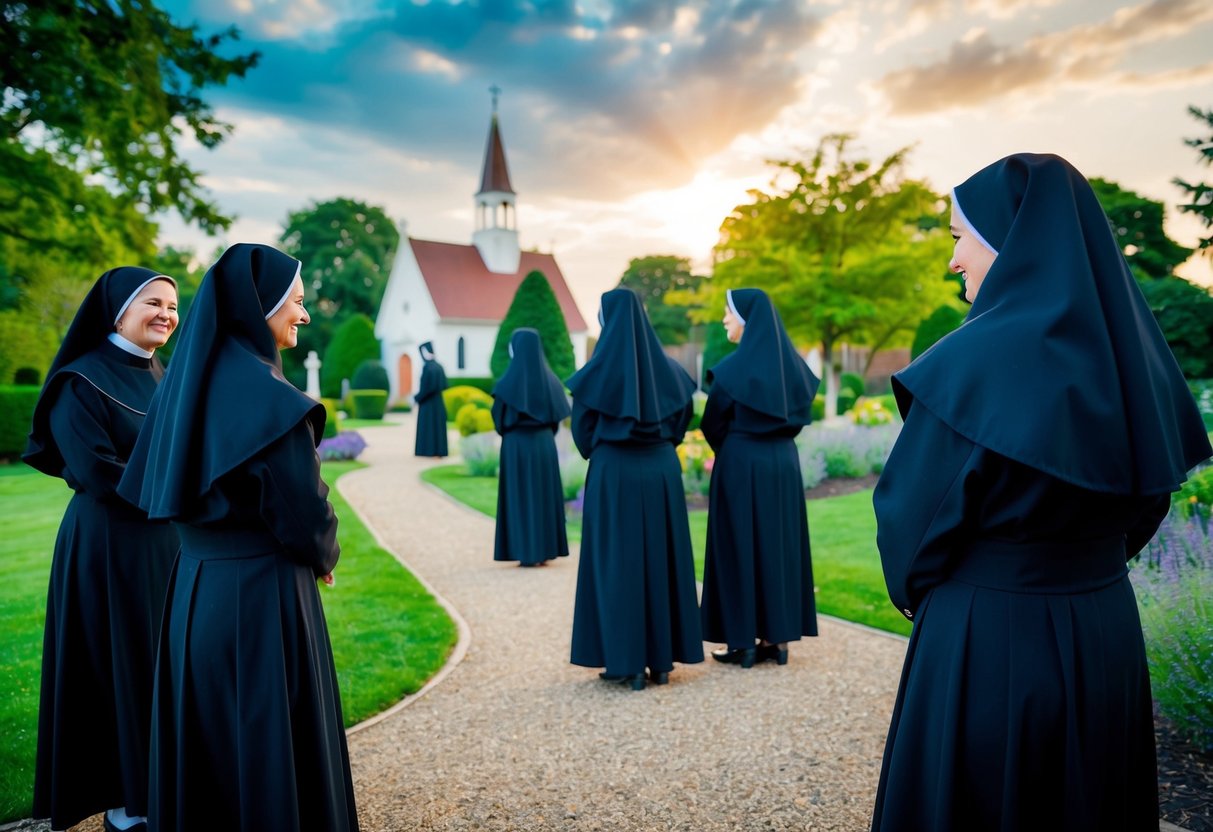
While the term superfluity is not frequently used today, it highlights the bond and shared purpose among nuns. Different titles may also describe these groups, such as “sisters” or “mothers,” depending on their roles within their religious communities.
This blog post explores these terms and provides insights into the fascinating world of nuns and their collective identities.
Terminology and Hierarchies
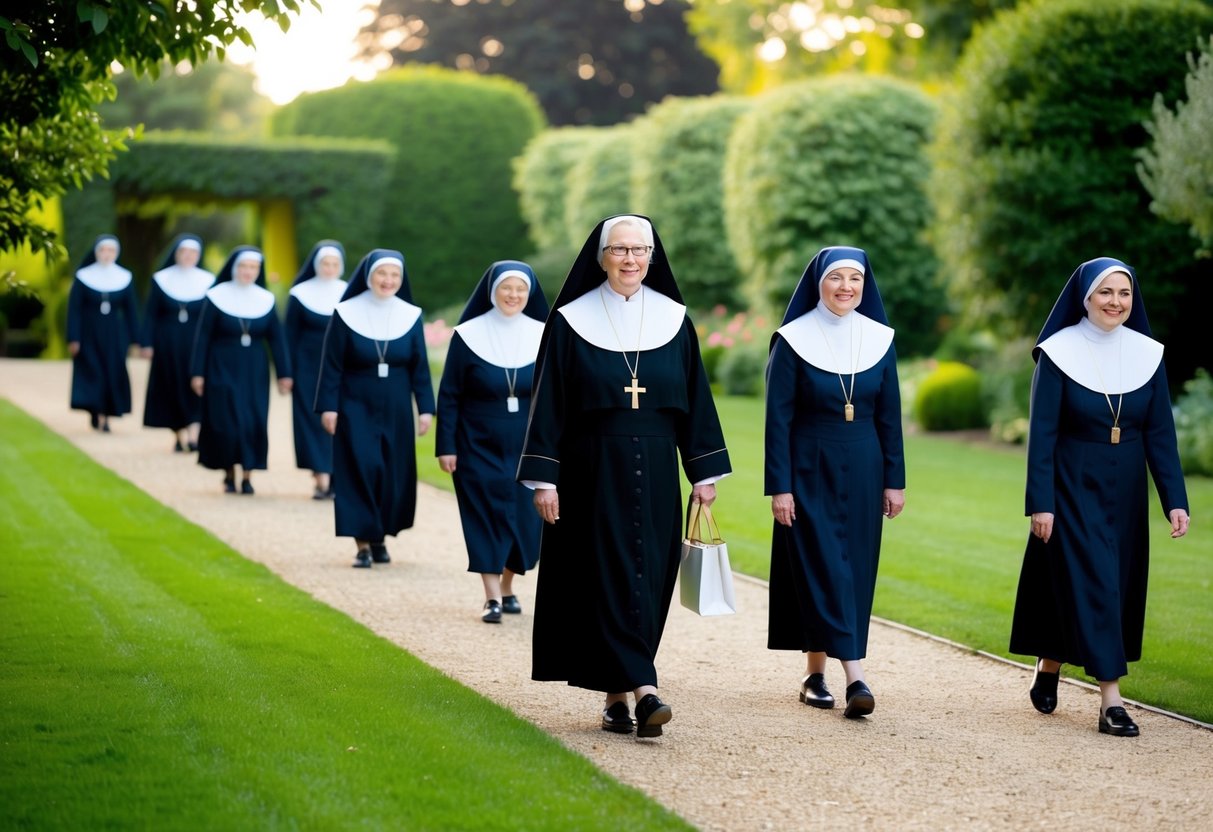
The terms used to refer to groups of nuns and their organizational structure can vary. Key terminology helps to identify the different groups and their roles within religious communities.
Common Terms for Groups of Nuns
A group of nuns is commonly known as a superfluity. This term is recognized in some dictionaries, though its use has become rare. More frequently, people refer to nuns collectively as a convent.
Other informal terms exist, including a mob, throng, or even squadron of nuns. Each term provides a different nuance, but they generally signify a gathering of these religious women working together in service.
In certain cases, nuns may also be known as Sisters. This title emphasizes their commitment to their spiritual vocation. Some traditions include specific roles, such as Canonesses, who are nuns living according to a particular rule of life.
Hierarchy Within Convents
Within a convent, there is a clear hierarchy. At the top is the Mother Superior, who leads the community. This individual is responsible for the spiritual guidance and administration of the convent.
Below the Mother Superior are the Sisters, who may have various roles. Some Sisters may still be in training and are known as Novices. They are learning the rules and responsibilities of convent life.
In larger communities, there may also be positions for different leaders or administrators. This structure ensures that everything runs smoothly and that all members of the community support each other in their spiritual journey.
Another term related to this hierarchy is Abbey, which refers to a larger religious establishment led by an abbot or abbess. Abbeys often house multiple convents, expanding the network of nuns and their missions within the community.
Religious Orders and Communities
Religious orders and communities play a vital role in the structure of religious life, especially within the Catholic Church. These groups consist of individuals who commit to a life of service, prayer, and community living. Each order has unique characteristics and traditions, which shape their practices and missions.
Major Catholic Orders
Major Catholic orders include the Benedictine, Cistercian, Franciscan, Dominican, and Carmelite communities. Each order has its own set of rules and goals.
- Benedictines focus on prayer and hospitality, following the Rule of St. Benedict.
- Cistercians stem from the Benedictines and emphasize a more austere lifestyle.
- Franciscans promote poverty and service to the poor.
- Dominicans prioritize preaching and teaching.
- Carmelites dedicate themselves to contemplation and community prayer.
These orders have established monasteries and centers worldwide, allowing their members to serve diverse communities.
Other Christian Traditions and Eastern Orders
Outside of Catholicism, various Christian traditions have their own communities. The Lutheran and Anglican traditions also support religious orders, though they are less common.
In Eastern traditions, such as Orthodox Christianity, monks and nuns live in similar communal settings.
These communities share a commitment to spiritual growth, often through prayer and service, and contribute to their local congregations.
Monastic vs. Mendicant Orders
Monastic and mendicant orders represent two distinct lifestyles within religious communities.
Monastic orders, like the Benedictines and Cistercians, focus on living in monasteries. They follow strict routines of prayer, work, and community life.
Mendicant orders, such as the Franciscans and Dominicans, live among the people. They rely on alms for their sustenance and aim to spread their message actively.
Both types of orders play essential roles in their communities, emphasizing different aspects of faith and service.
Spiritual Practices and Vows
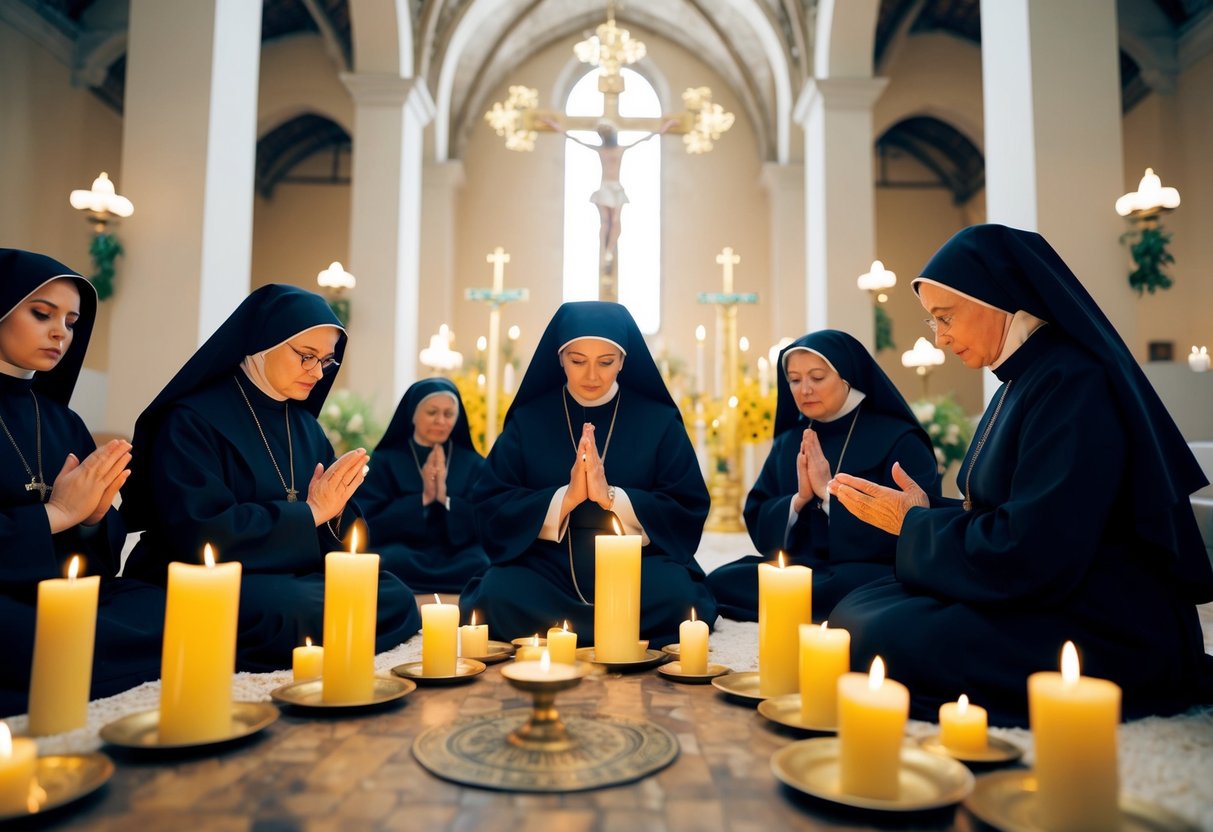
Nuns engage in specific spiritual practices and take serious vows that reflect their commitment to their faith. These practices guide their daily lives and shape their spiritual journey.
Vows and Commitments
Nuns make solemn vows, which are serious promises that guide their life choices. The main vows include poverty, chastity, and obedience.
- Poverty means giving up personal possessions to live simply and share resources with the community.
- Chastity involves choosing celibacy to dedicate their lives fully to God.
- Obedience is the commitment to follow the rules of their religious order and respect their leaders.
Some nuns may take simpler vows, which allow a degree of personal freedom, unlike solemn vows that are binding for life. These vows are essential to their spiritual commitments and community life.
Life of Prayer and Contemplation
Nuns dedicate time each day to prayer and contemplation.
Nuns often follow a structured schedule for prayers, which may include:
- Morning prayers
- Liturgy of the Hours
- Meditation
Through these practices, they seek to deepen their relationship with God. They also engage in quiet reflection, allowing time for introspection. This focus helps them cultivate a spirit of peace and devotion.
Their daily routines show how these practices are vital to their spiritual growth and community purpose.
Religious Attire and Symbols
Religious attire worn by nuns serves both practical and symbolic purposes. The garments often reflect their dedication to faith and community life. Two important components of their clothing are the habit and other significant symbols.
The Habit and Its Significance
The habit is a distinctive outfit worn by nuns. Typically made of simple materials, it is often black or white, depending on the order. This attire symbolizes their commitment to religious life, representing vows of poverty, chastity, and obedience.
In many cases, the habit includes specific elements such as the scapular and wimple. The scapular is a rectangular piece of cloth that hangs from the shoulders. It acts as a reminder of the wearer’s religious duties. The wimple is a head covering that signifies humility and devotion.
Wearing a habit helps nuns stand apart from the general public. It serves as a visual reminder of their faith and purpose, embodying the values they strive to uphold.
Other Religious Garments and Symbols
Along with the habit, nuns may wear other garments that enhance their religious identity. For instance, the veil is a common feature. It is worn over the head, symbolizing submission to God.
Nuns may also incorporate color coding into their outfits. Colors often signify which order they belong to, adding depth to their attire. For example, some orders wear brown or gray habits.
Each element of the attire carries meaning. Together, they reinforce the nuns’ commitment to their spiritual calling and their role in the community.
Historical and Cultural Impact
The role of nuns has shaped religious communities and cultural practices for centuries. Their contributions span significant historical figures and their ongoing influence in modern society.
Notable Historical Figures
Many influential figures in history have been nuns or connected to monastic life. Saint Benedict of Nursia (c. 480-543 CE) founded the Benedictine Order, setting essential guidelines for monastic life. His sister, Saint Scholastica, established communities for women, promoting spiritual growth among them.
Saint Francis of Assisi inspired many to dedicate their lives to faith and service. His contemporary, Saint Clare of Assisi, founded the Order of Poor Ladies, emphasizing poverty and community. Their legacies are seen in the commitment to service and education in many congregations today.
Nuns in Modern Society
In contemporary times, nuns play vital roles in various communities.
The Missionaries of Charity, founded by Mother Teresa, work to aid the poorest and most marginalized. These nuns exemplify the spirit of service and compassion.
Additionally, religious sisters are involved in education, healthcare, and social justice. They often champion women’s rights and provide resources for those in need.
Their impact reflects the enduring relevance of monastic life, showing that the commitment to faith and service remains strong in today’s world.
