
The question of who made Jesus often leads to discussions about his role within Christianity and his historical context.
Jesus Christ is widely recognized as the central figure of Christianity, a major world religion with billions of followers.
He was a Jewish preacher and religious leader who lived in the 1st century, and his teachings laid the foundation for Christian beliefs.

Many Christian denominations view Jesus as the incarnation of God’s Son and the awaited Messiah, which shapes his importance in the faith.
Understanding who made Jesus involves exploring both the biblical accounts of his life and the theological interpretations over the centuries. This rich history reveals not only his divine significance but also his profound impact on religion and society.
As readers will discover, the origins of Jesus reflect a blend of scriptural stories, cultural elements of the time, and the beliefs of the early Christians.
This exploration sheds light on how Jesus became a pivotal figure in history and continues to influence millions around the globe today.
Historical Context and Sources
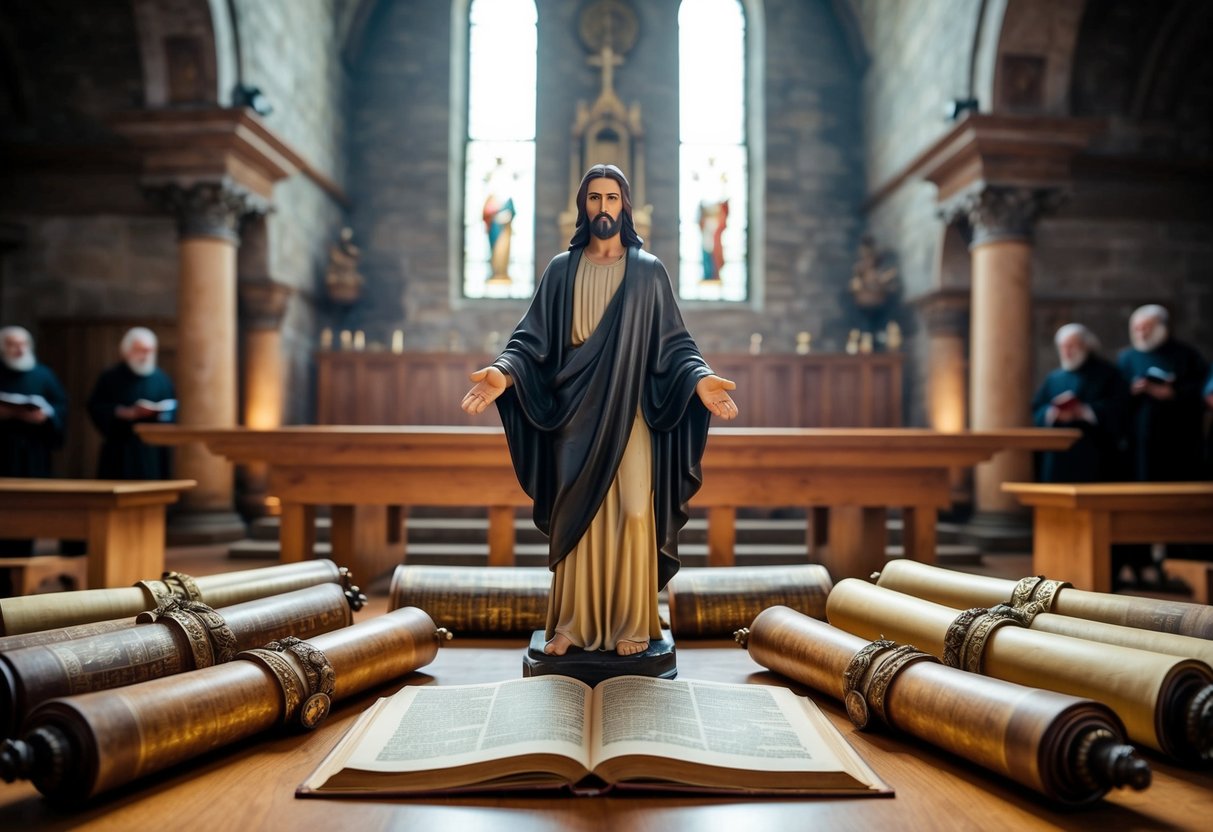
The historical context of Jesus’s life is crucial for understanding his role and influence. Two key factors shaped this environment: Jewish traditions and messianic expectations, along with the political landscape under Roman rule.
Both elements greatly influenced how Jesus was perceived and the teachings he shared.
Jewish Traditions and Messianic Expectations
Judaism played a vital role in Jesus’s identity. The Hebrew Bible, especially the Old Testament, outlined expectations of a coming Messiah. Many Jews at the time hoped for a deliverer who would restore Israel’s glory and liberate them from oppression.
This messianic hope was shaped by prophetic texts, such as Isaiah and Daniel. These texts influenced the beliefs of various Jewish sects, like the Pharisees and the Zealots.
When Jesus emerged, some viewed him as the fulfillment of these prophecies, while others were skeptical. Gospel accounts reflect this tension, depicting Jesus both as a healer and a revolutionary figure.
Roman Rule and Historical Landscape
The Roman Empire’s occupation of Judea set a complex stage for Jesus’s life. Roman rule followed the conquest of Judea in 63 BCE, leading to widespread resentment among the Jewish population.
The Romans allowed local authorities to maintain some power, but their presence created a desire for change.
During Jesus’s time, the political landscape was marked by instability and unrest. Groups such as the Zealots sought violent rebellion against Rome, while others were more focused on spiritual restoration.
Jesus’s message of love and forgiveness often contrasted sharply with the militant expectations of a liberator. This divergence illustrated the varied interpretations of the Messiah, both at the time and in subsequent historical discussions.
Birth and Early Life
This section explores two significant events in the early life of Jesus: his miraculous birth and his upbringing in Nazareth.
Key aspects include the circumstances of his nativity and the environment in which he was raised.
Nativity and Virgin Birth
Jesus was born in Bethlehem to Mary, who was a virgin at the time of his conception. This event is known as the Virgin Birth and is considered miraculous. According to Christian teachings, the conception occurred through the Holy Spirit, making it a significant theological point.
The Nativity is celebrated during Christmas, highlighting its importance in Christianity. Angels announced his birth to shepherds, emphasizing the divine nature of this event. The visit of the Magi later confirmed his status as a significant figure. This event set the stage for his life and teachings.
Upbringing in Nazareth
After his birth, Jesus grew up in Nazareth, a small town in Galilee. His adoptive father, Joseph, was a carpenter, and this profession likely influenced Jesus’s early life.
Growing up in a humble home, Jesus learned the values of hard work and dedication.
During his youth, he would often accompany his father, gaining skills in carpentry. The environment of Nazareth was largely rural and close-knit, providing a foundation for Jesus’s teachings on community and spirituality.
At age twelve, he visited the Temple in Jerusalem, showcasing his understanding of religious matters even at a young age. This experience marked the beginning of his journey toward his public ministry.
Public Ministry of Jesus

The public ministry of Jesus marks a significant period in his life, focusing on his teachings, the selection of his disciples, and his conflicts with religious authorities.
This ministry lasted about three years and was characterized by impactful lessons, miraculous events, and profound interactions with followers and critics alike.
Teachings, Parables, and Miracles
Jesus’ teachings were central to his ministry. He used parables, simple stories that revealed deeper spiritual truths, to convey his messages. Notable parables include the Good Samaritan and the Prodigal Son, which highlight compassion and forgiveness.
He performed numerous miracles, such as healing the sick and feeding the 5,000, demonstrating his divine authority. These acts drew large crowds and illustrated his teachings in action.
Jesus emphasized love, mercy, and the coming of the Kingdom of Heaven, often challenging traditional views on the Sabbath and religious laws.
Disciples and Apostles
Jesus chose twelve disciples to follow him closely. They were ordinary people, including fishermen and a tax collector. This diverse group received personal teaching and witnessed Jesus’ miracles firsthand.
These disciples, known as the Twelve Apostles, played a crucial role in spreading his message. Their names include Peter, James, John, and Judas Iscariot. After Jesus’ resurrection, they continued his work, laying the foundation for the early Christian church.
Conflict with Authorities and Last Supper
Conflict arose between Jesus and the Pharisees, the religious leaders of the time. They often questioned his authority and interpretation of Jewish law.
Jesus’ actions, like healing on the Sabbath, brought him into direct opposition with these authorities.
The Last Supper was a significant event during this time. It was the final meal Jesus shared with his disciples before his crucifixion. During this meal, he instituted the practice of communion, symbolizing his sacrifice. This moment highlighted both his impending death and the establishment of a new covenant for believers.
Crucifixion and Resurrection
The events of the crucifixion and resurrection of Jesus are central to Christian belief. They hold great significance in understanding the nature of salvation and God’s plan for humanity.
Trial and Sentencing
Jesus faced a series of trials before his crucifixion. The Sanhedrin, the Jewish ruling council, accused him of blasphemy for claiming to be the Son of God. This charge was serious under Jewish law. They sought Roman authority to execute him.
Pontius Pilate, the Roman governor, initially found no fault in Jesus. However, under pressure from the crowd, he ultimately sentenced Jesus to death by crucifixion. Pilate’s decision reflected both political expediency and the intense desire of the religious leaders to eliminate Jesus as a threat to their authority.
Significance of the Crucifixion
The crucifixion of Jesus is seen as an act of atonement for the sins of humanity. In Christian theology, Jesus is referred to as the Lamb of God, symbolizing the ultimate sacrifice for sin.
His death fulfilled Old Testament prophecies and established a new covenant between God and people.
Believers interpret the crucifixion as essential for salvation. Through His suffering and death, Jesus took on the sins of the world, offering redemption and reconciliation with God. This act demonstrates God’s immense love and desire for all to enter the Kingdom of God.
Evidence and Belief in the Resurrection
The resurrection of Jesus is a foundational event in Christianity. It is believed that he rose from the dead on the third day after his crucifixion, confirming his identity as the Son of God.
The Gospels describe multiple encounters where Jesus appeared to his disciples and others, solidifying their belief in his return.
Evidence for the resurrection is found in New Testament writings and accounts from early witnesses. These testimonies have been pivotal in shaping Christian faith. The resurrection signifies victory over sin and death, providing hope for believers in their own resurrection and eternal life.
This event reinforces the message of the Gospel and the promise of salvation to all who believe.
Theological Significance and Impact
The relationship between Jesus and God holds deep theological significance that has shaped Christian beliefs throughout history. This section explores various interpretations of Christ’s nature, the doctrine of the Trinity, and the legacy of Jesus across the globe.
Christological Interpretations and Debates
Christology studies the nature and role of Jesus as the Messiah and Son of God. Early Church Fathers developed key interpretations that defined Jesus’ divinity and humanity. The Gospel of John introduces the concept of the Logos, emphasizing that Jesus is both fully God and fully human.
Debates emerged, particularly during the Arian controversy, which questioned whether Jesus was created or co-eternal with God.
Arianism argued that Jesus was a created being, while orthodox views asserted his eternal existence with the father. The outcome of these discussions significantly influenced Christian theology and established key tenets about the nature of Christ.
The Trinity and Jesus as God
The doctrine of the Trinity is central to Christian belief, asserting that God exists as three persons: the Father, the Son, and the Holy Spirit.
Jesus, as the Son, is both divine and human, fulfilling the role of the redeemer. The incarnation signifies that God took on human form to bring salvation.
This belief contrasts with other groups that do not recognize the Trinity, such as Unitarians. The formulation of the Nicene Creed helped solidify this viewpoint during early ecumenical councils.
The understanding of Jesus as God is crucial for comprehending the fullness of Christian faith and worship.
Legacy and Global Influence
Jesus’ impact extends far beyond religious boundaries. His teachings influenced not only Christianity but also ethics, law, and culture in the Western world.
The Church has celebrated Jesus’ resurrection and anticipated His Second Coming through various traditions. The Book of Revelation describes His ultimate return, reinforcing hope and faith among believers.
Across continents, Jesus’ messages of love, forgiveness, and redemption continue to inspire millions. His legacy is evident in art, music, and social movements, leaving an indelible mark on human history.
