
When Jesus cursed the fig tree, it was more than just an act of frustration. He used this moment to teach a profound lesson about spiritual fruitfulness and the consequences of unfruitfulness.
Many readers today still ask: why did Jesus curse the fig tree? The answer reveals a powerful message that remains relevant for believers today.
The fig tree, full of leaves but lacking fruit, symbolizes the spiritual state of Israel at that time. It represented outward religious appearance without genuine inner devotion.
Through this dramatic act, Jesus exposed the danger of empty faith and called His followers to bear authentic spiritual fruit.
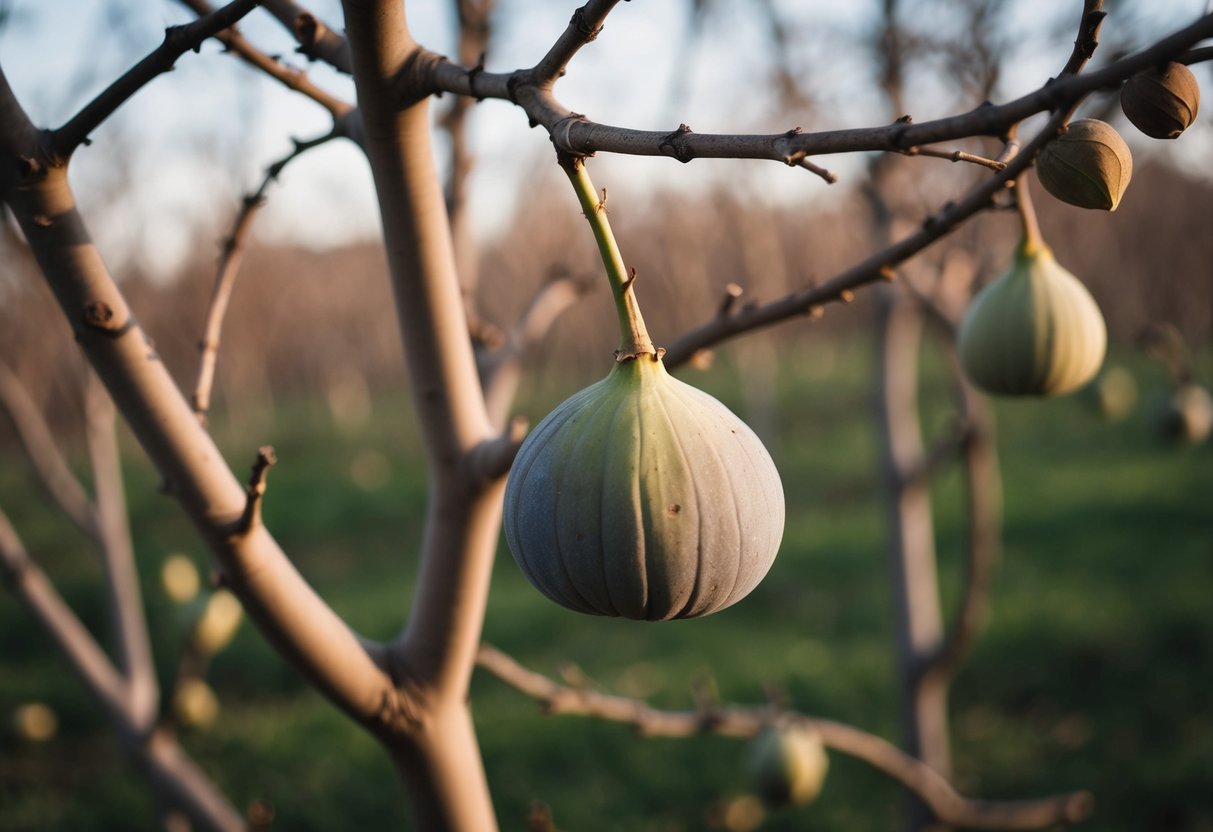
This event challenges readers to reflect on their own spiritual lives. It highlights the importance of being productive in faith, as Jesus expected visible results from those who followed Him.
Understanding the context of this story can lead to deeper insights about faith, judgment, and the hope of spiritual renewal.
The Event in the Gospels
The cursing of the fig tree is a key event found in the Gospels of Mark and Matthew. This act by Jesus carries deep meaning and symbolism, highlighting themes of faith and spiritual fruitfulness.
Each Gospel provides its own perspective and details regarding the event.
Narrative in Mark 11
In the Gospel of Mark, the account of Jesus cursing the fig tree occurs in Mark 11:12-14. The narrative starts the day after Jesus’ triumphant entry into Jerusalem. Hungry, Jesus approaches a fig tree but finds no fruit, even though it is full of leaves.
He then speaks to the tree, saying, “May no one ever eat fruit from you again.” This moment emphasizes the tree’s lack of productivity.
The next day, as the disciples pass by, they notice that the fig tree has withered away. This immediate result highlights the power of Jesus’ words and faith. The event serves as a warning against spiritual barrenness.
Parallel Account in Matthew 21
Matthew 21:18-22 presents a parallel account of the cursing of the fig tree. In this version, the scene is similar to Mark’s, with Jesus feeling hungry and approaching the fig tree. However, Matthew notes that it is not the season for figs, adding complexity to the situation.
After cursing the tree, the narrative shifts focus. Jesus emphasizes the significance of faith and prayer, stating that if one has faith, they can move mountains.
This teaching follows the cursing of the fig tree and deepens the understanding of the event. The account in Matthew illustrates both the miracle and the broader spiritual message that Jesus intended to convey.
Theological Significance
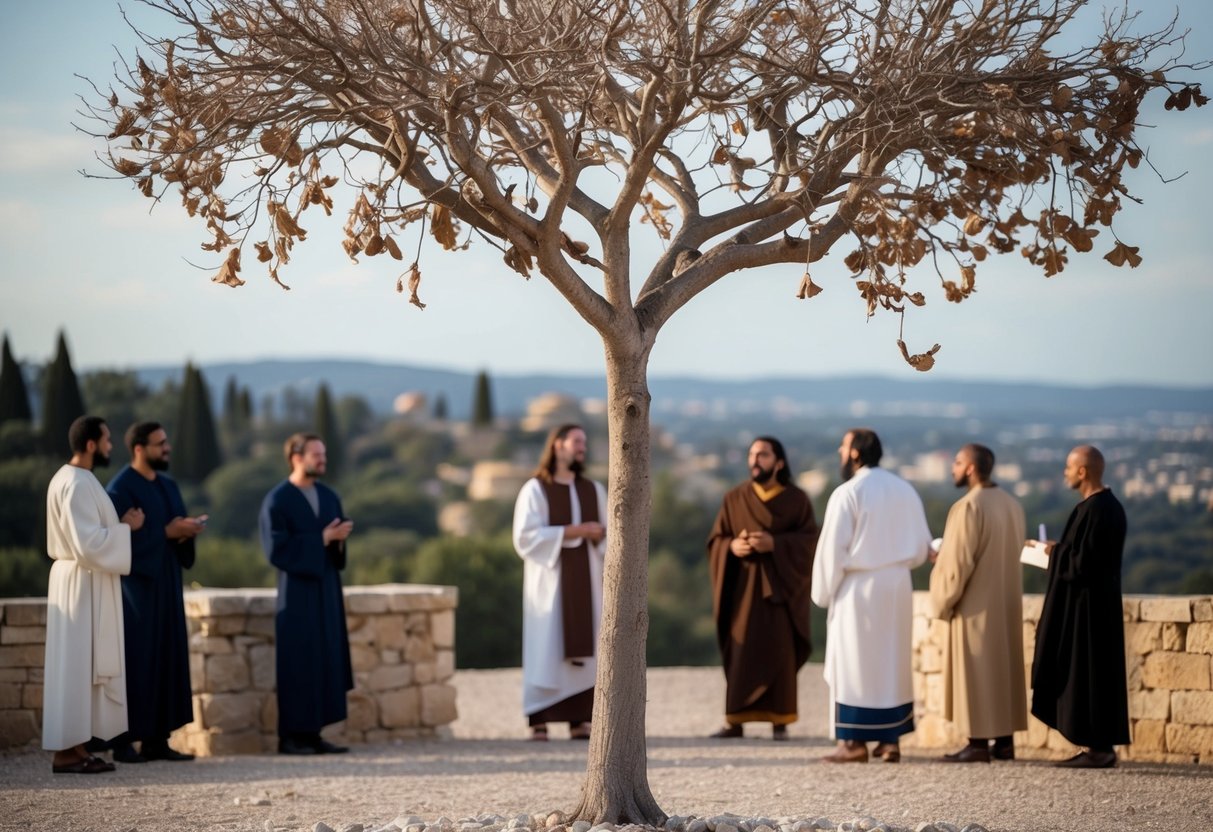
The act of Jesus cursing the fig tree holds deep theological meaning. It reflects themes of judgment, the necessity of faith and prayer, and the anticipation of the Messiah and His kingdom. Understanding these elements provides clearer insight into the underlying messages of this biblical event.
Judgment and Mercy
The cursing of the fig tree symbolizes God’s judgment on spiritual barrenness. The tree, full of leaves yet void of fruit, represents Israel’s failure to produce righteousness and justice. In biblical times, such barrenness signified a broken relationship with God.
This act also illustrates mercy intertwined with judgment. Jesus’ actions challenge believers to reflect on their spiritual fruitfulness.
He emphasizes the need for genuine faith, urging them to avoid becoming like the fig tree—outwardly impressive but inwardly lacking.
Faith and Prayer
Faith and prayer are central to the story of the cursed fig tree. Jesus emphasizes that a believer’s relationship with God requires active faith.
He teaches that having faith can yield powerful results, symbolized by the ability to move mountains.
This account underscores the importance of prayer in seeking God’s kingdom. It calls believers to rely on prayer as a means of cultivating a thriving spiritual life.
Through prayer, they can experience His guidance and strength in their spiritual journey.
Messiah and the Kingdom of God
The cursing of the fig tree connects to the broader theme of the Messiah and the establishment of God’s kingdom. Jesus came to fulfill God’s promises, signaling that His kingdom demands genuine spiritual fruit.
His actions in the temple, where He referred to it as a den of robbers, highlight the need for purity and righteousness.
The cleansing of the temple, along with the fig tree’s curse, signifies the urgency to prepare for the arrival of God’s kingdom. This is a call for believers to reflect on their faith, ensuring they contribute to the fruitfulness of God’s reign.
Historical and Cultural Context
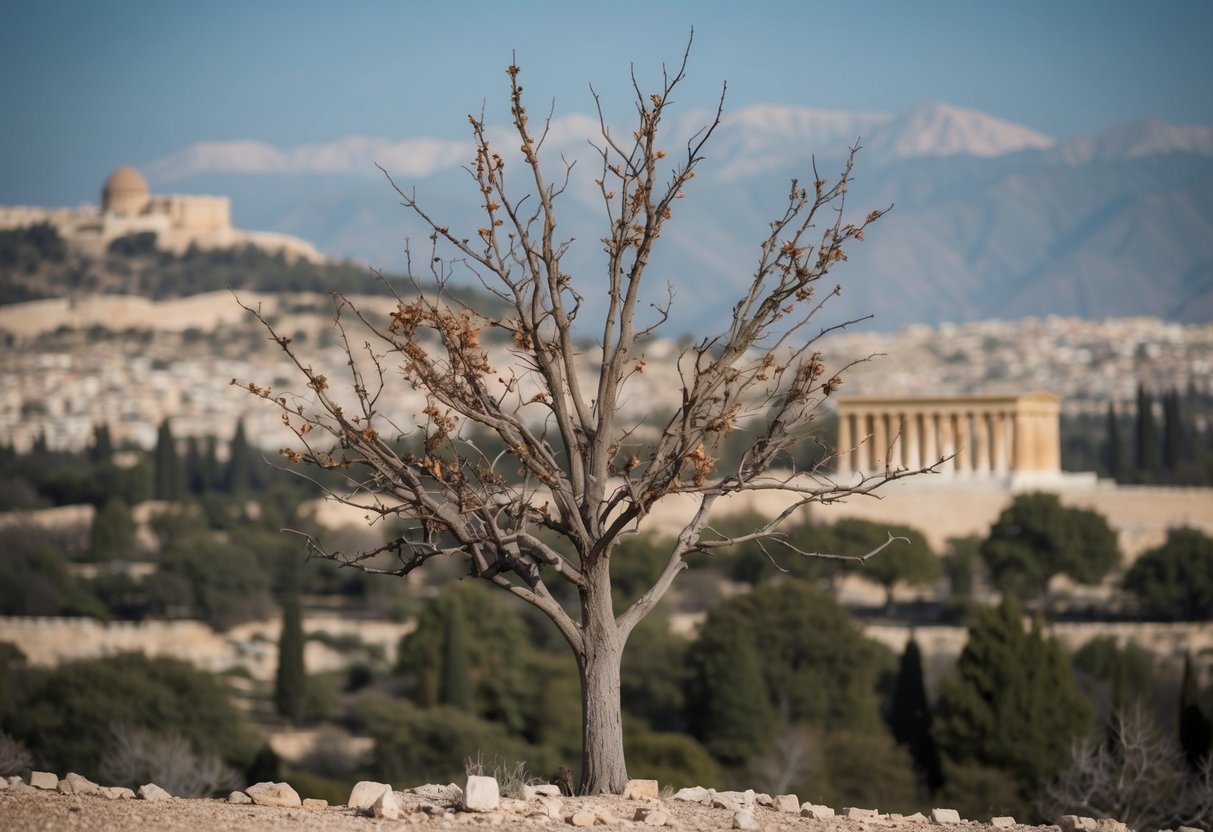
The act of Jesus cursing the fig tree holds deep meaning within its historical and cultural backdrop. This section explores the significance of Israel and the fig tree in the context of biblical teachings, alongside the implications of prophetic symbolism, especially regarding Jerusalem and its religious leaders.
Jesus and Israel
In Jesus’ time, Israel was under Roman occupation. The nation was waiting for a Messiah who would restore its glory. Jesus, as a Jewish leader, often challenged the status quo established by the religious leaders. He sought to clarify the true purpose of God’s covenant with Israel.
The fig tree represented not only Israel’s agricultural landscape but also its spiritual state. The expectation was for Israel to be fruitful, producing good works and faithfulness to God.
When Jesus cursed the fig tree, it symbolized His disappointment in Israel’s lack of spiritual fruit, especially among its leaders.
The Fig Tree in the Old Testament
The fig tree is featured prominently in the Old Testament, often symbolizing Israel itself. Jeremiah and Isaiah both use the fig tree to illustrate the nation’s spiritual condition. In Jeremiah 24, good figs represent those who follow God’s ways, while bad figs symbolize those turning away from Him.
During Jesus’ time, the fig tree’s leaves indicated it should have been bearing fruit. This expectation amplified His message. The fig tree’s failure to produce fruit paralleled the unfruitful religious practices prevalent among the Jews.
Prophetic Symbolism
When Jesus cursed the fig tree, He acted within the tradition of prophetic symbolism. Many prophets used tangible objects to convey deeper spiritual truths. The fig tree served as a stark warning to the religious leaders in Jerusalem.
This act foreshadowed the fate awaiting those who rejected Jesus’ teachings. The temple, central to Jewish worship, was also at the heart of Jesus’ criticism.
He called out the hypocrisy of the high priests and religious leaders. This moment highlighted the urgent need for spiritual renewal, not just for the Jews but also for the Gentiles.
Lessons for the Church
The event of Jesus cursing the fig tree offers important insights for the church. It highlights the need for genuine worship and spiritual fruitfulness. These lessons emphasize the importance of a healthy relationship with God and the necessity for the church to be true to its calling.
Church and Worship
In a church setting, worship must go beyond mere rituals. It should create a genuine connection with God.
This means that worship services must encourage true engagement, where participants can express their faith authentically.
Church leaders need to guide congregations in developing a heart for worship. This involves fostering an atmosphere of prayer and openness.
A house of prayer should not just be a physical space but also a spiritual mindset. When worship lacks sincerity, it can lead to spiritual barrenness.
Spiritual Fruitfulness
Spiritual fruitfulness is essential for the health of a church. The lack of fruits can indicate deeper issues in one’s relationship with God.
This can serve as a call to repentance, reminding individuals to evaluate their spiritual health.
The church is called to produce fruit that benefits the community and glorifies God. This includes acts of kindness, service, and sharing the gospel.
Remaining rooted in faith is necessary for productivity. Without this commitment, the church risks becoming a barren fig tree, lacking the vital fruits it was meant to bear.
Symbolic Meaning and Interpretations
The cursing of the fig tree by Jesus carries deep symbolic meanings and interpretations. This event serves as a prophetic sign that highlights spiritual barrenness, the consequences of failing to bear fruit, and the relationship between the divine and the natural world.
Fig Tree as a Symbol
In biblical context, the fig tree often represents the nation of Israel and its spiritual condition. The presence of leaves without fruit symbolizes God’s people who appear active in faith but lack true righteousness.
This correlation is evident in the parable of the barren fig tree, where a fig tree that does not bear fruit faces judgment.
By cursing the fig tree, Jesus offered a stark reminder that mere appearance is insufficient; genuine faith must produce spiritual fruit. This symbolism underscores the importance of living out one’s faith through actions and good works.
Withering of the Fig Tree
The withering of the fig tree signifies divine judgment on those who fail to uphold their spiritual responsibilities.
When Jesus curses the tree, it serves as a warning to Israel’s leaders and people about the consequences of rejecting Him as the Messiah. The immediate withering reflects God’s disapproval of their lack of faith and fruitfulness.
This theme aligns with the idea of the parable of the budding fig tree, demonstrating that true faith must eventually manifest in actions.
The quick demise of the tree also illustrates how quickly judgment can come when one does not respond to God’s call.
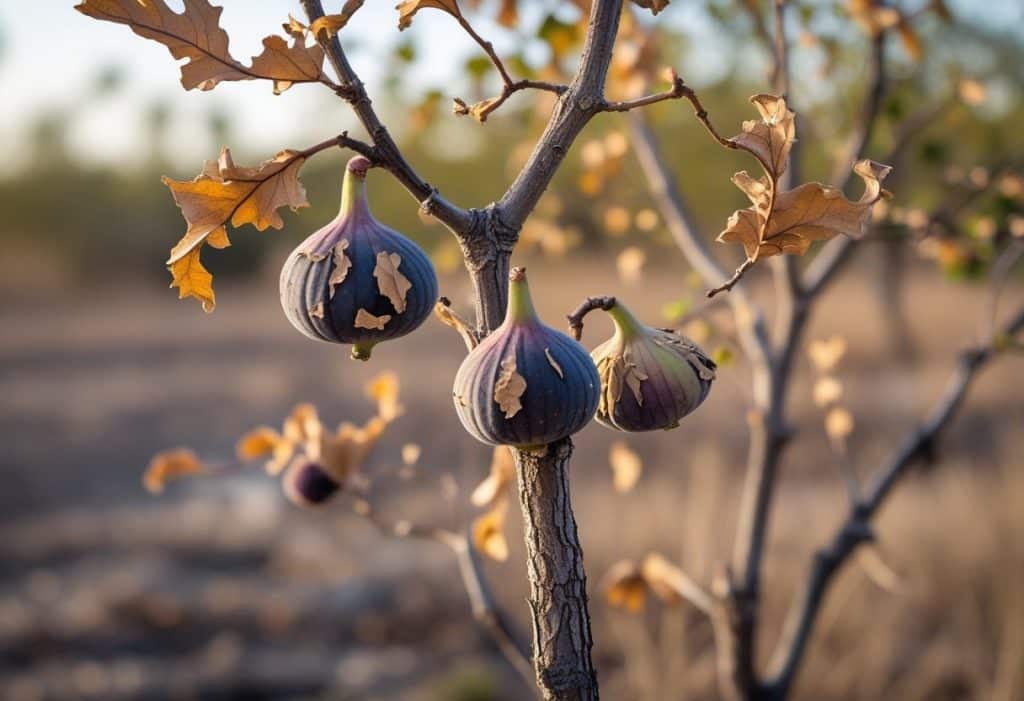
Cursing and the Natural World
Jesus’ act of cursing the fig tree also highlights the interconnectedness of the spiritual and natural worlds. It emphasizes that human choices have real consequences, not only for individuals but for the community and creation as a whole.
The fig tree, a common plant in Israel, serves as a relevant example for His audience. By addressing the tree’s failure to bear fruit, Jesus blurs the line between the spiritual decay of Israel and the natural world.
It serves as a prophetic sign that signifies deeper spiritual truths, reinforcing the message that God’s creation is affected by humanity’s faithfulness or lack thereof.
