
The question of whether Jesus had children has intrigued many throughout history.
When people ask did Jesus have children, they encounter a variety of theories—some believe he was married and fathered children, while others assert he remained single to focus wholly on his spiritual mission.
There is no credible evidence in the Bible or the Gospels to support the idea that Jesus had a wife or children. Mainstream Christian teaching holds that he devoted his life entirely to his ministry and the salvation of humanity.
Understanding what Scripture and historical sources actually say helps separate fact from speculation and provides clarity on this frequently asked question.

In the New Testament, Jesus frequently spoke about his purpose and dedication to God’s work. He emphasized creating spiritual connections rather than traditional family ties.
This perspective is an important aspect of the Christian faith, which views Jesus as a divine figure whose mission extended beyond earthly relationships.
As discussions continue, theories and speculations often arise, fueled by popular culture and historical anecdotes. The lack of solid biblical support makes it essential to approach this topic with careful consideration of the available evidence.
Historical Context of Jesus’ Life
To understand Jesus and his background, it is essential to explore the historical context in which he lived. This includes his identity as a Jewish man and the societal norms surrounding marriage during early Christianity.
The Jewish Man and His Times
Jesus was born into a Jewish family in the region of Judea, around 4 BCE. During his lifetime, Judea was part of the Roman Empire. The culture was deeply rooted in Jewish traditions and religious practices.
As a Jewish man, he followed the customs of his people, which included attending synagogue, observing the Sabbath, and practicing dietary laws.
Historical records highlight that Jesus engaged with various social, political, and religious groups, including Pharisees and Sadducees.
His teachings often challenged existing norms, addressing issues of faith, morality, and community. This engagement shaped his influence within a diverse society, where many were searching for religious meaning and social change.
Marriage Customs in Early Christianity
Marriage customs in early Christianity were influenced by Jewish traditions. These customs emphasized family life and community. In this context, marriage was often arranged, focusing on alliances rather than personal choice.
Jesus’ life and mission reflect a unique dedication to spirituality rather than family ties. Early Christian texts suggest that Jesus chose to remain single to fulfill his purpose without distractions.
While marriage was respected, it was not seen as essential for everyone, especially in a religious context that prioritized devotion over domestic life. This perspective contributed to the idea that Jesus did not have children or a spouse, aligning with his mission as a spiritual leader.
Examination of Biblical Texts

An analysis of biblical texts reveals key insights into whether Jesus had children. It explores the canonical gospels and their references as well as apocryphal writings that offer alternative views.
Canonical Gospels and Jesus’ Marital Status
The New Testament, specifically the canonical gospels, does not provide any evidence that Jesus was married or had children. Passages like Luke 20:34-36 suggest that Jesus taught about the nature of life after death, stating that people do not marry in the afterlife.
Furthermore, there are no mentions of a wife or children in any of the four gospels (Matthew, Mark, Luke, and John). This absence leads many scholars to conclude that Jesus lived a celibate life. The early Christian community focused on His teachings rather than documenting a family life, strengthening the argument that He had no biological children.
Apocryphal Writings and Potential References
Apocryphal texts, such as the Gospel of Philip and the Gospel of Mary, touch on themes that some interpret as related to Jesus’ personal life. The Gospel of Philip mentions a close relationship with Mary Magdalene, leading to speculation about their possible marriage.
However, these texts are not part of the accepted biblical canon and often reflect different theological perspectives. The Gospel of Jesus’ Wife, which surfaced in recent years, also claims Jesus was married. Still, its authenticity is widely debated. These writings raise questions, but they do not provide concrete proof of Jesus having children.
Jesus’ Personal Life in Scholarly Debate
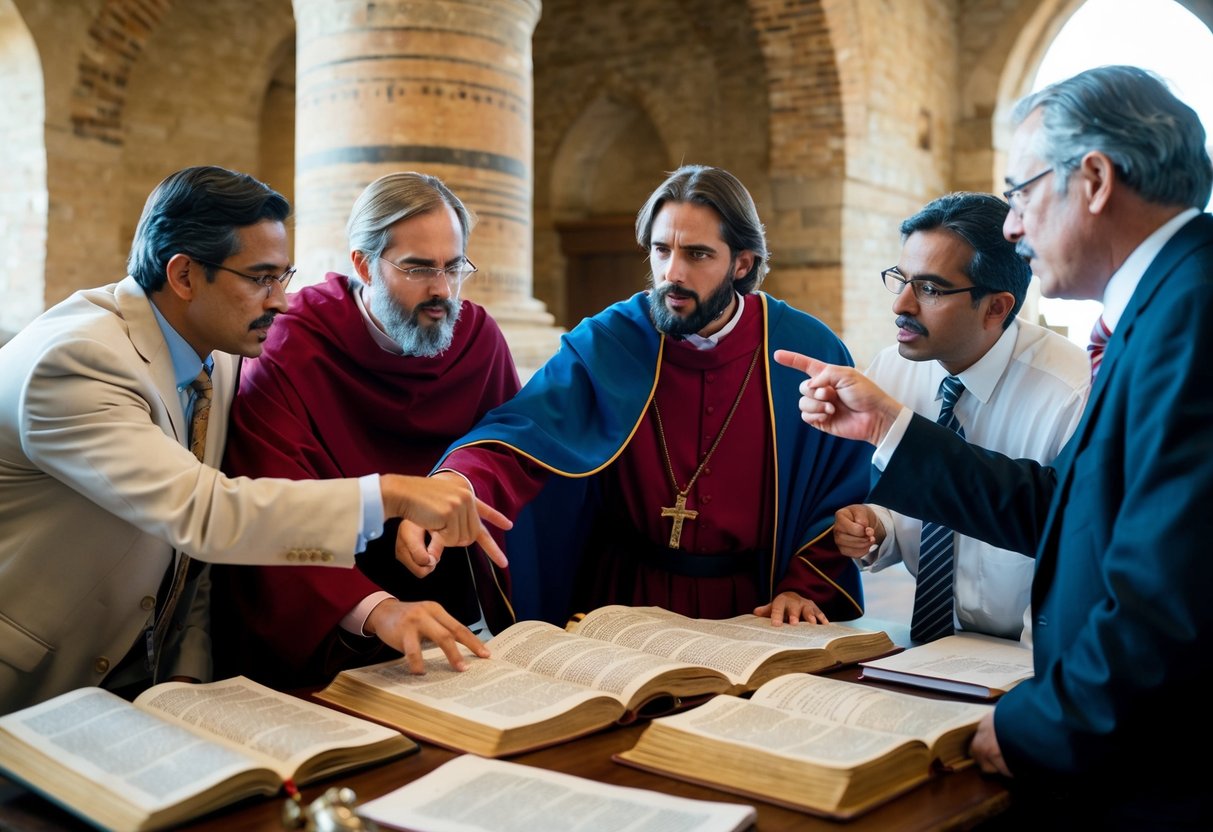
The discussion around whether Jesus had any children often involves his personal life, including the concept of celibacy and differing scholarly opinions on alleged descendants. Scholars examine historical texts and religious teachings to understand Jesus’ choices and lifestyle.
The Concept of Celibacy and Religious Teaching
Many biblical scholars agree that Jesus lived a celibate life. This is supported by various passages in the New Testament. For example, in Luke 20:34-36, Jesus emphasizes that those worthy of eternal life do not marry.
Celibacy is a key aspect of Christian teaching, reflecting devotion to God. Early Christians viewed Jesus’ unmarried status as central to his mission. The absence of a wife or children in the Gospels suggests he dedicated his life to preaching and healing, aligning with the ideals of selflessness in faith.
Scholarly Analysis on Jesus’ Alleged Descendants
The topic of Jesus’ potential children has generated much debate. Some argue he may have had descendants, citing non-canonical texts and interpretations of ancient manuscripts. Despite this, mainstream Christianity largely rejects these claims.
Biblical scholars note that the Gospels make no mention of Jesus being married or having children. This absence of evidence strongly indicates he did not have offspring. The early Church focused on preserving Jesus’ teachings, which likely would have included information about a family if it existed.
Cultural Representation and Hypotheses
The theories surrounding whether Jesus had children often intertwine with cultural representations and interpretations found in various forms of media. Literature and documentaries have sparked interest and speculation about his personal life, notably involving Mary Magdalene.
Popular Literature and Interpretations
One of the most famous works addressing this topic is The Da Vinci Code by Dan Brown. The novel suggests that Jesus was married to Mary Magdalene and that they had children. While fictional, Brown’s work drew attention to historical interpretations and alternative views of Jesus’ life. This sparked greater public curiosity about potential hidden truths regarding his family.
Another significant text is The Lost Gospel by Barrie Wilson and Simcha Jacobovici. This book claims to have discovered ancient writings suggesting that Jesus and Mary Magdalene were married. These interpretations encourage readers to question conventional views and explore lesser-known narratives that challenge traditional Christian beliefs about Jesus’ relationships.
Documentaries and Speculative Theories
Numerous documentaries have explored the hypothesis of Jesus having children. They often examine historical texts and cultural traditions suggesting that Jesus may have had a domestic life. These programs present evidence alongside speculation, leading viewers to consider the complexities of Jesus’ life beyond religious texts.
The portrayal of Mary Magdalene in these documentaries is crucial. Often depicted as a partner to Jesus, her role is examined through different lenses. Scholars discuss her significance in early Christianity and how her relationship with Jesus is often overlooked. This scholarly attention provides a modern context for the ongoing debate about Jesus’ personal life and legacy.
Theological Implications and Views
The question of whether Jesus had children carries significant theological implications. His celibacy and lack of a traditional family structure shape many aspects of Christian thought and community life.
Impact on Christian Theology
Jesus’ choice to remain unmarried influences Christian teachings about commitment and divine purpose. His life focused entirely on the mission of God, emphasizing spiritual rather than earthly connections.
This dedication is seen as a model for followers, encouraging them to prioritize their relationship with God over family ties.
The early Church Fathers often reflected on Jesus’ life choices, asserting that his teachings point to a broader spiritual family. This idea of a spiritual family aligns with the teachings of the Kingdom of God, where believers become brothers and sisters in faith, transcending biological ties.
Theological Significance of Jesus’ Celibacy
Jesus’ celibacy is significant in theological discussions about holiness and mission.
It indicates a form of devotion that many Christians aspire to emulate. The absence of a spouse and children allowed Jesus to focus on his ministry and equally serve all people.
Believers often interpret his life as a call to value spiritual relationships. In this view, Jesus’ example encourages a commitment to community and the Church, fostering unity among followers as they focus on the teachings of the Kingdom of God.
His choice is supported by passages in the New Testament that highlight the importance of serving God above familial obligations.
