
The physical suffering of Christ leading up to the crucifixion is a subject of intense historical and theological study. While many are aware that he was whipped, few grasp the full extent of the Roman scourging, leading them to ask: how bad was Jesus beaten according to historical standards?
Ancient accounts describe a level of punishment that was extreme even for that brutal era, designed to bring a victim to the very brink of death before the execution even began.
In fact, the abuse was so severe that his appearance was marred beyond human recognition. This brutal reality directly fulfills the prophetic writings of Isaiah, highlighting the immense physical price paid during the Passion.

The brutality included multiple forms of violence, such as flogging and mockery. Roman soldiers struck him repeatedly, which was not only meant to inflict pain but also to humiliate.
This treatment was part of a larger narrative of suffering that Jesus experienced, which served a significant purpose in the story of redemption.
Understanding how badly Jesus was beaten helps to illustrate the depth of his agony. It highlights the physical and emotional suffering endured, marking a crucial moment in history that would lead to the crucifixion, a pivotal event in Christian belief.
Historical Context of Jesus’ Arrest and Punishment
The arrest and punishment of Jesus occurred against a backdrop of political and religious tension in Judea.
Understanding the events leading up to his arrest and the role of key figures, such as Pontius Pilate, provides insight into the severity of his punishment.
The Events Leading Up to the Arrest
Before his arrest, Jesus had a significant impact on the Jewish community. His teachings and actions challenged the religious authority of the Sanhedrin, the ruling council of Jewish leaders.
This tension escalated after Jesus’ entry into Jerusalem, where he confronted merchants in the temple, an act that threatened the status quo.
As a result, Jewish leaders sought a way to remove Jesus. They conspired to arrest him quietly to avoid public unrest. The involvement of Judas Iscariot, who betrayed Jesus for silver, was key in this plan.
Soldiers, sent by the Sanhedrin, arrested Jesus at night in the Garden of Gethsemane, further emphasizing the secretive nature of their actions.
Pilate’s Role in Jesus’ Punishment
Pontius Pilate, the Roman governor, played a crucial part in the punishment of Jesus. The Jewish leaders brought Jesus before him, accusing him of claiming to be the King of the Jews, which threatened Roman authority.
Despite finding no fault in Jesus, Pilate faced pressure from the crowd demanding crucifixion. To appease them and maintain order, he ultimately authorized the punishment.
Pilate’s actions reflect the complex relationship between Roman governance and local religious authority. This decision resulted in Jesus being brutally beaten and executed. The political motives and fear of backlash greatly influenced Pilate’s treatment of Jesus during this critical moment in history.
The Nature of Jesus’ Suffering

Jesus’ suffering involved intense physical and emotional pain, which was crucial for understanding the depth of his sacrifice. His experiences revealed the harsh reality of human cruelty and the price of redemption.
Physical and Emotional Torment
Jesus endured severe physical torment during his trial and crucifixion. He was subjected to flogging, which involved a whip designed to inflict maximum damage.
Roman soldiers used a whip called a flagrum, often fitted with pieces of metal or bone to tear the skin. This punishment left him bruised and bleeding, which fulfills the prophecy stated in Isaiah 53:5 about how he was “pierced for our transgressions.”
In addition to physical pain, Jesus faced emotional torment. He was mocked during his suffering, with soldiers putting a crown of thorns on his head.
This act was not only painful but also humiliating. The combination of physical injury and public humiliation deepened his suffering, highlighting the cruel nature of his execution.
The Scourging and Flogging
The scourging that preceded the crucifixion is one of the most brutal parts of Jesus’ suffering. Roman authorities typically used this method as a precursor to execution.
Being whipped with multiple strands of leather added to the agony. Each strike would cause new wounds, exacerbating his pain.
The Bible depicts his suffering vividly, illustrating the severity of his beating. Such violence was meant to ensure that his body was barely recognizable.
The lashes inflicted not just pain but psychological trauma, as the soldiers mocked him amid the violence. Jesus’ suffering, therefore, served a dual purpose—highlighting the depths of human cruelty while also fulfilling prophetic scripture, showing the significance of his sacrifice for humanity.
Religious Significance of the Suffering
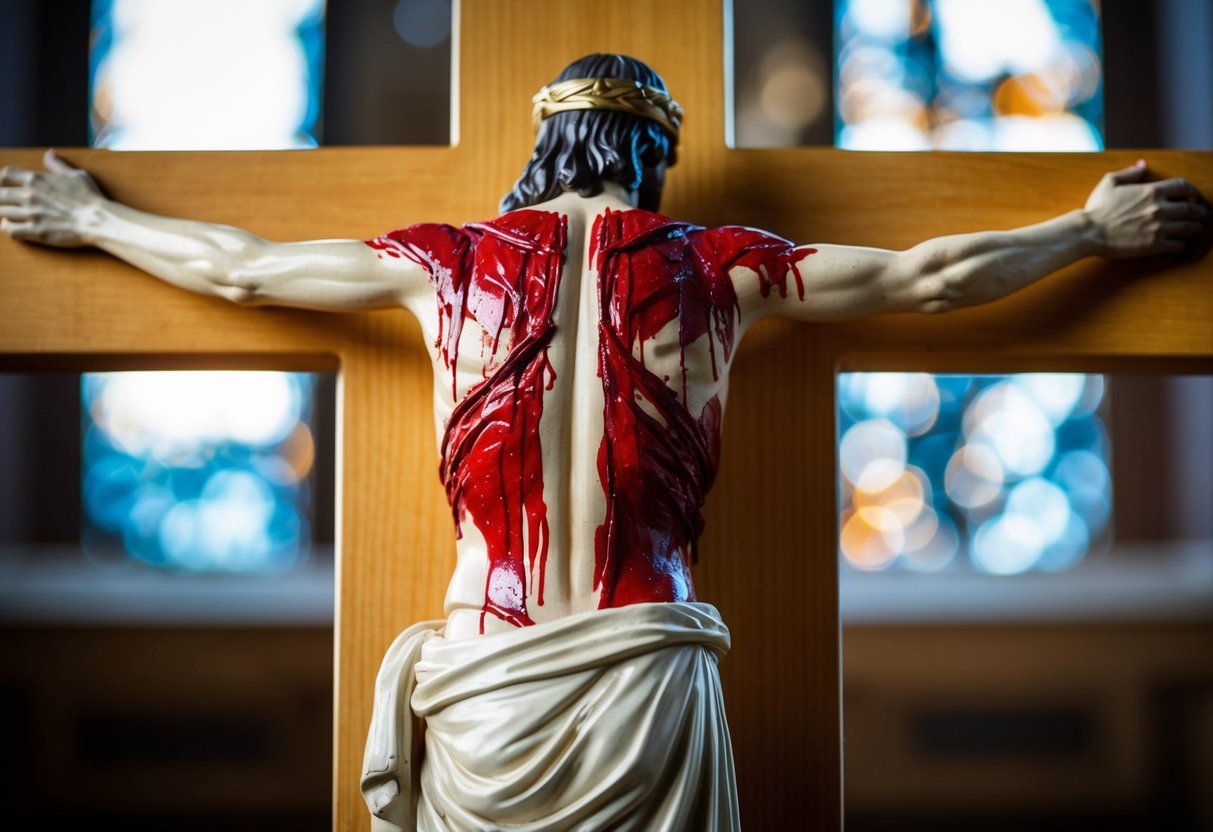
The suffering of Jesus carries profound religious significance. It connects to Biblical prophecy and holds deep symbolism, revealing key aspects of faith and redemption. The physical pain endured serves a greater spiritual purpose linked to sin and divine peace.
The Fulfillment of Prophecy
The suffering of Jesus fulfills Old Testament prophecies, showing His role as the Messiah. Isaiah 53 speaks of a suffering servant who bears the sins of many. This prophecy highlights that Jesus’ torment was not without purpose; it was a part of God’s plan for salvation.
By taking on the burden of sin, Jesus allowed believers to find hope and redemption. 1 Peter 2:24 describes how he bore our sins on the cross, providing healing through His suffering.
His sacrifice represents the ultimate chastisement, leading to peace for humanity and offering a pathway away from the second death.
The Symbolism of the Crown of Thorns
The crown of thorns represents both mockery and sacrifice. Placed on Jesus’ head, it symbolized him as the “King of the Jews,” yet it reflected the suffering he would endure.
The thorns cut into his skin, emphasizing the pain of His sacrifice.
This act reminds followers of the weight of sin and the cost of redemption. It serves as a powerful symbol of hope for believers.
By wearing the crown, Jesus demonstrated his willingness to confront sin, showcasing that through his suffering, he offers healing, peace, and reconciliation to God. The imagery of the crown connects deeply to the themes of love and sacrifice in Christian faith.
The Crucifixion and Death
The crucifixion of Jesus was a significant event marked by pain, humiliation, and prophecy fulfillment. His final moments were characterized by deep suffering and poignant interactions.
The Process of Crucifixion
Jesus underwent severe beatings before his crucifixion. The Roman guards mocked him during this time, adding to his suffering. They used a whip made of leather with sharp objects to inflict pain, as mentioned in John 19:1.
His death sentence was ordered by Pontius Pilate after a crowd, stirred by the religious leaders, demanded Jesus be crucified. Pilate tried to shift responsibility by having Jesus flogged first, believing it might satisfy the crowd. Instead, they continued to cry out for crucifixion.
Ultimately, Jesus was led to Golgotha, where he was nailed to the cross. The act of crucifixion was not just execution; it was a public display meant to instill fear and ridicule among the people.
Jesus’ Final Moments and Death Sentence
While hanging on the cross, Jesus experienced extreme physical agony. He hung there for about six hours, enduring the weight of his body and wounds.
During this time, the crowd mocked him, further heightening his pain.
In his final moments, Jesus spoke to those around him. He addressed his mother and the disciple John, showing care even amid his suffering.
His last words were significant, suggesting a deep connection with God as he cried out, “My God, why have you forsaken me?”
At the moment of his death, the sky darkened, and the temple curtain tore in two, symbolizing a significant spiritual event. His crucifixion was more than a death sentence; it was the culmination of his mission and prophecy fulfillment, as recorded in Mark 15:15.
The Aftermath and Impact
The events following Jesus’ suffering had profound effects on his followers and the broader faith community. His burial and resurrection signified victory over death, while the theological implications reshaped beliefs about sin and suffering.
The Burial and Resurrection
After the crucifixion, Jesus’ body was placed in a tomb owned by Joseph of Arimathea. This act fulfilled the prophecy found in Isaiah 53:9, which noted that he would be buried with the rich.
On the third day, Mary Magdalene and others discovered the empty tomb, marking the beginning of the resurrection. This event is crucial in Christian belief as it demonstrates Jesus’ triumph over death.
His resurrection also fulfilled warnings given before his death, solidifying his role as the Messiah. The resurrection is often referenced in John 19:34, which speaks of water and blood flowing from Jesus’ side, symbolizing both physical suffering and spiritual cleansing from transgressions.
Theological Implications for Believers
The aftermath of Jesus’ suffering has deep theological significance. It serves as a reminder of the weight of human iniquities and the sorrows he endured on behalf of humanity.
His physical suffering is often associated with the grief and sins carried by believers. The resurrection transforms these experiences into hope, offering forgiveness and redemption.
Jesus’ triumph over death reassures believers that their grief and sorrows are not in vain. This perspective encourages individuals to reflect on their own lives, emphasizing the importance of faith and the possibility of spiritual renewal, even amidst suffering.
