
The stone that sealed Jesus’ tomb has long been a topic of immense interest for historians, archaeologists, and believers alike. When examining the physical details of the burial site, a common question arises regarding the scale of the entrance: how big was the stone that was in front of Jesus’ tomb? Based on historical and archaeological findings from the Second Temple period, such stones were designed to be formidable barriers.
The stone was likely between four to six feet in diameter and weighed between one to two tons. These massive discs were typically carved from solid rock and set into a sloped stone track, making them relatively easy to roll closed but extremely difficult to move back up the groove from the outside.
This large, circular stone played a significant role in the story of Jesus’ resurrection, serving as a physical seal that was miraculously moved. Understanding its immense size and weight helps to emphasize the magnitude of the event described in the Gospels, where the stone was rolled away to reveal an empty tomb.
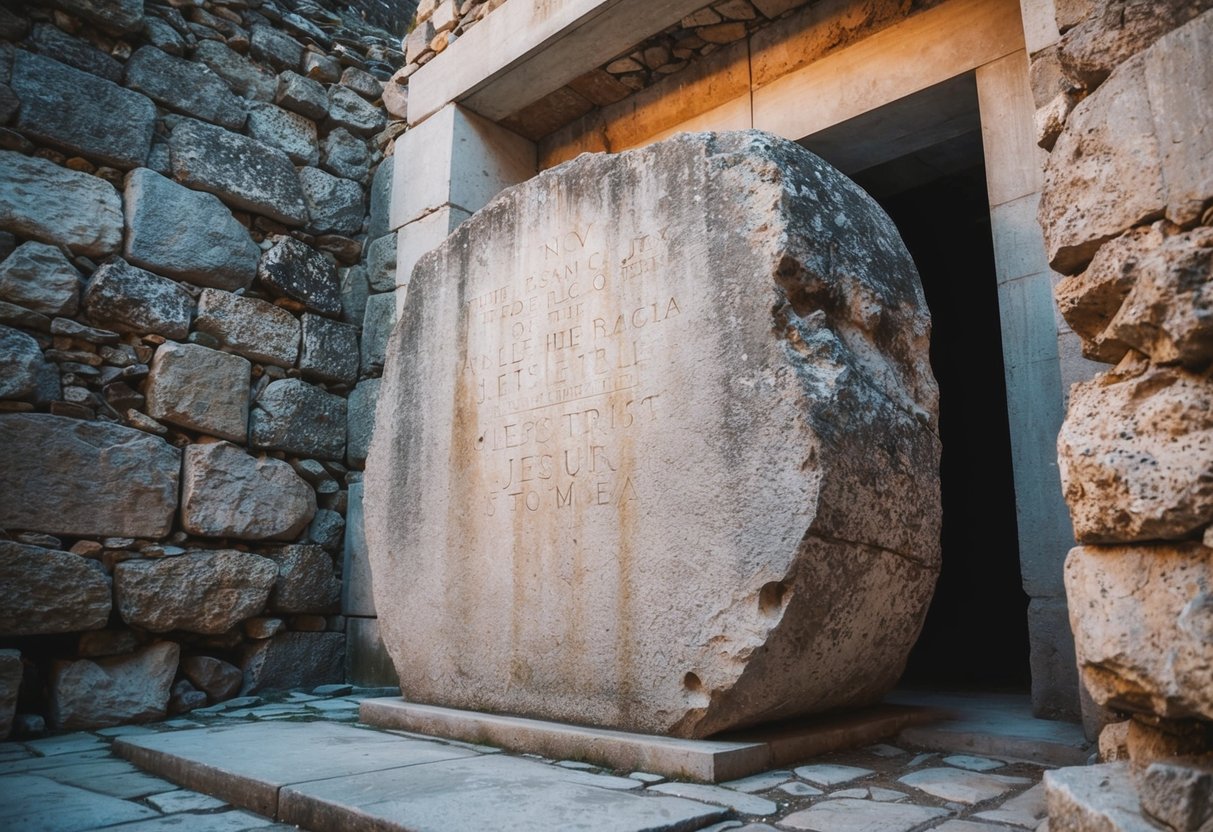
Understanding the size of the stone adds depth to the biblical narrative.
It helps illustrate the effort required to roll it away, making the resurrection account even more remarkable.
Various sources provide insights into the stone’s dimensions and the methods used to seal tombs in ancient Palestine.By exploring the details surrounding the stone at Jesus’ tomb, readers can gain a clearer picture of this crucial event in Christian history.
The practical and symbolic significance of the stone continues to resonate in discussions about faith and resurrection.
Historical Background of Jewish Burial Practices
Jewish burial practices have deep historical roots, especially during the Second Temple period.
Tombs were often rock-cut, carved directly into stone. These structures were practical and durable, preserving the remains more effectively.
Burial customs varied, but some common elements included the use of arcosolia—benches carved into the walls of the tomb for laying bodies.
Families often constructed elaborate burial caves to honor their deceased.
Notable sites, such as the tomb of Herod’s family, featured intricate designs.
The tomb of Jesus is also best understood within this context. It was typical to seal tombs with a large stone, which provided protection and respect for the body inside.During this period, ossuaries were used to store bones after the decay of the body. This practice preserved space in family tombs.
Historical accounts mention figures like Joseph of Arimathea and Nicodemus, who were involved in Jesus’ burial.
Queen Helena of Adiabene’s influence also shaped burial customs, adding richness to Jewish traditions.
Overall, the burial practices during this time reflect a profound relationship with the dead, emphasizing respect and care.
The Tomb of Jesus and Its Cultural Significance
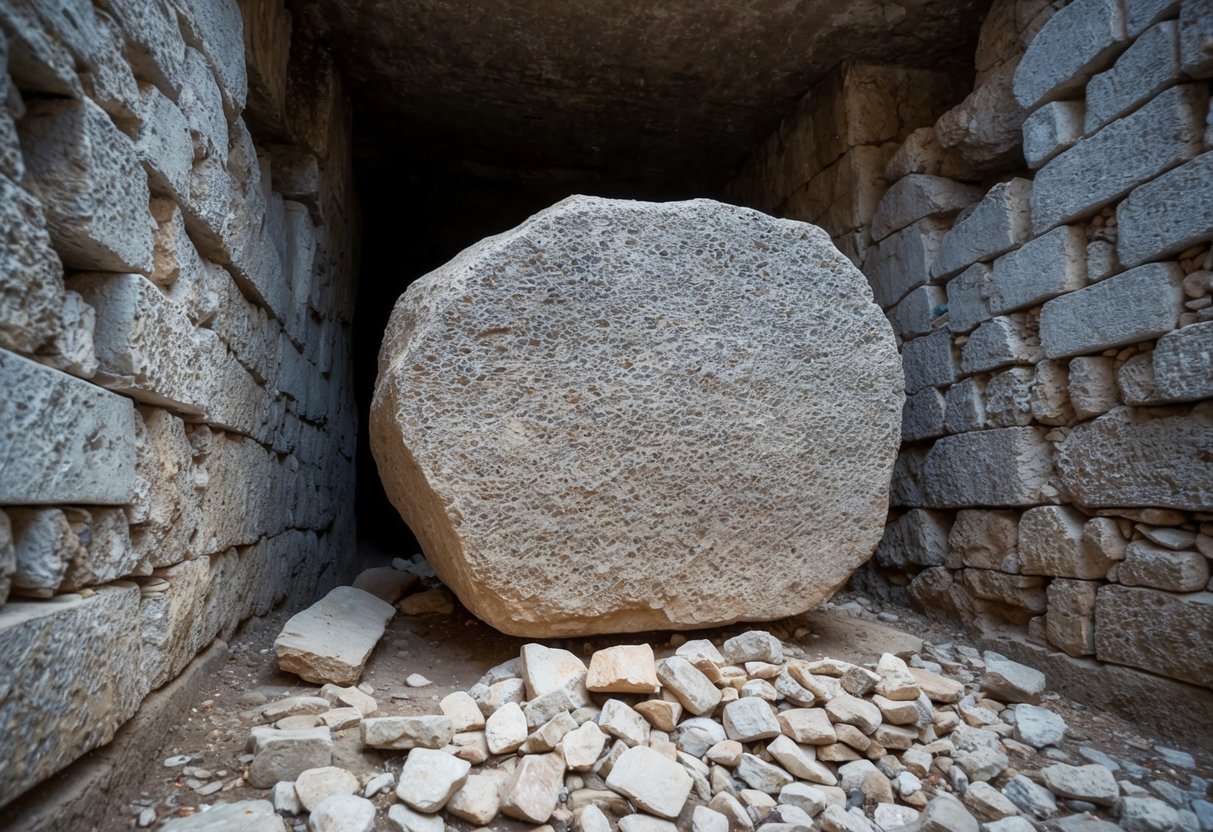
The tomb of Jesus holds great importance in Christian beliefs. It is often referred to as the burial site of Jesus and is located in Jerusalem.
This site is central to the story of the resurrection of Jesus.
The entrance to the tomb was designed to be small. This feature not only served a practical purpose but also added to the sense of solemnity surrounding the site.
In many Jerusalem tombs, similar stones were used to seal the entrances, reflecting burial customs of the time.
The concept of the empty tomb is significant for Christians. It symbolizes hope and the promise of eternal life.
The removal of the stone is seen as a divine act that enables Jesus to rise, illustrating the power of resurrection.In historical context, the tomb represents a transition. It marks the end of Jesus’ earthly life and the beginning of new beliefs about life after death.
The discovery of the empty tomb by Jesus’ followers also ignited the early Christian movement.
This site has attracted countless visitors and pilgrims over the years.
Many come to reflect on the events that transpired there and to connect with their faith. The tomb of Jesus remains a powerful symbol of belief, renewal, and spiritual significance.
Archaeological Insights and Biblical Accounts
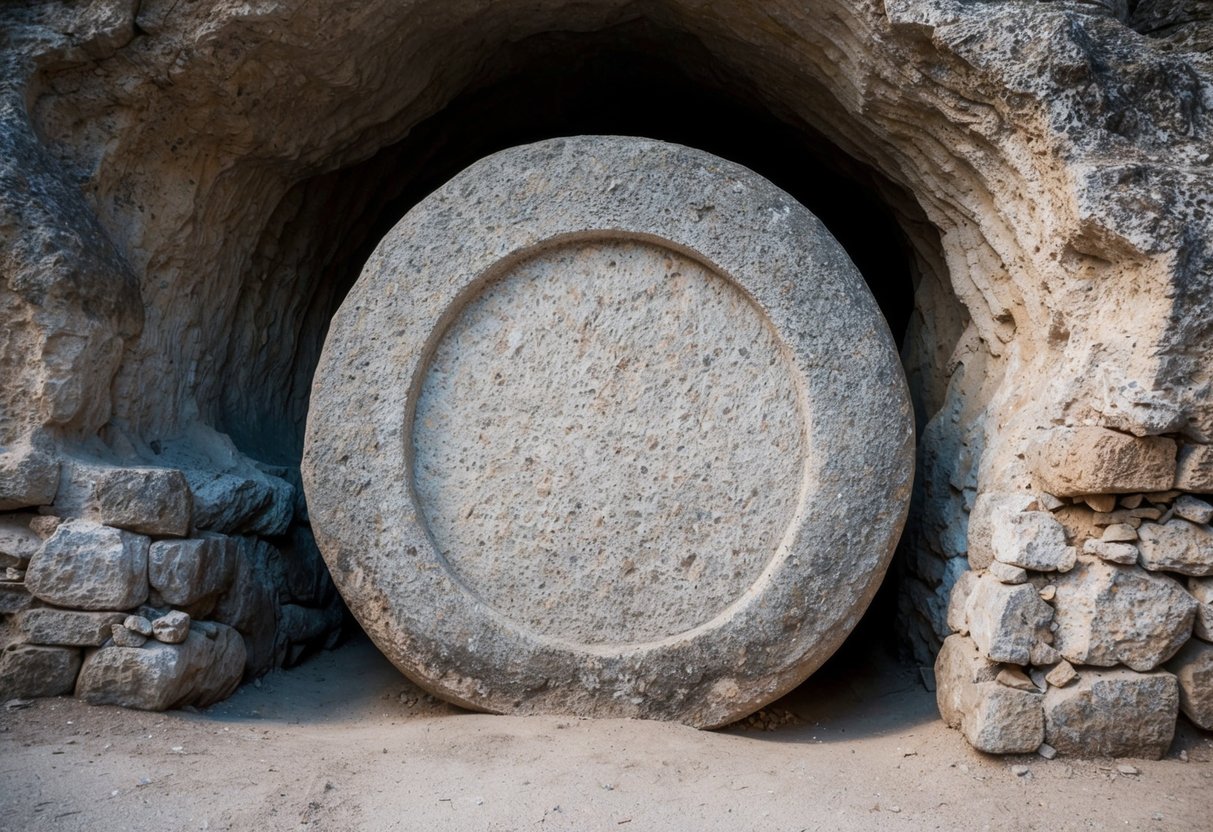
Archaeological evidence plays a vital role in understanding the tomb of Jesus and the stone that sealed it.
Excavations around Jerusalem show that many tombs used a large, circular stone to block entrances. This stone would have been quite heavy, often weighing several hundred pounds.
Biblical accounts in the Gospel of Mark (15:46) and Matthew (27:59) describe Joseph of Arimathea placing the body of Jesus in the tomb and rolling a stone against the entrance.
The Gospel of Mark (16:3) mentions the concern of the disciples about the stone’s size when they visited the tomb.
The synoptic gospels provide consistent details about the burial process. They highlight that the stone was significant in sealing the tomb.
This element aligns with archaeological findings, supporting the idea that such stones were common in that era.
Pontius Pilate’s involvement in the burial adds another layer. After his inspection, he ordered the tomb to be sealed to prevent theft. This Roman seal would have indicated any tampering with the tomb.
Archaeological research has further revealed that most Second Temple-period tombs had a stone of a specific shape. This aligns with the biblical description but does not give an exact measurement.
By combining archaeological evidence with biblical texts, a clearer picture emerges. It shows the importance of the stone in the context of Jesus’ burial and resurrection as described in the gospels.
Nature and Structure of the Tomb’s Stone
The stone that sealed Jesus’ tomb was a large, circular stone, often referred to as a rolling stone. This type of stone was typically disk-shaped and measured about 5 to 6 feet in diameter.
The structure of the stone served a specific purpose. It functioned as a blocking stone, preventing unauthorized access to the tomb.
In first-century Judea, such stones were commonly used in burial practices to protect against animals and grave robbers.
The stone was usually placed in a groove carved into the rock at the entrance of the tomb. This groove allowed the stone to roll easily. The design also helped ensure that the stone could be securely placed and removed.
The material of the stone was often limestone, which was plentiful in the region. Limestone is durable and well-suited for such constructions.
The use of large, cork-shaped stones or square stones was also noted in various burial sites.
The process of rolling the stone away was significant in the context of the resurrection.
According to accounts, an angel moved the stone to reveal the empty tomb. This act highlighted the importance of the stone in both burial customs and the resurrection narrative.
The tomb’s design included loculi, which were niches for bodies, and the overall structure emphasized respect for the deceased. It is essential to recognize how this stone type not only served a practical function but also held symbolic weight in the resurrection story.
Events Surrounding the Stone and Resurrection
After the crucifixion, Jesus was laid in a tomb sealed by a large stone. This stone played a key role in the events that followed.
On Easter Sunday, Mary Magdalene visited the tomb. She found that the stone had been rolled away.
This unexpected scene sparked many questions.
An angel of the Lord appeared to Mary. The angel announced that Jesus had risen from the dead. This news brought joy and confusion to those who heard it.
Before the resurrection, a great earthquake occurred. It is said that this event marked the moment of Jesus’ resurrection, demonstrating his power over death.
Roman guards were stationed at the tomb to prevent any interference. They witnessed the stone being moved but later reported feeling as if they were paralyzed with fear.
The resurrected Christ later appeared to Mary Magdalene. Her encounter with him became a pivotal moment for his followers.
They shared the message of his resurrection, which laid the foundation for the Christian faith.
The rolling away of the stone symbolized victory over death and the promise of eternal life. These events, marked by divine intervention, changed the course of history and established the significance of Easter Sunday.
