
Following the miracle of Easter, the timeline leading up to the Ascension is a crucial period in the New Testament.
Many believers turn to the book of Acts to find out exactly how long did Jesus stay on Earth after his resurrection. The scripture confirms that He remained for a distinct period of forty days.
During this time, He made numerous appearances to His disciples and followers, reinforcing their faith and providing final guidance before departing.
This significant duration is not just a historical detail but a vital part of the Christian narrative, emphasizing His physical victory over death and His ongoing role as the Messiah.
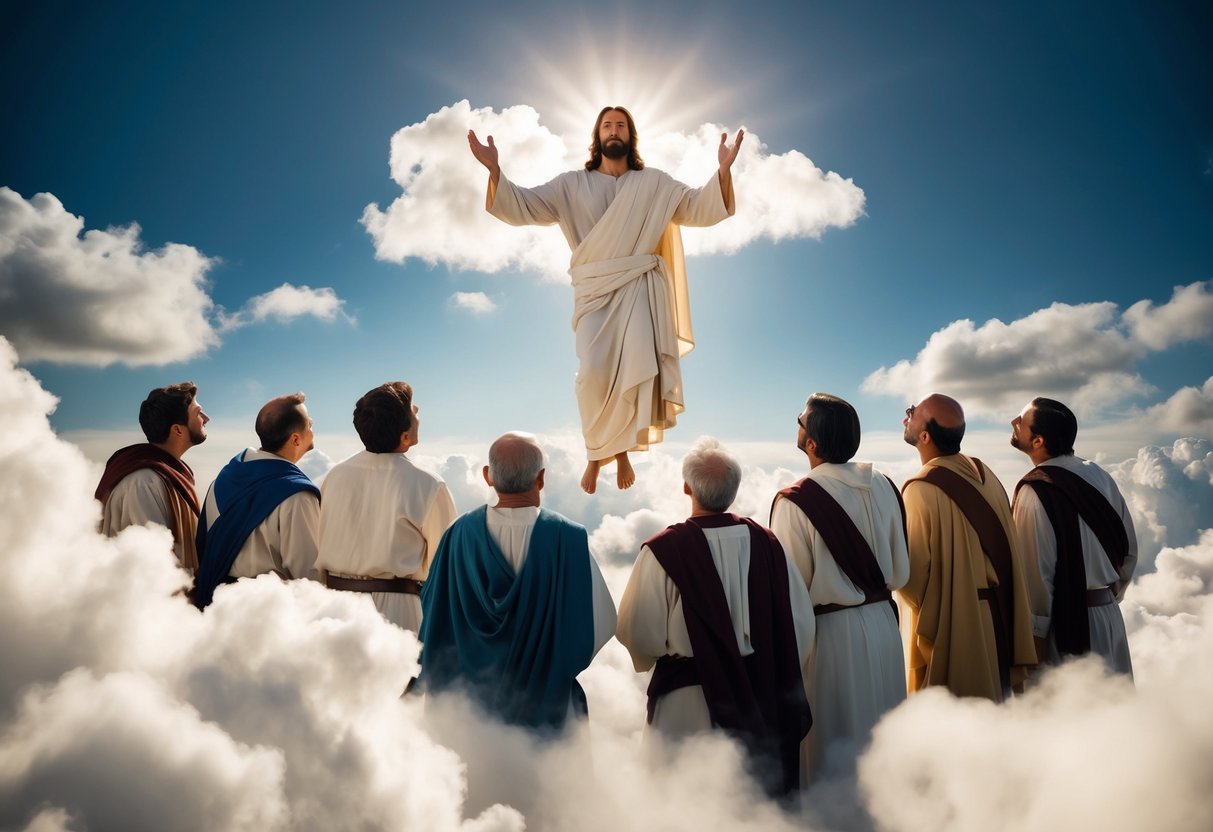
Throughout these forty days, Jesus actively engaged with His followers, teaching them about the Kingdom of God and offering proof of His resurrection.
This period served to strengthen the belief of those who had witnessed His crucifixion and death, affirming His teachings and mission.
Understanding how long Jesus stayed on Earth after His resurrection offers deeper insights into the events that shaped early Christianity. It highlights the importance of His presence during this time and its lasting impact on His disciples and the growth of the Christian faith.
The Resurrection
The resurrection of Jesus is a pivotal event in Christian belief. It is marked by significant appearances and compelling evidence that he was raised from the dead.
This period also set the stage for the disciples’ mission moving forward.
Evidence of the Risen Christ
Following Jesus’ resurrection, various forms of evidence support the claim that he rose from the dead. Reports from the disciples were crucial, showing their conviction. They had witnessed events that left a profound impact, especially considering the Roman authorities had confirmed his death.
Mary Magdalene was one of the first to encounter the risen Jesus. In her account, she found the tomb empty and was greeted by Jesus himself. This moment was significant, as it reinforced his victory over death.
The disciples collectively experienced many sightings of Jesus over forty days. They received teaching about the kingdom of God, providing them with assurance of his resurrection. These experiences formed the foundation for their faith and the message they would spread.
Appearances to the Disciples
During the forty days after his resurrection, Jesus made numerous appearances to his disciples. Each encounter aimed to strengthen their faith.
For instance, he appeared multiple times to reassure them of his presence and purpose.
In one notable incident, Jesus visited them in a locked room. He showed them his wounds, providing undeniable proof of his identity. This confirmed that he had indeed been raised from the dead.
The Great Commission followed these appearances. Jesus instructed the disciples to spread his message to all nations. This directive was transformative, marking the start of their mission as leaders in the early church. Each appearance solidified their role in spreading the news of his resurrection.
The Timeline Post-Resurrection

After Jesus’ resurrection, he remained on Earth for a significant period. This time was filled with important events that helped to establish the early Christian faith.
The Forty Days
Jesus spent forty days on Earth after rising from the dead. During this time, he appeared to his disciples and others to provide proof of his resurrection.
This phase allowed him to strengthen their faith and prepare them for the mission ahead.
Luke records that during these days, Jesus spoke about the kingdom of God. He aimed to clarify his teachings and ensure understanding.
The events spanned locations such as Galilee and Jerusalem. Jesus’s presence helped to solidify the beliefs of those who witnessed him.
Key Events and Appearances
Several key events marked this period.
One notable incident was the Road to Emmaus. Here, two disciples encountered Jesus without recognizing him initially. He explained the Scriptures and revealed his identity during a meal.
Other significant appearances included meetings at the Sea of Galilee. He instructed his disciples to fish and appeared during breakfast, reinforcing their mission. The Mount of Olives was also a location where he blessed his followers.
Accounts by Matthew, Mark, Luke, and John capture these events. Each Gospel provides unique details about Jesus’ interactions with his followers during this vital time.
Teachings and Instructions
After his resurrection, Jesus offered crucial teachings and instructions that guided his followers. These messages focused on spreading faith and preparing them for the future.
The Great Commission
The Great Commission is one of Jesus’ key teachings after his resurrection. In this directive, he instructed his disciples to “make disciples of all nations” (Matthew 28:19).
This command emphasizes the importance of spreading the message of the Kingdom of God to every corner of the world.
Jesus empowered his followers by assuring them that he would be with them always, even to the end of the age (Matthew 28:20). This promise strengthened their mission.
It was essential for early Christians to share their faith and teach others about Jesus’ message of salvation and love.
Instructions on the Holy Spirit
Jesus also provided instructions regarding the Holy Spirit. He promised his disciples that they would receive the Holy Spirit as a guide and helper (John 14:26).
This was a vital aspect of their mission, offering them wisdom and strength.
The Holy Spirit plays a crucial role in empowering believers to spread the teachings of Jesus.
The disciples were to wait in Jerusalem for this promise to be fulfilled (Acts 1:4). Through the Holy Spirit, Jesus ensured that his followers would have the support needed to sustain their faith and share it effectively.
The Ascension
The Ascension refers to the moment Jesus rose into heaven after His resurrection. This event is important in Christian belief as it signifies Jesus’ return to God and His position at the right hand of God, symbolizing His power and authority.
The Event of Ascension
The Ascension occurred forty days after Jesus’ resurrection. According to the Bible, this event is detailed in Acts 1:9-11.
As Jesus was speaking to His followers, He was taken up into a cloud. They watched as He ascended, which demonstrated His divine power. Two angels then appeared, telling the disciples that Jesus would return in the same way they saw Him go.
This event is significant for many reasons. It marked the end of Jesus’ earthly ministry and the beginning of His heavenly reign.
This scene confirmed to His followers that He was no longer limited by earthly bounds.
The Significance
Jesus’ ascension into heaven holds deep meaning for Christians. It shows His victory over death and His divine nature.
By ascending, Jesus affirmed that He sits at the right hand of God, a position of power and authority.
This location symbolizes that Jesus intercedes for believers. His ascension is also a promise of His return, which gives Christians hope.
They believe that just as He ascended, He will come back to fulfill His promise and establish His kingdom. The power of God was evident in this event, reaffirming faith in His divine plan.
Impact on Early Christianity
The time Jesus spent on earth after his resurrection significantly shaped the foundation of early Christianity.
His teachings, along with the experiences of the apostles, guided the spread of the faith and the establishment of the Church.
Formation of the Church
After the resurrection, Jesus empowered his followers to lead and spread his message. This empowered the apostles to establish the first Christian communities.
Peter played a crucial role, delivering powerful sermons that drew many to the new faith. The Church began to form through these gatherings.
James, Jesus’ half-brother, became a key leader in Jerusalem. His leadership upheld the teachings of Jesus and connected the early believers.
The book of Acts details the rapid growth of the Church through various missionary efforts.
Apostles like Paul traveled extensively, sharing the message of salvation and establishing new congregations.
Role of the Apostles
The apostles were instrumental in spreading the teachings of Jesus. Each had a unique contribution, but they all shared the same core message.
Peter was a leader, urging believers to remain steadfast. Thomas, known for his doubt, later became a bold proclaimer of the faith.
Paul’s epistles in the New Testament shaped early Christian theology. His writings emphasized the significance of faith and grace.
The letter to the Hebrews encouraged Christians to hold onto their faith despite challenges. The collective efforts of the apostles were vital in unfolding the early Church’s mission and establishing a foundation for future believers.
