
The Nativity story is a pivotal event in Christianity, yet beyond the Christmas traditions, many seek to understand the specific biblical details of this miraculous arrival.
To truly grasp the significance of the Incarnation, we must look to the Gospels to see exactly how was Jesus born and the prophecies fulfilled by his coming.
According to the New Testament, the Savior entered the world in humble circumstances in Bethlehem during the reign of King Herod.
Historical analysis suggests he was likely born between 6 and 4 B.C., with many scholars pointing to a timeline in the fall rather than the traditional December date.
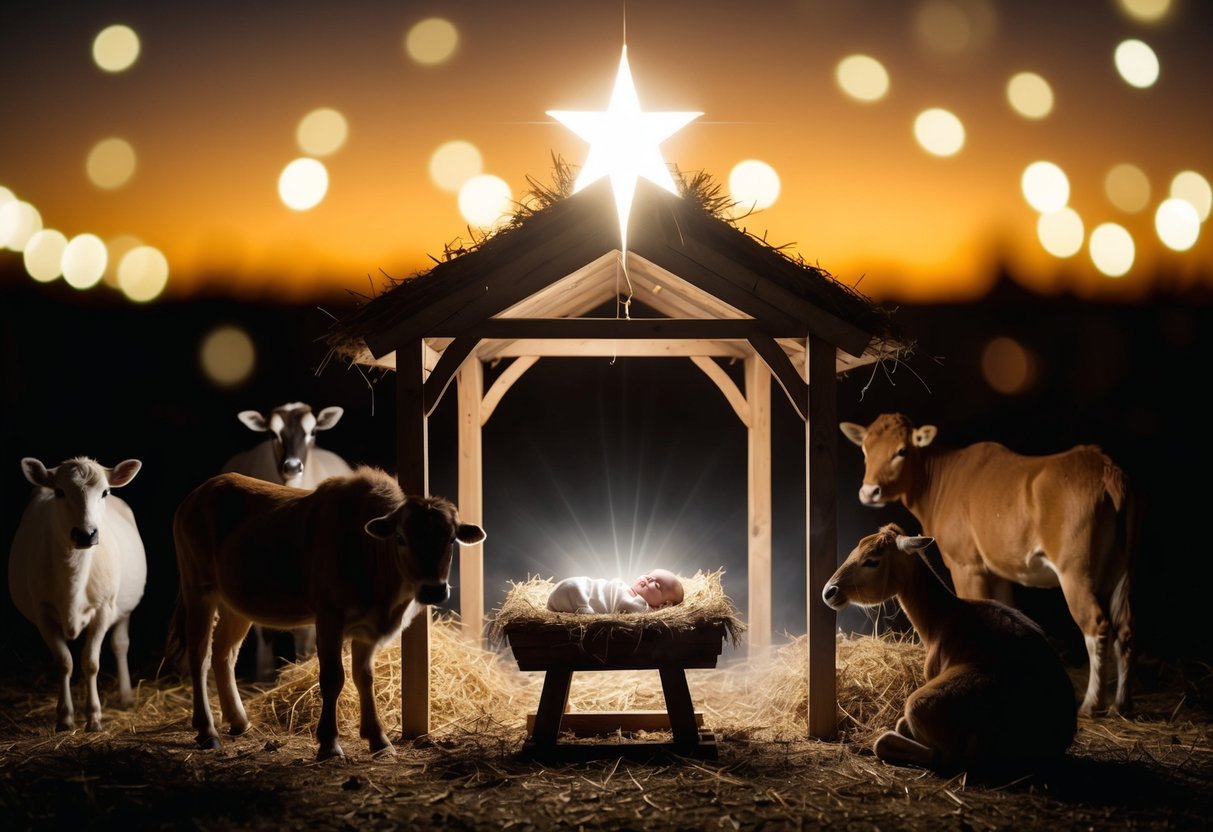
The Nativity story emphasizes the humble circumstances of his birth, including the visit from shepherds and the wise men. These accounts highlight the significance of Jesus as a central figure in Christianity, revered for his teachings and impact on the world.
Understanding the details surrounding his birth provides valuable context for the Christian faith and its traditions.
As readers explore the story of Jesus’ birth, they will uncover the historical and theological elements that shaped his early life. The Gospels in the New Testament offer insights that continue to inspire believers today, making this exploration of the Nativity both fascinating and meaningful.
Historical and Religious Context

The birth of Jesus occurred within a complex historical and religious backdrop. Key factors include the political landscape of the Roman Empire, prevalent Jewish beliefs, and the relevant timeline surrounding his birth.
Roman Empire and Judea
At the time of Jesus’ birth, Judea was under Roman control. This region was part of the larger Roman Empire, which was known for its vast territories and centralized power.
Herod the Great ruled Judea and was known for his building projects and brutal tactics. He sought to maintain order amid the diverse cultures and religions within his realm.
Herod was not only a political leader but also played a significant role in the historical narrative of Jesus’ birth. His fear of losing power led him to issue a decree to kill infants in Bethlehem, attempting to eliminate the newborn Messiah.
This political tension set a dramatic stage for the events surrounding Jesus’ early life.
Jewish Beliefs and Messianic Prophecy
Judea was home to a rich tapestry of Jewish beliefs, anchored in the expectations of a Messiah. Many Jews longed for a savior who would restore their kingdom and deliver them from oppression.
This awaited figure would be linked to the line of King David, fulfilling ancient prophecies.
Key prophecies mentioned in Jewish texts pointed to his birth in Bethlehem and his lineage. These beliefs fueled hope and anxiety among the people. The expectation was not just for a spiritual leader but a dynamic king who would reinstate Israel’s glory, which heightened the significance of Jesus‘ arrival.
Timeline and Chronology
Jesus is believed to have been born around 4-6 BC based on historical records and clues in the biblical accounts. Herod the Great’s reign ended in 4 BC, further supporting this timeline.
The Julian Calendar, used at the time, helps map these dates against modern calendars.
Tiberius became the Roman emperor in AD 14, and the dating of events during Jesus’ life often references this timeline. The mix of historical events, Jewish beliefs, and political realities shaped the narrative surrounding Jesus’ birth, framing it as a pivotal moment in history.
The Annunciation and Conception
The Annunciation marks a significant moment when the angel Gabriel announced to Mary that she would conceive Jesus. This event not only showcases Mary’s response but also connects to her relative Elizabeth, who was also experiencing a miraculous pregnancy.
Angel Gabriel’s Announcement
The angel Gabriel was sent by God to Mary in Nazareth. He greeted her with the message, “Greetings, you who are highly favored! The Lord is with you.” Mary was troubled by his words and wondered what they meant.
Gabriel reassured her, explaining that she would conceive a child by the Holy Spirit. This child would be called Jesus and hold a divine role, being called the Son of the Most High. The announcement shows the role of the Holy Spirit in Jesus’ conception, emphasizing the miraculous nature of this event.
Mary and Joseph’s Response
Mary responded with faith, saying, “I am the Lord’s servant. May your word to me be fulfilled.” This acceptance highlights her trust in God’s plan.
Joseph learned of Mary’s pregnancy later and was initially troubled. He considered ending their engagement quietly to protect her. However, an angel appeared to him in a dream, confirming Mary’s story and instructing him to take her as his wife. Joseph’s obedience reflects his trust in God and his protective role in Jesus’ life.
Visit to Elizabeth
After the Annunciation, Mary visited her cousin Elizabeth, who was six months pregnant with John the Baptist.
Upon greeting, Elizabeth’s child leaped in her womb, affirming that Mary was indeed blessed. Elizabeth exclaimed that Mary was the most blessed among women, recognizing the significance of the child she would bear. This meeting strengthens the connection between Jesus and John, setting the stage for their future roles in the New Testament narrative.
The Birth of Jesus
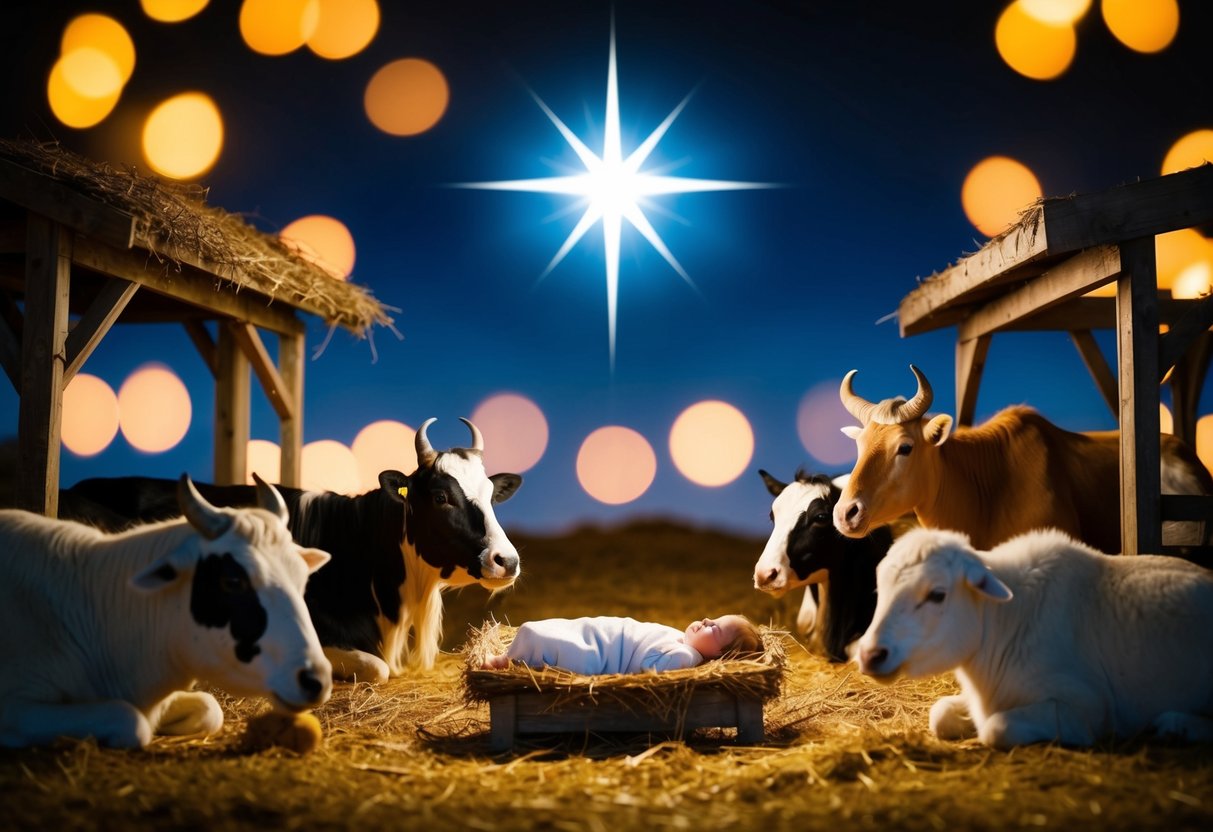
The birth of Jesus is a significant event that has been told through various accounts. Key elements include the location of Bethlehem, the humble nativity scene, and the context provided by the Census of Quirinius.
Bethlehem: City of David
Bethlehem is often referred to as the City of David because it is the birthplace of King David. This small town in Judea holds great importance in biblical history. According to the accounts in the Gospels, Mary and Joseph traveled to Bethlehem to register for a census.
The prophecy in Micah 5:2 states that the Messiah would be born there. The journey likely took place during a busy time, making accommodations scarce. This made Bethlehem a vital setting in the narrative of Jesus’ birth.
Nativity and the Manger
The nativity scene depicts Jesus’ birth in a humble setting. Mary and Joseph arrived in Bethlehem but found no room in the inn. They were given shelter in a stable, where Jesus was born.
He was laid in a manger, which is a feeding trough for animals. This symbolized his humble beginnings. The accounts in Luke 2 highlight the visitation by angels and shepherds, emphasizing the miraculous nature of the event.
Census of Quirinius
The Census of Quirinius plays an important role in the timeline of Jesus’ birth. According to historical records, Quirinius was the governor of Syria. He conducted a census that required everyone to return to their ancestral towns.
This edict brought Mary and Joseph to Bethlehem. Luke 2 provides a clear connection between the census and the fulfillment of prophecy regarding Jesus’ birthplace. This context helps explain why Jesus was born in Bethlehem, aligning historical events with biblical prophecy.
Revelation to the Shepherds and Visit of the Magi
The events surrounding Jesus’ birth include the angelic announcement to the shepherds and the journey of the Magi. These moments underline the significance of Jesus as the Savior and showcase different responses to His arrival.
Angels Announce to Shepherds
In the fields near Bethlehem, shepherds were tending their flocks when an angel appeared. The angel brought good news, stating that a Savior had been born. This was a significant revelation, as shepherds were often seen as lowly in society.
The angel proclaimed that the baby would be wrapped in swaddling clothes and lying in a manger, a sign of His humble beginnings. Suddenly, a multitude of angels joined in praising God, filling the skies with heavenly music. The shepherds were filled with fear and awe.
After hearing the message, the shepherds quickly decided to go to Bethlehem to see the newborn child. Their journey reflects their faith and eagerness to witness this miraculous event.
Wise Men from the East
Months later, wise men, often called Magi, traveled from the East. They had seen a unique star in the sky and understood it to signify the birth of a new king.
This group likely consisted of scholars and astronomers who studied the heavens for signs.
Upon arriving in Jerusalem, they sought information from King Herod. The Magi asked about the location of the newly born king, causing unease in Herod and the city. Herod, feeling threatened by the news of a rival king, inquired about the prophecies regarding the Messiah.
He eventually directed the Magi to Bethlehem, pretending he wanted to worship the child too. The Magi followed the star, which guided them directly to Jesus.
Star of Bethlehem
The Star of Bethlehem played a crucial role in leading the Magi to Jesus. This star was not ordinary; it appeared as a bright light in the sky, signaling the birth of the king.
As they traveled, the star led them to the place where Jesus was. Upon entering, the Magi presented gifts of gold, frankincense, and myrrh, each symbolizing important aspects of Jesus’ identity: royalty, divinity, and His future sacrifice.
After visiting Jesus, the Magi were warned in a dream not to return to Herod. They took a different route back home, ensuring the safety of the child and fulfilling their role in this divine story.

Aftermath and Fulfillment of Prophecy
The birth of Jesus not only marked the beginning of his life but also led to a series of significant events prophesied in the Old Testament. These events influenced the early years of the Holy Family and showcased how prophetic words came to fulfillment.
Flight to Egypt
Following the birth of Jesus, an angel warned Joseph in a dream about King Herod’s intentions. Herod sought to kill the child, fearing a rival to his throne.
Taking this warning seriously, Joseph fled to Egypt with Mary and Jesus. This journey was necessary to protect the infant from Herod’s lethal plan.
The family’s stay in Egypt fulfilled the prophecy found in Hosea 11:1, which states, “Out of Egypt I called my son.” This moment highlights the lengths to which God went to safeguard the Messiah and emphasizes the divine protection surrounding Jesus.
Massacre of the Innocents
Herod, enraged by the Magi not returning to inform him of Jesus’ location, ordered the execution of all male children under the age of two in Bethlehem.
This tragic event is known as the Massacre of the Innocents. It was a ruthless attempt to eliminate any potential threats to his reign.
This horrific action fulfilled the prophecy outlined in Jeremiah 31:15, which speaks of weeping and mourning in Ramah. The massacre serves as a stark reminder of the dangers surrounding Jesus’ early life and the fulfillment of prophecies concerning his life and mission.
Return to Nazareth
After Herod’s death, an angel once again appeared to Joseph in a dream, informing him that it was safe to return to Israel. The Holy Family then went back, settling in Nazareth, a town in Galilee. This choice fulfilled the prophecy that the Messiah would be called a Nazarene.
Nazareth became the backdrop for much of Jesus’ early life and ministry. It is often overlooked that this location played a vital role in fulfilling God’s plan. This demonstrates that even humble beginnings were part of a greater divine story.
