
The execution of Christ stands as a pivotal event in history, yet many believers and historians still seek to understand the specific details of how was Jesus crucified. This brutal method has shaped religious beliefs and cultural narratives for centuries.
He was nailed to a wooden cross, suffering an agonizing death through a common form of Roman execution reserved for the worst criminals.
This act was rooted in deep political and religious tensions of the time, where Jewish leaders sought his condemnation and Roman authorities ultimately carried out the sentence.
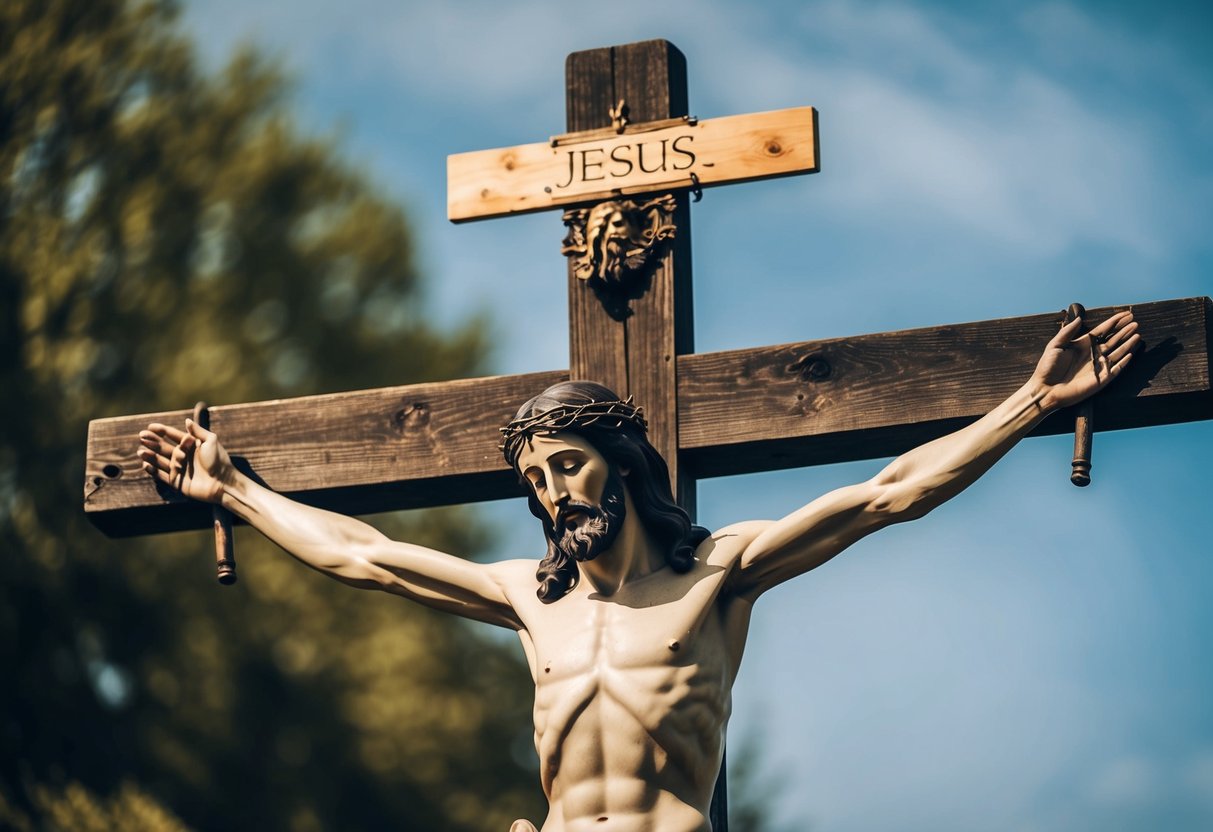
As Jesus carried his cross to Golgotha, where he was crucified alongside two thieves, he endured immense physical and emotional suffering.
This brutal execution is chronicled in detail in the New Testament, where it is described how he was mocked, offered wine mixed with gall, and ultimately died after hours of agony.
Through these accounts, one can understand the significance of his sacrifice and the impact it had on his followers and the world at large.
The story of Jesus’s crucifixion raises important questions about faith, sacrifice, and redemption.
Many believe that his death was not just an act of violence but a profound moment of love and a turning point for humanity. Exploring these themes can reveal deeper insights into the meaning and legacy of this historical event.
Historical Context of Jesus’ Crucifixion
The crucifixion of Jesus took place against a backdrop of political tension and religious authority. This context involved Roman rule over Judaea, the complex relationship with Jewish leaders, and the crucial role of Pontius Pilate during the trial.
Roman Rule and Jewish Leadership
During the time of Jesus, Jerusalem was part of the Roman Empire. The Romans had control over Judaea and used local leaders to maintain order.
Among these leaders were the chief priests and the Sanhedrin, a council of Jewish elders who held significant authority.
The Romans allowed the Sanhedrin to enforce Jewish law, but they retained the power to impose capital punishment. This arrangement created tension, as local leaders aimed to protect their power while responding to the Roman authorities. The chief priests viewed Jesus as a threat to their authority, especially after his activities in the temple.
The situation escalated when Judas Iscariot, one of Jesus’ disciples, betrayed him. This act led to Jesus’ arrest and set the stage for his trial.
Pontius Pilate’s Role and the Trial
Pontius Pilate served as the Roman governor of Judaea. He played a pivotal role in the trial of Jesus.
The chief priests brought Jesus to Pilate, accusing him of claiming to be the King of the Jews. They sought to have him convicted and executed.
Pilate faced pressure from the Jewish leaders and the crowd, especially when they demanded the release of Barabbas, a notorious prisoner.
Despite questioning Jesus and finding no solid charge against him, Pilate ultimately chose to appease the crowd. He ordered Jesus to be crucified, a decision that showcased the political complexity of governing a volatile region.
Pilate’s actions reflect the conflict between Roman law and the interests of Jewish leaders in Jerusalem during this significant historical moment.
Theological Significance of the Crucifixion

The crucifixion of Jesus carries deep theological meaning within Christian faith. It is viewed as a fulfillment of prophecies and as a crucial act of atonement for humanity’s sins. These elements are central to Christian theology and highlight Jesus as the promised Messiah and Son of God.
Prophecies and Messianic Expectations
The crucifixion is often seen as a fulfillment of Old Testament prophecies regarding the Messiah. Scriptures, such as Isaiah 53, predict the suffering servant who would bear the sins of many. This aligns with the belief that Jesus is the awaited Messiah who came to redeem humanity.
Early Christian writings, especially in the New Testament, emphasize that these prophecies were not mere coincidences.
They argue that Jesus’ suffering and death were part of a divine plan. His crucifixion became a pivotal moment connecting Old Testament expectations with New Testament revelations.
Crucifixion as Atonement for Sin
In Christian theology, the crucifixion represents the ultimate sacrifice for sin. Jesus’ death allows believers to receive salvation and implies a deep, personal relationship with God. It is believed that through his suffering, he provided atonement for humanity’s wrongdoings.
This concept is crucial for understanding the passion narratives in the Gospels. By dying on the cross, Jesus took upon himself the sins of the world. This act of love and sacrifice is what enables forgiveness and reconciliation with God, solidifying Jesus’ role as the Son of God within the Christian faith.
The Events of the Crucifixion Day

The day of Jesus’ crucifixion was filled with intense suffering and significant events that shaped the narrative of his death. This period is marked by Jesus’ journey to Golgotha, the site of his execution, and the aftermath of his crucifixion.
Via Dolorosa and Golgotha
Jesus began his final journey along the Via Dolorosa, meaning “Way of Sorrows.” This path led him through Jerusalem, carrying his cross, which was a symbol of shame and torture. Along the way, he faced mockery from the crowds and physical torment from the Roman soldiers.
As he approached Golgotha, also known as “the Place of the Skull,” the weight of his suffering was evident. Here, Jesus was offered wine mixed with myrrh to dull his pain, but he refused it. The crowds shouted insults, and a crown of thorns was placed on his head as a cruel mockery, calling him “King of the Jews.”
The Execution and Its Aftermath
Once at Golgotha, Jesus was nailed to the cross, enduring excruciating pain. He was crucified between two criminals, highlighting his association with public disgrace. The crucifixion began around 9 AM and lasted until noon. During this time, darkness fell over the land, which many saw as a sign of mourning.
As Jesus hung on the cross, he cried out, expressing his deep anguish. The earth shook, and an earthquake was reported at his death, marking the significance of this event.
Many witnesses were disturbed, realizing the impact of his suffering and death. Jesus offered a final cry before passing away, leading to profound reflections and changes among those present.
Details from the Canonical Gospels
The accounts of Jesus’s crucifixion in the Canonical Gospels provide distinct narratives that reflect both similarities and differences across the texts. Each Gospel composer offers unique details that reveal their interpretations and theological motivations.
Accounts of Matthew, Mark, Luke, and John
In the Gospel of Matthew, the crucifixion is detailed in Matthew 27. It describes Jesus being mocked, offered wine mixed with gall, and ultimately His death on the cross. Matthew emphasizes the fulfillment of prophecy, noting the darkness that covered the land.
Mark’s account, found in Mark 15, also highlights Jesus’s suffering. He mentions the mockery he faced and includes a brief yet powerful phrase about Jesus’s final words, “My God, my God, why have you forsaken me?” This reflects Mark’s focus on the abandonment Jesus experienced.
Luke presents the crucifixion in Luke 23. This Gospel offers a unique perspective, including Jesus’s words of forgiveness, “Father, forgive them,” which underscores His compassion. Luke also notes the response of the centurion who praised God after witnessing the events.
John’s narrative in John 19 delves into the intimate and theological aspects of the crucifixion. He highlights the role of Mary, the mother of Jesus, and includes the significant phrase, “It is finished,” illustrating the completion of His mission.
Differences and Interpretations
The differences among the synoptic Gospels—Matthew, Mark, and Luke—often focus on the details of the events leading to the crucifixion, while John provides a more theological interpretation.
For example, while Matthew and Mark emphasize the humiliation Jesus faced from onlookers, Luke emphasizes His compassionate response to those who inflicted suffering. This reflects Luke’s overall theme of mercy.
John’s account diverges significantly by incorporating events not found in the synoptic Gospels, such as the interaction between Jesus and Pilate. John’s focus on Jesus’s divine authority shapes the understanding of His sacrifice.
These different portrayals contribute to diverse interpretations of Jesus’s crucifixion, highlighting varying aspects of His identity and the significance of this pivotal moment in the New Testament.
Cultural and Religious Observances
Significant cultural and religious observances highlight the events surrounding Jesus’ crucifixion and resurrection. These observances are marked by specific days and practices that have deep meaning for Christians.
Good Friday and Easter Sunday
Good Friday commemorates the crucifixion of Jesus. It is observed on the Friday before Easter Sunday, marking the culmination of Holy Week. Many Christians participate in solemn services that reflect on Jesus’ suffering and death.
On this day, some churches hold services featuring the reading of the Passion narrative and the veneration of the cross. Fasting and mourning are common practices, as believers remember the sacrifice made by Jesus.
Easter Sunday celebrates the resurrection of Jesus. This event signifies victory over sin and death. Churches often hold vibrant services filled with music, flowers, and joyful celebrations.
Many communities organize sunrise services, symbolizing the dawn of new life. Celebrations include feasting and communal gatherings. The message of resurrection is central to Christian faith and is a pivotal moment that influences their worship throughout the year.
Worship and Remembrance Practices
Worship practices surrounding the crucifixion and resurrection are vital for believers.
Communion or the Eucharist, often held during services, reflects the Last Supper Jesus shared with his disciples. This practice symbolizes the commitment to remember his sacrifice.
Many congregations emphasize the importance of repentance and renewal during Holy Week.
Mary Magdalene plays a significant role in the resurrection narrative. She is often commemorated as the first witness to the risen Christ.
Churches may focus on her story during Easter celebrations, highlighting themes of hope and redemption.
In places like the Church of the Holy Sepulcher, pilgrims gather to honor the crucifixion and resurrection locations.
These sacred sites foster a deeper connection to the events of Holy Week and facilitate individual and community reflection on faith and salvation.
