
The question of whether Jesus and Krishna are the same figure has intrigued many across different faiths, sparking deep theological debates. Scholars and spiritual seekers often explore the parallels between their teachings, frequently asking, is Jesus Krishna in another form or are they distinct divine messengers?
Understanding their unique roles is essential for anyone interested in comparative religion and interfaith dialogue.
Followers of Christianity see Jesus Christ as the Son of God and the Messiah sent to save humanity through his sacrifice. In contrast, Krishna is regarded in Hinduism as a divine incarnation (avatar) who teaches love, duty, and the path to spiritual enlightenment.
While both figures emphasize the importance of devotion, their historical contexts and theological frameworks remain fundamentally different.
Exploring these two spiritual giants allows for a broader perspective on how different cultures perceive the divine. Whether one looks at the parables of the New Testament or the wisdom of the Bhagavad Gita, the impact of both figures on global spirituality is undeniable.

While Jesus and Krishna have key similarities as spiritual leaders, they represent distinct figures from different religious traditions, each with their own teachings and beliefs.
Exploring the lives and messages of these two figures sheds light on how various cultures understand divinity and ethics.
Readers will find a rich tapestry of stories, history, and theology that illustrates both connections and differences between these influential personalities.
As this discussion unfolds, it highlights how these figures have shaped the beliefs of billions. Understanding their teachings offers valuable insights into the broader contexts of Christianity and Hinduism, making the exploration even more significant.
Conceptual Similarities
Both Jesus Christ and Lord Krishna offer profound teachings that emphasize love and peace.
Their life stories share striking themes, including their roles as saviors and their miraculous births. Understanding these similarities helps to explore the connections between these two influential figures.
Teachings of Love and Peace
Jesus emphasized love as the greatest commandment. He taught followers to love one another and exhibit compassion. His messages focused on forgiveness, kindness, and charity.
Similarly, Krishna, in the Bhagavad Gita, promotes love and duty. He instructs Arjuna to act selflessly and uphold Dharma, or righteousness. Krishna’s teachings advocate for devotion and surrender to God, echoing themes of peace and harmony in relationships.
Both figures encourage a life centered around love, urging their followers to foster peace within themselves and in society.
Roles as Saviors and Deliverers
Jesus is often referred to as the Savior, believed to deliver humanity from sin. Christians view him as the Son of God who offers salvation through his sacrifice. His role aims to restore the relationship between humanity and God, providing a path to eternal life.
Krishna is also seen as a savior in Hinduism. He is viewed as an incarnation of Vishnu, sent to deliver humanity from evil and chaos. Hindus believe that Krishna’s actions protect the righteous and uphold Dharma. Both figures are revered for their roles in guiding people toward spiritual truth and liberation from suffering.
Divine Birth Stories
The births of Jesus and Krishna carry significant meanings. Jesus was born of the Virgin Mary, a miraculous event symbolizing purity and divine intervention. His arrival is celebrated as a fulfillment of prophecy, marking the beginning of a new covenant.
Krishna’s birth story also features miraculous elements. He was born to Devaki in a prison cell, destined to defeat the tyrant King Kamsa. His birth is celebrated in Hindu traditions as a demonstration of divine love and purpose. Both stories underline the themes of divine involvement in the human experience and the fulfillment of spiritual promises.
Scriptural Analyses
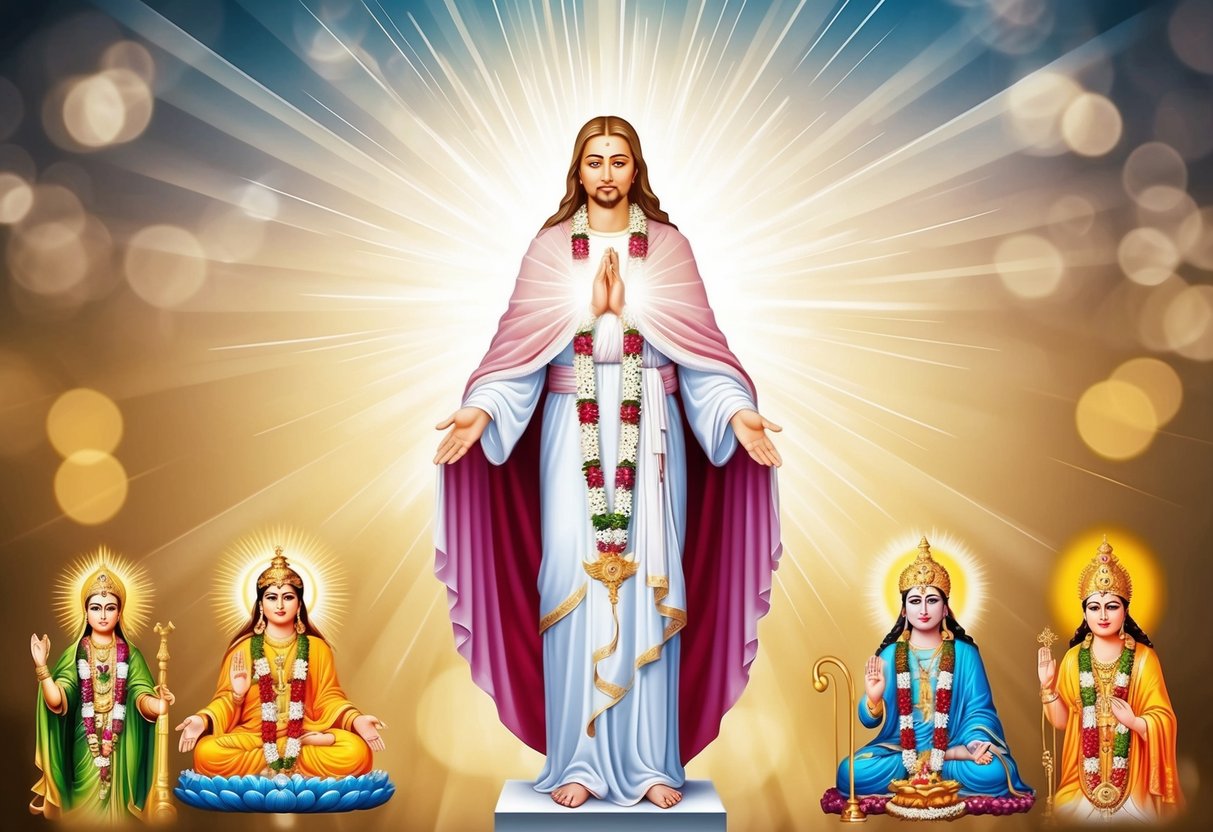
This section examines key narratives from the Bible and insights from the Bhagavad Gita. Both texts offer unique perspectives on their respective figures, allowing for a deeper understanding of their roles in spirituality.
Biblical Narratives
The Bible, specifically the New Testament, presents Jesus as the Son of God and the Savior of humanity. Central to his teachings are love, forgiveness, and salvation. Events like the crucifixion and resurrection are pivotal, emphasizing his divine nature and mission.
Jesus performed miracles, taught in parables, and shared profound truths about life and faith. His resurrection is viewed as a confirmation of his divinity. Believers see his life as a fulfillment of Old Testament prophecies, solidifying his role in Christian theology. He exemplified selfless love and sacrifice, which resonate deeply with followers.
Bhagavad Gita Insights
In contrast, the Bhagavad Gita presents Krishna as a deity who serves as a guide and charioteer to the warrior Arjuna. Here, Krishna emphasizes the importance of duty (dharma) and righteousness in life. His teachings include concepts of action without attachment and the pursuit of knowledge.
Krishna reveals himself as the divine essence within all beings. He advises Arjuna on the moral dilemmas faced in battle, highlighting the balance between duty and ethical behavior. This text teaches that understanding one’s purpose in life is essential for spiritual growth. Krishna’s multifaceted role reflects deep philosophical ideas present in Hindu thought.
Historical and Theological Contexts

The comparison between Jesus and Krishna involves understanding the historical and theological contexts in which these figures emerged. Each religion developed its own beliefs and practices shaped by influential leaders and cultural shifts.
Development of Religions
Christianity and Hinduism arose in different historical and cultural settings. Christianity began in the 1st century AD, influenced heavily by Jewish traditions and the teachings of Jesus Christ. The religion spread through the efforts of the apostles and historical figures like Constantine, who enabled it to flourish in the Roman Empire.
In contrast, Hinduism has ancient roots, with texts dating back thousands of years. Krishna, as documented in texts like the Bhagavata Purana, symbolizes divine playfulness and teaching. His life story includes miraculous events, similar to Jesus’ early life. This highlights how both figures held pivotal roles in their religious traditions, offering pathways to understanding God and spirituality.
Influences of Key Figures
Key figures shaped both Christianity and Hinduism.
In Christianity, disciples of Jesus played a crucial role in spreading his teachings. Their writings helped form the New Testament, shaping Christian theology.
In Hinduism, leaders like Srila Prabhupada emphasized the importance of Krishna’s teachings through the International Society for Krishna Consciousness (ISKCON). He helped introduce the concept of bhakti, or devotion, to wider audiences.
These influences show how earlier teachings and figures bolstered the spiritual foundations for their respective followers.
Both Jesus and Krishna represent divine connections to humanity, guiding their followers toward enlightenment and divine love.
Comparative Mythology
Comparative mythology explores the similarities and differences between deities across cultures. It helps to understand how figures like Jesus and Krishna share traits, while also revealing their unique characteristics.
Avatars and Incarnations
In Hinduism, an avatar refers to the earthly incarnation of a deity, most commonly associated with Vishnu. He has assumed several forms, including Rama and Krishna, to restore balance in the world. Similarly, Jesus is viewed as the incarnation of God in Christianity, fulfilling the mission of salvation.
Both figures embody divine principles aimed at guiding humanity. This concept of an earthly representative illustrates a common theme: the divine engaging with humanity for a higher purpose. The idea of divine avatars can shape one’s understanding of Jesus as he performs miracles and teaches wisdom echoing the teachings of Krishna.
Cross-Cultural Divine Archetypes
Divine archetypes often provide a framework for understanding spiritual figures across different religions. Jesus is sometimes likened to figures like Krishna and even the broader concept of Christos, which signifies a holy anointed one.
Kersey Graves noted parallels between Jesus and other mythological figures, suggesting they fulfill similar roles as saviors or incarnating spirits. Vishnu’s avatars, including Krishna, share attributes of compassion, wisdom, and the mission to lead people toward righteousness.
These cross-cultural archetypes emphasize the universal themes of sacrifice, redemption, and spirituality found in both Hinduism and Christianity.
Practices and Devotion
Devotion plays a central role in the lives of followers of both Jesus and Krishna. Both figures inspire spiritual disciplines and heartfelt expressions of faith. These practices enhance their connection with God and deepen their understanding of divine principles.
Spiritual Disciplines
In both Christianity and Hinduism, spiritual disciplines are essential for fostering a deeper relationship with the divine.
For Christians, prayer, Bible study, and worship are key activities that promote God consciousness. Followers often engage in communal worship, reflection, and service to express their faith.
For Hare Krishna practitioners, sadhana is critical. This includes daily routines such as chanting the Hare Krishna mantra, reading sacred texts, and meditation. Regular practice helps individuals align their thoughts and actions with divine teachings, fostering a strong sense of devotion.
Expressions of Devotion
Expressions of devotion manifest in various forms across traditions.
Christians often show their commitment through acts of charity, singing hymns, and participating in sacraments. These activities reflect their love for God and desire to follow Jesus’ teachings.
Similarly, Hare Krishna followers express their devotion through bhakti, or loving devotion, often showcased in rituals, festivals, and community gatherings. Dancing, singing, and offering food to Krishna are common practices. Such expressions cultivate a sense of belonging and alignment with divine purpose.
Cultural Impact and Legacy
The teachings and lives of Jesus and Krishna have shaped cultures and societies around the world. Their influence extends to festivals, holy days, and the broader cultural landscape, reflecting themes of love, non-violence, and spiritual connection.
Festivals and Holy Days
Various festivals celebrate the lives of Jesus and Krishna, emphasizing their shared values.
Christians honor December 25 as the birth of Jesus, a time for family, love, and reflection. Similarly, followers of Krishna celebrate Janmashtami to mark his birth, highlighting joy, devotion, and community.
These celebrations often include rituals, prayers, and community gatherings. For example, during Christmas, people decorate trees, exchange gifts, and attend church services. On Janmashtami, devotees sing, dance, and reenact stories from Krishna’s life, showcasing their love for God.
Influence on Society and Culture
The teachings of Jesus and Krishna advocate for principles such as non-violence, love, and service to others.
Both figures promote a deep relationship with the divine, emphasizing love for God as central to human experience.
This message has inspired numerous social movements.
For instance, Mahatma Gandhi drew on the teachings of both Jesus and Krishna, advocating for non-violent resistance.
The ideals of Krishna Consciousness extend these teachings, emphasizing devotion and service as pathways to spiritual fulfillment.
Together, these influences contribute significantly to art, literature, and moral philosophy across cultures.
Their legacies continue to inspire individuals and communities to pursue justice and compassion.
