
The trial of Christ reaches a dramatic peak when Pontius Pilate presents the crowd with a fateful decision regarding a prisoner release.
This historical moment is defined by the stark choice of Jesus or barabbas, a scene that raises profound questions about justice, mob mentality, and the nature of human redemption.
During the Passover feast, the governor offered to liberate one man according to tradition. Shockingly, the people demanded the freedom of a known insurrectionist rather than the innocent Messiah.
This decision not only sealed the fate of the Son of God but also highlighted a tragic exchange where the guilty was set free while the innocent was condemned.
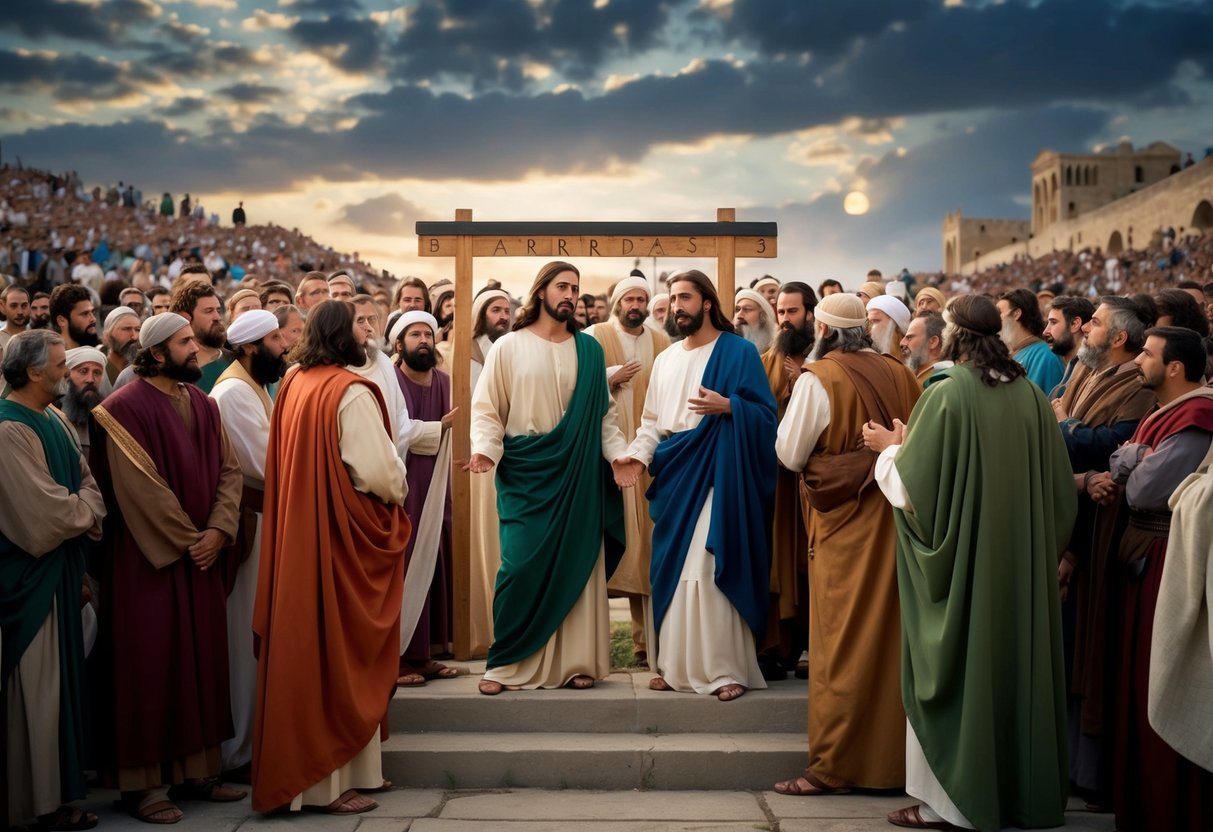
This choice reflects the complexities of human nature and societal influences. It prompts readers to consider the reasons behind the crowd’s decision and what it reveals about their values and beliefs.
The events surrounding this moment spark a deeper discussion about the implications of choosing between good and evil.
By examining the significance of this decision, one can uncover the layers of meaning behind it.
The story of Jesus and Barabbas continues to resonate, inviting people to reflect on their own choices and the factors that influence them.
Historical Context
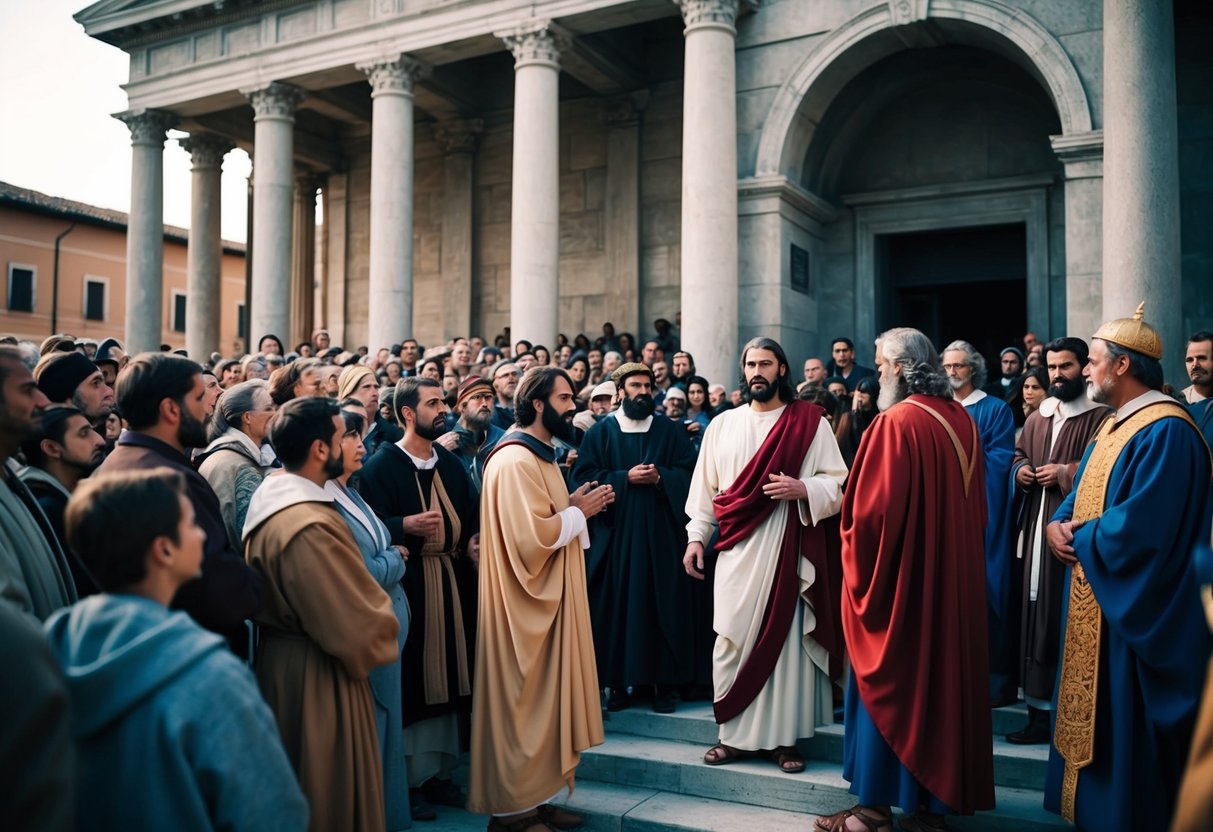
The historical context of the choice between Jesus and Barabbas is shaped by the political climate in Judea, the significance of Passover, and the role of Roman governance under Pontius Pilate.
Understanding these factors provides insight into why this moment was pivotal in the New Testament narrative.
Political Climate of Judea
Judea during the first century was a region of unrest and tension. Roman control was often met with resistance from various Jewish groups.
Many Jews were frustrated with heavy taxation and the loss of political autonomy. This created a fertile ground for various leaders, including Barabbas, who was likely seen as a freedom fighter.
The Jewish people were divided. Some wished to collaborate with Rome while others sought rebellion.
Barabbas’s actions resonated with those who yearned for independence. His release reflected the people’s hopes for a leader who could challenge Roman authority.
The Role of Passover
Passover was a crucial Jewish festival that commemorated the Exodus from Egypt. Each year, the Jewish people gathered in Jerusalem to celebrate their freedom and identity.
This festival was not just religious; it was also a time of heightened political sentiment.
During Passover, tensions flared as the population increased in Jerusalem. The memory of liberation was fresh, making the decision between Jesus and Barabbas even more significant.
The crowd advocated for Barabbas, possibly hoping for a messianic figure who could deliver them from Roman oppression, linking their historical struggles with their present situation.
Roman Governance and Pontius Pilate
Pontius Pilate served as the Roman governor of Judea. His administration was marked by conflict, especially with the Jewish community.
He was known to be harsh, which often led to unrest. Pilate had to navigate a delicate balance between maintaining order and addressing the volatile nature of the populace.
Offering a prisoner release during Passover was a customary act meant to appease the Jews.
Pilate faced a critical choice: to release a known rebel like Barabbas or the innocent Jesus. This decision was made within the context of Roman law and the pressures of governing a restless territory, illustrating the complex dynamics of power and control during that era.
The Figures of Jesus and Barabbas
The accounts of Jesus and Barabbas present two contrasting figures in the New Testament. Each plays a significant role in the events leading up to the crucifixion, highlighting themes of innocence and guilt.
Jesus: Messiah and Innocent Condemned
Jesus is recognized as the Messiah, a title that signifies his role as the anointed one sent to save humanity.
In the Gospels, he is portrayed as innocent, facing false accusations that led to his arrest. Despite performing miracles and teaching love and compassion, he was condemned to death by crucifixion.
The choice between Jesus and Barabbas reflects a pivotal moment. The crowds chose to release Barabbas, a notorious prisoner, showing how public sentiment can sway justice.
Jesus’ crucifixion symbolizes the ultimate sacrifice for sins. His status as the innocent condemned emphasizes the injustice faced by those who challenge the status quo.
Barabbas: Notorious Prisoner and Insurgent
Barabbas is described as a notorious prisoner involved in insurrection. He was imprisoned for acts against the Roman authorities, which included murder during a rebellion.
The Gospels depict him as a controversial figure, yet the crowd preferred his release over that of Jesus.
This decision reveals a complex societal choice. Barabbas represents those who resort to violence in their fight for freedom.
Unlike Jesus, who preached peace, Barabbas symbolizes a more aggressive approach to social change. His name, shared with Jesus, creates a stark contrast between the paths each figure represents.
This moment in history highlights the themes of justice and moral choice in a turbulent time.
Trial and Choice of the Crowd
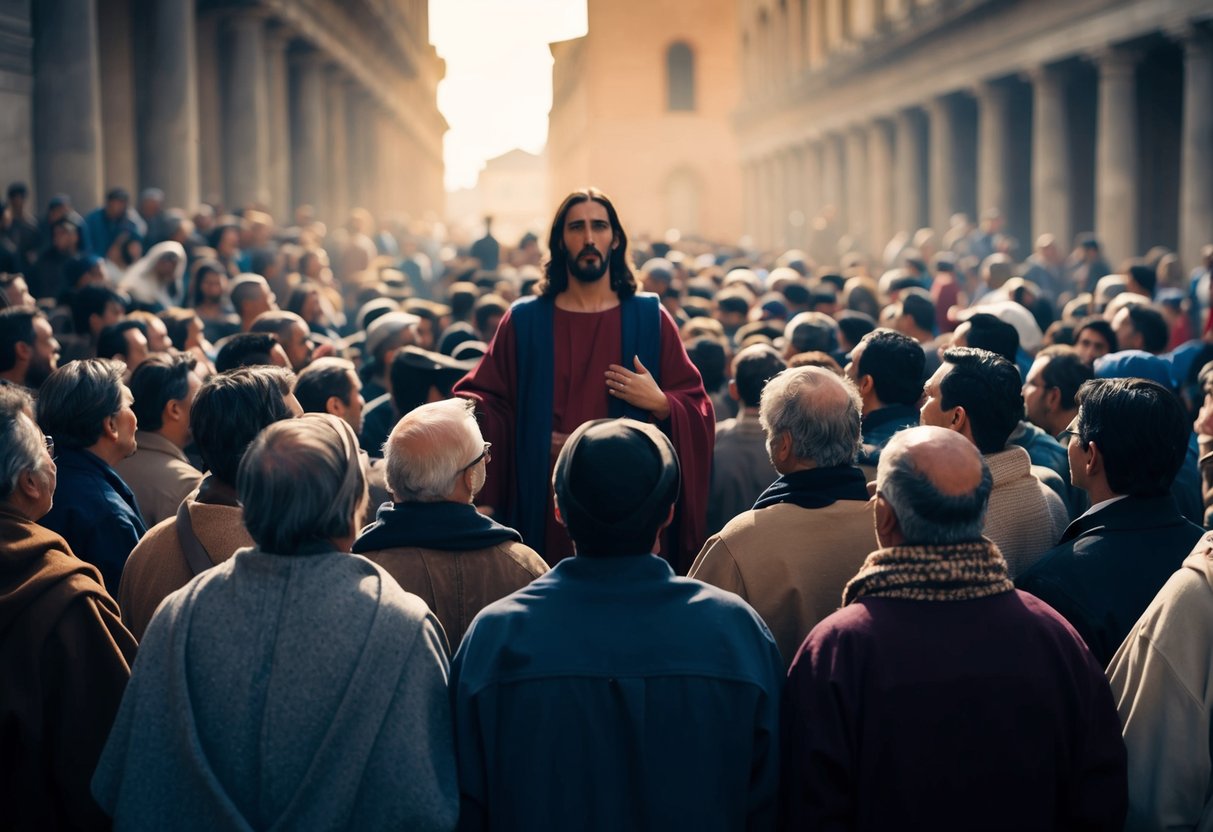
During the trial of Jesus, a significant moment occurred when the crowd faced a crucial decision. This situation highlighted the dynamics of power, influence, and collective choice in a tense political and religious environment.
Pilate’s Offer to the Crowd
Pontius Pilate was the Roman governor overseeing the trial of Jesus. He was aware of the chief priests’ motivations and their role in stirring up the crowd.
To appease the people, Pilate presented a choice: he could release one prisoner during the Passover festival.
The options were either Jesus, known as the “king of the Jews,” or a notorious criminal, Barabbas.
This offer was strategic, as Pilate hoped the crowd would favor Jesus due to his popularity. Despite this, the chief priests and elders influenced the crowd, urging them to choose Barabbas instead, reflecting their desire to eliminate Jesus.
The Public Decision
As the crowd gathered, the responsibility of making a choice fell heavily upon them.
Pilate asked them, “Whom do you want me to release?” The atmosphere was charged with tension.
The crowd’s decision was not merely about freedom for one man over another; it was a profound moment of collective judgment.
Despite the overarching influence of the chief priests, the crowd’s choice had lasting implications. They chose Barabbas, declaring, “Release Barabbas!” This pivotal moment underscored their role in the trial and their responsibility in deciding Jesus’ fate.
The choice revealed the complexity of public opinion and manipulation during a time of turmoil.
Scriptural Accounts
The accounts of the choice between Jesus and Barabbas are recorded in all four Gospels. Each Gospel provides unique details and perspectives on this pivotal event. Variations exist among manuscripts, which have led to different interpretations, particularly by early scholars like Origen.
The Gospels’ Narrative
In the Gospel of Matthew (27:15-26), Pontius Pilate offers to release a prisoner during the Passover feast. The crowd chooses Barabbas, a notorious criminal, instead of Jesus. This account highlights the role of the chief priests in influencing public opinion.
Mark (15:6-15) mirrors Matthew’s narrative closely but emphasizes Pilate’s reluctance to condemn Jesus, noting the crowd’s demand for Barabbas.
Luke (23:18-25) adds context by describing how the crowd collectively shouted for Barabbas, indicating widespread support for his release over the “king of the Jews.”
John (18:40) mentions that Barabbas was a robber, underscoring his criminal status. This choice reveals the tensions within the Jewish community and the influence of political leaders in this moment.
Variations in Gospel Manuscripts
Notably, some manuscripts of Matthew 27 refer to Barabbas as “Jesus Barabbas.” This raises theological questions about identity and the nature of the choice the crowd faced.
The presence of two figures named Jesus highlights the significance of the decision before the people.
These manuscript variations can change the interpretation of the narrative. Scholars examine early texts, comparing the New International Version and the English Standard Version to understand differences.
Textual criticism plays a role in how these accounts are understood today. Each manuscript offers insights into how early communities viewed Jesus and Barabbas.
Interpretations of Origen and Other Scholars
Origen, an early Christian scholar, commented extensively on the significance of the exchange between Jesus and Barabbas. He suggested that the release of Barabbas represents the choice of earthly freedom over spiritual salvation.
Later interpretations have varied, with some viewing the crowd’s choice as an example of misplaced priorities. Other scholars highlight the political complexities and the role of Roman authority in the final outcome.
Both ancient and modern studies continue to explore the implications of this event. The stories from Matthew, Mark, Luke, and John provide a rich tapestry of meaning, reminding readers of the historical and spiritual stakes involved in this moment.
Aftermath of the Choice
The choice made by the crowd led to significant events, affecting both Jesus and Barabbas in profound ways. This decision resulted in the crucifixion of Jesus and the release of Barabbas, encompassing deeper theological implications.
The Crucifixion of Jesus
After the crowd chose Barabbas, Jesus faced severe punishment. Pilate had Jesus flogged, which involved whipping him, causing great pain and bloodshed.
The intention was to appease the crowd, but their demand for Jesus’ execution continued.
Jesus was then mocked, beaten, and forced to carry his cross to the place of crucifixion. It was here that he was executed, nailed to the cross between two criminals.
This event marked a pivotal moment in Christian belief, symbolizing sacrifice for humanity‘s sins.
The Release of Barabbas
Barabbas, labeled a notorious bandit, was favored by the crowd despite his crimes. He was on the brink of execution, facing certain death for his actions.
Instead, with Jesus condemned, Barabbas gained freedom.
His release raises questions about justice and mercy. Barabbas shared a name with Jesus, being referred to as “Jesus Barabbas” in some texts. This parallel deepens the impact of the crowd’s choice.
By selecting Barabbas, the people chose a man associated with rebellion over the Son of God.
Theological Implications
The decision to release Barabbas over Jesus has lasting theological meanings. It showcases the themes of sacrifice and redemption central to Christian teachings.
Jesus’ crucifixion, often seen as a means of atonement, contrasts sharply with Barabbas’s escape from punishment.
This moment highlights the nature of humanity’s choices and the significance of free will. Theologically, Barabbas symbolizes all sinners who have been given a chance at freedom through Jesus‘ ultimate sacrifice.
In essence, the choice serves as a powerful reminder of grace and forgiveness offered to believers.
