
The group often referred to as the apostles played a crucial role in the formation of the early church and the spread of Christianity.
Yet, to fully understand the Gospels, many believers and historians seek to uncover exactly who were the 12 disciples of Jesus and what made them so significant.
These followers were handpicked by Christ to learn from him, witness his miracles, and carry his teachings to the world.
Each disciple brought a unique background and perspective, helping to shape the enduring message of the New Testament and the future of the faith.
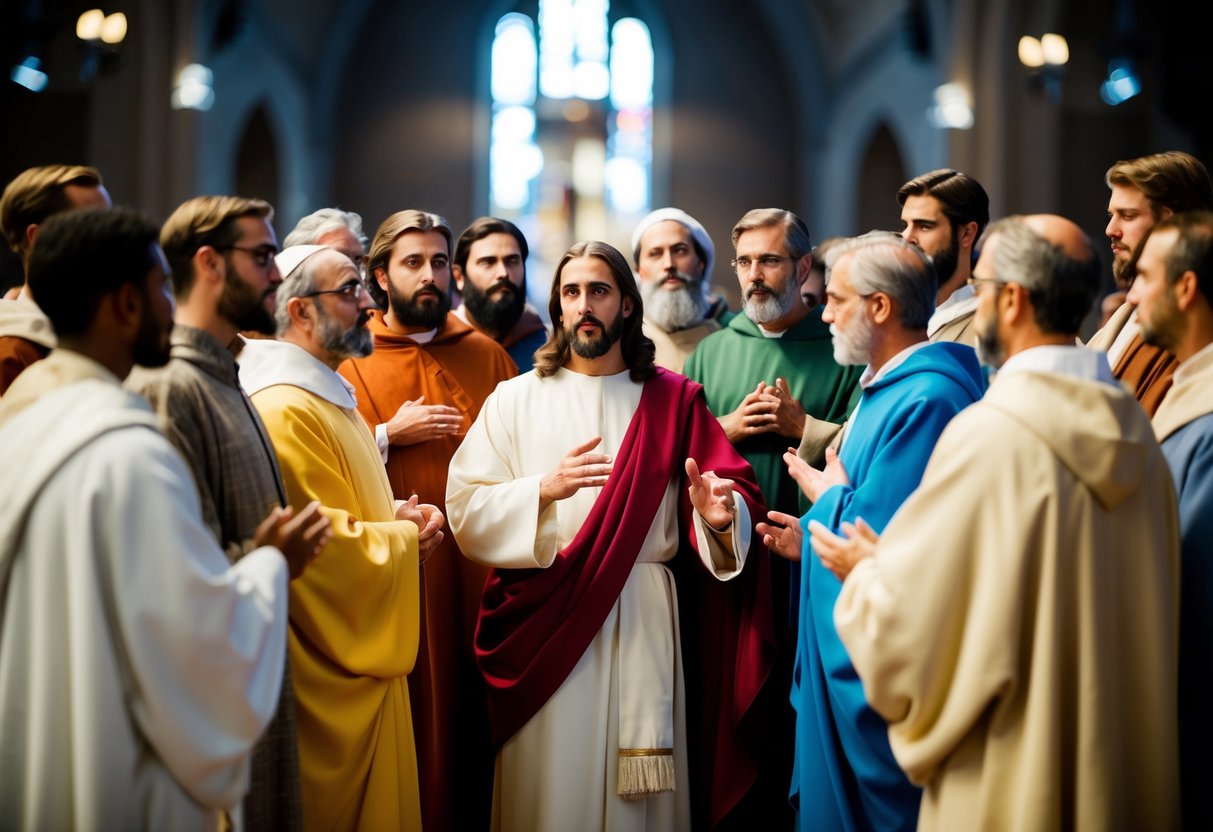
From fishermen to tax collectors, the diverse professions of the disciples highlight how Jesus called individuals from various walks of life.
Their experiences and personal journeys contributed to the foundational stories and teachings that are still relevant today.
Understanding who these men were provides insight into the growth of the Christian faith and its impact on the world.
The legacy of the 12 disciples continues to resonate, inspiring countless followers throughout history.
Their commitment to Jesus and the mission he set before them laid the groundwork for the church as it exists today, making their stories vital to the understanding of Christianity.
The Disciples and Their Backgrounds
The twelve disciples of Jesus were chosen for their diverse backgrounds and unique personalities. Each disciple played a significant role in his ministry, shaped by their past experiences and occupations.
Simon Peter: The Rock
Simon Peter, often referred to simply as Peter, was a fisherman by trade. He was known for his strong personality and impulsive nature. Jesus gave him the name Peter, meaning “rock,” signifying his foundational role in the early Church.
Peter’s leadership emerged as he became the spokesperson for the group. His unwavering faith and eventual martyrdom made him one of the most significant figures in Christianity.
Andrew: Brother of Peter
Andrew was the brother of Simon Peter and also a fisherman. He is often seen as the first disciple called by Jesus.
Andrew played a vital role in bringing others to Christ, including his brother. He was known for his faith and willingness to follow Jesus without hesitation.
His legacy includes being the patron saint of several countries.
James the Greater: Son of Zebedee
James, the son of Zebedee, was one of the first disciples called by Jesus alongside his brother John. He was part of Jesus’ inner circle and witnessed significant events, such as the Transfiguration.
James was known for his fiery temperament, which earned him the nickname “Boanerges,” meaning “sons of thunder.” He later became the first apostle to be martyred for his faith.
John: The Beloved Disciple
John, the brother of James, is often referred to as the beloved disciple. He had a close relationship with Jesus and was present at many key moments in Christ’s ministry.
John is attributed with writing the Gospel of John and the Book of Revelation. His insights into love and faithfulness deeply influence Christian teachings. John lived many years after Jesus’ resurrection, playing a crucial role in the early Church.
Philip: The Questioner
Philip was known for his inquisitive nature and loyalty. He came from the town of Bethsaida, the same place as Peter and Andrew.
Philip was instrumental in bringing Nathanael to Jesus, demonstrating his eagerness to share the Gospel. His questions often revealed deeper truths about Jesus’ mission, showing a desire to understand more fully what it meant to follow Christ.
Bartholomew: Son of Tolmai
Bartholomew is often identified with Nathanael. He was introduced to Jesus by Philip and quickly recognized Jesus’ authority.
Bartholomew was known for his honesty and straightforwardness. He is sometimes described as a man “without deceit.” Not much information is provided about his later life, but he is traditionally believed to have preached in various lands after Jesus’ resurrection.
Matthew: The Tax Collector
Matthew, also called Levi, was a tax collector before following Jesus. This was a despised profession since tax collectors often extorted money from their fellow Jews.
Matthew’s background as a tax collector provided him with skills in writing and record-keeping, which became beneficial for authoring the Gospel of Matthew. His calling by Jesus shows the transformative power of faith.
Thomas: The Doubter
Thomas is best known for his initial doubt regarding Jesus’ resurrection. He famously declared he would not believe until he saw Jesus’ wounds.
This incident led to his nickname, “Doubting Thomas.” However, his eventual declaration of faith, “My Lord and my God,” shows his deep conviction. Thomas is believed to have traveled to India to spread the Gospel.
James the Less: Son of Alphaeus
James the Less is identified as the son of Alphaeus. He is often overshadowed by his namesake, James the Greater.
Very little is known about his life, but he is mentioned in the lists of the twelve apostles. James the Less is sometimes identified with a figure in early Church history, highlighting the significance of even the lesser-known disciples.
Thaddeus: The Obscure Disciple
Thaddeus, also known as Judas (not Iscariot), is another less prominent figure among the disciples. He is recognized for asking Jesus about his revelations during the Last Supper.
Thaddeus is believed to have preached in various regions after the resurrection. His relatively obscure role illustrates the diverse contributions of the disciples.
Simon the Zealot: The Passionate
Simon the Zealot is believed to have been part of a radical Jewish group known as the Zealots. This group sought to overthrow Roman rule in Judea.
His passionate nature likely contributed to his commitment to Jesus’ teachings. Little detail remains about his life after the resurrection, but tradition holds he preached in various locations.
Judas Iscariot: The Betrayer
Judas Iscariot is known for his infamous betrayal of Jesus for thirty pieces of silver. His background is shrouded in mystery, and he is often viewed as a tragic figure.
Despite being part of Jesus’ inner circle, Judas’ actions led to his demise. His story serves as a cautionary tale about the impact of greed and betrayal.
The Role of the Apostles in Early Christianity

The apostles played a crucial role in spreading the gospel message and shaping the foundations of the early Christian church. Their preaching, missionary work, and leadership helped establish a vibrant community of followers committed to Jesus’ teachings.
Apostolic Preaching and Teachings
The apostles preached the gospel message with passion and conviction. They shared the life, death, and resurrection of Jesus Christ as the core of their teachings.
Their messages focused on salvation, repentance, and the love of God.
Each apostle brought unique insights, translating Jesus’ teachings into the language of their communities. They used parables, stories, and direct teachings to communicate their messages effectively.
Significant events like Pentecost marked key moments when they boldly proclaimed their faith to diverse audiences.
This evangelistic approach attracted many early followers, forming a solid base for the burgeoning church. The apostles also wrote letters, which became part of the New Testament, further spreading their teachings.
Missionary Journeys and Evangelism
The apostles engaged in extensive missionary journeys to spread Christianity. They traveled to various regions, including Judea, Samaria, and beyond, to share the good news. They faced challenges but remained dedicated to their mission.
Paul, one of the most notable apostles, undertook several journeys, establishing churches in places like Corinth and Ephesus. His letters addressed issues within these communities, guiding them in faith.
Through these travels, the apostles not only preached but also encouraged local leaders to continue spreading the message. Their work laid the groundwork for future evangelism and the growth of Christianity throughout the Roman Empire.
Founding of the Early Church
The apostles were instrumental in founding the early church. They organized communities of believers, creating structures for worship and fellowship. They emphasized teaching, breaking bread, and prayer as central aspects of community life.
The apostles appointed leaders to help manage these growing groups. They built a framework for church governance, addressing early issues to maintain unity.
Their teachings and examples set the foundations for Christian doctrine and practice. The early church thrived, providing support and guidance for its members as it spread across diverse cultures.
Key Events and Turning Points
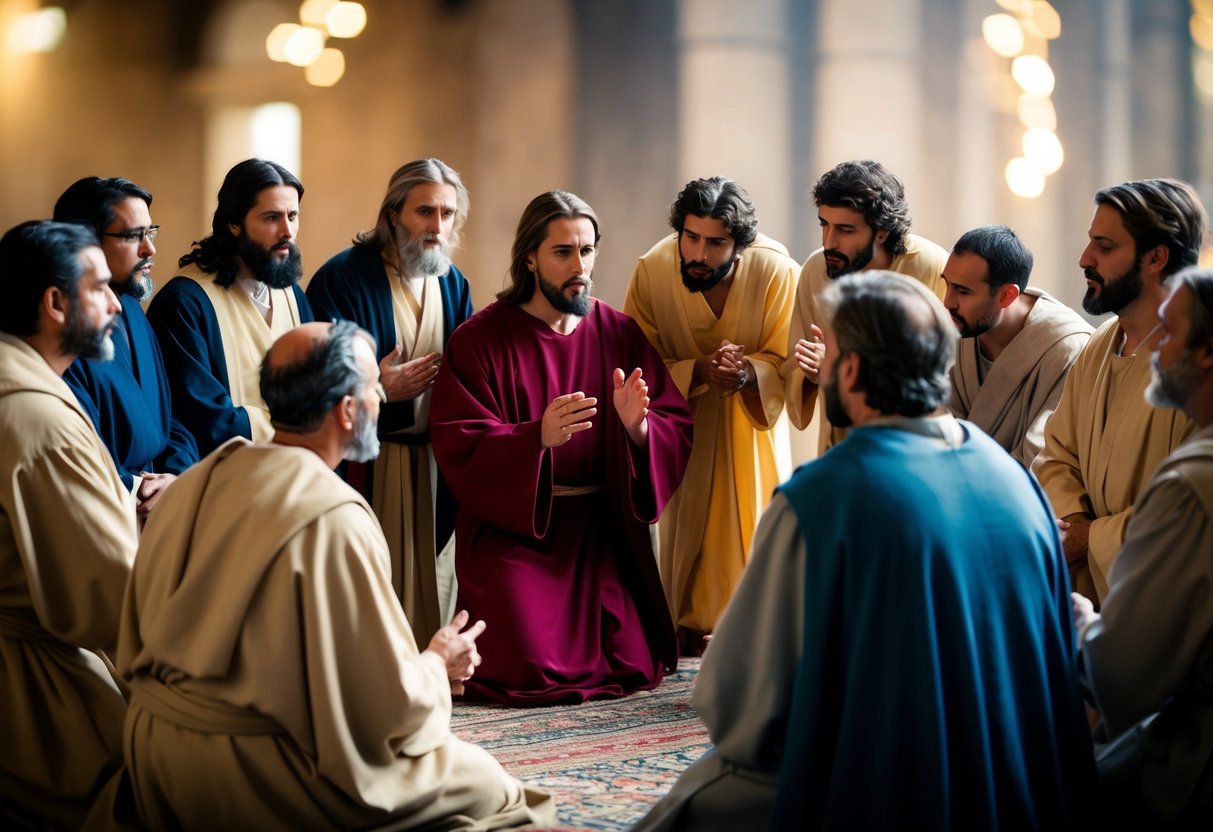
Several key events significantly influenced the lives of the twelve disciples. These turning points shaped their faith and mission. They experienced profound transformations during these moments, which would guide their actions and teachings in spreading the message of Jesus.
Crucifixion and Resurrection of Jesus
The crucifixion of Jesus marked a low point for the disciples. They witnessed their leader’s death, which left them fearful and confused. Many of them fled, feeling lost in the aftermath.
Three days later, Jesus rose from the dead, a defining event that restored hope. His appearance to the apostles reassured them and confirmed his teachings.
Jesus’ resurrection solidified their belief and strengthened their resolve to spread his message.
This event transformed the disciples from fearful followers into bold leaders. They embraced the call to witness his resurrection and began to preach in Jerusalem. The resurrection was essential for their faith and mission.
Pentecost and the Coming of the Holy Spirit
Pentecost was another pivotal moment for the disciples. Occurring fifty days after Jesus’ resurrection, this event was marked by the arrival of the Holy Spirit. The apostles gathered in Jerusalem, filled with anticipation.
Suddenly, a sound like wind filled the room, and they saw tongues of fire. The Holy Spirit empowered them to speak in various languages. This ability allowed them to communicate effectively with the diverse crowd in Jerusalem.
The arrival of the Holy Spirit transformed the apostles into confident messengers of Jesus’ teachings. They preached boldly, resulting in thousands of conversions. Pentecost was crucial in establishing the early Christian community and spreading the faith.
The Great Commission
The Great Commission is a crucial directive given by Jesus after his resurrection. He instructed his disciples to spread the gospel to all nations. This command emphasized their role as apostles tasked with sharing his teachings.
Jesus told them to baptize and teach others, ensuring that his message would continue. This mission was both a chance and a responsibility for the apostles. They were to act on their belief and lead others to faith.
The disciples took this commission seriously, embarking on extensive travel to spread Christianity. Their commitment helped establish the foundation of the early church and expand Jesus’ teachings to many regions.
The Legacy and Writings of the Apostles
The apostles left a significant mark through their writings, which are foundational to Christian beliefs. Their works not only recount the life of Jesus but also provide guidance and teachings for early Christians. This section explores notable writings and contributions from key apostles.
The Synoptic Gospels and Acts of the Apostles
The Synoptic Gospels include the Gospel of Matthew, the Gospel of Mark, and the Gospel of Luke. These gospels share similar stories about Jesus, focusing on his teachings, miracles, and parables.
Gospel of Matthew: Written for a Jewish audience, it emphasizes Jesus as the Messiah. It includes the Sermon on the Mount and detailed genealogy.
Gospel of Mark: The shortest gospel, it presents a fast-paced account of Jesus’ life and ministry. Mark highlights Jesus’ miracles and human emotions.
Gospel of Luke: This gospel provides a more detailed narrative, including stories unique to Luke, like the Good Samaritan. It emphasizes compassion and social justice.
In addition to the gospels, the Acts of the Apostles, attributed to Luke, details the early church’s formation and the apostles’ missionary efforts after Jesus’ resurrection. Acts 1:13 lists the apostles who played crucial roles in spreading Christianity.
Letters of Peter, John, and James
The New Testament contains several letters attributed to apostles that offer guidance to early Christians. These letters address issues of faith, morality, and church life.
1 Peter: This letter provides encouragement to Christians facing persecution. It emphasizes hope and the call to holiness.
Letters of John: The three letters attributed to John focus on love, truth, and the nature of Christ. They warn against false teachers and stress the importance of living in accordance with the teachings of Jesus.
Letter of James: This letter emphasizes the importance of faith in action. James encourages believers to demonstrate their faith through good works and moral behavior.
These letters are significant for their practical advice and spiritual guidance, shaping Christian thought and practice.
The Book of Revelation
The Book of Revelation, attributed to John, is a complex text filled with symbolism and prophecy.
It addresses the final days and God’s ultimate victory over evil.
Revelation contains vivid imagery and messages for the early Christian community. It serves as both a warning and a source of hope for believers facing persecution.
Key themes include:
- Faithfulness: Encouraging believers to remain steadfast.
- Judgment: Describing the consequences of sin and the reward for the faithful.
- New Creation: Promising a future where God will dwell with humanity.
The Book of Revelation is an essential part of the New Testament, providing insight into Christian eschatology and hope for eternal life.
The Martyrdom and Lasting Influence of the Disciples
The Twelve Apostles played a crucial role in the spread of Christianity. Many of them faced harsh challenges, and tradition holds that most died as martyrs for their faith.
Martyrdom was a significant theme in the lives of the apostles.
For example, it is believed that Peter was crucified upside down in Rome. James, the son of Zebedee, was reportedly killed by the sword.
John the Baptist, though not one of the Twelve, also faced martyrdom and influenced their missions. His death sparked interest in Jesus and the teachings of the apostles.
Many accounts of the apostles’ deaths come from early church traditions. However, historical accuracy varies, and not all martyrdom stories can be confirmed.
Their sacrifices significantly contributed to the growth of the Christian faith. The apostles’ dedication inspired countless followers throughout history.
The names of the apostles are still prominent today. Names like Peter, John, and Andrew are common, attesting to their lasting influence in Western culture.
