
Both figures stand as towering pillars in religious history, serving as the primary representatives of the Old and New Testaments.
When scholars and believers examine the continuity of scripture, the comparison of Jesus vs Moses often takes center stage to highlight the evolution of God’s plan. While each played a vital role in guiding the people of Israel, their specific functions and eternal legacies differ greatly.
Moses is revered as the great lawgiver and a faithful servant who established the foundation of the covenant at Sinai. In contrast, Jesus is recognized not merely as a leader, but as the ultimate fulfillment of that very law and the Savior of the world.
Understanding this distinction is crucial for grasping the transition from the shadow of the law to the reality of grace. It shows how the faithful servant paved the way for the divine Son.
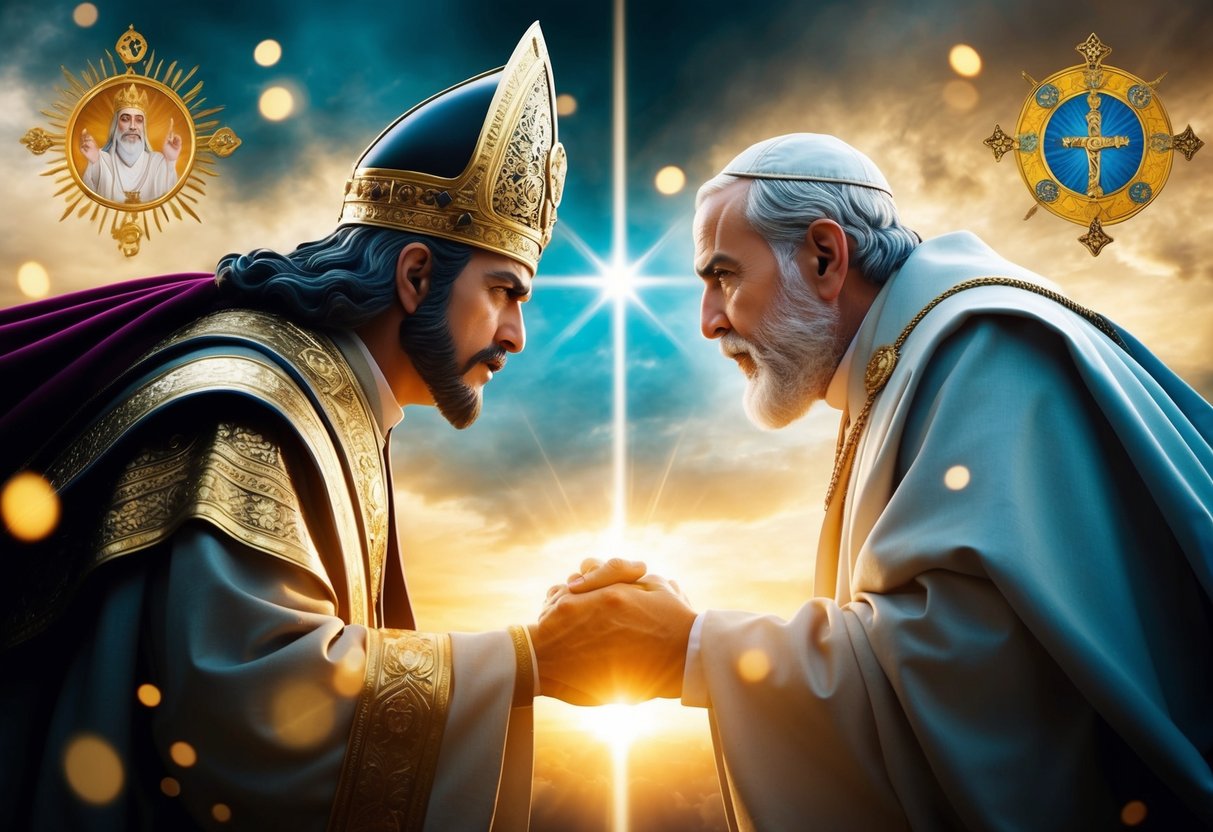
Understanding the similarities and differences between them can shed light on their unique contributions and the profound impact they had on faith.
Both experienced remarkable journeys, from their births under oppressive circumstances to leading their people in pivotal ways.
Even though Moses pointed to the coming of someone greater, Jesus ultimately fulfilled many of the promises made in the scripture.
This exploration reveals how their lives intersect yet diverge, providing deep insight into their roles in guiding the faithful. Readers will gain a clearer understanding of how Moses set the stage for Jesus’ ministry and what that means for believers today.
Historical Context
Understanding the historical contexts of Moses and Jesus provides insight into their lives and missions. Both figures lived in turbulent times, facing different challenges and leadership roles. Their stories reveal how they were shaped by their surroundings and events.
Life and Times of Moses
Moses lived during a time when the Israelites were enslaved in Egypt. He was born at a time when Pharaoh had ordered the death of Hebrew infants. To protect him, his mother placed him in a basket on the Nile River. He was found and raised by Pharaoh’s daughter.
Moses led the Israelites out of slavery, an event known as the Exodus. He faced numerous challenges, including resistance from Pharaoh.
With God’s guidance, he parted the Red Sea and received the Ten Commandments on Mount Sinai. This covenant between God and the Israelites formed the foundation of the Old Testament and shaped Jewish identity.
Life and Times of Jesus
Jesus lived in first-century Judea, under Roman occupation. At this time, the region was politically unstable and religiously charged. King Herod ruled as a client king appointed by Rome. His reign was marked by fear and brutality, including the slaughter of infants in Bethlehem.
Jesus began his ministry after John the Baptist was imprisoned. He preached about love, repentance, and the Kingdom of God.
His teachings and miracles drew many followers, but they also attracted the attention of religious leaders. His crucifixion marked a turning point that would lead to the formation of Christianity, as described in the New Testament.
Theological Significance

The roles of Moses and Jesus are pivotal in understanding their theological significance. Each figure embodies unique elements of faith and covenant, influencing the beliefs of millions.
Moses as Prophet and Lawgiver
Moses is revered as a major prophet and the lawgiver of Israel. He received the Law, including the Ten Commandments, on Mount Sinai. This event is critical as it established the Old Covenant between God and the Israelites, a promise that defined their identity.
Moses served as a mediator, delivering God’s commands to the people. His writings, particularly in Deuteronomy, reflect God’s desire for obedience and faithfulness. This covenant not only guided Israel’s religious and social life but also foreshadowed future revelations.
The prophets Isaiah and Jeremiah later referenced Moses’ laws while calling for deeper faith and commitment.
Jesus as Messiah and Fulfillment
Jesus holds the title of Messiah within Christian theology. He fulfills the prophetic roles outlined in the Old Testament. Unlike Moses, who was a servant, Jesus is seen as the Christ—the Son of God who initiates the New Covenant.
Through His teachings and sacrifices, Jesus reinterprets the Law, emphasizing love and grace.
His role transforms faith, offering believers a direct relationship with God. By fulfilling Old Testament prophecies, He validates His mission. In this sense, Jesus is not just a teacher but completes the promises made to Israel, establishing a path for all humanity.
Comparative Analysis

This section explores the significant roles of Moses and Jesus in relation to the Exodus narrative and introduces the concept of a New Exodus through Jesus. Both figures served as pivotal agents in conveying God’s message and fulfilling divine promises.
Moses and the Exodus
Moses is central to the Exodus story, where he leads the Israelites out of slavery in Egypt. This event represents a critical moment of liberation and faithfulness to God. In Deuteronomy 18:15, Moses speaks of a prophet who will come after him, hinting at the future arrival of the Messiah.
Throughout the Exodus, Moses performed miracles, such as parting the Red Sea and providing manna, to guide and sustain his people. His ministry emphasized obedience and faith in God. He was a faithful servant, demonstrating leadership and courage, often in the face of doubt from the Israelites. His role as a prophet and leader set the stage for future revelations from God.
Jesus and the New Exodus
Jesus is often described as leading a New Exodus, fulfilling the promises made in the Old Testament. He embodies the prophet mentioned in Deuteronomy 18:15, as he teaches about the Kingdom of God and offers salvation.
Through his ministry, Jesus performed numerous miracles, echoing the acts of Moses. He healed the sick, brought the dead back to life, and fed thousands. These miracles were signs of his divine authority and connection to God. His teachings aimed to bring people back to faithfulness, much like Moses did for the Israelites.
In essence, Jesus’ role as the Messiah fulfills the expectations set by Moses and the prophets, leading believers into a new relationship with God. This New Exodus represents a spiritual freedom, transcending physical liberation.
Cultural and Lasting Impact
The influence of Jesus and Moses extends deeply into religious writings and traditions, shaping beliefs and practices across generations. Their legacies affect modern faith, highlighting their roles as leaders and messengers.
Writings and Traditions
Moses is central to the Hebrew scriptures, particularly in the Torah, which includes laws and teachings that govern Jewish life. The Talmud expands on these texts, exploring interpretations and applications. Moses is celebrated as the lawgiver who brought foundational commandments, establishing Jewish identity and ethics.
In contrast, Jesus is pivotal in the New Testament, where he is portrayed as the fulfillment of the Law, introducing a “New Law” focused on love, forgiveness, and salvation.
The Gospels recount his signs and teachings, emphasizing his call to “Listen to Him.” While Moses received the law on Mount Sinai, Jesus taught that through faith, believers gain eternal life. This contrast highlights the differing yet intersecting paths of Moses’ and Jesus’ teachings.
Moses and Jesus in Modern Faith
In modern faith, both figures hold significant roles. Moses is often seen as a symbol of deliverance and guidance, with his story resonating in themes of liberation. His mother’s protective actions and Miriam’s leadership are integral to understanding the societal context they navigated.
Jesus, viewed as “Greater than Moses,” challenges traditional boundaries. He came to offer salvation, emphasizing inclusion and equality, contrasting with certain purity laws established by Moses.
This legacy influences Christian practices today, where believers often reflect on Jesus’s teachings about love and compassion while recognizing Moses’s foundational role in their faith.
Legacy of Leadership and Wisdom
Both Moses and Jesus left significant legacies that shaped their faith communities and influenced generations. Their teachings focus on righteousness, wisdom, and hope, stressing the importance of leading with integrity and compassion.
Teachings of Moses and Their Influence
Moses is known for delivering the Ten Commandments, a cornerstone of moral and ethical guidance. His laws emphasized righteousness and justice, setting a standard for behavior.
He acted as a mediator between God and the Israelites, showcasing leadership through humility and obedience. Moses’ teachings promoted community welfare and accountability.
His legacy continues to inspire leaders to advocate for justice and serve their communities. Many view him as a precursor to Jesus, often referred to as the “New Moses,” who also worked towards reconciliation through love and sacrifice.
Teachings of Jesus and Their Influence
Jesus built on Moses’ teachings by introducing concepts of love, forgiveness, and mercy.
The Sermon on the Mount encapsulates his message, encouraging followers to seek righteousness that surpasses mere rule-following.
He emphasized a personal relationship with God, bringing hope and confidence to the dispirited.
His life and sacrifice on the cross highlighted the ultimate act of love and forgiveness.
By teaching his disciples to spread the message of reconciliation, Jesus empowered Christians to impact the world positively.
His wisdom has guided countless individuals, solidifying his influence as a leader still relevant today.
