
The beginning of Holy week is marked by a celebration known as the Triumphal entry, a pivotal moment in the Christian faith.
For many believers and historians alike, understanding the significance of this day starts with asking: what happened to Jesus on palm sunday? The Bible describes a dramatic scene where he made a significant entrance into Jerusalem, riding on a donkey to fulfill ancient Zechariah’s prophecy of peace.
As he approached the city gates, the atmosphere was electric with anticipation. Crowds gathered in the streets, waving palm branches and spreading their cloaks on the road. They shouted praises of “Hosanna,” openly acknowledging him as the long-awaited king of the Jews.
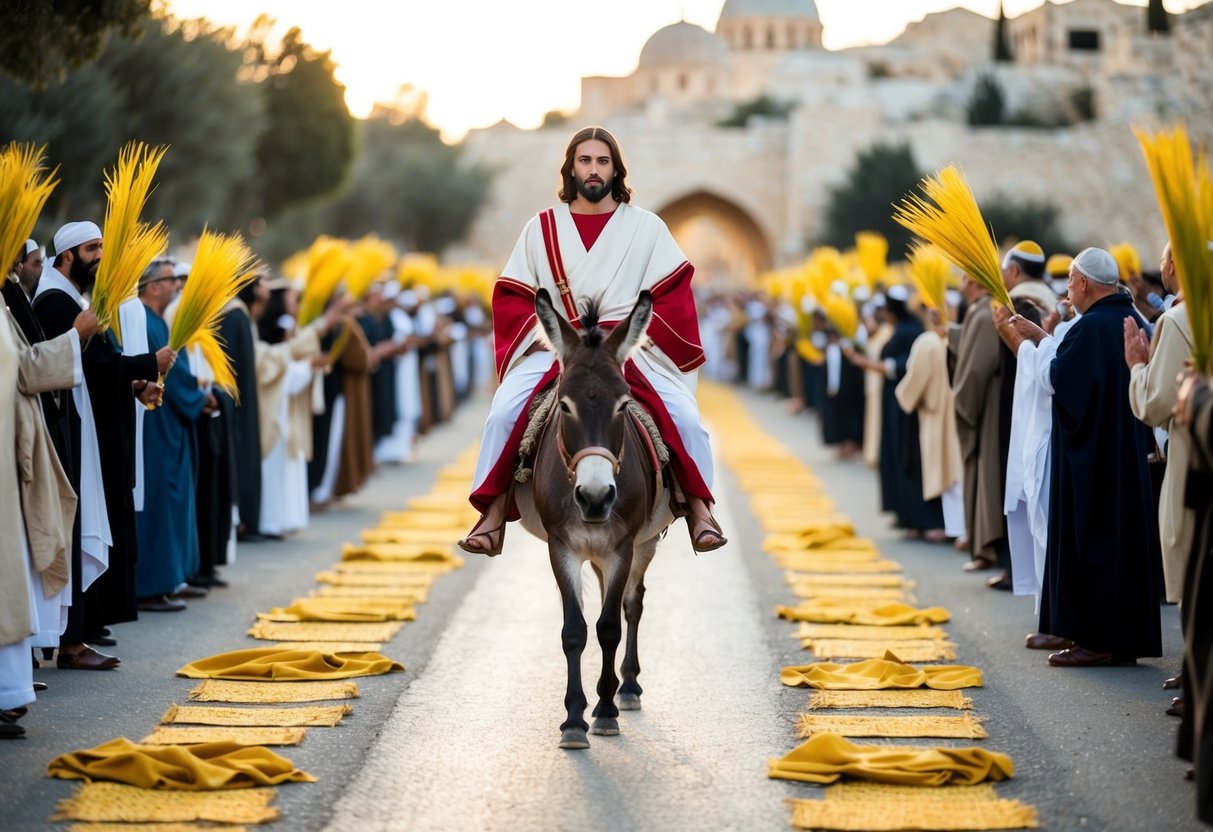
This event highlighted both Jesus’ acceptance and the misunderstandings surrounding his mission. His disciples witnessed the excitement and began to understand the importance of these moments as recorded in the Gospels.
The celebration soon turned to confusion and fear, foreshadowing the tragic events that would unfold in the following days.
As Jesus entered Jerusalem, the scene was filled with hope and expectation, but those feelings were short-lived. The enthusiasm of Palm sunday contrasted sharply with the events that led to his crucifixion just days later, making it a key moment in the story of Jesus’ life and ministry.
Understanding what happened on that day provides insight into the complex nature of his journey.
The Significance of Palm Sunday
Palm sunday holds great importance in Christian tradition, marking Jesus’ entry into Jerusalem. This event is deeply rooted in Old Testament prophecies and rich in symbolism, particularly concerning palm branches.
These themes reflect Jesus’ role as the Messiah and the establishment of his kingship.
Old Testament Prophecies
The entry of Jesus into Jerusalem fulfills the prophecy found in Zechariah 9:9, which speaks of a king coming to his people humble and mounted on a donkey. This scripture emphasizes the connection between Jesus and the long-awaited Son of David.
As he rode into the city, the fulfillment of this prophecy signified the arrival of the King. The people recognized Him as the awaited Messiah, celebrating his entry with joy and hope.
This act not only pointed to Jesus’ identity but also foreshadowed his mission of salvation for humanity.
Symbolism of the Palm Branches
The palm branches waved by the crowd during Jesus’ entry symbolize peace and victory. In ancient times, palms were not only used in celebrations but also represented the triumph of God’s chosen ones.
Waving palms served as a declaration of Jesus’ kingship and the coming of the Kingdom of God. This act demonstrated the people’s acknowledgment of him as their liberator.
The palms can be seen as a call not only for physical salvation but also for spiritual renewal.
In this context, Palm sunday highlights the contrast between worldly expectations of a king and the true nature of Jesus’ mission. This day serves as a reminder of the divine plan at work through Jesus.
The Triumphal Entry into Jerusalem
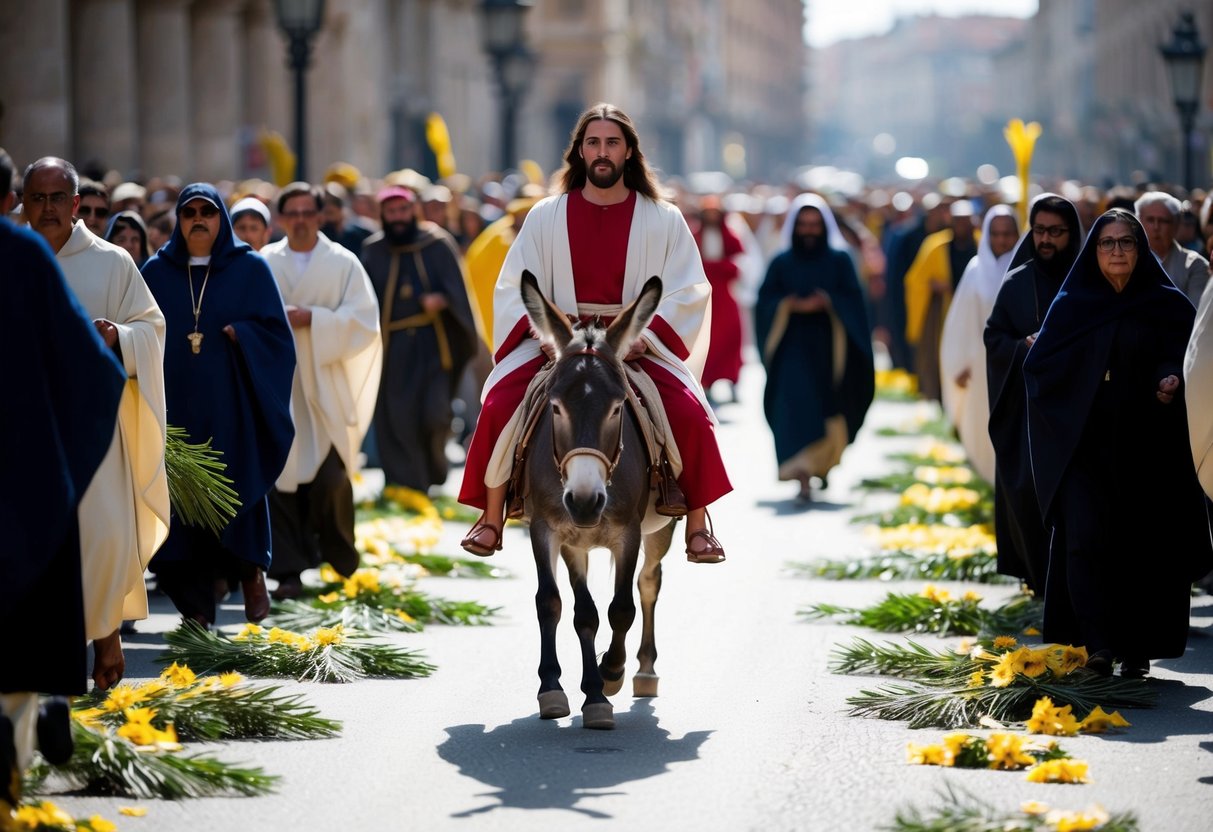
The Triumphal entry is a key event that marks Jesus’s arrival in Jerusalem before his crucifixion. This moment is filled with rich symbolism and significant interactions among Jesus, the crowd, and the environment.
The Route from Bethphage to Jerusalem
Jesus made his way from Bethphage to Jerusalem, a journey that holds great importance. This route starts at the Mount of Olives, giving a beautiful view of the city. Bethphage is just a short distance from Jerusalem, known as the place where Jesus instructed his disciples to fetch a donkey and a colt.
As they traveled, the road was lined with palm branches and cloaks laid down by the crowd. This act demonstrated honor and respect for Jesus, signifying him as a welcomed king entering the city.
The atmosphere was charged with excitement as they approached Jerusalem.
The Role of the Donkey and Colt
Jesus rode into Jerusalem on a donkey, fulfilling a prophecy from Zechariah 9:9, which speaks of a humble king coming on a donkey. The inclusion of both a donkey and a colt in this entry adds to the significance.
The choice of a donkey instead of a horse symbolizes peace rather than war.
By using this humble animal, Jesus showed he was not a typical warrior king. Instead, he presented himself as a servant leader.
This action challenged the expectations of many who saw him as a political liberator.
The Crowd’s Acclamation
As Jesus entered Jerusalem, the crowd erupted in joyful praise, shouting “Hosanna!” This phrase means “save us” and reflects their hope for deliverance.
The people also proclaimed him as “the king of Israel” and “the Son of David.”
They laid their cloaks on the ground, creating a royal welcome for him. Some were likely from Bethany and other nearby towns, having witnessed his miracles.
Their enthusiastic reception highlighted the growing support for Jesus and the expectations of what his arrival might mean for their lives and for Israel.
Through this entry, Jesus was recognized not just as a prophet from Nazareth but also as a figure of immense hope for the Jewish people during a tumultuous time.
Jesus’ Actions and Teachings on Palm Sunday
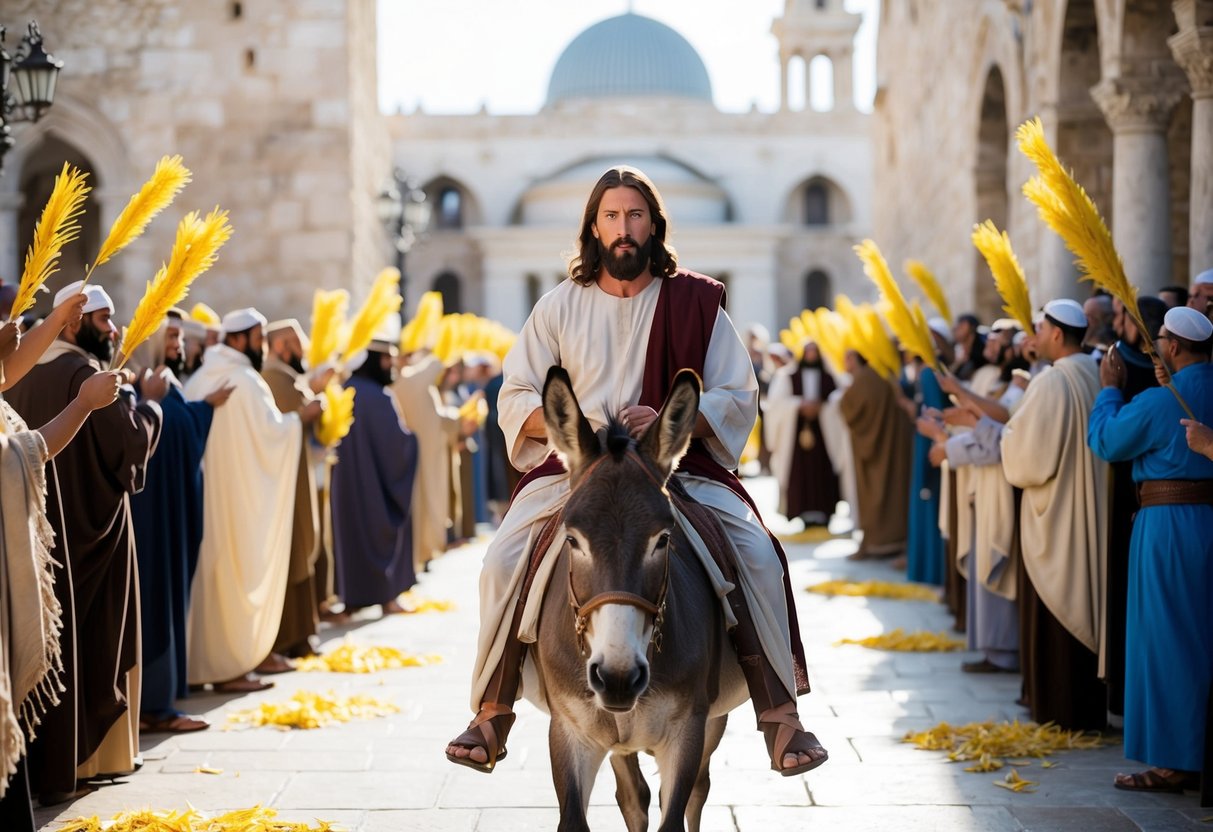
On Palm Sunday, Jesus demonstrated His authority and shared crucial teachings that highlighted His mission. He acted decisively by cleansing the temple, which emphasized the importance of pure worship.
Additionally, he conveyed messages about faith and humility, encouraging his followers to adopt these values in their lives.
The Cleansing of the Temple
Upon entering Jerusalem, Jesus went directly to the temple. There, he observed merchants and money changers conducting business, which troubled him deeply. He saw this as a corruption of a sacred space meant for worship.
In response, Jesus drove out those who were buying and selling. He overturned their tables and boldly declared, “My house shall be called a house of prayer, but you make it a den of robbers” (Matthew 21:13).
This act symbolized his authority as the Messiah and challenged the existing practices of worship.
It called for genuine reverence and highlighted the dangers of valuing profit over spirituality. His actions reminded everyone about true worship and the need to remove sin to approach God authentically.
Teachings on Faith and Humility
During his time in Jerusalem, Jesus taught vital principles about faith and humility. He often emphasized that true greatness in the kingdom of God comes from serving others.
As he approached the crowds, he demonstrated love and compassion despite their mixed reactions.
He reminded His disciples that faith, even as small as a mustard seed, can move mountains (Matthew 17:20). This teaching encouraged his followers to trust in God’s power against the backdrop of sin and challenges they faced.
Jesus also showed humility by riding on a donkey, a sign of peace rather than a warhorse, reinforcing his message that his Kingdom is not about power but love and servitude.
The Reaction of the Authorities
The arrival of Jesus in Jerusalem stirred significant concern among the religious and political leaders. Their reactions were shaped by the implications of his actions and the potential threat to their authority.
Pharisees and Leaders
The Pharisees and other religious leaders viewed Jesus as a direct challenge to their control. As he entered Jerusalem amidst cheers and the waving of palm branches, they recognized the crowd’s recognition of him as the “king of the Jews.”
This celebration threatened their position and power.
The Gospels report that the Pharisees urged Jesus to silence his followers. They feared that his popularity could lead to unrest and provoke Roman authorities.
As leaders of the Jewish faith, they felt the need to maintain order during Passover, a time when tensions ran high.
Political Implications
The triumphant entry also carried significant political implications. Jesus’ acceptance as the Messiah raised fears of a potential uprising.
The term “king of the Jews” sparked concerns about liberation movements against Roman rule.
The Pharisees worried that any disturbances could lead to a harsh Roman response. They understood that if Jesus gained too much influence, it could threaten their collaboration with the occupying forces.
This alliance was crucial for maintaining their authority and stability within their society.
The Road to Easter
The events of Palm Sunday set the stage for the significant moments that follow during Holy week. It marks the beginning of Jesus’ journey toward his death and resurrection, connecting deeply with themes of suffering, sacrifice, and ultimate triumph.
Connecting Palm Sunday to Holy Week
On Palm Sunday, Jesus entered Jerusalem, a moment celebrated with joy by the crowds. They shouted “Hosanna,” recognizing him as a king, which reflected their hope for deliverance.
This event is pivotal as it initiates Holy week, leading directly to his arrest and crucifixion.
During this week, each day is filled with crucial events, from the teachings in the temple to the Last supper on Maundy Thursday.
This meal was significant, as Jesus shared his final moments with his disciples, revealing the new covenant through his impending sacrifice.
As the week progresses, the tension builds, leading to good Friday, when Jesus would face crucifixion.
Foreshadowing the Crucifixion and Resurrection
Palm Sunday foreshadows the events of good Friday and Resurrection Sunday. The entrance into Jerusalem symbolizes not only Jesus’ acceptance by the people but also the coming suffering.
The cheers for Him would soon transform into cries for his death. His entry into the city occurred during Passover, a time when the Jewish people commemorated their freedom from Egypt.
This timing parallels Jesus’ role as the sacrificial lamb. As the week unfolds, Jesus speaks of his coming death in the Olivet discourse, preparing his followers for the impending tragedy.
The echoes of his teachings resonate through Spy Wednesday and into the garden of Gethsemane, where he faces immense anguish. His betrayal by Judas Iscariot intensifies the theme of suffering, which culminates in the crucifixion.
The road to Easter embodies profound themes of love, sacrifice, and hope.
