
One of the most remarkable miracles recorded in the New Testament involves Christ defying the laws of nature during a storm.
However, to fully visualize the scene and understand the biblical geography, many believers and historians ask exactly where did Jesus walk on water on that fateful night.
This miraculous event took place on the rough waters of the Sea of Galilee, specifically near the ancient fishing town of Bethsaida.
In this extraordinary moment, He demonstrated his divine power while encouraging faith among his terrified disciples, proving that he was Lord over the elements.
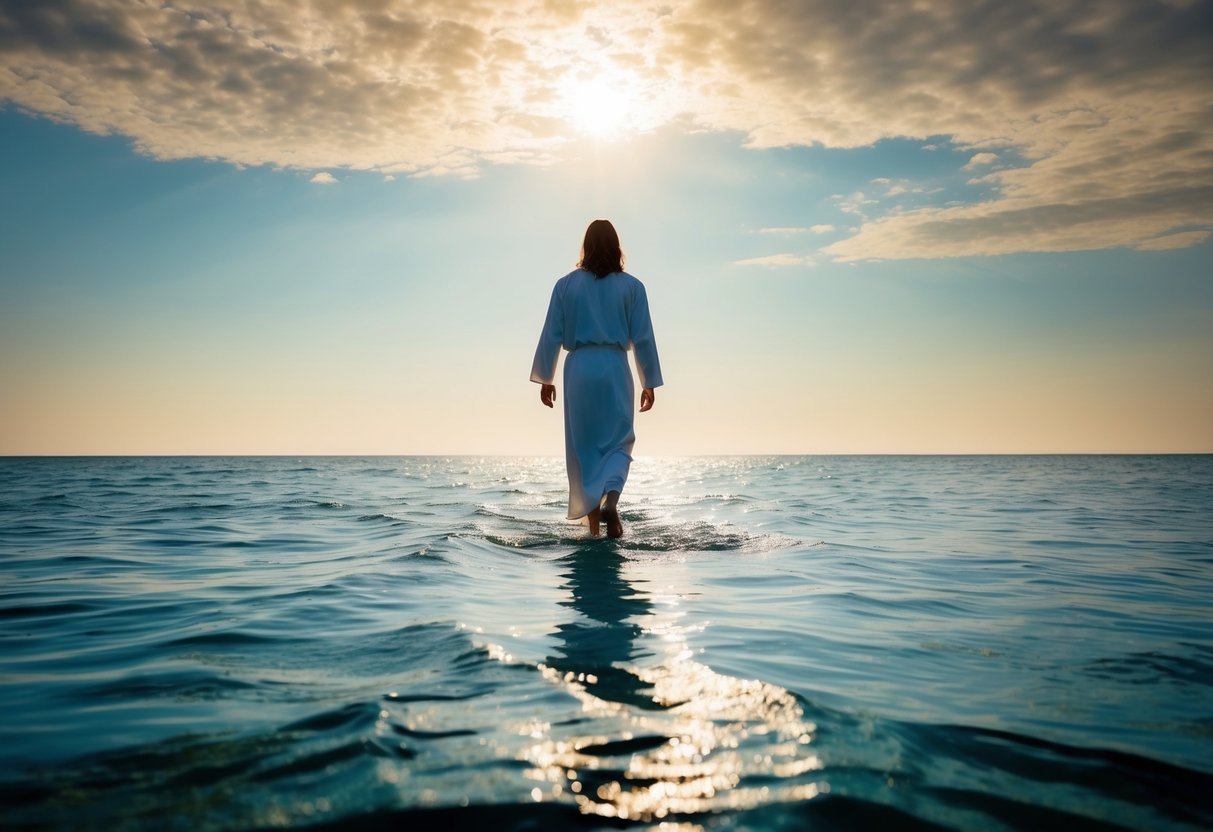
The accounts of this miracle can be found in three of the Gospels: Matthew, Mark, and John. Each Gospel provides unique details, enriching the understanding of the event.
As the disciples struggled against the waves, Jesus approached them, showcasing both his supernatural ability and his role as the Son of God.
This story serves as a profound testament to faith, reminding believers of the strength that comes from trusting in the divine.
The New Testament Account
The New Testament presents several accounts of the miraculous event of Jesus walking on water. Each Gospel offers unique details that enhance the overall understanding of this significant miracle. The stories highlight Jesus’ divine authority and the reactions of his disciples.
Depictions in the Gospels
In the Gospel of Matthew (Matthew 14:22-33), Jesus sends the disciples ahead in a boat while he prays alone. During the night, he walks on the water toward them. The disciples are terrified, thinking he is a ghost.
Jesus reassures them, saying, “Take courage! It is I.” Peter steps out to walk on the water but begins to sink when he loses faith.
In Mark (Mark 6:45-52), the account is similar but emphasizes the disciples’ struggle against the wind. Here, Jesus walks on the water and intends to pass them by. The mention of him seeking to pass by adds a layer of mystery to his actions.
In John’s Gospel (John 6:16-21), the focus is on the immediate response of the disciples. They are initially afraid, but after Jesus speaks, they willingly take him into the boat, and they arrive at their destination instantly.
Synoptic Comparison
The three Synoptic Gospels—Matthew, Mark, and John—present the incident with different perspectives. They all highlight the miracle of Jesus walking on water, emphasizing his authority over nature.
- Matthew and Mark both include Jesus telling the disciples not to fear, reinforcing their need for faith.
- John, while shorter, underscores Jesus’ calming presence, emphasizing his ability to offer peace even in chaos.
Each Gospel highlights unique details, such as the dialog with Peter in Matthew, the struggles against the wind in Mark, and the disciples’ acceptance of Jesus in John. These differences provide a fuller picture of the event and its significance in Jesus’ ministry.
The Setting and Prelude

The events leading up to Jesus walking on water took place in a specific geographical and historical setting. Understanding this context helps clarify the significance of the miracle.
Key moments include the location of the Sea of Galilee and the miraculous feeding of the five thousand, which set the stage for the next remarkable event.
Sea of Galilee and Its Significance
The Sea of Galilee, also known as Lake Tiberias, is a freshwater lake in Israel. It is about 13 miles long and 8 miles wide, surrounded by hills and towns, including Capernaum and Bethsaida.
This location is crucial to many events in Jesus’ ministry. The sea provides a natural backdrop for his teachings and miracles. Its waters can be calm or tumultuous, reflecting the emotional and spiritual climate of the disciples.
When Jesus walked on the water, the setting emphasized his authority over nature, demonstrating a divine power that was both awe-inspiring and revealing for those who witnessed it.
The Feeding of the Five Thousand
The feeding of the five thousand occurred shortly before Jesus walked on the water. This miracle involved Jesus using five loaves of bread and two fish to feed a large crowd.
It took place in a desolate area near the Sea of Galilee, where many people had gathered to hear Jesus speak. After the crowd was fed, they were amazed at the abundance produced from such a small amount.
This event is significant as it not only showcased Jesus’ compassion but also prepared the disciples for the next miracle. The feeding highlighted the importance of faith and trust in God’s provision, themes that would resonate during the stormy night on the Sea of Galilee.
The Miracle of Walking on Water
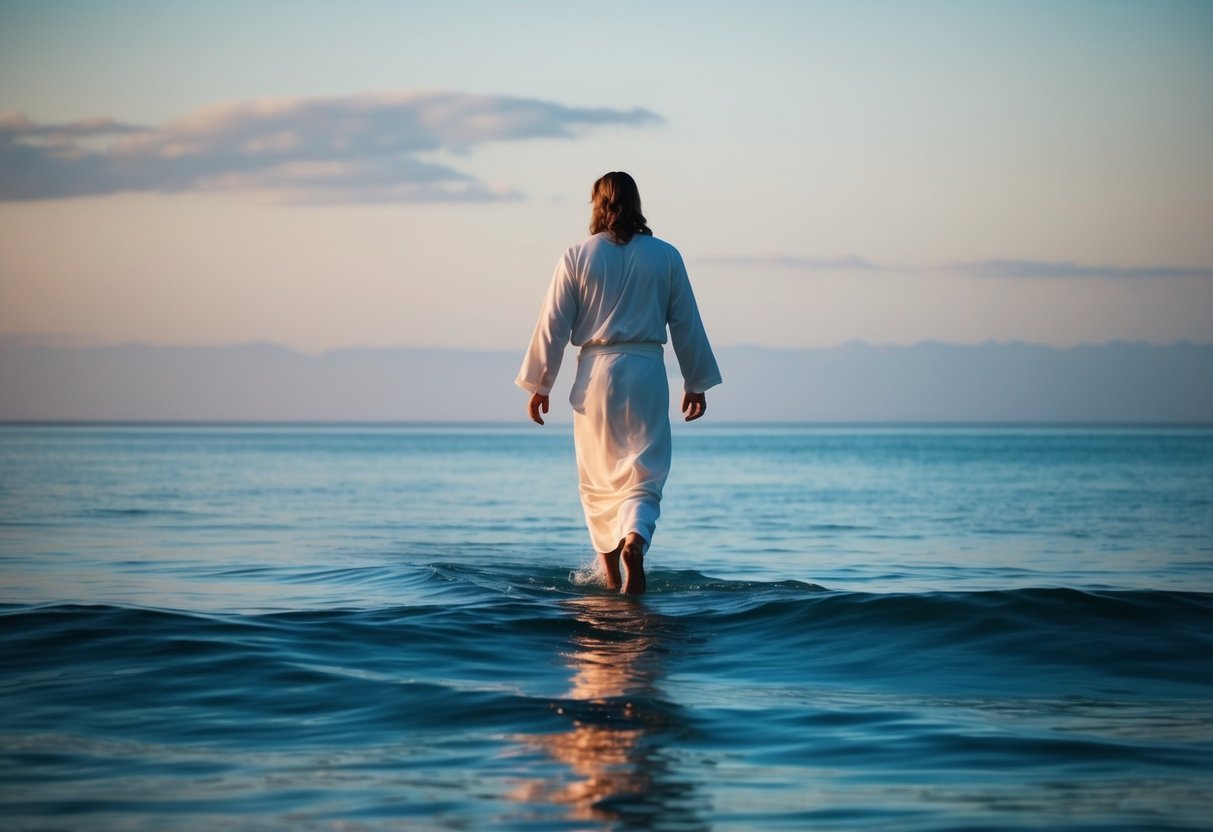
The account of Jesus walking on water is a significant event highlighting his divine power. This miracle took place on the Sea of Tiberias, also known as the Sea of Galilee, during a stormy night that tested the disciples’ faith.
Christ’s Divine Power
Jesus demonstrated profound divine power through the miracle of walking on water. This event is recorded in the Gospels of Matthew, Mark, and John, particularly in John 6. After feeding the five thousand, Jesus sent his disciples ahead in a boat while he went to pray alone on a mountainside.
When the disciples found themselves struggling against strong winds and waves, Jesus approached them, walking effortlessly on the water.
His presence calmed their fears, showing that his authority extended over nature. When the disciples saw him, they initially thought he was a ghost. However, he reassured them, saying, “Take courage! It is I. Don’t be afraid.” This moment reinforced their understanding of Jesus’s true identity as the Son of God.
Stormy Night on the Sea
The setting of this miracle was a stormy night on the Sea of Tiberias. The disciples were in a boat, battling fierce winds and heavy waves for hours. The sea was rough, and their fear grew as they fought to stay afloat.
This situation highlighted their vulnerability and reliance on Jesus.
As they struggled, they spotted Jesus walking towards them on the water. The contrast between the tempestuous sea and Jesus’s calm demeanor added to the miracle’s significance.
He not only walked on the water but also embodied peace amidst chaos. The disciples’ fear turned into awe when he joined them in the boat, and the wind ceased. This pivotal moment strengthened their faith in his divine nature.
Lessons of Faith and Revelation
The story of Jesus walking on water provides deep insights into faith, revealing key lessons through Peter’s experience and the significance of Jesus’s identity. These moments highlight the struggles of belief and the nature of divine authority.
Peter’s Experience and Doubt
Peter’s experience on the water brings forth a powerful lesson about faith.
Initially, he trusts Jesus and steps out onto the waves, demonstrating great courage. As he walks, his focus is on Jesus, reflecting his belief in the Son of God.
Yet, when Peter notices the strong wind, he becomes fearful and starts to sink. This moment emphasizes how doubt can overshadow faith.
When Peter cries out for help, Jesus immediately reaches out, proving His willingness to support those who seek Him. This interaction illustrates that even the strongest believers can struggle with doubt, and that a brief moment of fear can lead to a loss of faith.
Peter’s lesson serves as a reminder of the importance of unwavering belief in Jesus.
The ‘I Am’ Declaration
The phrase “I Am” spoken by Jesus as He approaches the disciples holds significant meaning.
In this moment, Jesus reveals His divine identity and authority over nature. The declaration echoes the name of God in the Old Testament, highlighting His eternal presence and power.
By stating “I Am,” Jesus reassures His disciples, reminding them that He is always with them, regardless of their fears. This acknowledgment strengthens their belief in Him as the Living Son of God.
Recognizing Jesus’s identity not only affirms faith but also reinforces their understanding of His divine nature. This moment plays a crucial role in deepening their belief in Jesus, ultimately guiding them on their spiritual journey.
Cultural and Theological Impact
The story of Jesus walking on water is found in the New Testament, specifically in the Gospels of Matthew, Mark, and John. This miraculous event has significant cultural and theological implications.
Theologically, it demonstrates Jesus’ divine power and authority over nature. This reinforces the belief in his identity as the Son of God.
The miracle also serves as a source of inspiration for many believers.
Culturally, this event has shaped art, literature, and music over centuries. It is often depicted in stained glass and paintings, showcasing its lasting impact on Christian traditions.
Life Lessons from this story include faith and courage. When Peter steps out onto the water, it symbolizes the importance of trusting in Jesus, especially in challenging situations.
This lesson resonates with many who seek guidance in their lives.
The event also speaks to the concept of eternal life. Believers see it as a reassurance of Jesus’ ability to lead them toward salvation.
The walking on water narrative is more than just a miracle. It symbolizes trust, faith, and the divine nature of Jesus. It continues to be a powerful story that influences people’s beliefs and values today.
