
When planning a pilgrimage to the Holy Land, the most profound question for many believers is: can you visit where Jesus was crucified and see the exact spot of the Passion?
The answer is a resounding yes; visitors can go to the location traditionally believed to be the site of the crucifixion.
Known as Golgotha or Calvary, this significant place is now enclosed within the ancient Church of the Holy Sepulchre in Jerusalem.
As a major destination for Christian pilgrims worldwide, it allows the faithful to touch the rock where the cross once stood, connecting them deeply to their spiritual heritage.
The Church of the Holy Sepulchre holds great historical and religious importance, as it also encompasses the tomb where Jesus is said to have been buried and resurrected.
Many travelers seek this location to connect with their faith and experience the history surrounding these events.
For those interested in visiting, various tours are available that guide visitors through important locations in Jerusalem, including Golgotha. This opportunity allows individuals to engage with the rich history and spirituality of one of Christianity’s most pivotal moments.
Historical Significance of Golgotha
The location of Golgotha holds deep historical and religious importance. Its etymology, biblical mentions, and archaeological findings provide insights into the events surrounding Jesus’ crucifixion and the broader context of Jerusalem at that time.
Location and Etymology
Golgotha, also known as Calvary, is located just outside the walls of Jerusalem. The term “Golgotha” comes from the Aramaic word meaning “place of the skull.”
It is believed that this name arose due to the area’s appearance or perhaps the nature of its use as a crucifixion site. The Gospels indicate that Golgotha was a spot where many executions occurred, making it a significant landmark within the city.
The Via Dolorosa, the path Jesus walked to the crucifixion, leads directly to this location, enhancing its role in the narrative of Jesus’ last days.
Biblical References and the Gospels
Golgotha is prominently mentioned in the New Testament, specifically in the Gospels of Matthew, Mark, Luke, and John. The accounts consistently emphasize its somber nature as the place where Jesus was crucified, fulfilling scriptural prophecies.
The Gospels portray it not just as a location but as a focal point of Christian faith. Renowned Jewish historian Josephus also referred to crucifixions that took place in this area, confirming its historical context.
These references highlight the significance of Golgotha in advancing the message of salvation within Christianity.
Archaeological Perspectives
Archaeological studies have provided valuable information about Golgotha and its surroundings. Excavations near the traditional site have revealed tombs and other structures dating from the period of the crucifixion.
While exact locations are debated, findings continue to depict Jerusalem as a bustling place in the first century. Scholars rely on both biblical text and archaeological evidence to piece together the significance of Golgotha.
This research helps confirm the site’s critical role in early Christian history and its lasting impact on faith practices.
The Church of the Holy Sepulchre
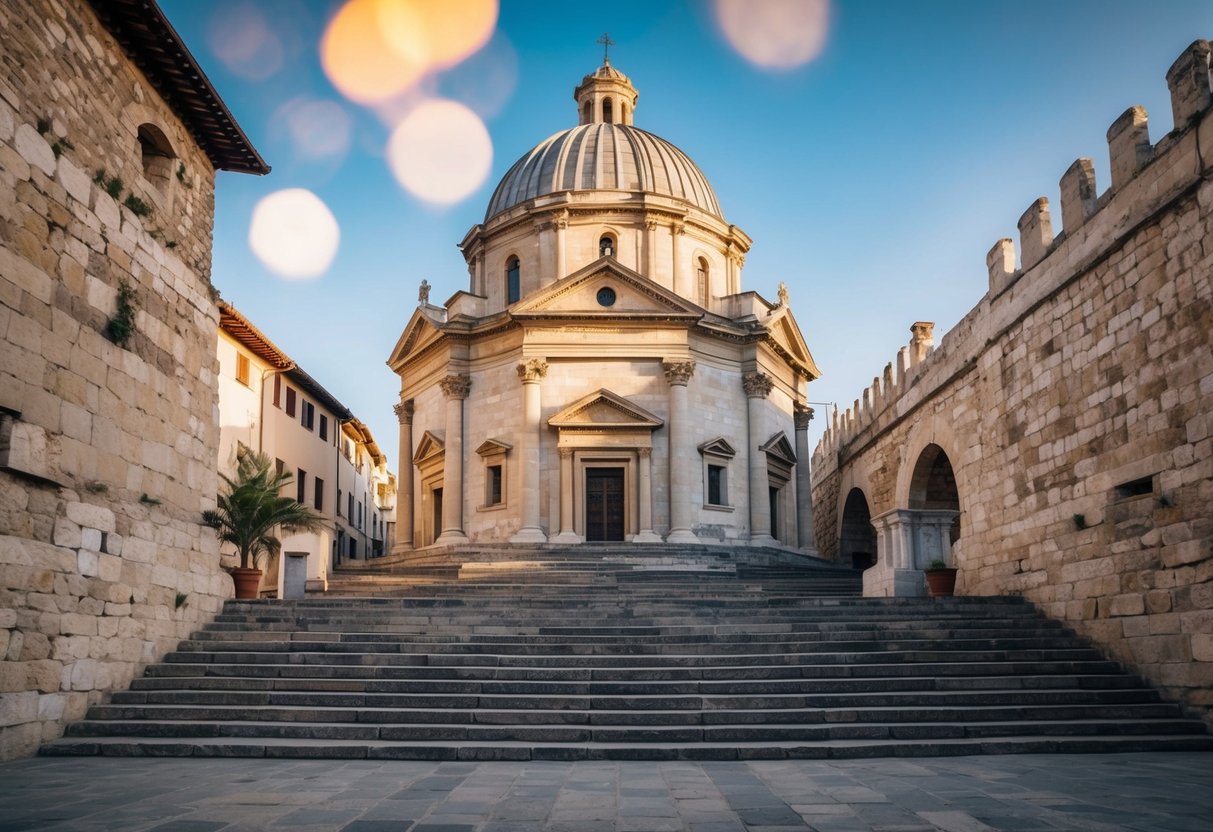
The Church of the Holy Sepulchre is a significant site in Christianity. It is believed to be the location where Jesus was crucified, buried, and rose from the dead. The church holds great importance for pilgrims and worshippers around the world.
Foundation and History
The Church of the Holy Sepulchre was built in the 4th century. Empress Helena, mother of Emperor Constantine, is credited with identifying the site as the place of Jesus’ crucifixion and burial.
The church was consecrated on September 13, 335, marking it as a central place of Christian worship.
Throughout history, it has undergone several renovations and reconstructions due to damage from wars and fires. It is thought to stand over Golgotha, the site known as the Place of the Skull, where the crucifixion occurred.
Architectural Features
The church combines various architectural styles due to its long history. It features a large rotunda that houses the Tomb of Jesus or the Holy Sepulchre, where many believe Jesus was buried and resurrected.
Visitors also find the Altar of the Crucifixion, which is encased in glass, protecting the rock believed to be where Jesus was crucified. The interior is decorated with stunning mosaics, intricate carvings, and religious icons, contributing to its sacred atmosphere.
Pilgrimage and Christian Worship
The Church of the Holy Sepulchre attracts millions of Christian pilgrims each year. Many come to commemorate the events of Jesus’ Passion, Crucifixion, and Resurrection.
During Easter, the church hosts special services, including the Holy Fire ceremony, drawing large crowds. Worshippers participate in rituals such as lighting candles and prayers to connect with their faith at this historical site. The church remains a vital center for Christian worship and devotion.
Alternative Theories and Sites
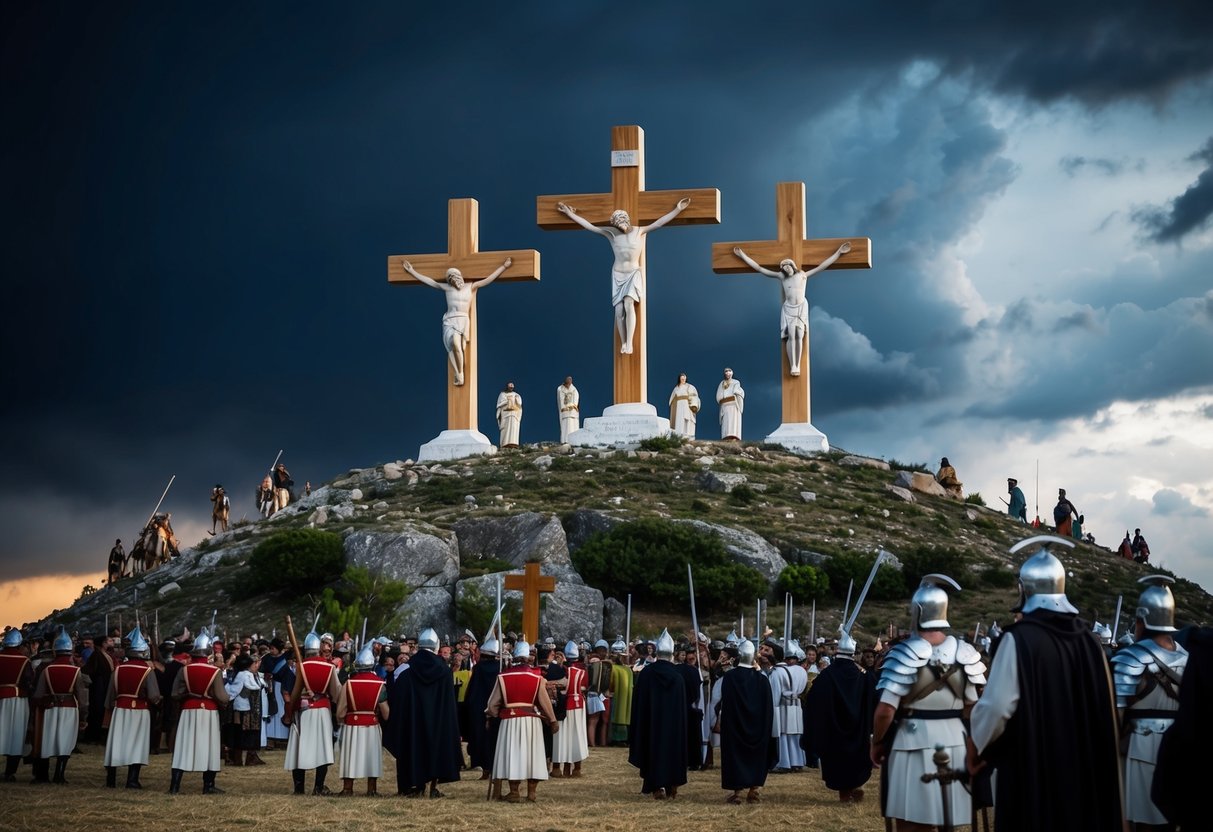
There are various theories regarding the location of Jesus’ crucifixion. Each proposed site offers unique historical and archaeological perspectives that contribute to the ongoing discussion about where this significant event occurred.
Gordon’s Calvary and the Garden Tomb
Gordon’s Calvary is one of the most notable alternative sites for the crucifixion of Jesus. Located just outside the Old City of Jerusalem, this site is characterized by a rock formation resembling a skull, which many believe aligns with the biblical description of Golgotha.
Nearby, the Garden Tomb has been proposed as the burial place of Jesus. British army captain Charles Gordon popularized this site in the late 1800s. The area features a garden with a tomb cut into the rock that dates back to the first century.
This location fits the Gospel accounts, especially with its proximity to Jerusalem. Many visitors view this site with reverence for its historical significance.
Archaeological Study and Critiques
Archaeological studies of Gordon’s Calvary and the Garden Tomb have stirred debates among scholars. Dieter Vieweger has examined the evidence while pointing out inconsistencies with traditional views of the crucifixion site.
Excavations in and around these locations often reveal ancient artifacts and structures. Critics note that many findings do not directly support claims that these sites are authentic.
The debate continues due to a lack of concrete evidence linking these locations to specific biblical events. Researchers aim to uncover more information, highlighting the complex history of Jerusalem and its significance in Christian tradition.
Modern Journey to Golgotha
Traveling to Golgotha, the site of Jesus’ crucifixion, offers a unique opportunity for reflection. Visitors often experience the deep historical and spiritual significance of the location while navigating through the Old City of Jerusalem.
Visiting the Sacred Location
To visit Golgotha, one must enter the Old City of Jerusalem, which can be accessed through the Damascus Gate. This gate is an integral part of the city’s rich history and provides a connection to many pilgrimage routes.
Golgotha is traditionally located within the Church of the Holy Sepulchre. This church not only holds the site of Jesus’ crucifixion but also claims to encompass his tomb. Visitors often report a sense of awe when they stand at the spot believed to be where such a monumental event took place.
Many guided Holy Land Tours include Golgotha as a key highlight. These tours often provide context about the crucifixion, the historical Jerusalem, and how the sites have evolved over time.
The Importance of Via Dolorosa
The Via Dolorosa, or “Way of Suffering,” is the path that Jesus took on his way to crucifixion. This route runs through the heart of the Old City and is marked by various Stations of the Cross, each signifying an event from Jesus’ final journey.
Visitors often walk this historic path, which enhances their connection to the narrative of Jesus’ suffering and sacrifice. The journey typically begins at the Antonia Fortress and culminates at Golgotha.
As pilgrims walk along Via Dolorosa, they encounter various chapels and shrines, each with its own story. This pathway is not just a historical walk but also a spiritual experience for many.
Cultural and Religious Implications
The site of Jesus’ crucifixion carries deep cultural and religious meanings for many believers. Its significance ranges from symbols of sacrifice and redemption to important historical connections, reflecting the intersection of faith and history.
Symbolism and Significance in Christianity
For Christians, the crucifixion site, known as the Place of the Skull or Golgotha, symbolizes the ultimate sacrifice of Jesus Christ. His suffering is seen as a path to redemption for humanity.
The Crown of Thorns, worn during the crucifixion, represents mockery of Jesus’ title as the King of the Jews. This event is central to Christian theology, emphasizing themes of love, sacrifice, and salvation.
Pilgrims often visit the Church of the Redeemer, built near the crucifixion site, to connect with this powerful moment in history. Visitors can find the Rock of Calvary, which is traditionally believed to be the actual location of the crucifixion. This connection to Jesus’ sacrifice deeply influences Christian worship and personal faith.
The Intersection of Faith and History
The historical significance of the crucifixion site links believers to the events of the New Testament.
Jesus’ crucifixion is not just a religious story; it is an actual event that took place in Jerusalem.
Sites like the Grotto of Jeremiah nearby enhance this connection, providing a tangible link to biblical accounts.
Simon, who carried Jesus’ cross, highlights the involvement of ordinary people in this pivotal moment.
As a pilgrimage destination, the site leads many to reflect on their faith and the historical context of Jesus’ life and death.
Visitors often ponder their spiritual journeys while at this deeply meaningful site.
