
The final journey of Christ to Golgotha is a central element of the Passion narrative, yet specific details often spark curiosity among believers.
To fully grasp the physical magnitude of His sacrifice, many seek to know exactly how far did Jesus carry the cross through the streets of Jerusalem.
Historical estimates suggest He bore the heavy beam for approximately one-third of a mile (about 600 meters) along the winding path now known as the Via Dolorosa.
This route remains filled with deep spiritual significance for Christians today, symbolizing the immense suffering He endured leading up to His ultimate death on Calvary.
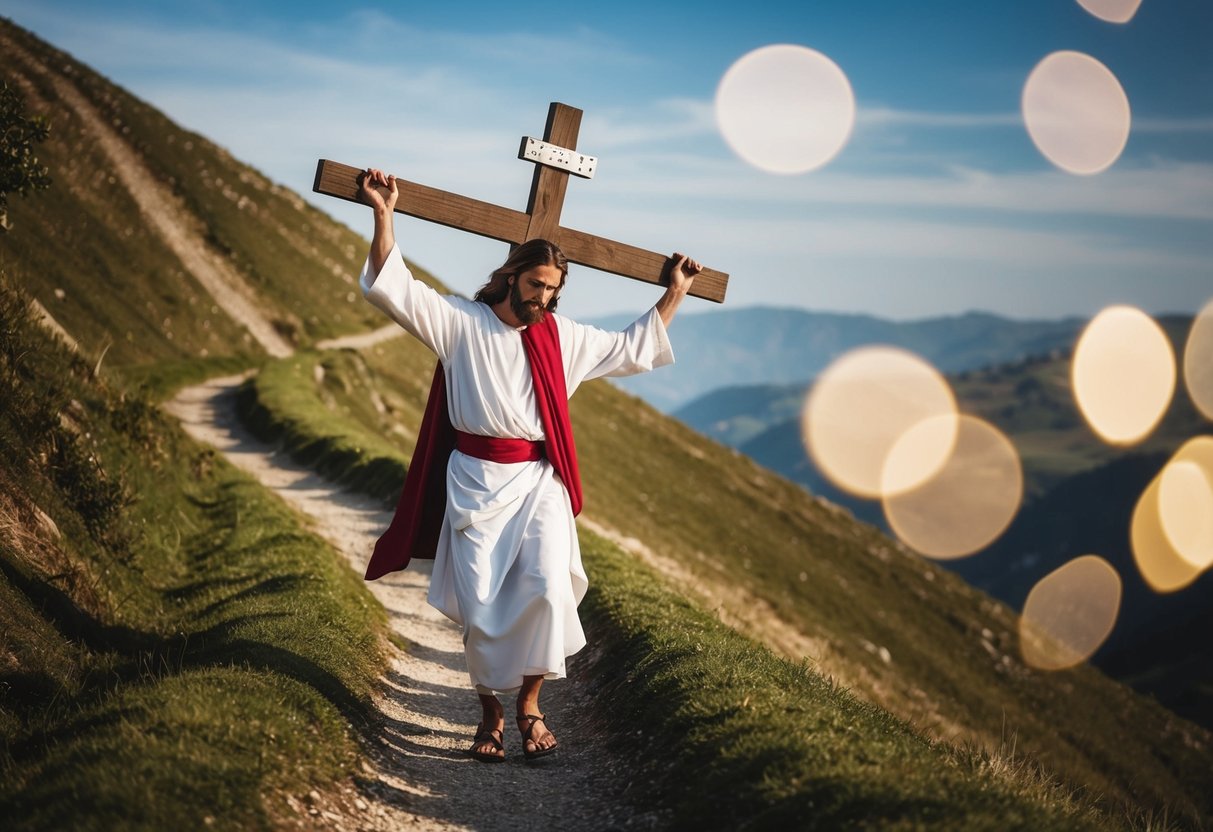
The Gospels provide insight into what happened on that day, though they do not give exact distances. However, historical and archaeological studies suggest that the distance from where he was sentenced to his crucifixion site holds great meaning.
Along this route, Jesus faced the weight of the cross and the burden of humanity’s sins, an event that continues to resonate with believers today.
Understanding how far Jesus carried the cross enhances the appreciation of the sacrifice he made. It reflects the physical and emotional pain he experienced, as well as the importance of this journey in Christian faith.
Exploring this topic sheds light on what the story means for contemporary followers and how it is commemorated through rituals today.
Historical and Biblical Context
The journey of Jesus carrying the cross holds significant importance both in history and scripture. This section examines the events leading to this moment, focusing on the trial under Pontius Pilate, the route known as the Via Dolorosa, and the assistance provided by Simon of Cyrene.
Pontius Pilate and the Trial
Pontius Pilate served as the Roman governor of Judea during the time of Jesus’ trial. The Sanhedrin, the Jewish ruling council, sought to have Jesus executed. They accused him of claiming to be King of the Jews, which they argued was a threat to Roman authority.
Pilate, portrayed in biblical accounts as conflicted, found no guilt in Jesus. Yet, he succumbed to pressure from the crowd demanding crucifixion.
He famously washed his hands, claiming he was innocent of Jesus’ blood. This decision directly led to Jesus’ painful journey to Golgotha.
The Route of Suffering: Via Dolorosa
The Via Dolorosa, translated as “Way of Suffering,” is a route in Jerusalem that Jesus is believed to have walked on his way to crucifixion. It is about 0.4 miles long and has significant historical and religious value.
Most biblical accounts suggest that Jesus carried his cross along this path, enduring immense suffering. This route contains several stations, each commemorating moments from Jesus’ final hours.
It is marked by the Ecce Homo arch, where Pilate displayed Jesus to the crowd. This arch symbolizes the moment of Jesus’ condemnation.
Simon of Cyrene’s Contribution
Simon of Cyrene is critical to the story of Jesus carrying the cross. According to the Gospels, he was compelled by Roman soldiers to help carry Jesus’ cross when Jesus could no longer bear the weight.
This event highlights both the physical burden of crucifixion and the unexpected role of bystanders in Jesus’ path.
Simon’s involvement is noted in Matthew 27:32, Mark 15:21, and Luke 23:26. His assistance underscores the harsh realities of the Roman method of execution and the challenges faced by Jesus during this pivotal moment in history.
The Physical Burden of the Cross
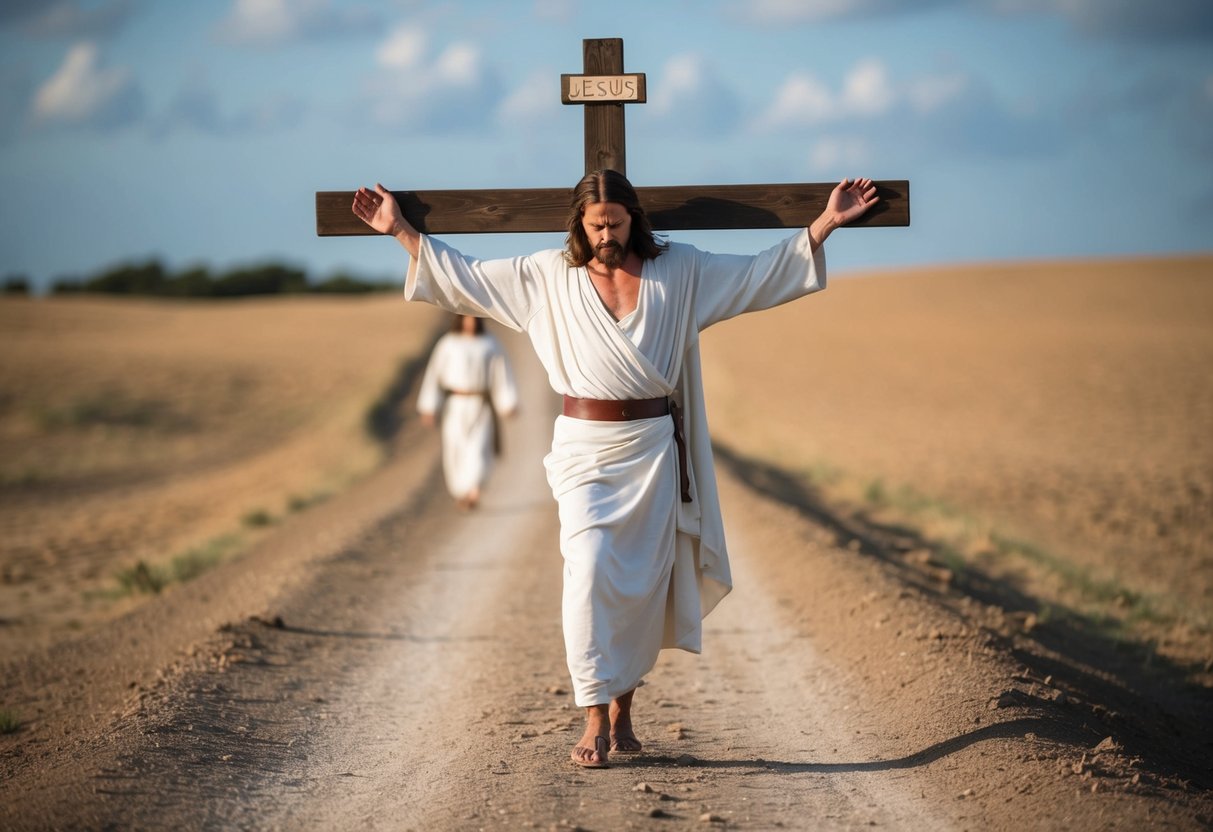
Carrying the cross was a significant physical challenge for Jesus. The weight and the effects of prior torture played crucial roles in his suffering during the journey to Golgotha.
The Weight of the Patibulum
The patibulum is the horizontal beam of the cross that Jesus carried. This part alone likely weighed between 75 to 125 pounds (34 to 57 kilograms).
Imagine the strain it imposed on his body after a night of intense scourging. The combination of fatigue and injury would have made lifting this weight extremely difficult.
As he moved through the streets, every step would lead to immense pain. The pressing weight on his shoulders intensified his suffering. Despite this, he continued, showcasing remarkable endurance under dire conditions.
Torture and Scourging Effects
Before carrying the cross, Jesus experienced severe torture. The scourging involved whipping that left deep lacerations on his back. This not only caused excruciating pain but also significant blood loss.
Such injuries weakened his physical state, further impacting his ability to carry the cross. The thorny crown added to his torment, digging into his scalp and causing additional pain.
The cumulative effect of these tortures meant that each step forward was a struggle.
The burden of the cross mirrored the physical and emotional strain he endured throughout his crucifixion journey. Each moment was marked by profound suffering and an unyielding will to complete his path.
Spiritual Significance and Theology
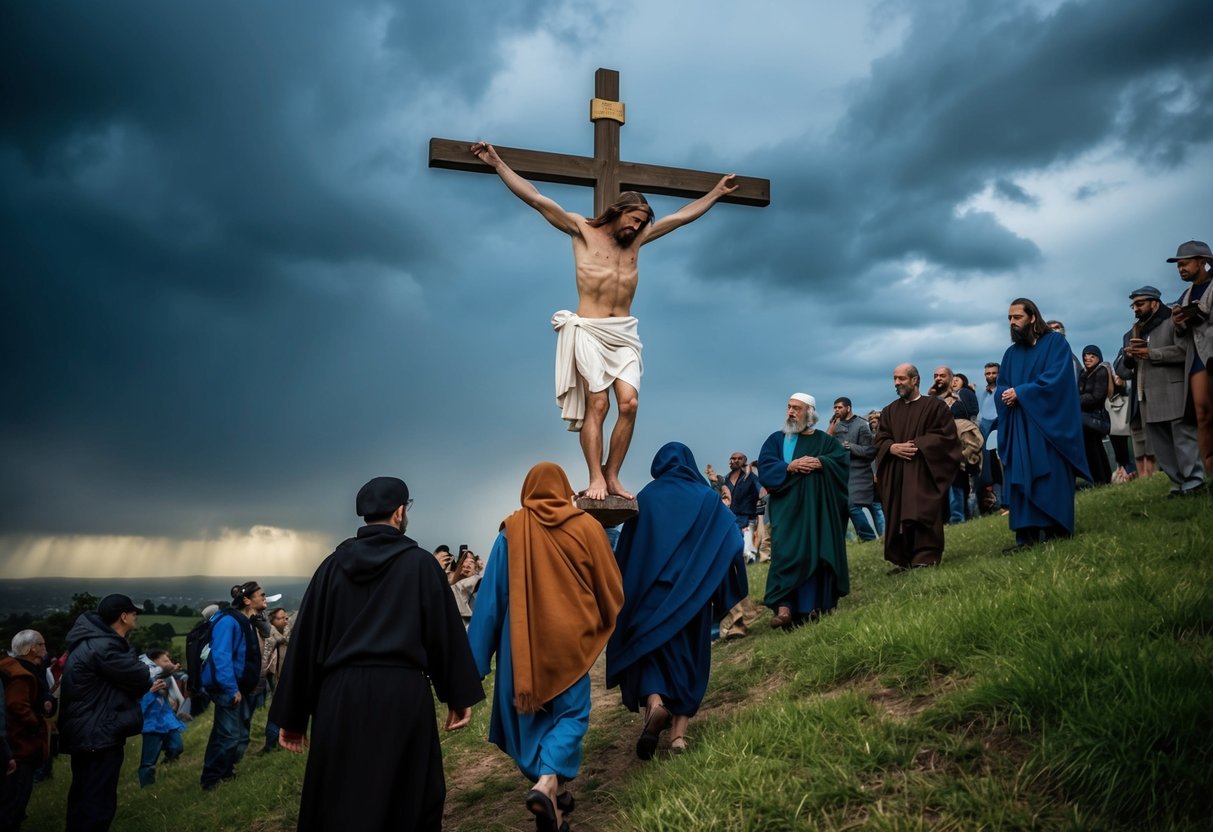
The act of Jesus carrying the cross holds deep spiritual meaning within Christianity. It reflects key theological concepts such as prophecy fulfillment and the symbolism of the cross.
These elements contribute to understanding the core of the Christian faith, including themes of sacrifice, redemption, and salvation.
Fulfillment of Prophecy
Jesus’ journey with the cross connects directly to Old Testament prophecies, particularly as seen in Isaiah 53:10. This verse speaks of the suffering servant who would bear the sins of many.
By carrying the cross, Jesus embodied this prophecy, fulfilling the expectation of a Messiah who would endure suffering for humanity’s salvation.
This act signifies God’s compassion and willingness to sacrifice for human redemption. It emphasizes that Jesus took upon himself the weight of sin, aligning with the foretelling found in scriptures.
Prophecy fulfillment reinforces faith in the divine plan and highlights the anticipation of Christ’s role in salvation history.
Symbolism of the Cross in Christianity
The cross is a central symbol in Christian theology, representing both suffering and hope. It signifies the ultimate sacrifice made by Jesus for the forgiveness of sins.
By submitting to this humiliation, He demonstrated profound compassion and love for humanity.
Additionally, the cross symbolizes the pathway to redemption. Believers see it as a reminder of the cost of salvation and the promise of eternal life.
The juxtaposition of suffering and resurrection encourages Christians to embrace faith despite challenges. This duality is crucial for understanding the depth of Christian beliefs and the transformative power of Jesus’ sacrifice.
The Stations of the Cross
The Stations of the Cross represent pivotal moments in Jesus’ journey to Calvary. Each station captures a unique event that reflects His suffering and sacrifice.
This practice serves as a spiritual path for believers, allowing them to engage with the events of the Passion of Christ.
Jesus’ Journey and the Stations
As Jesus carried His cross along the Via Dolorosa, he encountered various moments of grief and compassion. The Stations of the Cross include 14 specific events, starting from His condemnation and ending with His burial.
Travelers and pilgrims often follow this path to meditate on His suffering.
Each station symbolizes significant events. For example, the first station marks Jesus being condemned to death, while the fifth station highlights Simon of Cyrene assisting Him in carrying the cross.
These moments are deeply meaningful in Christian faith, illustrating the physical and emotional burden He faced as He walked the way of suffering.
Modern Veneration and Reflection
Today, many Christians participate in the Stations of the Cross during Lent and Good Friday. This ritual often takes place within church settings, including the Church of the Holy Sepulchre, where many believe Jesus was buried.
Through prayer and meditation, believers reflect on the pain Jesus endured.
In modern times, the Stations serve as a tool for personal reflection. Each station prompts thoughts about sacrifice, mercy, and redemption.
Many use this time for confession or to strengthen their faith, connecting deeply with the Gospel of John’s account of Jesus’ final moments. It remains a powerful practice to honor His journey and the passion He experienced.
The Culmination at Golgotha
The event at Golgotha marks one of the most significant moments in Christian history. It involves the crucifixion and the eventual resurrection of Jesus, along with various key figures of the time.
Crucifixion and Death
At Golgotha, also known as Calvary, Jesus was crucified by Roman soldiers. This location was chosen for its visibility and proximity to Jerusalem.
The chief priests, including Caiaphas, condemned Jesus, claiming he declared himself the King of the Jews (John 19:19).
The soldiers mocked him, dividing his clothes and casting lots for his garments. The inscription “Jesus of Nazareth, King of the Jews” was placed above his head.
As he hung on the cross, Jesus spoke seven final words, expressing profound thoughts of forgiveness and abandonment.
His death was marked by dramatic events, including darkness enveloping the land and the temple veil tearing. Josephus, a Jewish historian, recorded these occurrences, highlighting their significant impact.
After his death, he was laid in a tomb owned by Joseph of Arimathea, fulfilling prophecies about his burial.
The Resurrection and Its Impact
Three days after his crucifixion, Jesus rose from the dead, marking the cornerstone of Christian belief.
This resurrection took place early in the morning, witnessed by women, including Mary Magdalene.
The angelic message at the tomb proclaimed that Jesus had risen, instilling hope in his followers. The resurrection proved Jesus to be Emmanuel, meaning “God with us.”
This event transformed the disciples from fearful individuals into bold proclaimers of the faith.
The news spread throughout the Holy Land, laying the foundation for Christianity.
The significance of the resurrection continues to be a central theme in Christian teachings, emphasizing redemption and eternal life.
