
Jesus Christ is regarded as the Son of God and the Promised Messiah, yet his earthly ministry was defined by more than just his teachings. As recorded in the New Testament, he performed numerous supernatural acts, leading many new believers to ask: what are the miracles of Jesus specifically?
These events illustrate his divine nature and absolute authority, showcasing his power over the physical, spiritual, and natural realms.
Beyond simply proving his ability, his miracles served a specific theological purpose. They not only affirmed his messianic identity but also demonstrated his deep compassion and care for the suffering of humanity.
By examining these signs, followers gain insight into the nature of God’s kingdom. They serve as tangible proof that the power of God was active and present among his people.
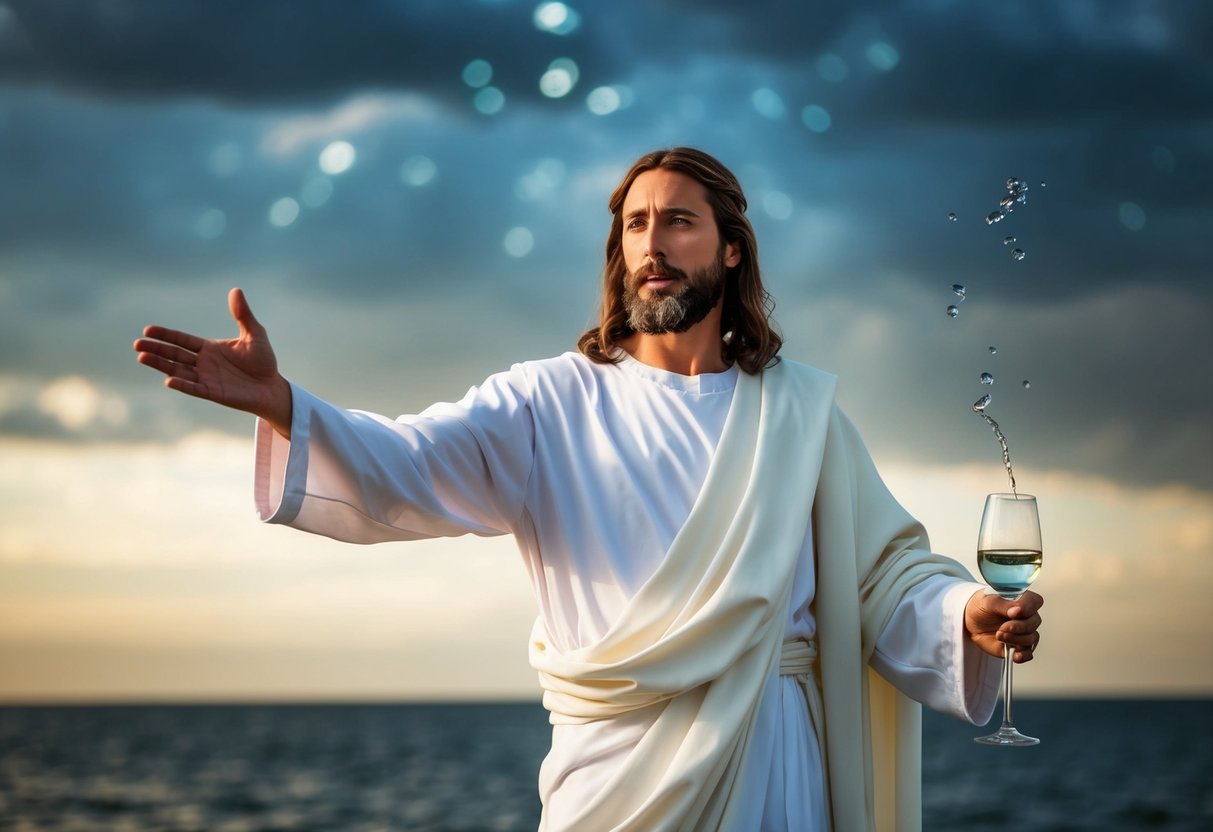
From turning water into wine to raising the dead, each miracle served a purpose in revealing the character of Jesus and his mission. The stories of healing the sick and feeding the hungry highlight his role in restoring lives and providing hope.
These events are not merely tales; they invite readers to explore the deeper significance of faith.
Understanding the miracles of Jesus allows for a greater appreciation of his teachings and the impact he had on those around him. For many, these signs of wonder are a foundational aspect of faith, inspiring belief in the miraculous power of God at work in the world.
Nature of Miracles in the New Testament
The miracles of Jesus in the New Testament reveal significant truths about His identity and purpose. They serve as demonstrations of divine authority and highlight theological meanings that go beyond the acts themselves.
Defining a Miracle
A miracle is often defined as an extraordinary event that cannot be explained by natural laws. In the New Testament, these acts are attributed to Jesus and illustrate His divine nature.
Examples include turning water into wine, walking on water, and healing the sick.
Each miracle serves a purpose. They address human needs and display compassion.
By performing these acts, Jesus communicates His role as the Son of God and invites belief in His message.
The New Testament records numerous miracles, emphasizing their importance in His ministry.
Miracles as Signs of Divine Authority
Jesus’ miracles are significant signs of his authority over various elements of life. When he calms a storm or walks on water, he demonstrates mastery over nature.
This control reveals his divine nature as the Son of God, reinforcing the belief that He is sent from God.
Additionally, his healing miracles, such as restoring sight to the blind or raising the dead, show his power to restore life. These acts highlight Jesus’ compassion and his mission to bring hope and healing.
Such miracles validate his message and encourage faith among those who witness them.
Theological Significance
The miracles of Jesus hold deep theological significance. They are not merely acts of wonder; they are intended to reveal deeper truths about God’s kingdom.
Each miracle acts as a sign pointing to Jesus’ divine authority and identity.
Furthermore, these acts emphasize the relationship between faith and healing. Many miracles require belief, illustrating that faith plays a vital role in experiencing God’s work.
Miracles also affirm the New Testament’s themes of redemption and salvation. They invite individuals to recognize Jesus as the source of hope and transformation.
Jesus’s First Miracle: Water into Wine

The miracle of turning water into wine holds significant historical and symbolic meaning in the context of Jesus’s life and work. This event not only marks the beginning of his public ministry but also carries deep messages about transformation and faith.
Historical Context of the Miracle
Jesus’s first miracle occurred during a wedding celebration in Cana, a town in Galilee. This event is recorded in the Gospel of John, specifically in John 2:1-11.
At this wedding, the hosts ran out of wine, which could have caused great embarrassment.
Mary, Jesus’s mother, brought the situation to His attention. Though he initially hesitated, Jesus instructed the servants to fill six stone jars with water. He then transformed that water into wine, showcasing his divine authority.
This miracle provides a glimpse into Jesus’s early public ministry, where he began revealing his identity and mission to others. The presence of his disciples at this event signifies the start of their journey with him.
Symbolic Implications
The transformation of water into wine presents several symbolic implications. Wine often represents joy and abundance in biblical texts.
By performing this miracle, Jesus highlights the theme of transformation, turning something ordinary into something extraordinary.
Furthermore, this act foreshadows the new covenant established through Jesus. Just as the old water was replaced with new wine, believers are invited to experience a spiritual renewal.
This miracle also emphasizes the importance of faith, as the servants acted on Jesus’s instructions without fully understanding the outcome.
Through this act, Jesus not only provides for the immediate need but also sets the stage for his future miracles and teachings, affirming his role as the Messiah.
Healing Miracles and Exorcisms
Jesus’s ministry included many remarkable acts. Among these were healing miracles and exorcisms. These acts showcased his power over sickness and evil spirits, profoundly impacting the lives of those he touched.
Healing the Sick and Individuals with Leprosy
One notable miracle involved healing individuals with leprosy. In biblical times, leprosy was a feared and isolating disease. People with leprosy were often outcasts.
Jesus showed compassion by healing them, restoring not only their health but also their social acceptance.
In one instance, he approached a leper who asked to be cleansed. Jesus touched him and said, “I am willing; be cleansed.” Immediately, the man’s leprosy left him.
This act demonstrated Jesus’s authority over physical ailments and his willingness to reach out to those marginalized by society.
Restoration of Sight to the Blind Man
Another significant miracle was the restoration of sight to a blind man. Jesus encountered a man who had been blind since birth. His disciples asked who had sinned to cause this man’s blindness.
Jesus replied that neither he nor his parents had sinned; rather, this occurred so that God’s works might be revealed.
Jesus used mud made from saliva and dirt to anoint the man’s eyes. He instructed him to wash in the Pool of Siloam. When the man obeyed, he received his sight.
This miracle not only restored his vision but also served as a powerful testimony of Jesus’s divine ability to transform lives.
Exorcising Evil Spirits
Exorcisms were another essential aspect of Jesus’s miracles. He frequently encountered individuals possessed by evil spirits. These spirits caused various afflictions, leading to physical and mental distress.
In one notable situation, a man possessed by demons was found living among tombs. The spirits caused him to harm himself and live in isolation.
Jesus commanded the evil spirits to leave, and they obeyed. They entered a herd of pigs, which subsequently rushed into the sea.
This act demonstrated Jesus’s authority over evil forces and provided freedom for those tormented.
Miracle of Healing the Deaf and Dumb Man
Jesus also performed a miracle on a deaf and dumb man. The man struggled to hear or speak clearly, affecting his quality of life.
Friends brought him to Jesus, seeking healing.
Taking the man aside, Jesus put his fingers in the man’s ears and touched his tongue. Then he looked up to heaven and sighed, saying, “Ephphatha,” which means “Be opened.”
Immediately, the man’s ears were opened, and he began to speak clearly.
This miracle highlighted Jesus’s unique ability to heal both physical disabilities and restore communication with others.
Miracles over Life and Death
Jesus performed several miracles that demonstrated His power over life and death. Through these acts, He showed divine intervention that brought hope and transformation to those who were suffering or grieving. The most notable instances include the resurrection of Lazarus, the raising of a paralyzed servant, and the overall chronological context of these miracles.
The Resurrection of Lazarus
The story of Lazarus is one of the most profound examples of Jesus’ power over death. Lazarus, a friend of Jesus, had been dead for four days when Jesus arrived at Bethany.
Despite the doubts of onlookers, Jesus expressed confidence, stating, “I am the resurrection and the life.”
He then called Lazarus out of the tomb, and to the amazement of everyone present, Lazarus emerged alive.
This miracle not only showcased Jesus’ authority over death but also highlighted His compassion for grieving families.
The resurrection strengthened the faith of those who witnessed it and significantly impacted the belief of many in Jesus as the Messiah.
Raising the Paralyzed Servant
Another remarkable miracle involved the healing of a paralyzed servant. In this account, a centurion approached Jesus, expressing faith that He could heal his servant from a distance.
Impressed by the centurion’s belief, Jesus declared that the servant would be healed. At that moment, the servant was restored to health.
This miracle illustrated Jesus’ authority over physical ailments and His ability to grant life and healing with just a command, rather than requiring physical presence.
The centurion’s faith also emphasized that Jesus’ power transcends boundaries and is accessible to all, regardless of social status.
Raising the Dead in Chronological Context
Throughout His ministry, Jesus performed multiple miracles that involved raising the dead. These events are not isolated but connected within a broader narrative.
The resurrection of Lazarus occurs after several other healings, showcasing a progression in the demonstration of divine authority.
For instance, earlier in His ministry, Jesus raised the son of the widow of Nain. This chronological order highlights His growing reputation and the increasing impact of His miracles on His followers.
Each resurrection brought more attention to His powers and propelled His message further. These acts of divine intervention reaffirmed Jesus’ role as more than a teacher; they established Him as the One with authority over life and death.
Miracles Reflecting Mastery over Nature
The miracles performed by Jesus demonstrate his authority over nature. They reveal how he controlled elements and circumstances in ways that defy natural laws. The following are key examples that highlight this mastery.
The Miraculous Catch of Fish
One of the most notable nature miracles is the miraculous catch of fish. After a long night of fruitless fishing, Jesus instructed Simon Peter to cast the nets again.
To Peter’s astonishment, the nets filled to capacity with fish (Luke 5:4-7). This event established Jesus as a powerful figure in the fishing world and served as a pivotal moment in Peter’s discipleship.
The catch symbolized the type of “fishing” Jesus would call his followers to do—bringing people into faith. It illustrated not just a miracle but also the transition of disciples into fishers of men.
The action of Jesus emphasized that his authority extended beyond spiritual realms into the everyday lives of the people.
Cursing the Fig Tree and its Outcomes
In another significant miracle, Jesus approached a fig tree that was not bearing fruit. He cursed it, stating it would never bear fruit again (Mark 11:12-14).
The next day, the disciples noticed that the tree had withered from its roots. This miracle showcased Jesus’ authority over nature, as a single command resulted in a dramatic transformation.
This incident is often viewed as a metaphor for spiritual barrenness. Just like the fig tree, those who do not bear good fruit risk facing consequences.
The event highlights the seriousness of spiritual productivity and the expectations Jesus had for those who followed him.
Provision of the Temple Tax in a Fish’s Mouth
Another fascinating miracle occurred when Jesus was approached about paying the temple tax.
To avoid offense, he instructed Peter to catch a fish, which would contain a coin sufficient to cover the tax for both of them (Matthew 17:24-27).
This event shows Jesus’ ability to provide in unusual ways.
The act of finding a coin in a fish’s mouth illustrates that he could manage even the mundane aspects of life.
This miracle also reinforces the idea that Jesus is aware of and can supply what is needed, even in unexpected circumstances.
