
Jesus’ act of cleansing the temple is a powerful moment captured in the New Testament, specifically in the books of Matthew and John. When exploring this dramatic event, many believers wonder what can we learn from Jesus cleansing the temple regarding true faith and devotion.
This narrative reveals not only his divine authority but also the critical importance of maintaining reverence in all places of worship.
From this incident, readers can learn that the temple, as a sacred space, demands profound respect and spiritual cleanliness. It serves as a vivid reflection of our need for a pure, undistracted relationship with God. By removing the money changers, Jesus emphasized that our hearts and our places of prayer should be free from worldly greed.
This story remains relevant today as it challenges us to examine our own lives and spiritual priorities. It reminds us that worship is not about external rituals or commerce, but about a sincere connection with the Creator. Understanding this message helps us cultivate a more authentic and dedicated life of faith.
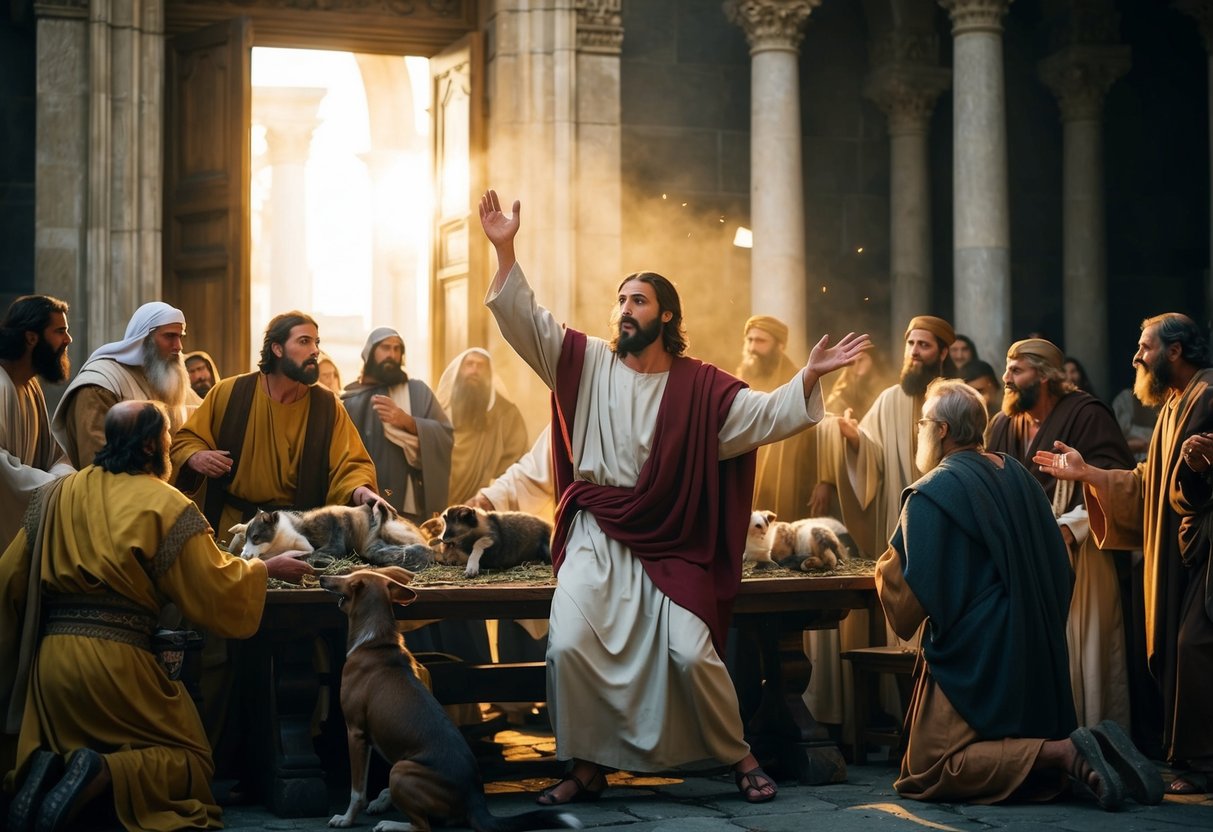
When Jesus confronted the money changers and merchants, he demonstrated righteous anger towards corruption and greed. This action goes beyond mere protest; it teaches an essential lesson about maintaining the integrity of spiritual spaces.
His passionate response invites individuals to reflect on their own behaviors and attitudes within their faith communities.
Historical Context of the Temple Cleansing
The cleansing of the Temple by Jesus took place in a significant religious and cultural setting. Understanding the importance of the Temple in Jerusalem and the context of the Passover feast reveals deeper meanings behind this event.
The Significance of the Temple in Jerusalem
The Temple in Jerusalem was more than just a religious building; it was the heart of Jewish worship. Known as the Second Temple, it stood on the Temple Mount and served as the place where sacrifices were made and prayers offered.
This Temple was central to Jewish identity. Pilgrims traveled from various regions to worship, especially during major feasts like Passover. The Temple symbolized God’s presence on earth and was a focal point for community and faith.
When Jesus cleansed the Temple, he challenged the practices that had become corrupt. Money changers and merchants had filled the sacred space, shifting the focus from worship. This act highlighted the need for reverence and purity in spiritual practices.
Passover Feast and Jewish Traditions
Passover was one of the most important Jewish festivals, commemorating the Exodus from Egypt. During this time, Jewish families gathered to remember their liberation. The celebration included a meal, rituals, and sacrifices at the Temple.
Many pilgrims visited Jerusalem for Passover. They sought to make sacrifices in the Temple, leading to increased activity and commerce. The influx of visitors often resulted in merchants setting up stalls, which contributed to the bustling atmosphere.
Jesus’s actions during Passover were particularly impactful. By cleansing the Temple, he restored its sacredness at a time when many were focused on rituals more than spiritual significance. This act not only called for reform but also signaled a new understanding of worship.
Jesus’ Actions and Teachings in the Temple
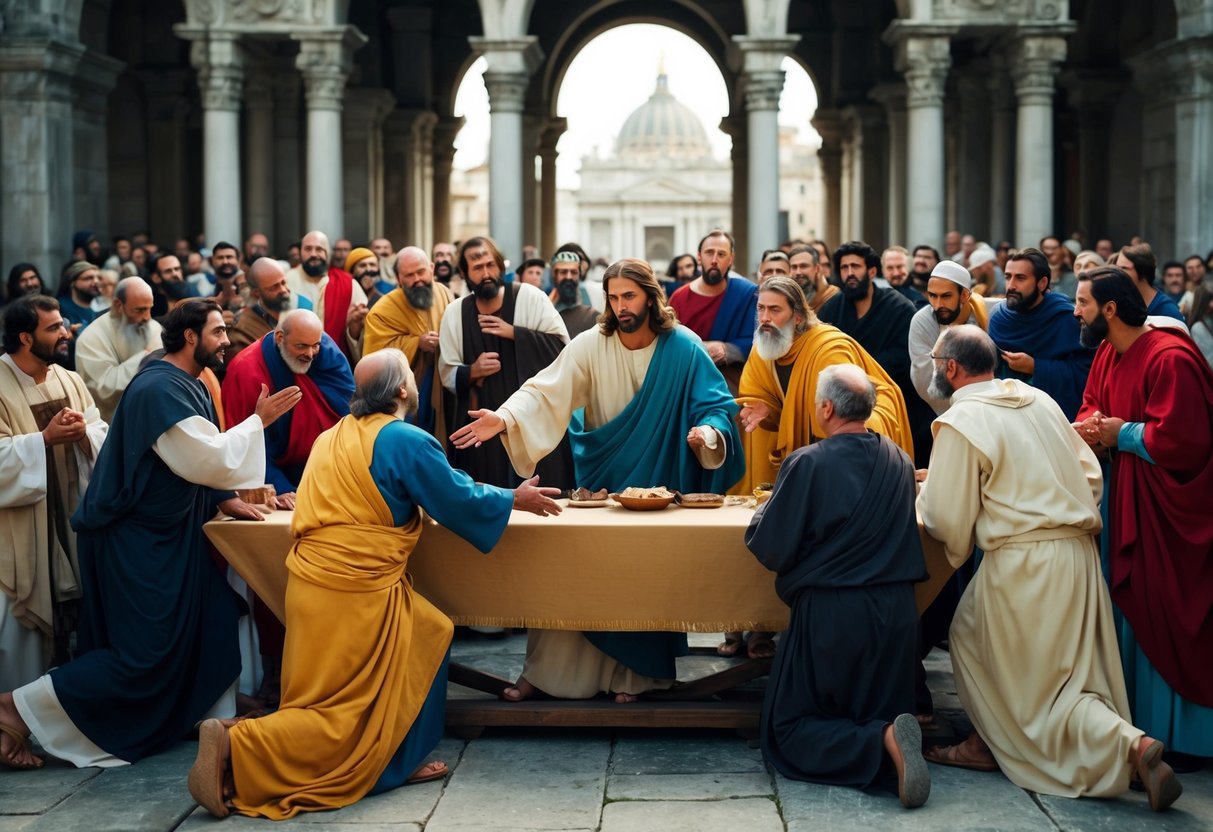
In the Temple, Jesus demonstrated profound actions and teachings that highlighted the importance of worship, justice, and respect for sacred spaces. His encounters there provide critical lessons for believers regarding faith and reverence towards God.
Cleansing the Temple
When Jesus cleansed the Temple, he showed strong authority against disrespectful practices. He overturned tables and drove out those selling sacrificial animals.
This act was not just about anger; it was a call to restore the Temple as a true House of Prayer.
The Temple was meant for worship, not commerce. By cleansing it, he emphasized that the sacred space must be respected. This action reflected the need for purity and reverence in how people engage with God. Worship should be sincere and not corrupted by greed.
Confronting the Money Changers
Jesus confronted the money changers, who exploited worshippers by charging high fees. This practice turned worship into a profit-driven scheme.
Jesus criticized this behavior, reinforcing the idea that the Temple should be a place of justice and fairness.
He addressed how the money changers prioritized profits over true worship. His actions served as a reminder that God desires genuine worship, not transactions. The behavior of these individuals conflicted with the purpose of the Temple, emphasizing the need for integrity.
Lesson on Prayer and Worship
In his teachings, Jesus emphasized that prayer and worship should be central to the lives of his followers. He pointed out that the Temple was meant to be a House of Prayer.
This underscores the belief that communication with God is fundamental to faith.
Prayer connects believers to God’s authority and purpose. Jesus demonstrated that worship must be heartfelt and free from distractions.
His actions illustrate that engaging sincerely in worship is crucial for spiritual growth and community. The emphasis was on building a genuine relationship rather than a ritualistic or commercial approach.
Theological Reflections
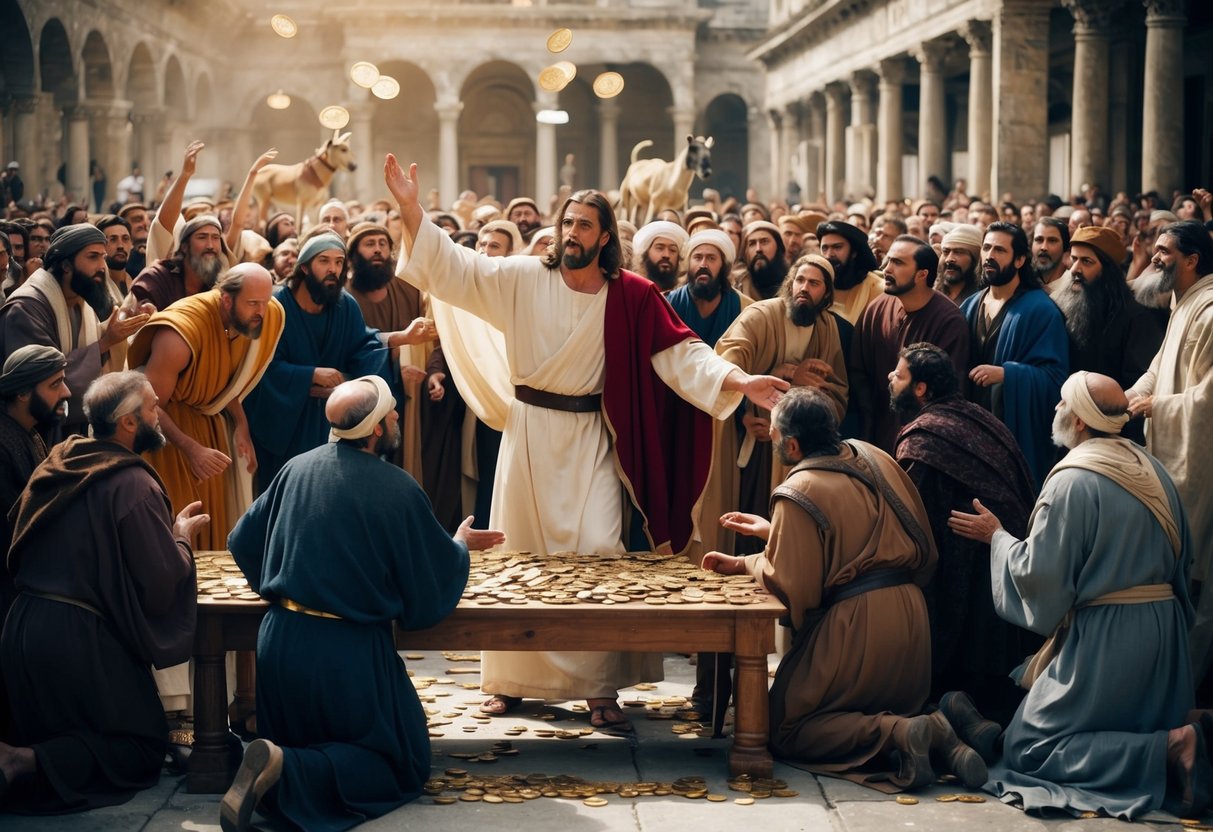
The cleansing of the temple by Jesus holds significant theological meaning. It reflects on his role as the Messiah and prophet and underscores the importance of God’s presence. This act also highlights the need for believers to address corruption within sacred spaces.
Jesus as Messiah and Prophet
Jesus presented himself as both the Messiah and a prophet during his time on Earth. His actions in the temple demonstrated his authority to challenge the status quo and reclaim the sanctity of God’s house.
By driving out the money changers and sellers, he provided a powerful message about the true purpose of the temple as a space for worship and prayer.
As the Messiah, Jesus fulfilled prophecies and established a new covenant. His role as a prophet was evident in his bold confrontation of corruption within the temple. This ultimately pointed to his mission to restore humanity’s relationship with God and emphasize the importance of sincerity in worship.
The Concept of God’s Holy Presence
The temple represented the dwelling place of God among his people. It was considered a sacred space, set apart for worship and communion with the divine.
Jesus’ actions highlighted the need to maintain the sanctity of this space, reinforcing that it should not be misused for profit or gain.
He emphasized that God’s presence should be honored and respected. The cleansing of the temple reminds believers that they, too, are called to preserve their own bodies as temples of the Holy Spirit, maintaining purity and devotion in their lives.
Righteous Indignation and the Fight Against Corruption
Righteous indignation is a response to moral wrongdoing, and Jesus exemplified this during the cleansing of the temple. His anger was directed not at individuals but at the system that allowed corruption to thrive in the holy space.
This act challenged the complacency of religious leaders who had failed to protect the temple’s sanctity.
Jesus’ actions serve as a call to believers to confront corruption in their communities. It encourages them to stand up against practices that diminish the integrity of their faith. This attitude aligns with the teachings of the Holy Spirit, who empowers believers to pursue justice and purity in their spiritual lives.
Response and Reactions
The cleansing of the temple stirred strong reactions from both the disciples and the authorities. These responses reveal important insights into faith, authority, and the mission of Jesus.
Disciples’ and Witnesses’ Perspectives
The disciples were deeply moved by Jesus’ actions in the temple. They saw his zeal and passion as a reflection of their own faith.
When Jesus drove out the money changers, it reinforced their belief in the sanctity of the House of God.
Witnesses in the temple observed the upheaval and were astonished. Many saw the act as a bold declaration against corruption.
They recognized that the temple, which once served as a marketplace, was meant to be a place of worship. The cleansing prompted them to reconsider what their faith should embody.
Authorities’ Challenge to Jesus
The temple authorities responded with alarm and hostility. They saw Jesus’ actions as a challenge to their power and the religious order.
The presence of money changers and the collection of the Temple Tax were integral to their authority.
After the cleansing, the leaders confronted Jesus, demanding to know by what authority he acted. They were threatened by his actions, as it undermined their control over the temple. This moment marked a significant clash between divine mission and human authority, ultimately questioning the legitimacy of their practices.
Lasting Implications for Believers
The cleansing of the temple by Jesus carries significant lessons for believers today. It emphasizes the need for spiritual purity and the importance of mercy, forgiveness, and repentance within the community.
The Idea of a Spiritual Temple
Believers are called to see their bodies and communities as spiritual temples. This understanding highlights the sanctity of their lives, urging them to maintain purity in thoughts and actions.
In 1 Corinthians 6:19, it is stated that the body is a temple of the Holy Spirit.
This concept encourages individuals to create spaces of worship and love, centered on prayer and fellowship.
Maintaining a spiritual temple means keeping out greed and negativity, promoting an environment of kindness and support for others.
The church should reflect these values, embodying unity and respect, fostering strong relationships among members. In this light, every act of service or kindness is not just a good deed but a way to honor the sacredness of their collective worship.
Principles of Mercy, Forgiveness, and Repentance
Jesus cleansing the temple teaches about the crucial role of mercy and forgiveness in the believer’s life.
It shows that one must not only seek forgiveness but also extend it to others.
This principle is foundational in loving one’s neighbor and embracing the Good News.
Repentance plays a vital part in this process. It is not merely feeling sorry for wrongdoings; it involves a genuine commitment to change.
Believers are reminded that through sincere repentance, relationships with God and others can be restored.
Mercy helps to bridge gaps between individuals within the church.
It nurtures compassion and understanding, essential for overcoming greed and selfishness.
When believers actively practice these virtues, their community becomes a place of healing and growth.
