
The final gathering of Jesus and his apostles remains one of the most profound moments in biblical history. To truly understand the foundation of Christian faith, we must explore what did Jesus do at the Last Supper before his betrayal and eventual crucifixion. This event, recorded in the New Testament, serves as a pivotal cornerstone for believers worldwide.
During this sacred meal, Jesus instituted the tradition of Communion by breaking bread and sharing wine, symbolizing his body and blood. By doing so, he transformed a traditional Passover meal into a new covenant, emphasizing sacrifice, humility, and the importance of remembrance.
This powerful act not only marked the end of a chapter in Jesus’ earthly life but also established a central practice that has lasted through centuries. Today, it remains a symbol of unity and a core element of Christian worship across different denominations.
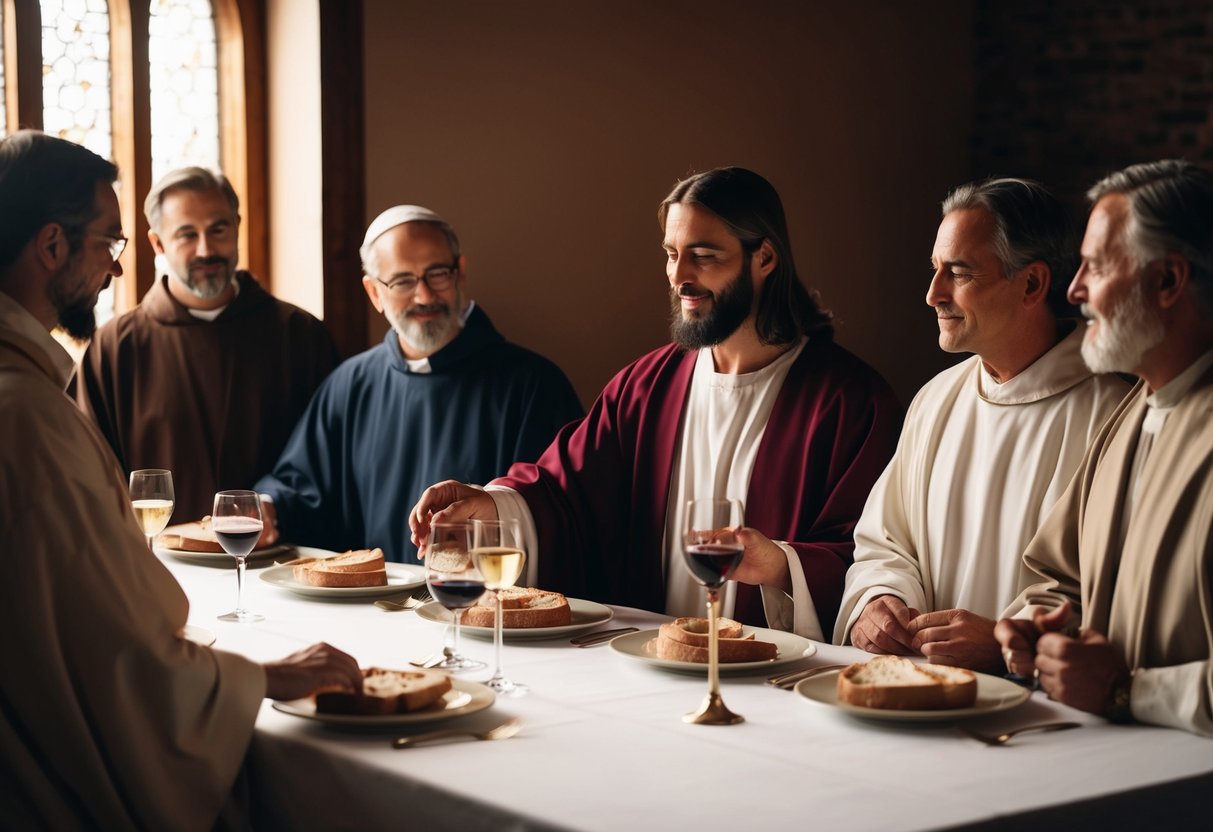
As they gathered to celebrate Passover, Jesus revealed profound truths about his upcoming sacrifice. He took the time to communicate his message of love and redemption to his followers, emphasizing the importance of service and humility.
The interactions at this meal laid important groundwork for the teachings of Jesus and their impact on Christian beliefs.
The Last Supper continues to be commemorated in many Christian traditions today. This event is remembered not only for its historical significance but also for its ongoing spiritual relevance in the lives of believers. Understanding what Jesus did at the Last Supper provides insight into the essence of his mission and the foundation of Christian practice.
Historical Context of the Last Supper
The Last Supper took place during a significant time in Jewish history. Understanding the backdrop of Passover and the setting of Jerusalem provides essential context for this pivotal event.
The Significance of Passover
Passover is a major Jewish festival that celebrates the Exodus from Egypt. It commemorates the liberation of the Israelites from slavery. During this festival, families gather for a special meal known as the Seder.
The Last Supper is often viewed through this lens of Jewish tradition. Jesus and his disciples shared this meal as part of the Passover observance. This timing adds layers of meaning to the event. The ritual includes symbolic foods, such as unleavened bread and wine, which Jesus used to illustrate deeper spiritual truths.
This meal also aligns with the Festival of Unleavened Bread, which starts immediately after Passover. It emphasizes themes of freedom and redemption central to both the festival and the early Christian message.
Jerusalem during Jesus’s Time
Jerusalem was a bustling religious and cultural center during the first century. It attracted pilgrims, especially during Passover. Many came to offer sacrifices at the Temple, which was the heart of Jewish worship.
The population swelled with visitors, creating a vibrant and intense atmosphere. This context heightened the tensions between Jesus and the religious authorities. The Last Supper took place in an upper room, likely away from the public eye.
In this charged environment, Jesus’s actions during the meal carried significant implications. His announcement of betrayal and the establishment of the Eucharist marked critical moments in this setting. The combination of religious fervor and political tension in Jerusalem shaped the events leading to the crucifixion, making the Last Supper even more pivotal.
The Narrative of the Last Supper
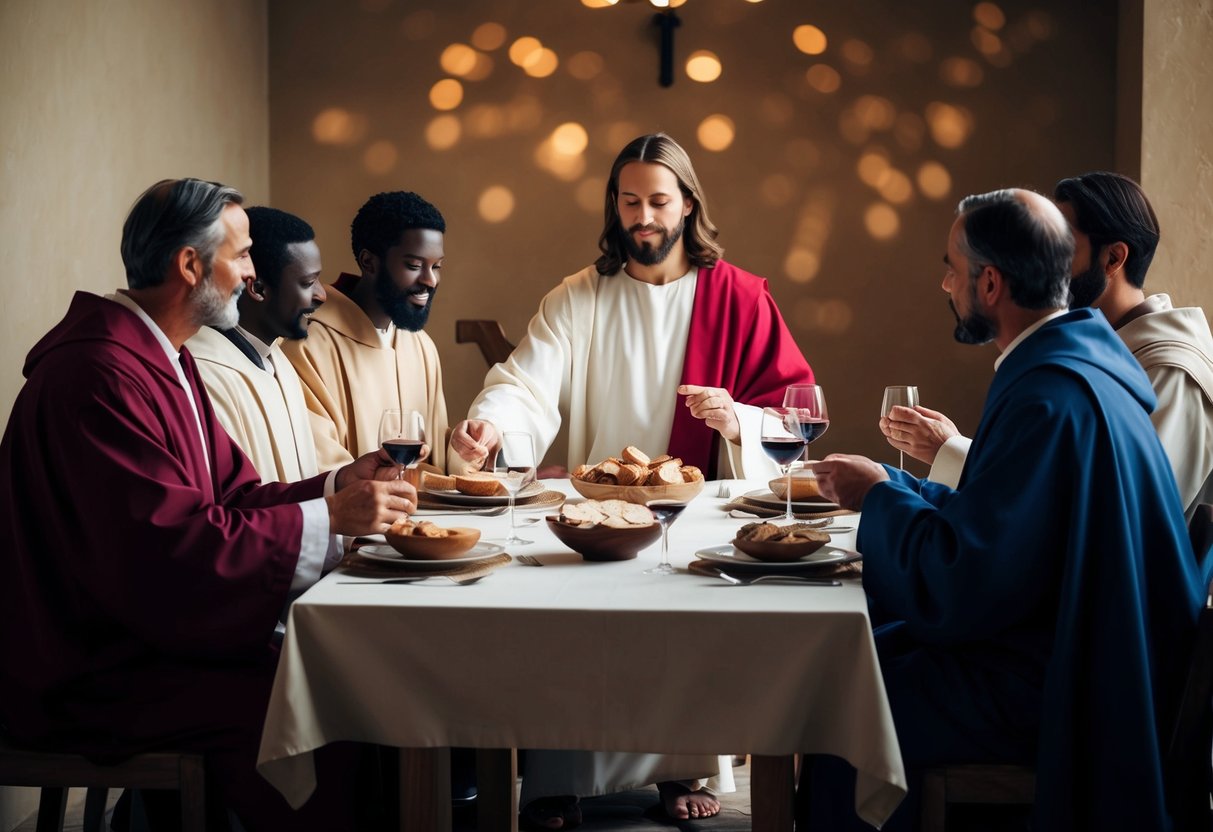
At the Last Supper, Jesus shared significant actions and words with his apostles, marking this event as a pivotal moment before his crucifixion. His interactions revealed deep meanings about sacrifice and community, while the apostles played crucial roles in this poignant gathering. The atmosphere was charged with foreboding as Jesus hinted at the betrayal that loomed near.
Jesus’s Actions and Words
During the Last Supper, Jesus took bread and said, “This is my body, given for you.” He broke the bread and shared it among his apostles, symbolizing his impending sacrifice. He then took a cup of wine, stating, “This cup is the new covenant in my blood.” This act established the foundation of Christian Communion.
By participating, the apostles were invited into a deeper relationship with him and with each other. Jesus emphasized the importance of remembrance, urging them to “do this in remembrance of me.” These actions signified a profound moment of unity and purpose.
The Role of the Apostles
The apostles gathered around Jesus, eager to partake in this special meal. Each apostle had a unique personality and role. For instance, John is often identified as the beloved disciple, shown as leaning close to Jesus. Others, like Peter, demonstrated loyalty and boldness. However, they were also unaware of the larger meaning of these events.
As Jesus shared the bread and the cup, the apostles were called to witness not only a meal but the beginning of a transformative mission. Their participation marked them as integral to Jesus’s teachings and future community.
The Impending Betrayal
As the meal progressed, Jesus revealed a shocking truth: one of the apostles would betray him. This statement stunned the group, causing confusion and sorrow. Judas Iscariot, who would later betray Jesus for silver, was present. Jesus subtly indicated his betrayal by stating that the one who dipped bread into the bowl with him would be the traitor.
This tragic moment highlighted the tension of the evening. The bond of trust within the group was shattered, foreshadowing the events that would soon unfold leading to Jesus’s arrest and crucifixion.
Theological Implications
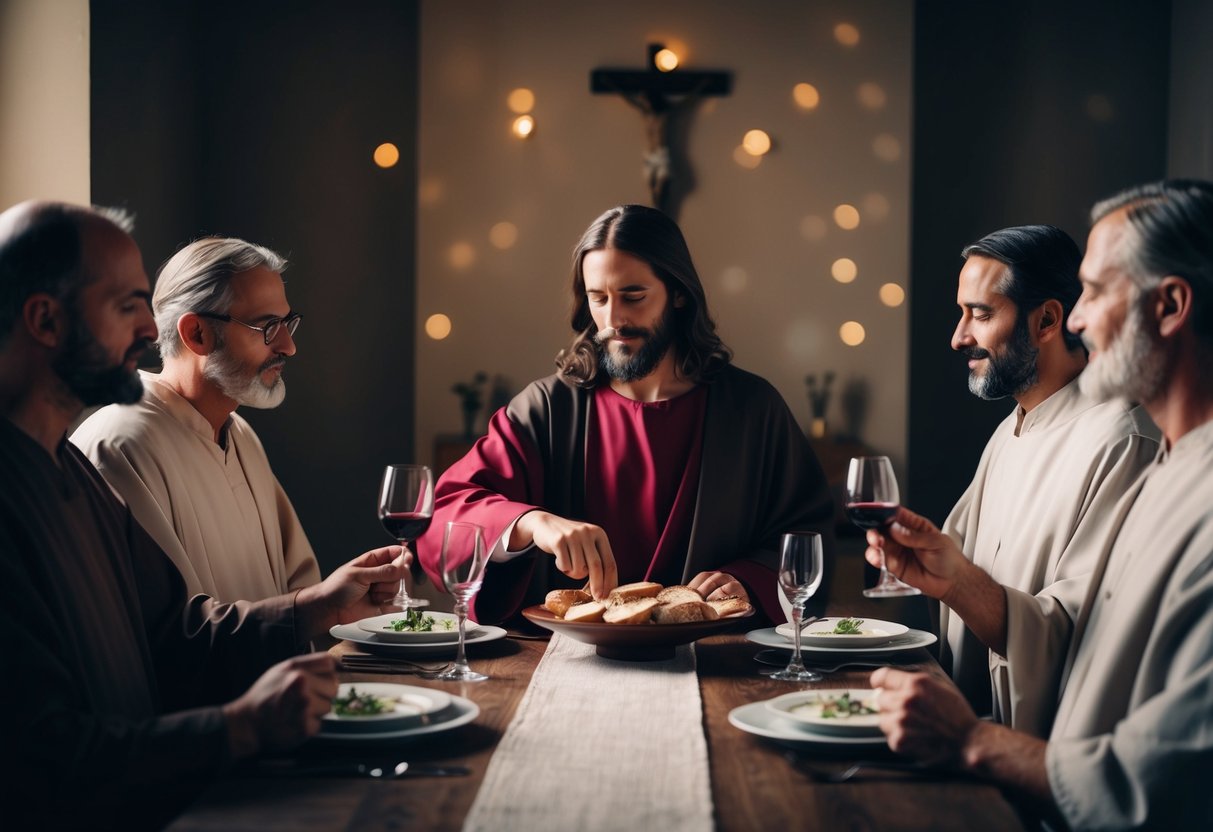
The Last Supper holds deep theological significance for Christians. It highlights key concepts such as the Eucharist, the establishment of a new covenant, and the themes of forgiveness and redemption. Each element contributes to the understanding of Jesus’ mission and the foundation of Christian faith.
Eucharist and Communion
At the Last Supper, Jesus instituted the Eucharist, also known as Communion. He declared the bread as his body and the wine as his blood, signaling a profound transformation. This act invites believers to partake in the body of Christ and the blood of Christ, uniting them with him.
The Eucharist serves as a memorial of Jesus’ sacrifice. It is a reminder of his presence and the commitment to remember him. Through this sacrament, Christians accept the forgiveness of sins and affirm their faith in his redemptive power.
Covenant and Sacrifice
The Last Supper established a new covenant between God and humanity. This covenant replaces earlier agreements, emphasizing that Jesus’ sacrifice is central for salvation. By sharing his blood, Jesus fulfilled the prophetic symbolism of the “blood of the covenant,” making the covenant available to all believers.
This sacrifice is not merely a historical event; it is fundamental to Christian doctrine. It illustrates the depth of Jesus’ love and his readiness to suffer for humanity’s sake. This new covenant, marked by his body and blood, invites followers into a relationship rooted in grace and unconditional love.
Forgiveness and Redemption
Forgiveness is a central theme arising from the Last Supper. Jesus’ words remind his followers that his sacrifice is for the forgiveness of sins. This act opens the door to redemption, allowing individuals to become reconciled with God.
Believers are encouraged to reflect on their lives and seek forgiveness through Christ. The Last Supper emphasizes that redemption is not just a one-time event; it is a continual invitation for transformation and renewal. Accepting this gift of forgiveness fosters a deeper, more meaningful relationship with God and strengthens the community of believers.
Cultural and Artistic Depictions
The Last Supper has been a significant theme in art and culture throughout history. Various artists have interpreted this moment, reflecting different styles and cultural influences. The most notable depiction is by Leonardo da Vinci, which has inspired countless works in various media.
Leonardo da Vinci’s ‘The Last Supper’
Leonardo da Vinci created one of the most famous representations of the Last Supper between 1495 and 1498. This work is located in the refectory of the Convent of Santa Maria delle Grazie in Milan.
Da Vinci’s portrayal captures the emotional reactions of the apostles as Jesus announces his betrayal. The use of perspective guides the viewer’s eye to Jesus at the center, emphasizing his importance.
The painting also features hidden details, like the combination of food items, which enhances the moment’s significance. This masterpiece is iconic, influencing both religious art and broader cultural expressions.
The Last Supper in Modern Media
In modern times, the Last Supper continues to inspire various forms of media. Movies, television, and literature often reference this event, highlighting its lasting impact on popular culture.
For instance, parodies and reinterpretations appear in comedy shows, while serious dramas examine its themes of loyalty and betrayal. Many artists create modern adaptations, reflecting contemporary values and concerns.
Additionally, installations and performances have brought new life to the Last Supper, using innovative approaches to connect with audiences today. These works reflect the ongoing relevance of the Last Supper in discussions about faith, humanity, and art.
Modern Observance and Practice
Today, the Last Supper is commemorated through various practices in Christian communities. These observances often emphasize unity, belief, and the significance of faith in the life of the church.
Holy Communion and Liturgy
Holy Communion, or the Eucharist, is a central liturgical practice in many Christian traditions. It represents Jesus’ command during the Last Supper to “do this in remembrance of me.” During this ritual, congregants partake of bread and wine, which symbolize Jesus’ body and blood.
Depending on the denomination, the belief in transubstantiation varies. In Catholicism, it is believed that the bread and wine truly become Christ’s body and blood. Many Protestant denominations view these elements as symbols, while others affirm their significance in a spiritual sense.
The liturgy surrounding Holy Communion often includes prayers, hymns, and scriptural readings to create a sacred environment that fosters community and shared faith.
Variations Across Denominations
The observance of the Lord’s Supper varies significantly among Christian denominations.
- Catholics typically celebrate the Eucharist weekly, emphasizing the sacramental nature of Communion.
- Protestants may celebrate it less frequently, some on a monthly basis or during special occasions.
- Orthodox Christians hold a deeply reverent liturgical service that includes elements of mystery and ancient traditions.
These differences reflect unique beliefs about the nature of the sacrament and its role in the life of the church. Each tradition contributes to a rich tapestry of faith experiences that emphasize community and shared worship.
Personal and Communal Reflections
For many, the observance of Holy Communion is both a personal and communal experience.
Individuals often reflect on their faith journey during the service. They use the moment to seek reconciliation and spiritual growth.
Communally, the act fosters a sense of unity among participants. It reminds them of their shared beliefs and values.
Churches may encourage attendees to share their experiences and insights. This creates an environment of blessed interaction. This practice helps reinforce community bonds while deepening individual faith.
