
In Christian theology, the relationship between the divine and the faithful is often described through powerful metaphors. To understand the depth of this spiritual union, many believers ask why is Jesus called the Bridegroom and what this title signifies for the Church. This ancient designation, rich in both meaning and symbolism, serves as a cornerstone of biblical interpretation.
This title highlights the intimate relationship between Jesus and his followers, drawing a direct parallel to the sacred bond between a bride and her groom.
Such imagery conveys profound love, sacrificial commitment, and a divine promise of eternal unity. Through this lens, the Church is beautifully depicted as the Bride of Christ, waiting for her beloved.
By exploring this metaphor, we uncover a message of hope and devotion that spans the entire New Testament. It is a relationship defined not by rules, but by a covenant of the heart, emphasizing that the connection between Jesus and the faithful is meant to be the most faithful and enduring bond of all.

The concept of Jesus as the Bridegroom is rooted in biblical imagery, where marriage represents God’s covenant with his people.
Throughout the New Testament, this metaphor emphasizes joy and celebration, contrasting with the expectations of fasting and mourning found in other teachings. By understanding Jesus in this role, believers can appreciate the depth of his love and the invitation to a personal relationship.
This article explores the Bridegroom imagery and its importance in understanding Jesus’s mission on Earth and the significance of his relationship with humanity. It also opens up discussions about the nature of discipleship and the transformational love that defines the Christian faith.
Biblical Foundations of the Bridegroom Metaphor
The metaphor of Jesus as the Bridegroom draws deeply from both the Old and New Testaments. These scriptures establish a rich context that enhances the understanding of this imagery.
The following sections explore the prophetic foundations in the Old Testament and the confirmations found in the New Testament.
Old Testament Prophetic Imagery
In the Old Testament, the relationship between God and Israel is often depicted as a marriage. This imagery signifies a covenant marked by love and commitment. Prophets like Hosea illustrate this relationship vividly. In Hosea, God commands the prophet to marry a promiscuous woman, symbolizing Israel’s unfaithfulness.
Isaiah also echoes this theme. He presents God as a husband who rejoices over his people. Such imagery emphasizes the deep emotional connection and covenant loyalty between God and Israel.
The use of bridegroom imagery serves as a precursor to the New Testament understanding of Jesus. It sets the stage for his role in fulfilling the covenant through a relationship with His followers.
New Testament Confirmations
In the New Testament, the metaphor of Jesus as the Bridegroom is confirmed several times. In the Gospels, Jesus refers to himself as the Bridegroom when discussing his ministry and the Kingdom of God.
For instance, in Matthew 9:15, he questions why his followers would mourn while he is with them, highlighting his joyful presence.
John the Baptist also introduces Jesus in this way. According to John 3:29, he recognizes Jesus’ role as the Bridegroom, affirming the close relationship between Jesus and his followers. This imagery is also reinforced through parables, such as the wedding banquet in Matthew 22, illustrating the invitation to join God’s Kingdom as a festive celebration.
The Church as the Bride

The connection between the Church and the concept of the Bride is deeply rooted in scripture. Two key elements highlight this relationship: the teachings in Ephesians 5 about Christ and the Church, and the Parable of the Ten Virgins, which illustrates readiness and faithfulness.
Ephesians 5 and the Relationship to Christ
In Ephesians 5, Paul compares the relationship between Christ and the Church to that of a husband and wife. He emphasizes that Christ loves the Church and sacrifices Himself for her. This illustrates the depth of commitment and care that Christ has for His followers.
The passage also urges husbands to love their wives as Christ loves the Church. This mutual love reflects selflessness and devotion.
The Church, as the Bride, is called to submit and respect Christ, just as a wife does her husband. This relationship highlights the sacred bond, showcasing that the Church is cherished, valued, and essential to Christ’s purpose.
The Parable of the Ten Virgins
The Parable of the Ten Virgins, found in Matthew 25:1-13, emphasizes the importance of being prepared for Christ’s return.
In this story, ten virgins await the arrival of the bridegroom. Five are described as wise, carrying extra oil for their lamps, while five are foolish and unprepared.
When the bridegroom arrives, the foolish virgins cannot join the celebration because they lack oil. This parable illustrates the need for vigilance and readiness in faith.
The Church, represented by the wise virgins, must be diligent in maintaining its relationship with Christ. Being the Bride means being prepared to meet the Bridegroom at any time, ensuring readiness for His coming.
Theological Significance of the Marriage Metaphor
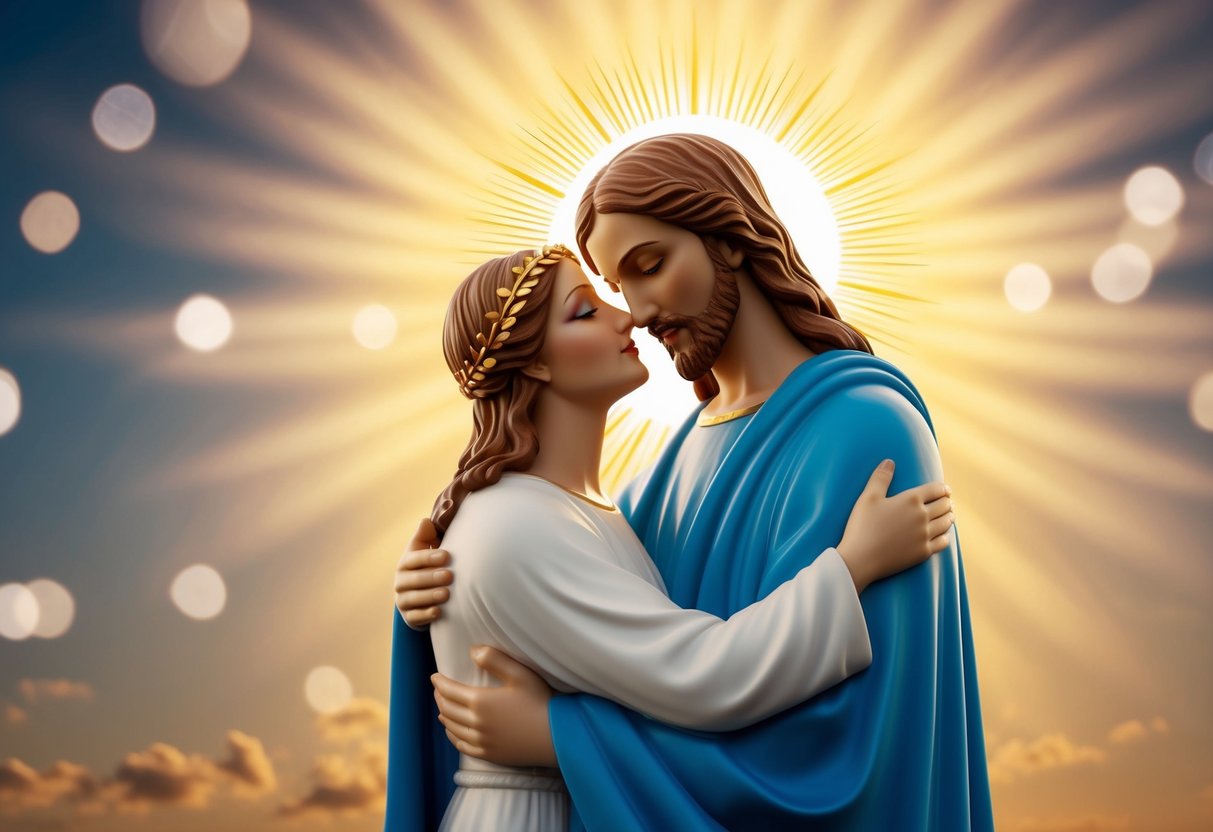
The marriage metaphor holds deep theological meaning in understanding the relationship between God and humanity. It emphasizes concepts like love, covenant, and redemption, showcasing how these elements intertwine to highlight the divine connection with believers.
Covenantal Love and Fidelity
Covenantal love reflects the commitment between God and humanity. In the Bible, marriage represents a sacred covenant, signifying mutual commitment and loyalty. Just as a husband vows to love his wife, God pledges His unwavering love to His people.
This covenantal relationship involves fidelity, where God remains devoted despite human shortcomings. Scriptures often illustrate this loyalty using marriage, portraying God as the faithful spouse who desires a deep, personal relationship.
Such love calls believers to respond with their own faithfulness, encouraging them to live in ways that honor this divine bond.
Redemption and Union with God
Redemption signifies the restoration of the broken relationship between humanity and God. Jesus is called the bridegroom to highlight His role in this redemptive process.
Through His sacrifice, He opens the path for believers to unite with God beautifully.
In this union, believers are seen as the bride, invited into an intimate relationship with Him. This relationship is about more than just individual salvation; it embodies a communal commitment to live according to God’s purpose and teachings.
The marriage metaphor thus serves as a powerful reminder of the love and grace available through faith in Christ.
Jesus’ Earthly Ministry and the Bridegroom Identity
During His earthly ministry, Jesus is often referred to as the Bridegroom, emphasizing His role in establishing a new relationship between God and humanity. This identity is supported by key events, including John the Baptist’s testimony and the miracle at the wedding at Cana.
John the Baptist’s Testimony
John the Baptist played a crucial role in declaring Jesus as the Bridegroom. In the Gospel of John, John identifies himself as the friend of the Bridegroom, who rejoices at the arrival of Jesus. He highlights the joy and importance of recognizing Jesus’s divine role.
John emphasizes that Jesus is the one who has come to fulfill God’s promise. His declaration signals a shift from the old covenant to the new. As the Bridegroom, Jesus invites all to participate in the Kingdom of God. This testimony establishes a foundational understanding of Jesus’s mission and His relationship with His followers.
Miracle at the Wedding at Cana
The miracle at the wedding at Cana is another powerful illustration of Jesus’s Bridegroom identity. During this event, Jesus turns water into wine, showcasing His miraculous powers.
This act symbolizes joy and celebration, traits associated with a wedding feast. It also serves as a metaphor for the new covenant Jesus brings.
By performing this miracle, He demonstrates His authority and ability to transform the ordinary into the extraordinary. This moment not only affirms His divine identity but also invites His disciples and all present to recognize the significance of His role in their lives.
Eschatological Themes and the Bridal Imagery
Bridal imagery in Christianity relates closely to key eschatological themes. It illustrates the relationship between Jesus and His followers, depicting the final union between Christ and the Church. This section explores the significance of the Wedding Feast of the Lamb and the concept of the Second Coming highlighted by the wedding banquet.
Wedding Feast of the Lamb
The Wedding Feast of the Lamb, mentioned in Revelation 19, symbolizes the joyous culmination of history where Christ, the Savior, reunites with the Church. This “feast” represents the full realization of God’s promises to his people.
In this imagery, Jesus is the bridegroom, and the Church is His bride. This relationship underscores the love and commitment shared between them.
During this banquet, believers, referred to as wedding guests, celebrate their eternal union with Christ in the Kingdom of Heaven. The imagery emphasizes joy, fulfillment, and the triumphant conclusion of salvation history.
The Second Coming and the Wedding Banquet
The Second Coming of Christ is intricately linked to the wedding banquet theme. As Jesus returns, he will bring his followers into a new era marked by peace and righteousness.
This event is often illustrated as a grand celebration, where the faithful gather to rejoice.
Biblical passages convey the anticipation of this banquet, encouraging believers to remain steadfast in faith. The wedding banquet is not just a celebration but a declaration of God’s plan for his creation.
It affirms that those who accept Christ will partake in eternal life. The imagery serves to motivate and inspire Christians to prepare for his return, ensuring they are counted among the wedding guests at this sacred event.
