
As Jesus hung on the cross, he spoke seven profound statements that continue to resonate with believers today. To fully understand the depth of his sacrifice, we must examine exactly what did Jesus say on the cross and the theological meaning behind each phrase.
His final utterances not only reflect his immense physical pain but also convey powerful messages of forgiveness, love, and the fulfillment of ancient prophecy.
Known as the seven last words, these statements have been carefully preserved in the Gospels to offer insight into his final moments during the crucifixion.
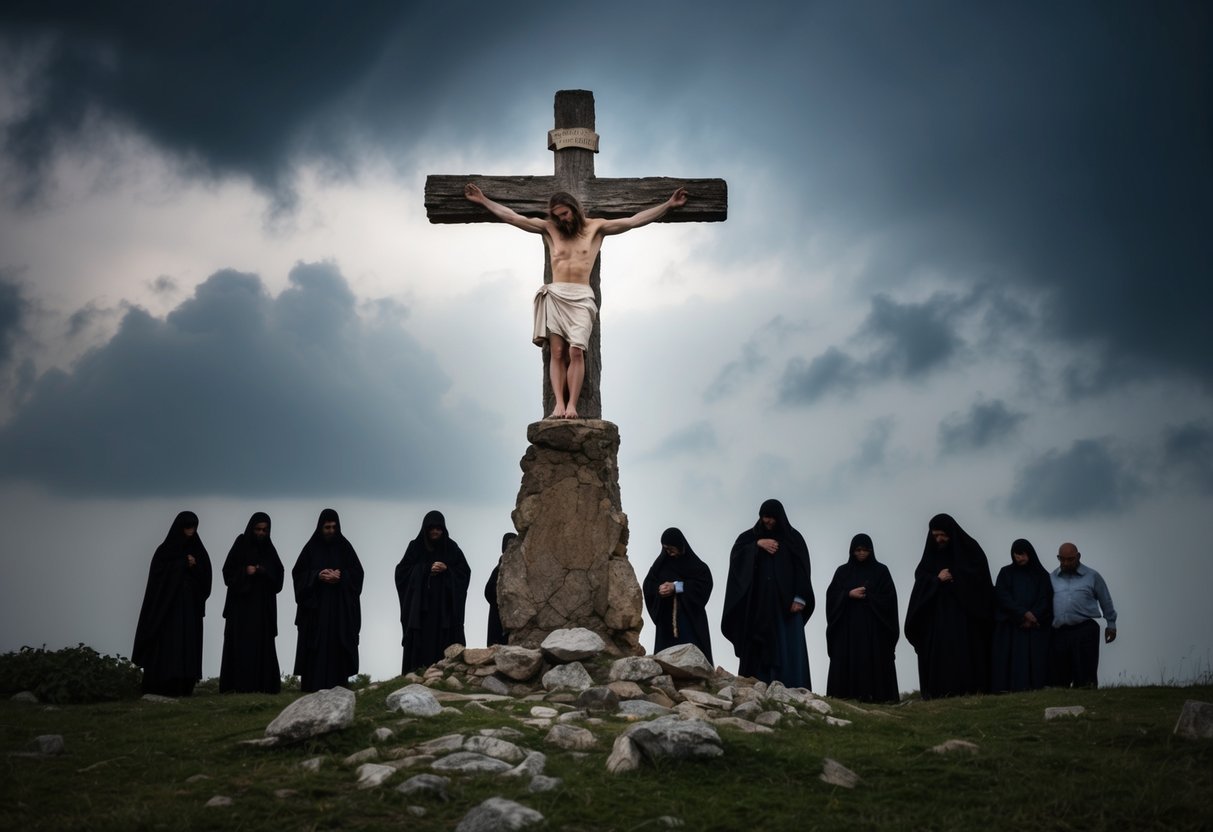
The sayings capture a range of emotions and highlight the significance of his sacrifice. From expressing compassion for others to affirming his relationship with God, each statement holds deep meaning.
Readers will find that understanding these words sheds light on key aspects of Jesus’ mission and the impact of his death on the cross.
Delving into these powerful expressions provides not just historical context but also spiritual lessons that resonate in today’s world. Exploring the last words of Jesus encourages reflection on themes like redemption, trust, and love, making it a vital topic for anyone interested in the teachings of Christianity.
The Significance of the Cross in Christianity
The cross is central to Christian beliefs. It represents the place where Jesus Christ was crucified and where he suffered for humanity’s sins.
His death on the cross is seen as a critical moment in the story of salvation.
Through the crucifixion of Jesus, Christians believe that he offered redemption for all people. This act of self-sacrifice is viewed as a demonstration of God’s immense love and justice.
The suffering Jesus endured signifies the serious nature of sin and the cost of forgiveness.
The cross is not just a symbol of suffering; it is also a powerful emblem of hope. For many, it represents the promise of salvation and eternal life.
By accepting Jesus’ sacrifice, believers feel they receive grace and are restored to a right relationship with God.
Additionally, the resurrection of Jesus three days after his crucifixion adds to the significance of the cross. It affirms his victory over sin and death, proving that through him, believers can gain eternal life.
The cross invites reflection on the themes of sacrifice, love, and redemption. It serves as a reminder of the depth of Jesus’ commitment to his followers and the lengths he went to secure their salvation.
Context of Jesus’ Crucifixion
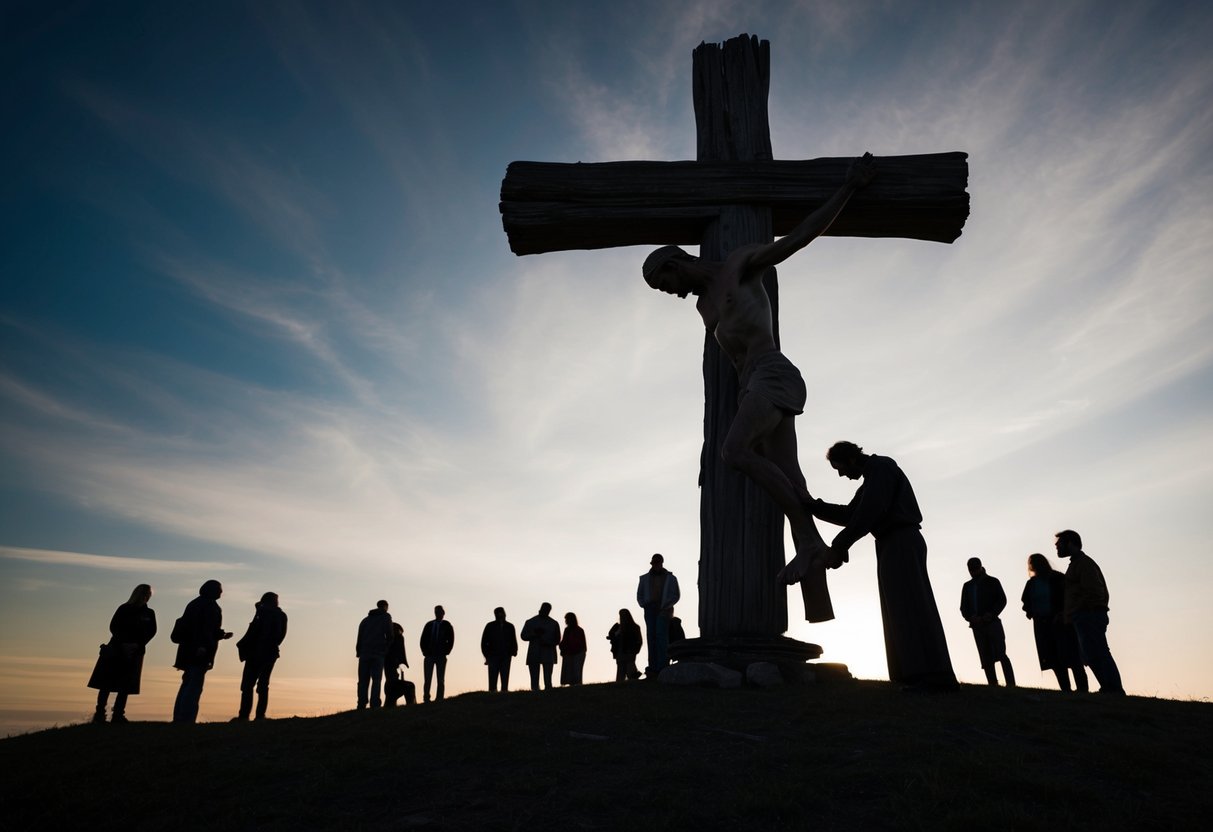
The crucifixion of Jesus took place in a complex environment shaped by historical tensions and religious leadership. Understanding the events leading to this pivotal moment requires examining the historical and biblical context, the circumstances before the crucifixion, and the roles played by Roman and Jewish authorities.
Historical and Biblical Accounts
The crucifixion of Jesus is recorded in the Gospels of Matthew, Mark, Luke, and John. Each account provides unique details about the event.
For instance, Matthew 27 emphasizes the mocking of Jesus by the onlookers. Mark 15 highlights the role of Pontius Pilate, who faced pressure from the public and religious leaders to condemn Jesus.
In Luke 23, Jesus is shown pleading for forgiveness for his executors, demonstrating his compassionate nature even at the end. John 19 presents a more intimate view of Jesus’s last interactions, including dialogues with his mother and beloved disciple.
Together, these accounts paint a rich portrait of this significant moment in Christian history.
The Events Leading to the Crucifixion
The events leading to Jesus’ crucifixion began in the Garden of Gethsemane, where he prayed fervently before his arrest. His betrayal by Judas Iscariot marked a turning point.
Following his arrest, Jesus was put on trial before the Sanhedrin, where he was accused of blasphemy.
The trial quickly escalated, culminating in his presentation before Pilate. Pilate found no guilt in Jesus but, facing the demands of the crowd, eventually acquiesced to their wishes for his execution.
This sequence of events underscores the intense conflict between Jesus’s teachings and the established religious authority of the time.
Roman and Jewish Leadership Roles
The roles of Roman and Jewish leaders were crucial in the lead-up to the crucifixion.
Pontius Pilate, the Roman governor, held the authority to execute Jesus but struggled with how to address the charges against him.
The Jewish religious leaders, fearing Jesus’s influence, played a key role in urging the Roman authorities to act. They viewed Jesus as a threat to their power and stability.
Their collaboration with Pilate shows how political and religious motives intertwined during this critical moment, leading to the decision to crucify Jesus.
The Seven Last Sayings on the Cross
Jesus’ last words on the cross are significant moments that reveal deep meaning and emotion. Each saying reflects His compassion, fulfillment of prophecy, and the ultimate sacrifice He made for humanity.
Father, Forgive Them
In this moment, Jesus expresses profound mercy. As recorded in Luke 23:34, He asks God to forgive those who are crucifying Him. Despite the pain and humiliation He faces, His focus is on compassion, showing that forgiveness is possible even in the darkest times.
This statement illustrates His commitment to love and mercy, illuminating His role as the Savior who offers forgiveness to all. It emphasizes the importance of forgiveness, challenging believers to reflect that same grace in their lives.
Today You Will Be With Me in Paradise
Jesus speaks these words to one of the criminals crucified alongside Him. In this moment, He assures the repentant thief that they will be together in paradise (Luke 23:43).
This promise signifies hope and redemption, demonstrating that faith in Jesus leads to eternal life. It highlights that no one is beyond the reach of God’s grace, and salvation is available at any moment, even in the hour of death.
Behold Your Son, Behold Your Mother
In this statement, Jesus addresses Mary, His mother, and the Apostle John. He entrusts Mary to John’s care, saying, “Behold your son,” and to John, “Behold your mother.”
This moment reflects His concern for family and humanity. Even in suffering, He shows love and responsibility. Jesus’ care for His mother emphasizes the importance of community and support among believers, urging them to look after one another.
My God, Why Have You Forsaken Me?
This cry from the cross is one of the most poignant moments in the crucifixion narrative. Jesus voices His feelings of abandonment, a reference to Psalm 22.
It reveals the depth of His suffering, both physically and spiritually. This expression of despair resonates with those who feel alone in their struggles. It shows that even in profound pain, it’s natural to seek God’s presence. This statement connects His suffering to the human experience of feeling forsaken.
I Thirst
When Jesus states, “I thirst,” it signifies more than physical thirst. It encapsulates the culmination of His suffering.
This statement connects to His humanity, highlighting His physical pain and need. It also reflects the fulfillment of Scripture, underscoring that He endured every aspect of suffering for humanity’s sake. This phrase reminds believers of His sacrifice and the lengths He went to bear the weight of sin.
It Is Finished
With the declaration “It is finished,” Jesus proclaims the completion of His mission on Earth. He has accomplished what He set out to do: provide redemption for humanity.
This statement signifies the fulfillment of prophecy and the end of the sacrificial system. It illustrates that through His death, the debt of sin is paid. This finality carries immense weight, offering believers assurance of salvation and a relationship with God.
Father, Into Your Hands I Commit My Spirit
In His final words, Jesus entrusts His spirit to God. This saying, recorded in Luke 23:46, reflects His ultimate trust in the Father.
It shows His acceptance of death and the completion of His earthly life. By committing His spirit, He demonstrates the relationship between obedience and faith. This moment reinforces the importance of surrendering to God and trusting in His plan, even when facing death. It highlights Jesus’ role as a faithful servant who fulfilled His purpose.
Theological Interpretations
The words spoken by Jesus on the cross have significant theological implications. They connect to Old Testament prophecies and inform core Christian doctrines regarding forgiveness, eternal life, and the nature of the Messiah.
Fulfillment of Old Testament Prophecies
Jesus’ words on the cross often reflect themes found in the Old Testament. For instance, in Psalm 22, Jesus quotes, “My God, My God, why have You forsaken Me?” This verse illustrates the suffering Messiah, fulfilling the prophecy of a righteous servant experiencing anguish.
Additionally, Jesus’ statement about forgiveness illustrates the theme of repentance found throughout the Old Testament. His promise to the criminal beside Him, “Today you will be with Me in Paradise,” underscores the belief in eternal life and the fulfillment of God’s covenant to those who believe.
Jesus’ Words and Christian Doctrine
The phrases spoken by Jesus encapsulate essential Christian teachings. His declaration of forgiveness highlights the central tenet of repentance in Christianity.
By offering forgiveness even in His final moments, Jesus demonstrates the power of faith and the importance of mercy.
His mention of “Paradise” signifies the promise of eternal life for believers. This reinforces the authority Jesus claims when He says He has power to lay down His life and take it up again. Each phrase enriches the understanding of His role as the Messiah and the pathway to salvation through faith.
Influence on Christian Thought and Art
Jesus’ words on the cross have had a profound impact on Christian thought and artistic expression. These statements are not only pivotal in understanding His sacrifice but also shape how believers commemorate His life and teachings.
Liturgical Commemorations
One of the key moments in the Christian calendar is Good Friday, which marks the crucifixion of Jesus. This day is a time for reflection on His final words, emphasizing themes of compassion, mercy, and grace.
Many churches hold services focusing on the significance of His sacrifice, often incorporating readings that highlight His cries from the cross.
The liturgical actions during this day, such as the veneration of the cross, invite disciples to connect deeply with Jesus’ suffering and its meaning for humanity. Biblical scholars often explore how these liturgies convey the message of healing and restoration that Jesus’ death represents.
Depictions in Christian Art
Christian art has long been influenced by Jesus’ words during the crucifixion.
Artists depict scenes from the Passion to convey the depth of His suffering and the promise of resurrection. Many works include imagery that reflects His mercy and grace, highlighting His final words as symbols of hope.
Iconic paintings, sculptures, and stained glass windows serve to remind viewers of the significance of the cross.
The Garden of Eden often contrasts with these depictions, symbolizing the fall of man and the need for redemption.
By portraying Jesus’ final moments, artists communicate the transformative power of His sacrifice, echoing the love and compassion He showed humanity.
