
Within the diverse traditions of religious life, many people find themselves curious about the levels of discipline practiced behind convent walls. For those researching what is the strictest order of nuns in the Catholic Church, the answer is widely acknowledged to be the Trappistines (Trappists). They strictly follow the Rule of St. Benedict, which emphasizes a life of complete silence, manual labor, and rigid uniformity.
This order is part of the larger Cistercian family, adhering to a commitment that almost entirely isolates its members from the secular world. By removing external distractions, they are able to focus exclusively on prayer and contemplation. Their ascetic lifestyle is considered one of the most demanding paths within the Christian tradition.
Life within these cloisters is governed by a schedule that prioritizes the Divine Office and communal worship. For these women, the choice to live in such a disciplined environment is a profound expression of their devotion and desire for a deeper union with God.
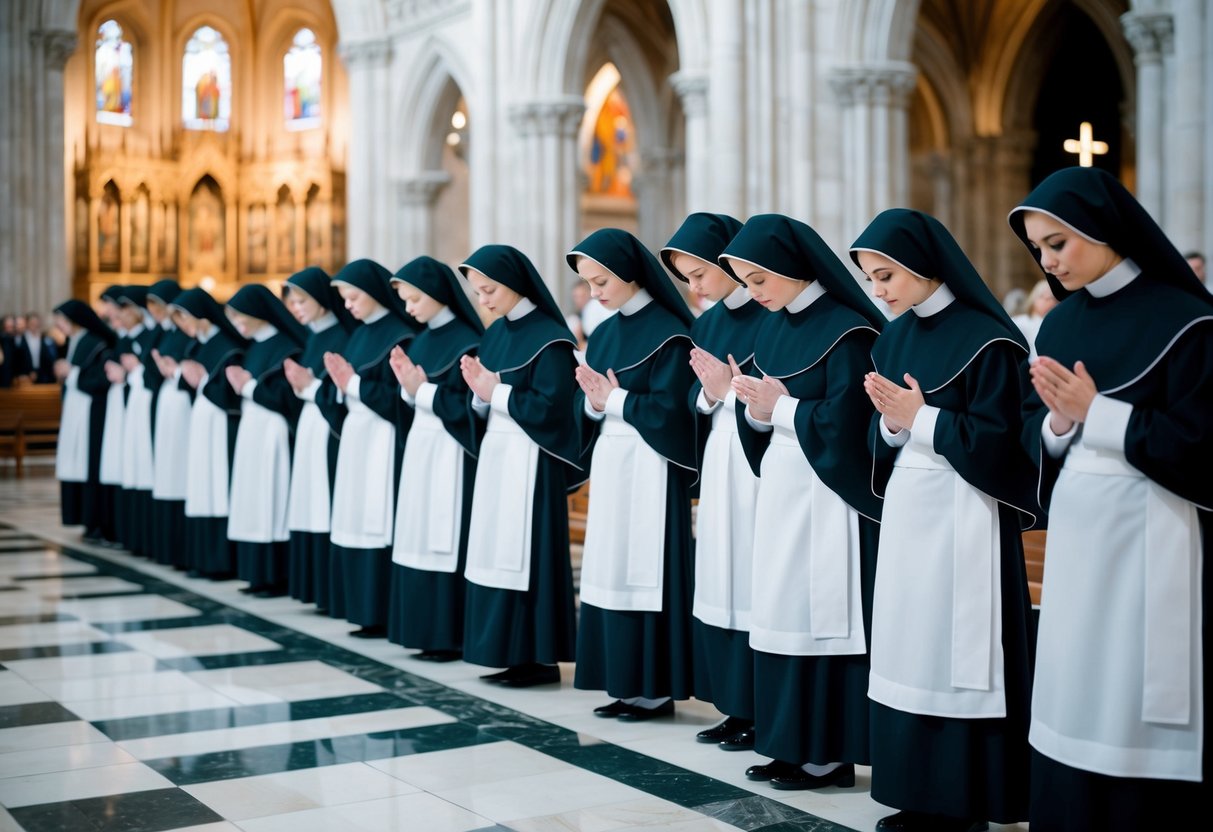
Trappist nuns, like their male counterparts, live in cloistered communities.
Their daily routine is structured around prayer, work, and a communal lifestyle, all while maintaining a vow of silence that deepens their spiritual practice.
The environment promotes a profound sense of peace and dedication to God, aligning with the values of the Roman Catholic Church.
Exploring the life of Trappist nuns reveals insights into their rigorous discipline and commitment to faith. The challenges and rewards they face draw many to learn more about this unique way of living, where every moment is dedicated to spiritual growth and communal harmony.
Origins of Cistercian Order
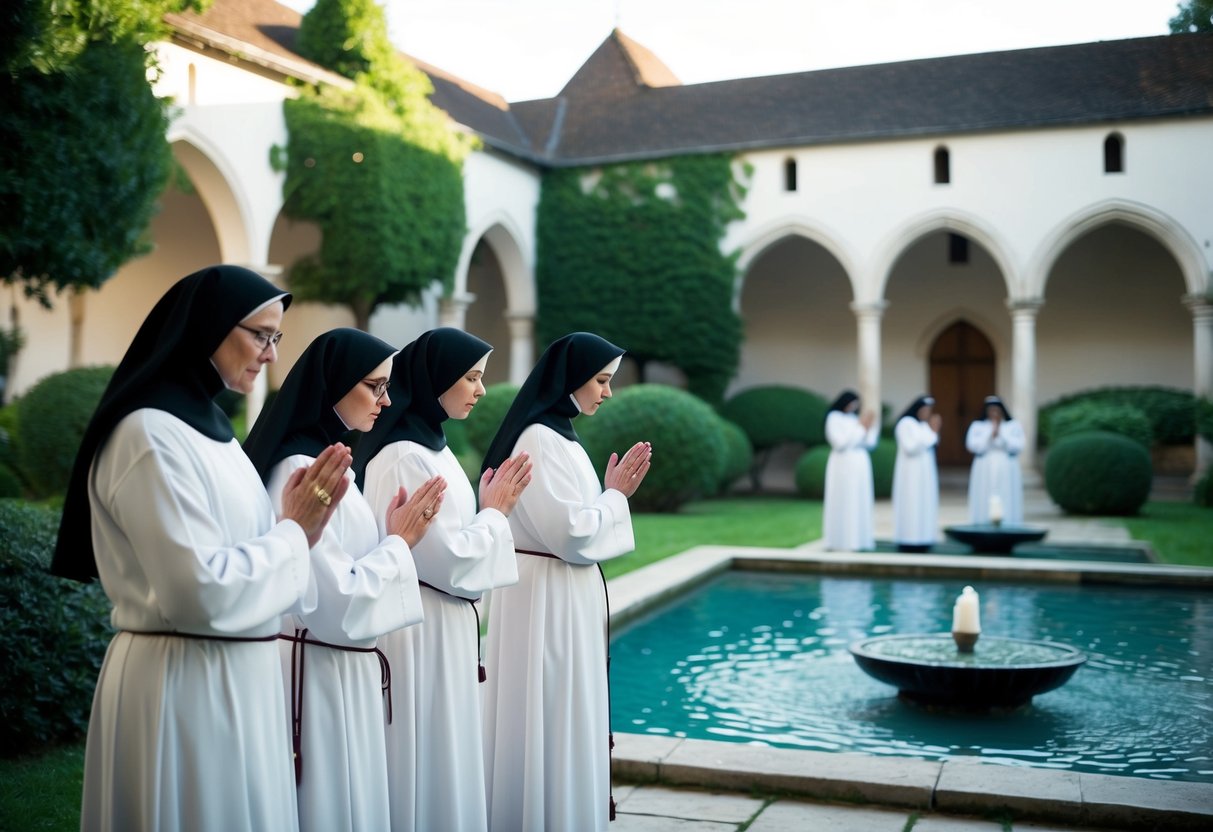
The Cistercian Order has deep roots in monastic tradition. Its foundation marked a desire for a more austere and disciplined way of life among its founders. The key figures involved in this movement played essential roles in shaping the order.
Foundation by St. Robert, St. Alberic, and St. Stephen
In 1098, St. Robert of Molesme, along with St. Alberic and St. Stephen, established the first Cistercian monastery at a site called Cîteaux, near Dijon, France.
They aimed to create a community that strictly followed the Rule of St. Benedict.
This group sought a return to a simpler and more austere form of monastic living. Their vision attracted about 20 monks who shared their commitment to prayer and work. This marked the beginning of the Cistercian focus on solitude and contemplation.
The founders emphasized manual labor alongside spiritual practices. This approach helped the order grow and eventually spread across Europe. The strict adherence to their ideals distinguishes the Cistercians even today.
Role of the Abbey of Citeaux
The Abbey of Citeaux served as the motherhouse for the Cistercian Order. It became the center for the development of Cistercian life and spirituality.
The abbey’s emphasis on simplicity and communal living set a standard for other monasteries.
Cîteaux was not just a place of worship; it was also a hub for agricultural innovation. The monks practiced sustainable farming methods, which contributed to the surrounding community.
Their commitment to both spiritual and practical work showcased the order’s dual mission.
As more monasteries branched out from Citeaux, they adopted its practices and values. This helped establish the Cistercian identity, which focused on reform and a return to the basics of monastic life. The influence of the Abbey of Citeaux remains strong in Cistercian communities today.
The Rule of St. Benedict
The Rule of St. Benedict is a guiding text for monastic life, created by St. Benedict of Nursia in the 6th century. It sets out principles and practices that govern daily life for monks and nuns, promoting a structured and spiritual existence. The Rule has also influenced the practices of other orders, notably the Cistercians.
Principles and Practices
The Rule emphasizes a balanced life combining prayer, work, and community living. It encourages monks and nuns to remain in silence, fostering reflection and contemplation.
Daily life is organized around communal prayer, specifically the Divine Office, which is held eight times a day.
Key Principles include:
- Obedience: Members are expected to obey the abbot or abbess, reinforcing authority in the community.
- Stability: Nuns and monks commit to their specific monastery, promoting a deep sense of belonging.
- Conversion of Life: The Rule urges continuous personal growth and commitment to spiritual practices.
By following these principles, the Rule seeks to create a harmonious and focused community that helps individuals pursue holiness.
Adaptation by Cistercian Monks and Nuns
The Cistercian order adapted the Rule of St. Benedict to emphasize simplicity and manual labor.
St. Robert of Molesme founded the Cistercians in the 11th century, aiming for a more austere and contemplative life.
Cistercians focused on:
- Self-sufficiency: They engaged in agriculture, reducing reliance on external resources.
- Silence: While silence is fundamental in all Benedictine practices, Cistercians highlighted it even more in their daily routines.
- Architecture: Their monasteries are characterized by simplicity, reflecting their values.
This adaptation strengthened their commitment to solitude and a spiritual lifestyle, remaining true to the essence of the Rule of St. Benedict while fostering a unique identity within monastic life.
Order of Cistercians of the Strict Observance

The Order of Cistercians of the Strict Observance, often called the Trappists, is a Roman Catholic religious order characterized by a strict lifestyle centered on prayer, work, and community living. This order includes both male and female branches, each dedicated to a life of contemplation and the observance of traditional monastic rules.
Trappistines: Female Branch of the Order
The Trappistines represent the female branch of the Order of Cistercians of the Strict Observance. They are dedicated to a cloistered life, following the Rule of St. Benedict, which emphasizes prayer, silence, and simplicity.
Trappistine monasteries, such as the ones in Virginia and California, host groups of nuns who live in community, practicing deep, contemplative prayer.
These women contribute to the community through various tasks, including farming, baking, and crafting. Their work often supports the monastery financially, allowing it to thrive while adhering to a simple lifestyle.
Governance and Structure
The Order is governed by an Abbot General, who oversees the entire Cistercian community. Each monastery is led by a local abbot or abbess, responsible for the spiritual and practical aspects of their community.
Monastic life is organized around daily routines of prayer, work, and communal meals. The Trappists are known for their silence and solitude, creating an environment for deep spiritual growth.
The structure is hierarchical yet communal, with an emphasis on shared responsibilities and decision-making within the monastery. Each member plays a vital role, fostering a strong sense of unity and purpose.
Conventual Life and Spiritual Practices
Conventual life for nuns emphasizes silence, prayer, and community. Each day is structured around specific spiritual practices that foster deep contemplation and a strong bond among the community members.
Silence and Prayer in Daily Life
Silence is a vital part of conventual life. Nuns often spend significant time in quiet reflection and contemplation. This practice allows them to connect more deeply with their faith and God.
Daily routines are structured around specific times for prayer. They participate in communal prayers and personal prayer sessions.
Contemplative prayer is encouraged, allowing thoughts to settle and enabling a deeper spiritual experience.
The environment of a convent further supports these practices. With minimal distractions, nuns can immerse themselves fully in prayer and reflection, creating a sacred atmosphere.
Manual Labor and Community
Manual labor is another essential aspect of conventual life. Nuns engage in various work tasks, such as gardening, cooking, and maintenance. This form of labor is seen as both a necessity and a form of service to God.
Work fosters a sense of community among the nuns. Collaborating on tasks strengthens their bonds and promotes teamwork. It also reflects the belief that all work can be a form of prayer.
Their labor contributes to the convent’s self-sufficiency. By tending to their needs, they maintain their focus on spiritual practices without reliance on the outside world.
Strict Disclosure and Enclosure
Enclosure is a critical practice in strict orders of nuns. It means that nuns live within the convent walls and limit interactions with the outside world. This helps maintain a peaceful environment conducive to contemplation.
Strict disclosure emphasizes the importance of privacy regarding their community life. Nuns focus on their spiritual journey without distractions. This discipline helps them remain committed to their vows and deepens their spiritual experiences.
Both enclosure and disclosure create a sacred space. This allows the nuns to dedicate their lives fully to prayer, reflection, and service to God while maintaining the convent’s integrity.
Global Influence and Expansion
The Cistercian order, known for its strict observance and commitment to a contemplative lifestyle, has a significant global presence. Their approach to monastic life has led to a unique influence and adaptation across various regions.
Cistercians Around the World
Cistercians have established monasteries in diverse locations, including Europe, Africa, Asia, and Latin America. Each monastery reflects the cultural context of its region while maintaining adherence to the Rule of St. Benedict.
For example, in Africa, Cistercian communities focus on local issues, such as poverty and education. In contrast, those in Latin America often engage in environmental preservation.
Cistercian monasteries in Asia are increasingly involved in interfaith dialogues, promoting peace and understanding among different religions.
Through these adaptations, the Cistercian family continues to influence communities worldwide, engaging with contemporary social challenges while upholding their core values.
Contemporary Challenges and Adaptations
Today’s Cistercian order faces various challenges, such as declining vocations and societal changes.
Many communities are exploring new approaches to attract younger members and remain relevant in a modern world.
Some monasteries are embracing technology, using social media to share their mission and daily life.
Others are involved in sustainable agriculture, which not only supports the community but also responds to ecological issues.
By engaging with their surroundings and innovating, Cistercian nuns and monks adapt to contemporary needs while remaining committed to their foundational principles of silence, simplicity, and prayer.
