
The resurrection of Jesus Christ is a pivotal event in Christian faith, symbolizing hope and renewal for believers everywhere. When people ask when did Jesus rise from the dead, the answer is found in Scripture—he rose on the third day after his crucifixion.
According to the New Testament, this miraculous event is celebrated by Christians around the world as Easter.
The Gospels provide detailed accounts of the events surrounding his death, burial, and resurrection, affirming his role as the Savior of humanity.
Understanding when and how Jesus rose from the dead strengthens faith and highlights the promise of eternal life that lies at the heart of Christianity.
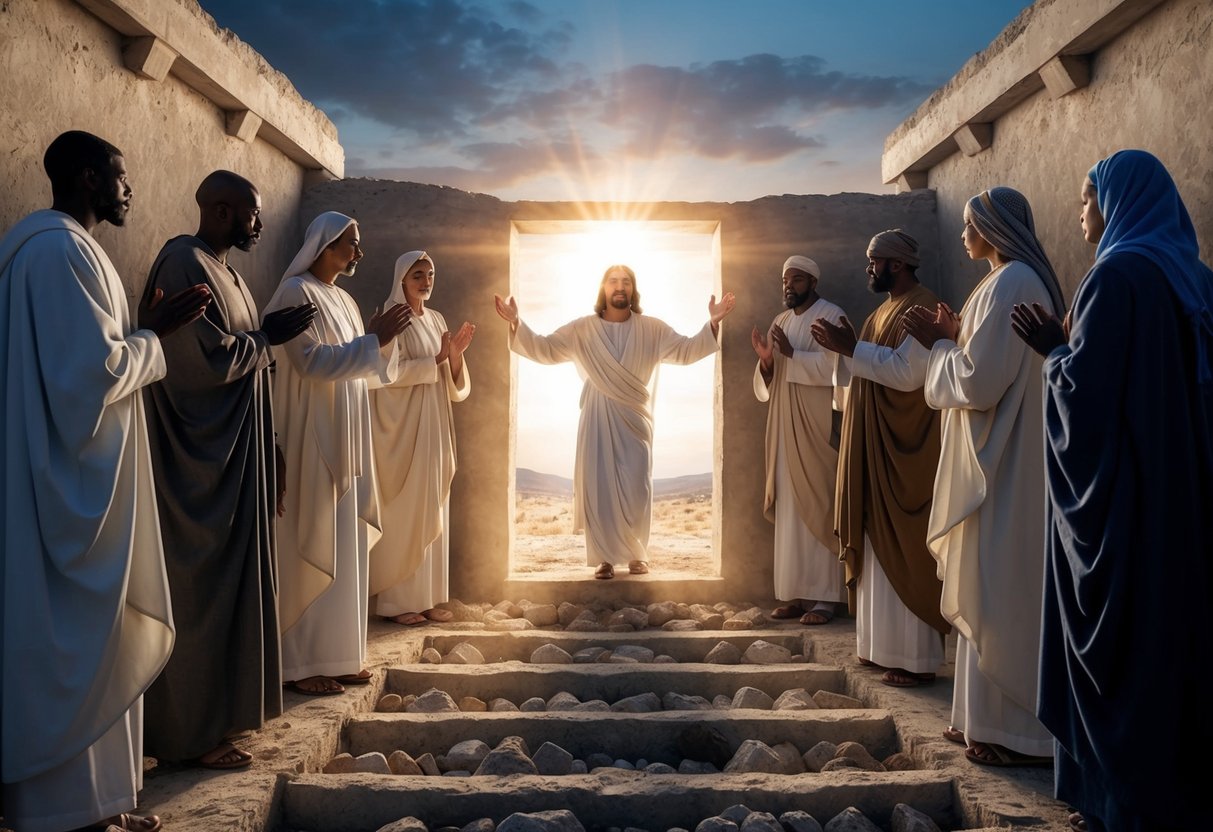
Debates regarding the exact timing and implications of this miraculous event have persisted for centuries.
Some scholars examine time references within the Gospels, noting that these may vary in precision. Historical writings, including those from figures like Flavius Josephus, provide additional context for understanding the significance of Jesus’ resurrection in the frame of first-century events.
As readers explore this topic, they will find a rich tapestry of interpretation and significance within the Christian tradition.
Understanding when Jesus rose from the dead opens doors to deeper comprehension of a central tenet of Christianity and its impact on followers throughout history.
Biblical Narrative of Resurrection
The resurrection of Jesus is central to the Christian faith. It begins with his crucifixion and death, leads to the discovery of the empty tomb, and concludes with several post-resurrection appearances. Each of these events holds significant meaning in the Gospel accounts.
Crucifixion and Death of Jesus
Jesus was crucified under Roman authority, an event recorded in each Gospel. He died after hours of suffering on the cross. His final words included a cry of abandonment, emphasizing his deep anguish.
After his death, Jesus’ body was taken down and laid in a nearby tomb, owned by Joseph of Arimathea.
To ensure that his body remained undisturbed, Roman guards were placed at the tomb. This act highlighted their concern about Jesus’ predictions regarding his resurrection. The crucifixion marked a critical moment in Christian belief, symbolizing sacrifice and redemption for humanity’s sins.
Discovery of the Empty Tomb
On the third day following Jesus’ burial, several women, including Mary Magdalene, went to the tomb to anoint his body. When they arrived, they found the tomb empty. An angel appeared and informed them that Jesus had risen from the dead.
The message of the angel stunned the women. They rushed back to inform the disciples of their discovery.
The empty tomb serves as a key element in the resurrection narrative, affirming the belief that Jesus overcame death. This event is foundational in establishing the truth of his resurrection.
Post-Resurrection Appearances
After rising, Jesus made several post-mortem appearances to his disciples and others. These appearances occurred over a span of forty days and were pivotal in confirming his resurrection. He appeared first to Mary Magdalene, who became a crucial witness.
During these encounters, Jesus provided reassurance and taught his disciples about the kingdom of God. Each appearance was significant for those present, strengthening their faith. The Gospels detail how these moments transformed doubt into belief, showcasing the impact of the resurrection on early Christians.
Theological Significance

The resurrection of Jesus holds deep theological meaning for Christians. It forms the basis of salvation, assures believers of eternal life, and is a key component in Christian creeds. Each aspect emphasizes the importance of the resurrection in the faith.
Concept of Salvation
In Christian belief, the resurrection is central to the concept of salvation. Through Jesus’ death and resurrection, he atoned for sin, offering forgiveness to humanity. As stated in 1 Corinthians 15:22, “For as in Adam all die, so in Christ all will be made alive.”
This act represents the defeat of sin and death. The Holy Spirit plays a crucial role in applying the benefits of this salvation to believers.
Through faith, they receive a new life that aligns them with Christ’s resurrection. This new life is not only spiritual but also brings hope for bodily resurrection in the future.
Promise of Eternal Life
The resurrection serves as a promise of eternal life for all who believe in Jesus. His rising from the dead is seen as a guarantee that believers will share in this eternal life as well. Jesus’ victory over death assures them that they, too, will rise.
John 3:16 emphasizes this promise: “For God so loved the world that he gave his one and only Son, that whoever believes in him shall not perish but have eternal life.” This assurance deeply influences Christian hope and daily living.
Role in Christian Creeds
Many Christian creeds emphasize the resurrection. The Nicene Creed, for instance, states that Jesus rose “on the third day” in accordance with the Scriptures.
These creeds solidify the belief in Jesus’ bodily resurrection as a cornerstone of the Christian faith.
Through creeds, the resurrection is acknowledged as fundamental to understanding the nature of Christ and the hope of believers. These statements of faith guide and unify Christian beliefs, reinforcing the importance of the resurrection in the context of atonement and salvation.
Cultural and Historical Context
Understanding the cultural and historical context of Jesus’ resurrection involves examining Jewish traditions, early Christian celebrations, and how Easter observances evolved over time. Each of these aspects plays a vital role in how the event is perceived and commemorated today.
Jewish Traditions and Messianic Prophecies
Jewish traditions significantly influenced the context of Jesus’ resurrection. The Passover, a major Jewish feast, celebrates the Israelites’ liberation from Egypt. This feast coincides with the timing of Jesus’ resurrection.
Many believed the Messiah would arrive during Passover, fulfilling prophecies in the Old Testament. This connection would have made Jesus’ resurrection striking to his followers.
Prophecies about the Messiah’s suffering and triumph over death added layers to the significance of the event. The resurrection was seen as a divine validation of Jesus’ claim as the Messiah.
Early Christian Celebrations
In the early Christian community, celebrations surrounding Jesus’ resurrection emerged quickly. These gatherings sought to remember and honor the resurrection as a pivotal event in faith.
Early Christians commemorated this through communal meals and prayer, often linked to the Passover.
As these practices spread, Christians began observing a specific day for this celebration. Initially called Pascha, the event became a time of joy and reflection.
This marked a shift from the sorrow of Good Friday to the joy of Easter Sunday, emphasizing Jesus’ victory over sin and death.
Evolution of Easter Observances
Easter observances evolved significantly following the resurrection. The Council of Nicaea in 325 AD formalized the date of Easter in the Christian liturgical calendar.
This council established that Easter would be celebrated on the first Sunday after the first full moon following the vernal equinox.
As Christianity spread, local customs and traditions influenced Easter practices. Many regions incorporated local festivals into their celebrations, blending ideas and rituals.
This evolution reflected the growing and diversifying Christian faith while maintaining the core message of resurrection and renewal.
Scholarly Perspectives
Scholarly perspectives on the resurrection of Jesus examine the historical validity of the accounts, ongoing academic debates, and interdisciplinary approaches that contribute to understanding this event. Each of these facets offers unique insights into the significance of the resurrection in religious and historical contexts.
Historical Validity of Resurrection Accounts
The historical validity of resurrection accounts is a key focus for biblical scholars. Important sources include the Canonical Gospels, which detail the events surrounding Jesus’ resurrection.
Scholars like William Lane Craig argue that the empty tomb and the post-resurrection appearances are compelling evidence.
Many historical scholars examine ancient texts and their context. They assess the reliability of the Gospel writers, noting potential biases.
The transformation of the disciples, who became willing to die for their faith, adds weight to claims of resurrection. The overlapping testimonies in different Gospels also lend support to the historical credibility of these accounts.
Academic Debates on the Subject
The resurrection remains a hotly debated topic within academia. Scholars like Ben Witherington contribute to discussions by analyzing the theological implications.
They explore whether the resurrection was a literal event or a metaphorical expression of faith.
Key questions focus on the nature of the evidence presented in the Gospels. Critics point to the lack of contemporary documentation outside biblical texts.
Proponents counter this by arguing that the resurrection can be inferred from early Christian writings and the rapid growth of Christianity.
Different methodologies are applied as scholars interpret these texts. Some focus on historical-critical methods, while others prioritize theological perspectives, showcasing the complexity of scholarly debate around the resurrection.
Interdisciplinary Approaches to the Resurrection
Interdisciplinary approaches to the resurrection draw from fields like history, theology, and philosophy. Scholars combine insights from different disciplines to better understand this significant event.
For instance, historical analysis of ancient practices surrounding death and burial sheds light on the resurrection narrative.
Philosophical discussions often tackle the implications of a resurrection for concepts of existence and afterlife.
The blending of these perspectives enriches the conversation about its meaning and relevance today. Interdisciplinary studies promote a more nuanced understanding and invite broader discussion among scholars and laypeople alike.
Modern Reflections and Interpretations
The resurrection of Jesus continues to influence contemporary thought and practice. Its impact can be seen in Christian worship, the arts, and various religious perspectives.
Impact on Contemporary Christian Worship
The resurrection shapes how contemporary Christians approach worship. Many services focus on themes of hope and renewal, often connecting the resurrection to the promise of future miracles and the Second Coming.
Celebrations during Easter, such as sunrise services, reflect the dawn of new life. These events symbolize not only the historical resurrection but also the imaginative resurrection in the hearts of believers.
Worship songs frequently highlight the concept of immortality. They remind attendees of the transformational power of Jesus’ rising, which they believe assures their own future resurrection.
Resurrection in Arts and Media
Art and media have played significant roles in interpreting the resurrection. Many artists create works that depict moments of Jesus’ resurrection or the emotional responses from his followers. These interpretations can evoke feelings of joy and hope.
Movies and television shows often dramatize the resurrection, allowing viewers to connect with the story. This helps reinforce the miracle of the event and its significance for faith today.
New Age movements frequently reference the resurrection as a metaphor for personal growth and enlightenment. This approach blends traditional themes with contemporary beliefs, emphasizing self-discovery.
Comparative Religious Perspectives
Different religions have various interpretations of resurrection. In Christianity, it signifies eternal life, while in Islam, Jesus is seen as a prophet whose return signifies justice.
Judaism does have beliefs about future resurrection but emphasizes communal rather than individual outcomes.
These perspectives can enrich discussions around life after death and immortality.
By exploring these views, individuals gain broader insights into how the resurrection inspires hope and faith across cultures.
This dialogue can deepen understanding among followers of different beliefs, highlighting shared values in the quest for meaning.
