
Mary, the mother of Jesus, is a central figure in Christianity and holds a special place in the hearts of millions around the world.
When people ask Who Was Jesus’ Mother, they discover the story of a faithful first-century Jewish woman from Nazareth chosen for an extraordinary purpose.
She became the mother of Jesus Christ, regarded as the Son of God in the New Testament. Her willingness to accept God’s plan made her an essential part of the story of salvation and redemption.
Mary’s story highlights her importance in the Christian faith, where she is often honored as a symbol of faith, humility, and unwavering devotion to God.
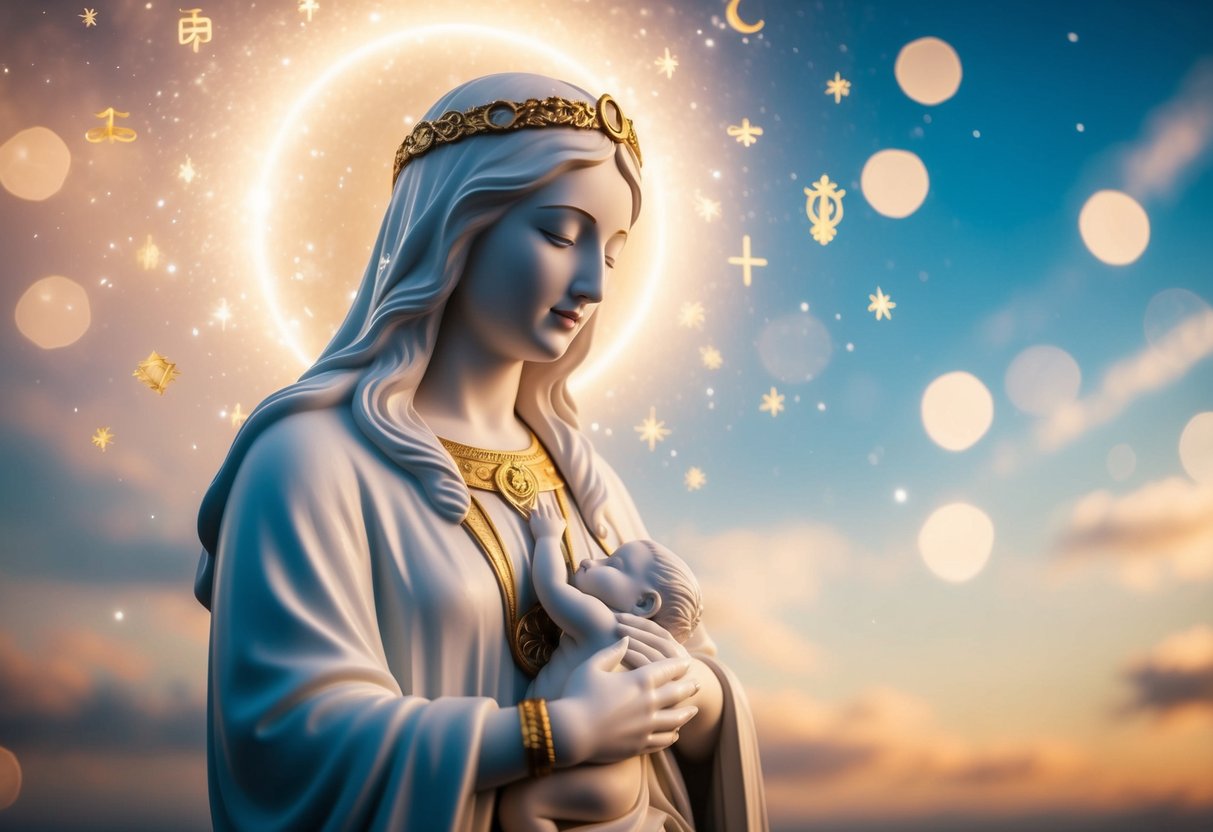
Throughout the New Testament, Mary’s role is significant, especially during key events like the Annunciation, where the angel Gabriel told her she would conceive Jesus.
This event marks her as the Virgin Mother, a title that emphasizes her unique role in the Christian narrative. As a result, she is venerated by various denominations, including Catholicism, Eastern Orthodox, and Protestant churches.
Mary’s influence extends beyond religious texts; she has inspired countless works of art, music, and literature through the ages.
Her journey as the mother of Jesus reflects themes of courage, humility, and unwavering faith, making her a beloved figure not only in religious contexts but also in cultural expressions worldwide.
Mary in Biblical Accounts
Mary, the mother of Jesus, plays a significant role in the Gospels, specifically in the accounts of the Annunciation and during Jesus’s ministry. Her experiences highlight important theological themes and provide insight into her character and faith.
Annunciation and Virgin Birth
The Annunciation is a key event where the Angel Gabriel visits Mary to announce that she will conceive Jesus. This moment is primarily described in the Gospel of Luke (Luke 1:26-38).
Gabriel tells Mary that she will bear a son, despite being a virgin.
Mary responds with faith, accepting her role. This moment emphasizes her obedience to God’s will.
Matthew also references Mary’s virginity, affirming that Jesus was born miraculously (Matthew 1:18-25). The virgin birth is vital in Christian theology, establishing that Jesus is both fully human and fully divine. Scholars often discuss this event to highlight Mary’s unique position in salvation history.
Role in Jesus’s Ministry
Mary is present at key moments in Jesus’s life and ministry. Although she is not highly involved in the day-to-day workings of His public ministry, her presence is notable.
For instance, she appears at the wedding at Cana, where Jesus performs His first miracle by turning water into wine (John 2:1-11).
This event highlights Mary’s role in initiating Jesus’s public work.
Additionally, during the crucifixion, she stands by the cross, demonstrating her unwavering support and love (John 19:25). These accounts reveal her strength and depth of character, showing her as an essential figure in the story of Jesus.
Theological Significance
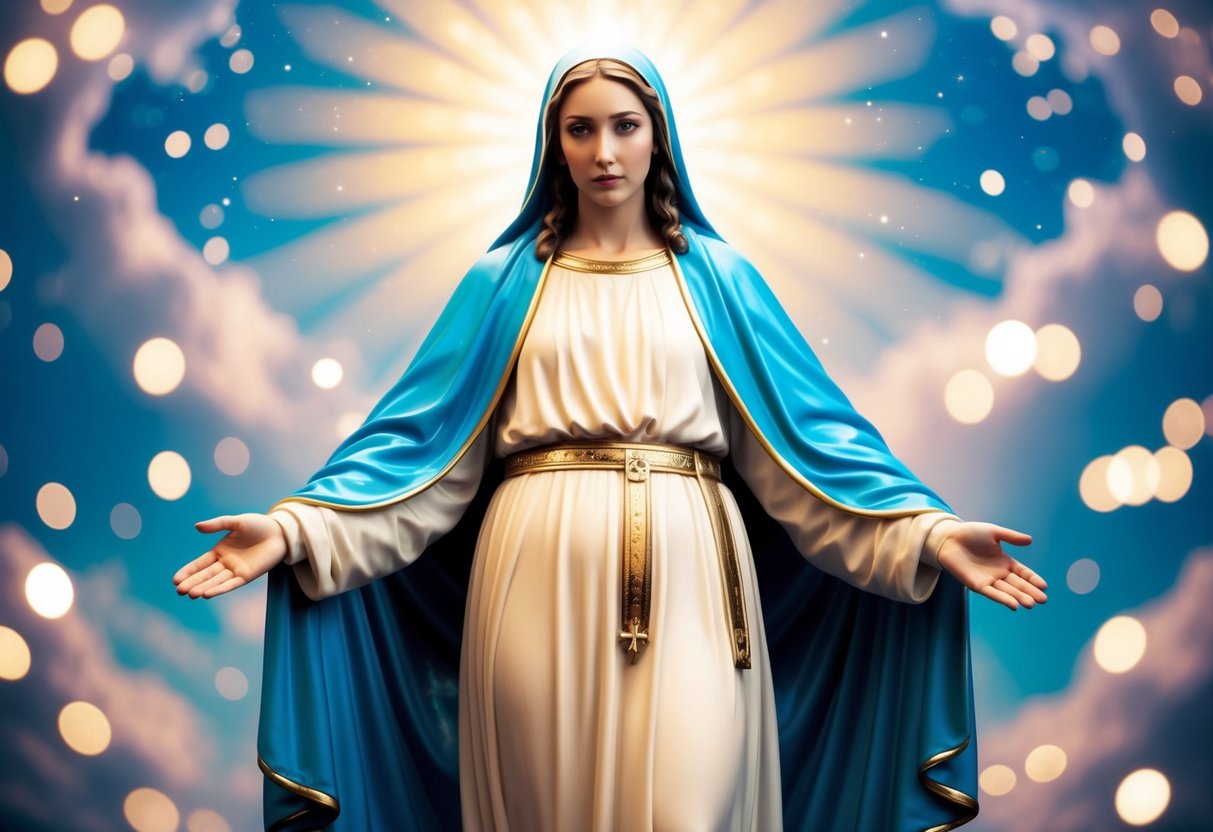
Mary’s role as the mother of Jesus carries deep theological importance in Christianity. Key beliefs about her include the Immaculate Conception, Divine Motherhood, and Perpetual Virginity. Each aspect highlights her unique position in relation to God and humanity.
Immaculate Conception
The Immaculate Conception is a doctrine that states Mary was conceived without Original Sin. This belief emphasizes that from the moment of her conception, she was pure and free from the stain of sin.
Catholic theology asserts this purity was essential for her to bear the Son of God. The Holy Spirit enabled this divine act, ensuring Jesus would enter the world untainted by sin. This idea parallels Eve, who contributed to the Fall through her disobedience.
By contrast, Mary’s sinless nature reflects God’s grace and plan for redemption. Her purity makes her a model for all believers and highlights the significance of God’s choice in selecting her as the mother of Jesus.
Divine Motherhood
Mary is recognized as the Mother of God, a title affirming her vital role in the incarnation of Jesus Christ. This belief underscores that she gave birth to Jesus, who is fully divine and fully human.
The title signifies Mary’s cooperation in God’s redemptive plan. Through her acceptance of the angel’s message, she became a central figure in the relationship between God and humanity.
Her role is celebrated in many traditions and emphasized in prayers, such as the Hail Mary. This recognition of her as the Divine Mother elevates her status within the Church and reinforces her importance in the Christian faith.
Perpetual Virginity
The doctrine of Perpetual Virginity asserts that Mary remained a virgin before, during, and after the birth of Jesus. This belief highlights her complete dedication to God’s will and her unique role in the mystery of Christ’s birth.
The idea of her perpetual virginity signifies her total commitment to God and her separation from worldly relationships. Early Church Fathers supported this view, stating that her virginity preserves the sacredness of Jesus’ divine nature.
This belief also emphasizes the miraculous nature of Jesus’ birth, underscoring God’s influence through the Holy Spirit. Mary’s virginity, therefore, reinforces her holiness and contributes to the understanding of her role in salvation history.
Mary’s Family

Mary’s family included her husband, Joseph, and her lineage connects back to significant figures. This section highlights her betrothal to Joseph and addresses her siblings and genealogy, shedding light on her family background.
Joseph and Betrothal
Mary was betrothed to Joseph, a carpenter from Nazareth. Their engagement was significant in Jewish culture, which often included a binding agreement with legal implications. Joseph is described as a “just man” who initially planned to divorce Mary quietly when he learned of her pregnancy.
However, an angel appeared to Joseph in a dream, assuring him that Mary’s child was conceived by the Holy Spirit. This moment emphasized the Virgin Birth, a cornerstone of Christian belief. Joseph accepted the divine message, marrying Mary and raising Jesus as his own. He played a vital role in the upbringing of Jesus, providing for the family and protecting them during their early years.
Siblings and Genealogy
Mary’s genealogy is traced back to important figures like King David. According to the Gospel of Luke, her lineage links to Adam, highlighting her connection to humanity. Some traditions state her parents were Anne and Joachim, though these names do not appear in the Bible.
Mary is often associated with several siblings. The Gospels mention Jesus’s brothers, including James and John. These figures were pivotal in the early Christian church. While their exact relationship to Mary is debated, they are crucial to understanding her family’s role in the community.
Marian Devotion and Veneration
Marian devotion and veneration reflect the deep respect and honor given to the Virgin Mary across various Christian traditions. This devotion is expressed through significant events, prayers, and dedicated sites that highlight her importance in the faith.
Apparitions and Sanctuary Sites
Throughout history, many believers have reported apparitions of the Virgin Mary. These sightings are significant in promoting faith and devotion. Notable sites include Lourdes, Guadalupe, and Fatima.
- Lourdes: In 1858, Mary appeared to Bernadette Soubirous in a grotto, leading to a major pilgrimage site known for miraculous healings.
- Guadalupe: In 1531, Mary appeared to Juan Diego in Mexico, resulting in a deep connection between the Virgin and the local culture. Her image became a symbol of faith for many.
- Fatima: In 1917, Mary is said to have appeared to three shepherd children, delivering messages about prayer and peace.
These sites attract millions of visitors seeking spiritual solace and healing.
Feasts and Prayers
The Catholic Church and Orthodox Christianity celebrate numerous feasts in honor of Mary. These commemorations help believers to deepen their faith and connection to her.
Key feasts include:
- Assumption of Mary: Celebrated on August 15, it marks the belief that Mary was assumed into heaven.
- Immaculate Conception: Observed on December 8, it honors Mary’s conception without original sin.
Prayers such as the Hail Mary and the Rosary are central to her devotion. These prayers focus on her role as the mother of Jesus and encourage believers to seek her intercession. While Protestant views on Marian devotion may differ, many still recognize her significance as Jesus’ mother.
Mary’s Influence in Christianity and Beyond
Mary, the mother of Jesus, plays a significant role in Christian tradition and has left a lasting impact on culture and the arts. Her veneration varies across different denominations, highlighting her importance to Christians globally.
Impact on Christian Tradition
Mary has been a central figure in Christian tradition since the early days of the Church. She is often referred to as the “Mother of God,” a title that emphasizes her role in the mystery of Jesus Christ’s incarnation. This title is widely accepted within the Catholic Church, Eastern Orthodox Churches, and some Protestant denominations.
In Rome and Jerusalem, churches dedicated to Mary are prominent. Major feast days celebrate her life and virtues. Saints throughout history have also drawn inspiration from her example. The Qur’an recognizes Mary as a significant figure, referring to her with respect in Islamic teachings. Her lineage from the tribe of Judah connects her to biblical prophecies, further reinforcing her role in Christian belief.
Representations in the Arts and Culture
Mary’s influence extends beyond religion into the arts and culture. Artists have depicted her in countless paintings, sculptures, and mosaics, from the Renaissance to modern times.
She is often portrayed in scenes related to her life, especially the Annunciation and the Nativity. In literature, Mary appears in hymns, prayers, and devotionals.
The “Hail Mary” prayer is among the most popular in Christian worship. Various titles, such as the “Blessed Virgin” and “Queen of Heaven,” show her importance in devotional practices.
Mary’s presence in cultural events and festivals further emphasizes her lasting legacy across different societies and eras.
