
The ultimate fate of the most significant relic in Christian history has intrigued believers and historians for centuries. Consequently, many pilgrims and seekers continue to ask exactly where is Jesus’ cross now and if any authentic pieces remain.
Today, small fragments of the True Cross are said to be distributed across various locations around the globe, treasured as holy relics by different Christian communities.
These pieces are believed to have been dispersed following their legendary discovery by St. Helena in the fourth century during her famous pilgrimage to the Holy Land.

Throughout history, the true cross has been surrounded by legends and stories, leading to its significance in Christianity.
Each fragment carries deep spiritual meaning and draws countless pilgrims who seek to connect with the crucifixion event that changed the course of religious history. Understanding the journey of the True Cross reveals much about faith and the lasting impact of Jesus’ sacrifice.
As believers and historians search for the cross’s remnants, they uncover a tapestry of traditions and historical accounts. The search for the original cross continues, inviting curiosity about its past and the treasures of faith that endure to this day.
Historical Context and Significance
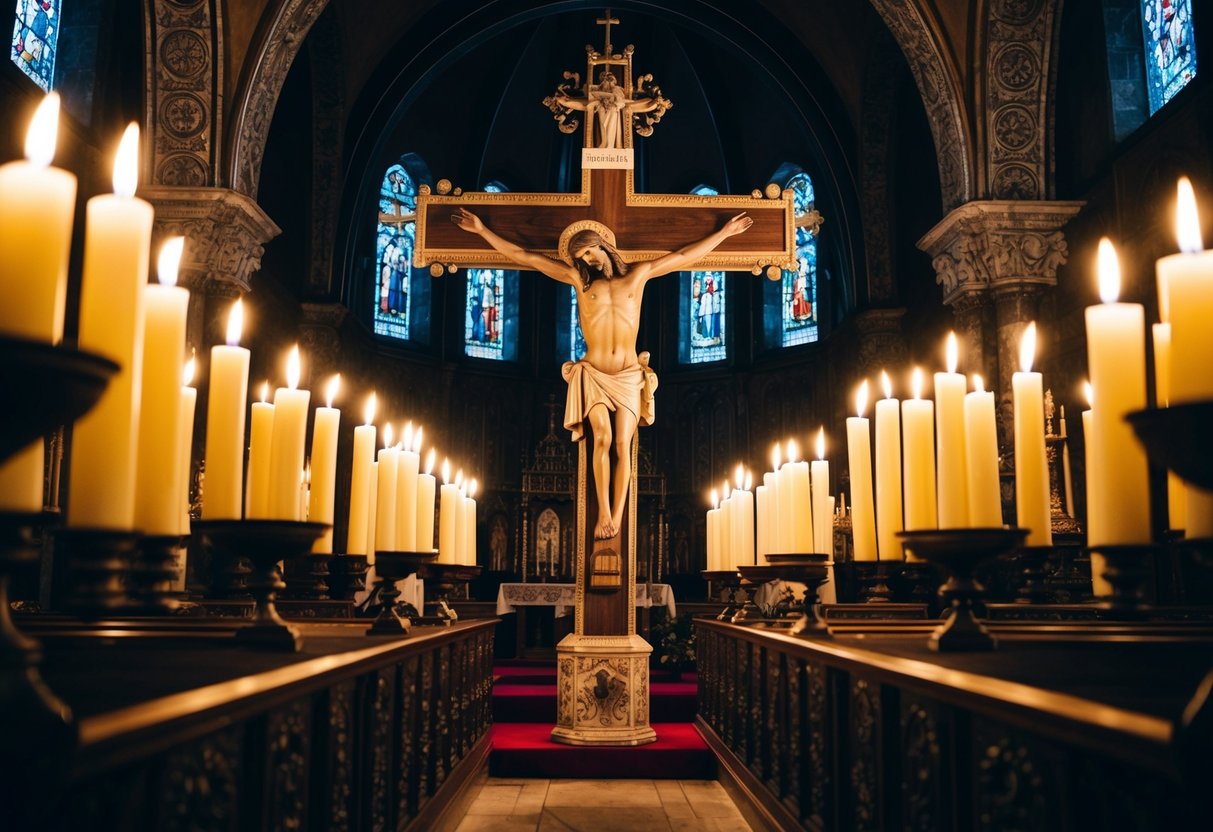
The crucifixion of Jesus and the cross have profound significance in Christian tradition. They embody key themes of sacrifice, salvation, and redemption.
Understanding this context reveals how the cross evolved from a tool of execution to a powerful symbol of faith for Christians.
The Crucifixion in Christian Tradition
In Christian tradition, the crucifixion is a central event, regarded as the culmination of Jesus’s ministry.
It took place around 33 AD under the authority of Pontius Pilate, the Roman governor of Judea. His death is interpreted as a sacrifice for humanity‘s sins, aligned with the concept of atonement found in the New Testament. This event is commemorated during Holy Week, especially on Good Friday, marking its significance to Christians worldwide.
The Role of the Cross in Christianity
The cross is more than just a method of execution; it is a symbol of hope and triumph over death.
Traditionally, it represents the Passion of Christ and His willingness to suffer for the salvation of mankind. For many believers, the cross signifies God’s love and the promise of eternal life.
Statues, crucifixes, and artworks featuring the cross serve as reminders of their faith and Jesus’s sacrifice. This profound symbol shapes the practices and beliefs within Christianity.
Veneration of the Cross Through History
The veneration of the cross has evolved significantly since the time of Jesus.
Early Christians honored the cross as a symbol of faith, often incorporating it into rituals and liturgies. Over the centuries, the cross became a focal point during various religious events, like the Feast of the Holy Cross celebrated on September 14.
Throughout history, numerous churches and sites in Jerusalem claim to house fragments of the true cross, enhancing its religious significance. Locations associated with the crucifixion draw pilgrims who seek to deepen their connection to these events that shaped their beliefs.
The Quest for the True Cross
The story of the True Cross intertwines with early Christian history and notable figures. Key events include Empress Helena‘s discovery of the cross and its subsequent journey through centuries, marked by both reverence and conflict.
Empress Helena’s Discovery
In the early 4th century, Empress Helena, mother of Emperor Constantine, journeyed to the Holy Land. Her mission was to find significant Christian relics, especially the True Cross, believed to be the cross upon which Jesus was crucified.
She explored sites associated with Jesus’ death and resurrection. Helena discovered the Tomb of Jesus at the Holy Sepulchre in Jerusalem. During excavations, workers unearthed three crosses, one of which was recognized as the True Cross through a miraculous healing.
This discovery was widely celebrated and amplified Helena’s legacy. The Church of the Holy Sepulchre was later built to honor this site, solidifying Helena’s role in Christian history.
The Cross’s Journey Through History
After its discovery, the True Cross began a long journey. Fragments were eventually distributed across various locations. Many churches claimed to possess pieces of this significant relic.
In Santa Croce, Italy, three small fragments of the True Cross can be found in the Cappella delle Reliquie. Alongside these pieces are also some thorns from the Crown of Thorns and parts of the nails used in the Crucifixion.
The dispersal of the relics continued after the Fourth Crusade in 1204, leading to further claims by churches and monasteries. Today, only a small percentage of the True Cross remains, yet its historical significance continues to resonate through Christianity.
Physical Manifestations and Reliquaries
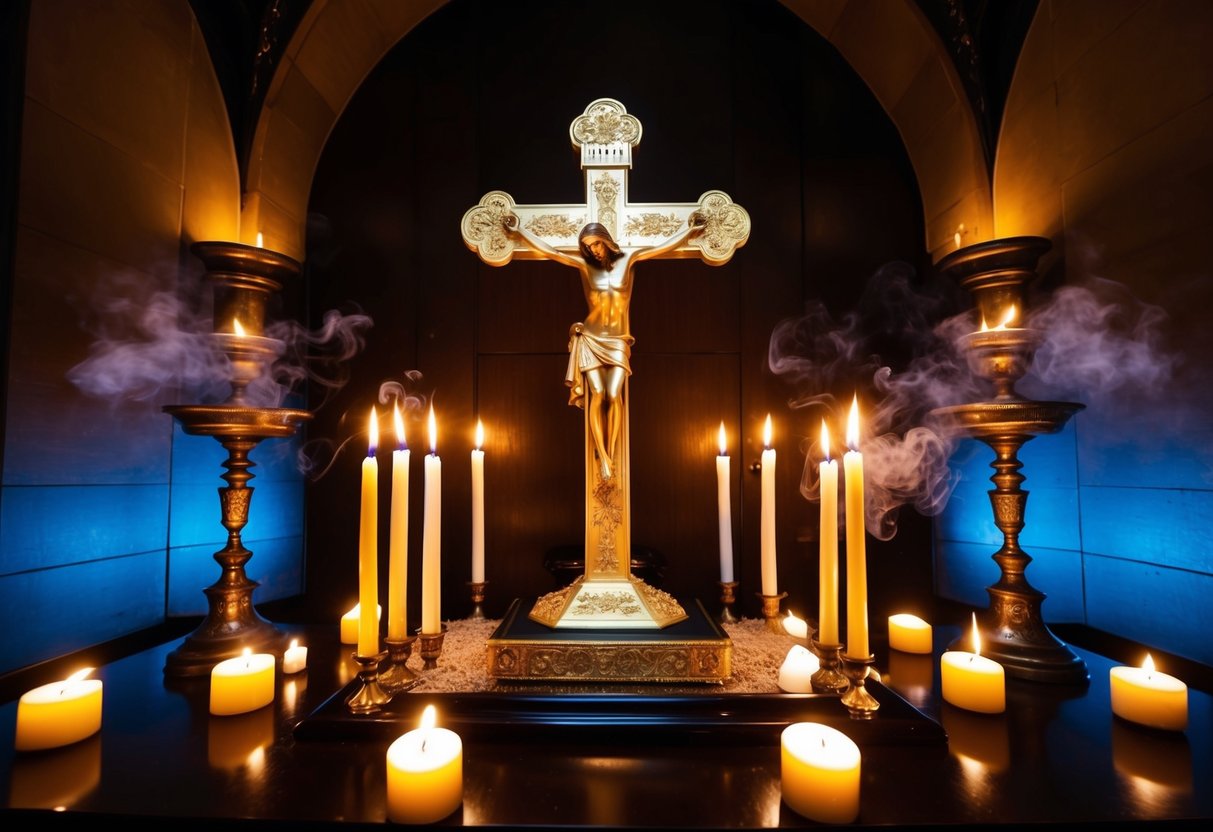
Physical manifestations of the True Cross and its fragments have played a significant role in Christian tradition. Various reliquaries house these sacred items, preserving their authenticity and historical importance. Their journey through time reflects the reverence held by believers.
Recognizing the True Cross
The True Cross is historically recognized as the actual cross on which Jesus Christ was crucified. Its discovery by St. Helena in the 4th century sparked widespread admiration and devotion. Fragments of the Cross became powerful relics, believed to carry spiritual significance.
These fragments were often encased in ornate reliquaries, which are special containers designed to protect and display relics. One prominent location associated with the True Cross is the Cappella delle Reliquie in Rome.
This chapel holds an impressive collection of relics, showcasing the importance of the Cross in Christianity. The relics were often accompanied by a titulus, a written description that attests to their authenticity.
Preservation of the Cross’s Fragments
Preserving the fragments of the True Cross is essential to maintain their historical and religious value. Various churches and institutions hold pieces of the Cross, carefully safeguarding them from damage.
Authenticity is crucial; many relics undergo rigorous examination to confirm their origins.
The Via Dolorosa, the path Jesus walked to his crucifixion, plays a vital role in connecting the physical and spiritual realms. Many believers visit this site, hoping to experience a link to the Crucifixion through the fragments.
Reliquaries come in many forms, from simple boxes to elaborate displays, ensuring these pieces remain significant for future generations. Their careful preservation reflects the deep faith and respect many have toward these relics.
Historical and Modern Locations
The journey of the cross from the time of Jesus to its current resting place has reflected the changes in historical significance and religious practices. Different locations claim to hold pieces or the entirety of the cross, each with its own story.
The Cross’s Itinerary Over Centuries
After the crucifixion, the true cross was said to be discovered by Saint Helena, the mother of Emperor Constantine. She found it in Jerusalem, near the site where the Church of the Holy Sepulchre now stands.
This church, located in the Holy Land, became a major pilgrimage site for Christians. Over time, parts of the cross were taken to various locations, such as the Crusader Kingdom of Jerusalem, where fragments were preserved in key churches.
By the Middle Ages, relics of the cross had made their way to many important churches across Europe, including Notre Dame in Paris and on Mount Athos. Each piece was venerated, leading to multiple claims of authenticity.
Resting Places of the Cross Today
Today, several churches claim to house fragments of the true cross. The Church of the Holy Sepulchre remains a prominent site, as it is believed to house the original cross or significant relics.
Other notable locations include Sainte-Chapelle in Paris, where a piece is displayed for veneration.
In addition, the Roman Catholic and Eastern Orthodox denominations often highlight their possessions of cross relics. Each relic serves as a symbol of faith and sacrifice.
While the exact whereabouts of the full cross remain unclear, its pieces continue to inspire devotion among believers worldwide.
Cultural Impact and Legacy
The legacy of the cross extends deeply into cultural practices and artistic expressions. Its significance is evident in various rituals, worship settings, and representations throughout history.
The Cross in Ritual and Worship
The cross plays a central role in Christian worship, symbolizing the crucifixion and resurrection of Jesus. Early Christians gathered in secret, often marking their places of worship with the cross.
The Exaltation of the Holy Cross became a significant feast, celebrating both the instrument of death and the means of salvation.
Roman Emperor Constantine, along with his mother Helena, significantly shaped the cross’s cultural importance. Helena is believed to have discovered fragments of the true cross, inspiring the construction of many churches, including the Church of the Holy Sepulchre in Jerusalem.
Throughout the ages, the cross influenced various Christian rites. From the French Revolution, which saw many religious symbols attacked, to the resurrection themes emphasized in liturgies, the cross remains a powerful emblem of faith. It is also integral to the rituals of the Knights Templar and other religious orders, reflecting deep spiritual commitments.
Artistic Representations of the Cross
Art has been a primary means of depicting the cross and its significance.
From the intricate designs seen in Notre-Dame Cathedral to the works of Renaissance masters, the cross has inspired countless artists.
John Calvin and other reformers emphasized the importance of Scripture, leading to new interpretations and artistic expressions of the cross.
Many paintings and sculptures capture the moments of the crucifixion or the resurrection, highlighting its transformative power.
The portrayal of the cross has evolved.
The Crusaders often carried the cross into battle as a symbol of faith and purpose.
This rich artistic legacy reflects the ongoing cultural impact of the cross, communicating profound theological themes through visual means.
Notable figures like Pope John XXIII have also contributed to its legacy, reaffirming its importance in modern Christian worship and promoting its meaning across contemporary society.
